Medlar Compote
Bletted medlars packed into jars with a clove or two, covered in hot syrup, and preserved for the pantry — updated here with a modern, timed water-bath process.
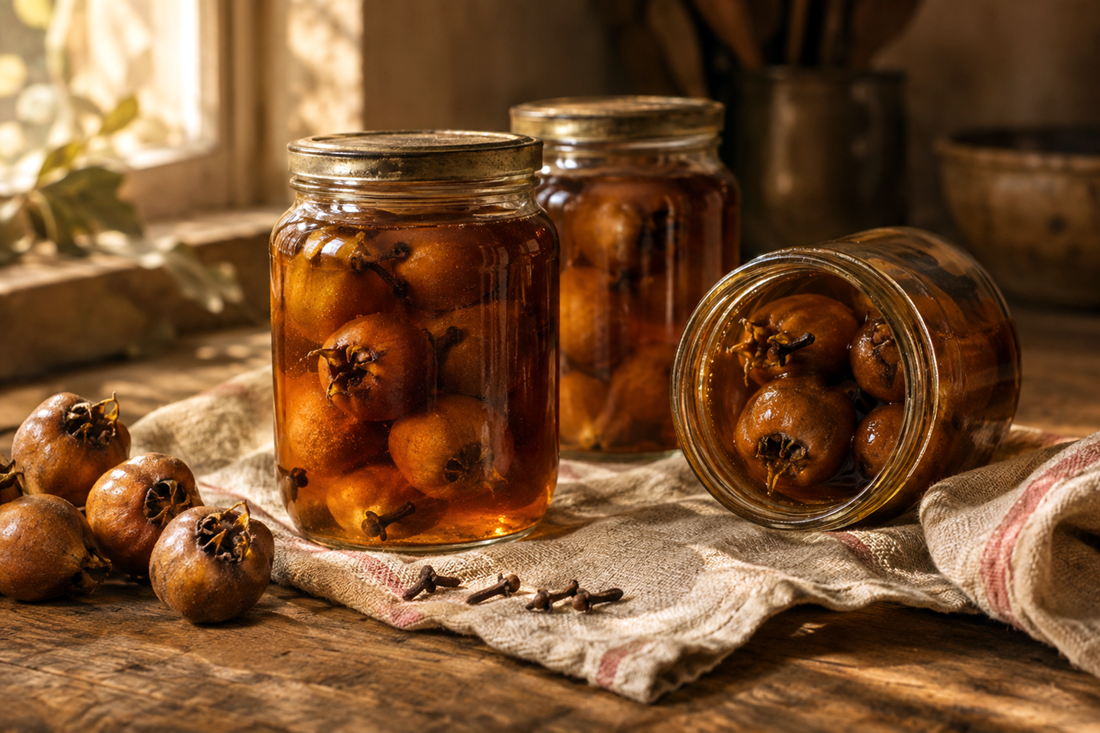
Quick Summary
This compote preserves very ripe medlars in jars with cloves and light syrup, using heat processing for safety. Quince may replace medlars, but both require proper water-bath timing—not the quick visual doneness test once described.
Historical recipe
Modernised adaptation of an early 20th‑century source. Not independently kitchen-tested by Attic Recipes. Quantities, temperatures, and food safety guidance have been updated for a contemporary kitchen — results may vary and errors may exist. Nutritional values, where provided, are estimates only and have not been laboratory tested. Always follow current food safety guidelines for your region. If you have a health condition, allergy, or dietary requirement, consult a qualified professional before preparing this recipe.
Use of this recipe is entirely at your own risk and subject to ourTerms of Service andPrivacy Policy. Attic Recipes accepts no liability for any adverse outcome.
Additional notes
Warning
This is a jarred, heat-processed preserve. Improperly processed jars can allow Clostridium botulinum to grow without any obvious change in smell, taste, or appearance — this recipe has been updated with a full boiling-water-bath time and an added acid for safety margin; do not shorten the processing time or skip the lemon juice. Discard, without tasting, any jar that looks cloudy or bulging, smells off, or spurts liquid when opened. This applies to everyone, but especially infants, pregnant women, older adults, and anyone immunocompromised.
Note
Each jar contains a small amount of added spirit. Pregnant women, children under 18, and anyone avoiding alcohol should be aware.
- 1
Snip the calyx ('eyes') off each medlar with small scissors, then wash the fruit and drain thoroughly.
- 2
Pack the drained medlars neatly into clean, dry jars, tucking a few whole cloves in among the fruit in each jar.
- 3
Combine the water and sugar in a saucepan and bring to a boil, boiling until it forms a light syrup.
- 4
Pour the hot syrup over the fruit in each jar, leaving about 1-2cm of headspace at the top.
- 5
Add the tablespoon of clear spirit and the tablespoon of lemon juice to each jar.
TipThe lemon juice isn't in the original recipe — it's a safety margin for a fruit whose acidity isn't well documented in modern food-safety references. Don't skip it. - 6
Wipe the jar rims clean and seal with two-piece canning lids, following the manufacturer's instructions for finger-tight rings.
- 7
Lower the jars into a large pot of water, making sure they're covered by at least 2-5cm of water. Bring to a full, rolling boil.
TipThis replaces the original's straw-lined pot and cloth-tied jars — modern two-piece lids create a verifiable vacuum seal that a tied cloth cannot. - 8
Process at a full rolling boil for 20 minutes (increase by 5 minutes if you're above 300m/1,000ft in altitude), keeping the jars fully submerged the whole time.
- 9
Remove the jars with a jar lifter and set them upright on a towel, undisturbed, to cool completely — this can take several hours.
- 10
Once cool, check that each lid has sealed (it should be concave and not flex when pressed). Label and store sealed jars in a cool, dark place; refrigerate any jar that didn't seal, and use it first.
Nutrition Informationper 1 serving (approx 100g fruit and syrup)
Nutritional values are approximate estimates and may vary based on specific ingredients used, preparation methods, and portion sizes.
Serving Suggestions
Serve chilled, on its own or spooned over plain yogurt, rice pudding, or a simple sponge cake.
About This Recipe
Medlar is a fruit that has to be coaxed into edibility rather than simply picked ripe: it’s hard, sour, and unpleasant straight off the tree, and only becomes soft, sweet, and applesauce-like after weeks of bletting — a controlled over-ripening that softens the flesh and mellows its tannins. Once bletted, the fruit is soft enough to pack whole into jars, and a light clove-spiced syrup does the rest of the work, turning it into a preserve that keeps through the winter months when little else in the garden does.
The note at the end of the original about substituting peeled, cut quince is a practical one — quince shares medlar’s dense flesh and needs the same kind of long, gentle cooking to soften, and it’s a far easier fruit to find today.
Why It Works
Bletting is what makes this recipe possible at all: the process breaks down the pectin and tannins that make an unripe medlar essentially inedible, leaving a fruit soft enough to preserve without any additional cooking of the flesh itself. Packing the fruit into jars before pouring over hot syrup, rather than cooking it directly in the syrup, keeps the delicate bletted flesh from breaking down into mush during processing. The full boiling-water-bath step — longer than the original’s visual cue — is what actually makes the sealed jars safe to store outside the fridge, by reliably holding the jars at a high enough temperature for long enough.
Modern Kitchen Tips
Because bletted medlars are extremely soft, handle them gently when packing the jars — a bit of bruising won’t affect safety, but a jar of visibly mashed fruit is less appealing than one where the shape has held. If you’re using the quince variation from the original, peel and cut the quince into similarly sized pieces so they process evenly, and expect it to hold its shape a little better than the medlars will.
A classic of early 20th century home cooking, preserved and adapted for the modern kitchen.
The Story Behind This Recipe
Historical Context
Home preservers of the period judged doneness by sight — watching for the first fine bubbles to rise inside the jar — rather than by a fixed processing time, since standardized boiling-water-bath guidance wasn't yet common knowledge in the home kitchen. Wrapping each jar in straw inside the pot served the same purpose a modern jar rack does: keeping the glass from cracking against the hot pot bottom or against other jars.
Modern Kitchen Adaptation
The original method — pulling the jars as soon as bubbles appear — does not reliably reach the time and temperature needed to make sealed jars of fruit safe from *Clostridium botulinum*, which can grow in improperly processed low-acid or borderline-acid preserves without producing any obvious smell, taste, or appearance. Medlar's acidity isn't well documented in modern food-safety references, so this version adds a tablespoon of lemon juice per jar as a safety margin and replaces the visual doneness cue with a full 20-minute boiling-water-bath process, the standard modern approach for fruit preserved in syrup at this jar size. The splash of alcohol is worth keeping for flavor, but it should not be relied on for preservation — heat processing and, ideally, acidification are what actually make the jars shelf-stable. Cloth, dampened parchment, and tied string cannot form or show a verifiable vacuum seal the way a modern two-piece canning lid can, so this version uses standard canning lids instead; always check that a lid has sealed properly before storing a jar at room temperature. Never taste or use a jar that smells off, looks cloudy or bulging, spurts liquid when opened, or has a lid that isn't firmly sealed.
This recipe is an independent modern adaptation developed from historical sources in the public domain. It is provided for informational and educational purposes only and does not constitute professional dietary, nutritional, or medical advice. Food preparation involves inherent risks. The reader assumes full responsibility for safe food handling, ingredient sourcing, and adherence to current local food safety guidelines. The site operator accepts no liability for outcomes resulting from the preparation or consumption of this recipe.
One recipe.
Every week.
You Might Also Like
More recipes you'll enjoy
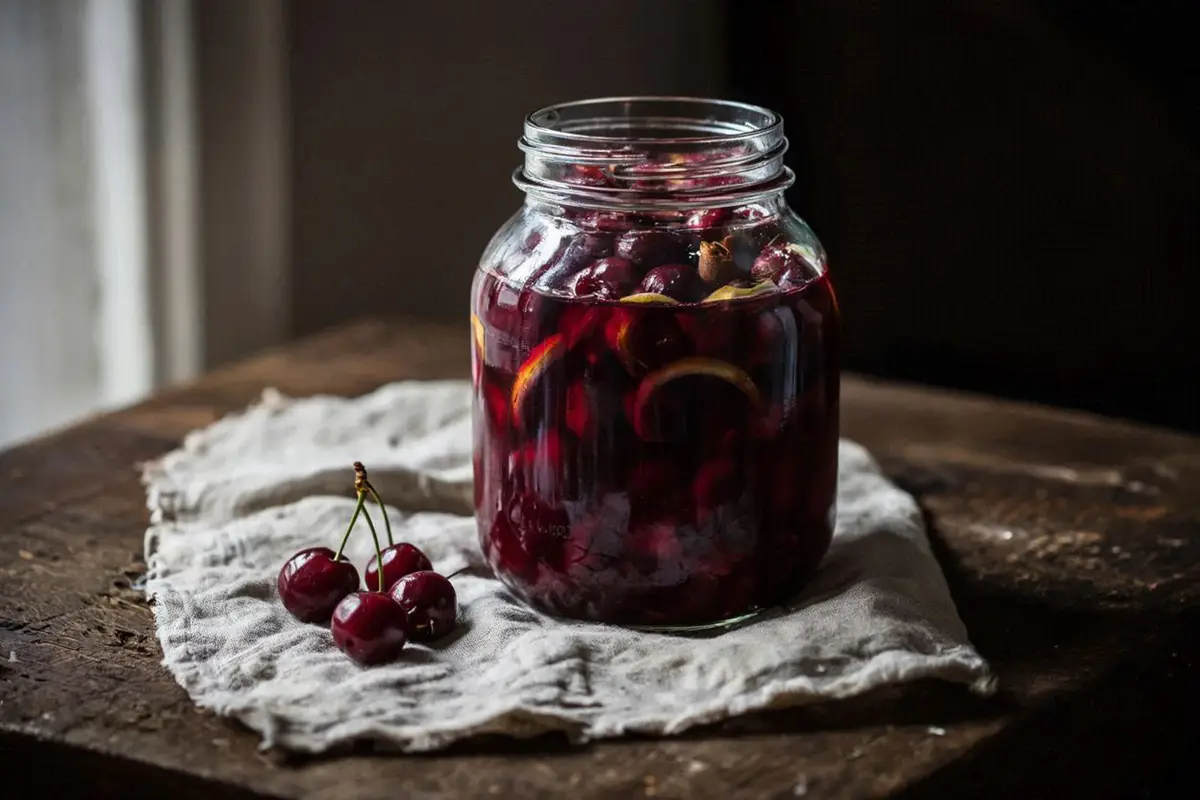
Cherries in Sugar for Winter
Ripe cherries preserved in sugar and wine vinegar with cloves, cinnamon, and lemon — sun-fermented for 3–4 days, then stored through winter.
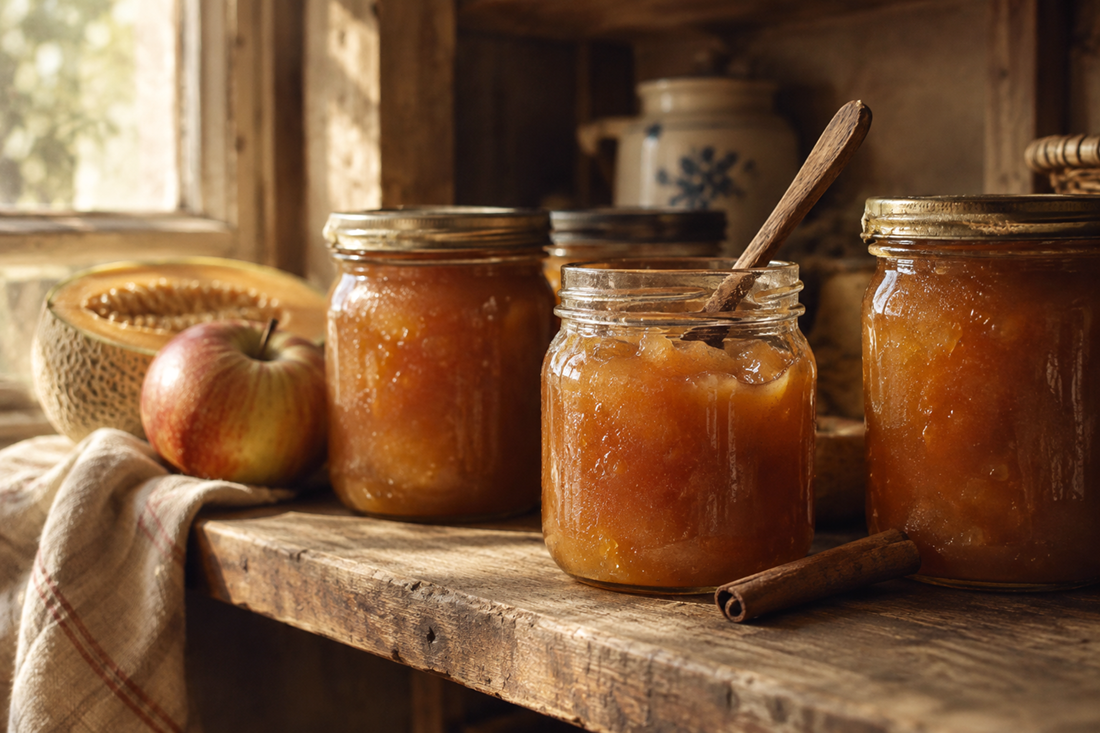
Melon and Apple Pekmez (Fruit Butter)
A slow-cooked melon and apple fruit butter (pekmez), lightly spiced with cinnamon and canned for shelf-stable keeping.
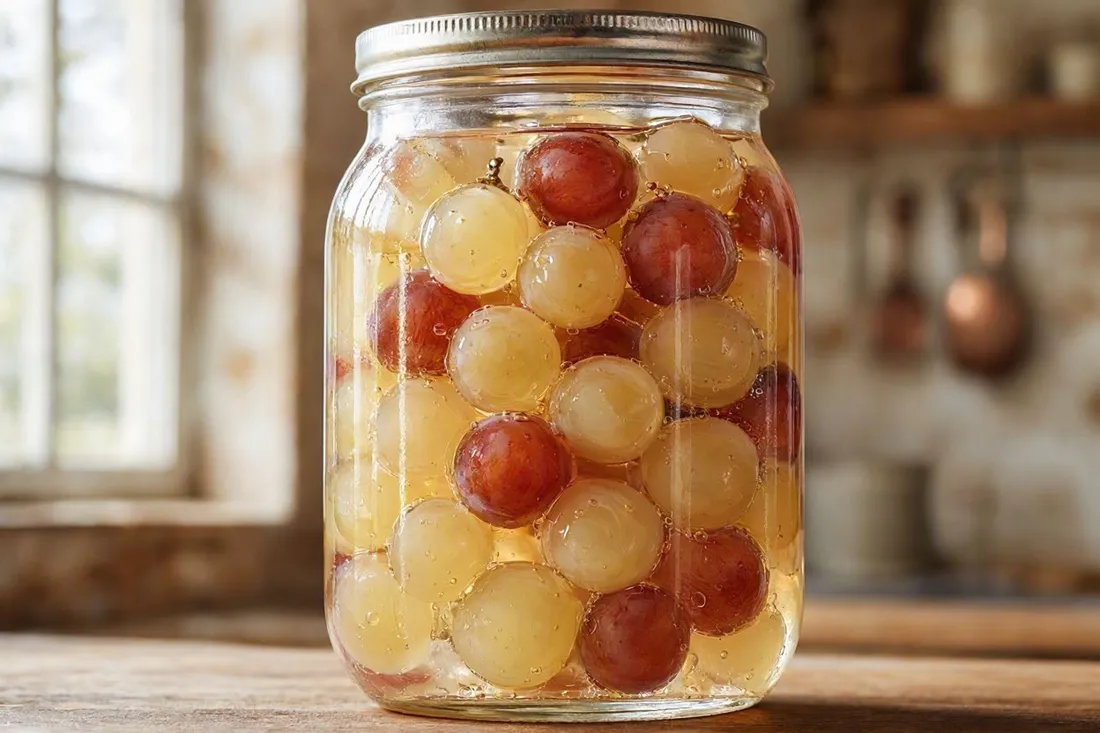
Grape Compote in Syrup
Small clusters of grapes are packed into jars and covered with a light sugar syrup, then home-canned for a stable preserve to enjoy through the colder months.