Macaroni with Salt Fish
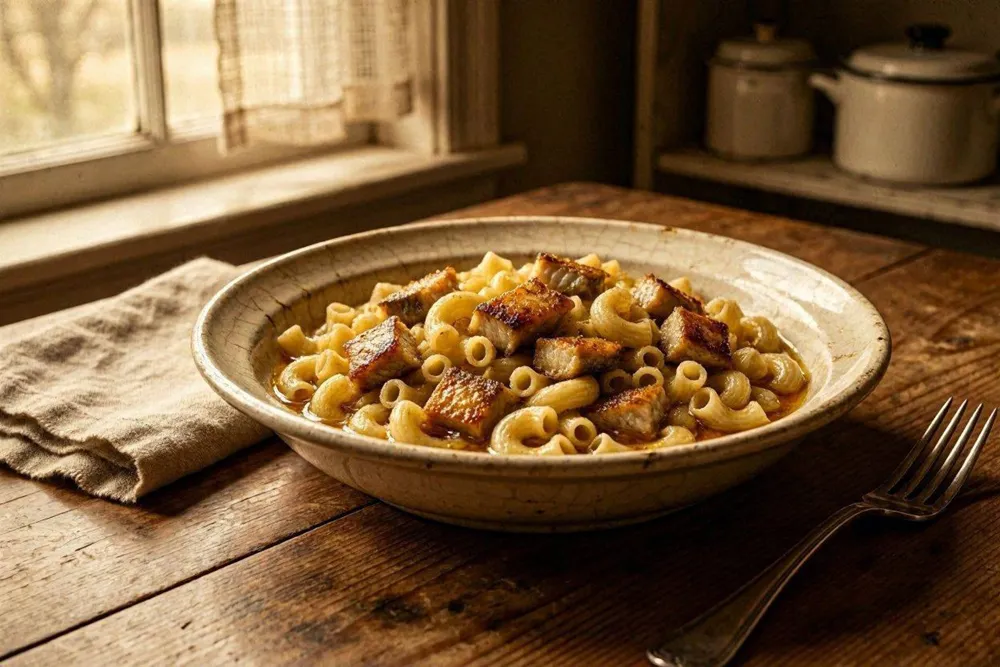
Salted fish, floured and pan-fried until golden, then tossed hot with its cooking oil straight into boiled macaroni for a simple, savory one-pan meal.
Historical recipe
Modernised adaptation of an early 20th‑century source. Not independently kitchen-tested by Attic Recipes. Quantities, temperatures, and food safety guidance have been updated for a contemporary kitchen — results may vary and errors may exist. Nutritional values, where provided, are estimates only and have not been laboratory tested. Always follow current food safety guidelines for your region. If you have a health condition, allergy, or dietary requirement, consult a qualified professional before preparing this recipe.
Use of this recipe is entirely at your own risk and subject to our Terms of Service and Privacy Policy. Attic Recipes accepts no liability for any adverse outcome.
- Fish
- Gluten
Additional notes
-
Warning
Hot oil can splatter when frying, especially when adding floured fish pieces. Lower fish into the oil gently and keep a lid or splatter screen nearby to prevent burns.
-
Note
Salted fish is naturally high in sodium. Individuals managing sodium intake, including pregnant women and those with hypertension, may want to soak the fish longer or choose smaller portions.
- 1
Bring a large pot of salted water to a boil and cook the macaroni until tender, about 10-12 minutes. Drain well.
Tip Don't rinse the macaroni with cold water — you want it hot and slightly starchy so it soaks up the fish oil in the last step. - 2
Wash the cleaned, boned salted fish fillets and cut into large pieces.
Tip If the fish is very salty, soak it in cold water for a few hours beforehand, changing the water once or twice, to reduce the salt before cooking. - 3
Dredge the fish pieces in the flour, shaking off the excess.
- 4
Heat the oil in a frying pan over medium-high heat. Fry the fish pieces until golden on both sides, about 8-10 minutes total.
Tip Hot oil can splatter when the fish is added — lower the pieces in gently and keep a lid or splatter screen nearby. - 5
Pour the hot fried fish and its cooking oil directly over the hot, drained macaroni. Toss well to combine and serve warm.
Nutrition Information per 1 plate (approx 300g)
Nutritional values are approximate estimates and may vary based on specific ingredients used, preparation methods, and portion sizes.
Serving Suggestions
Serve warm as a simple one-pan meal, with a green salad or steamed vegetables on the side.
About This Recipe
This is about as simple as historical cooking gets: macaroni boiled until tender, salted fish floured and fried until golden, and the two brought together with nothing more than the hot cooking oil doing the work of a sauce. No cream, no cheese, no separate seasoning — the saltiness of the fish and the flavor it leaves behind in the oil are the whole point.
It’s a dish that likely came together from pantry staples on hand rather than a planned menu, which is probably why the original instructions were so brief. The technique, though, is worth paying attention to: pouring hot fried fish and its oil directly over hot, well-drained macaroni lets the pasta absorb flavor it couldn’t pick up any other way.
Why It Works
Draining the macaroni well and keeping it hot matters here — starchy, hot pasta absorbs the fried fish’s flavorful oil far more readily than pasta that’s been rinsed and cooled. The flour coating on the fish serves double duty: it crisps into a light crust during frying, and it also picks up some of that frying oil, which then transfers onto the macaroni along with everything else in the pan.
Modern Kitchen Tips
If your salted fish is on the stronger side, a few hours of soaking in cold water (changed once or twice) will bring the saltiness down to something more manageable without losing the dish’s character. Fry the fish in batches if your pan is small — overcrowding drops the oil temperature and leaves the coating soft instead of crisp.
A classic of early 20th century home cooking, preserved and adapted for the modern kitchen.
The Story Behind This Recipe
Historical Context
Period recipes for simple, everyday dishes like this one often specified only the essential ingredients and left quantities such as flour, the exact number of fish pieces, and cooking times to the cook's judgment.
Modern Kitchen Adaptation
The instruction to pour the finished fish and oil over the macaroni at the end is written here as cooked macaroni, since the first step already calls for boiling it — the original wording appears to be a transcription slip. Fish quantity, salt for the pasta water, flour amount, and cooking times are estimated, since the original specified only '2 or 3 pieces' of fish and 100 grams of oil. A soaking step for very salty fish has been added as a practical note, since salting levels vary and this wasn't addressed in the original.
This recipe is an independent modern adaptation developed from historical sources in the public domain. It is provided for informational and educational purposes only and does not constitute professional dietary, nutritional, or medical advice. Food preparation involves inherent risks. The reader assumes full responsibility for safe food handling, ingredient sourcing, and adherence to current local food safety guidelines. The site operator accepts no liability for outcomes resulting from the preparation or consumption of this recipe.
One recipe.
Every week.
You Might Also Like
More recipes from the same category
Baked Fish with Tomatoes
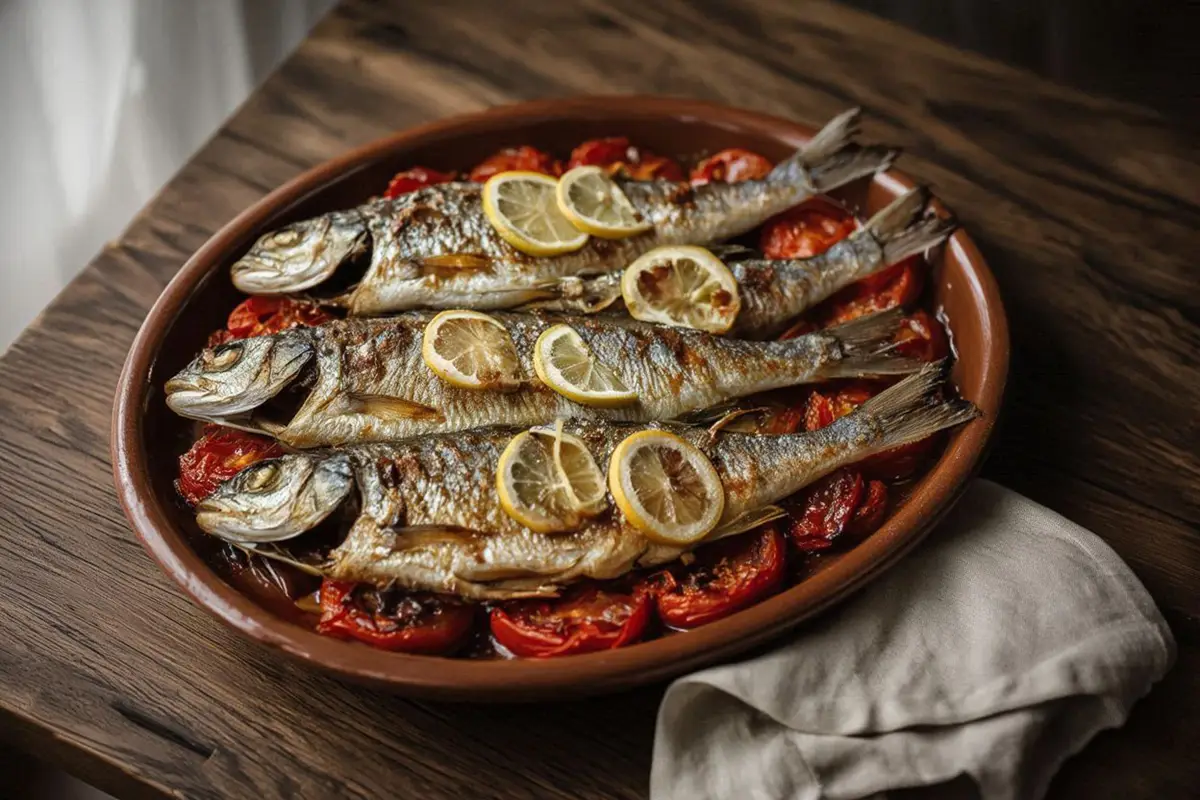
Whole fish baked over ripe tomatoes with generous olive oil and lemon — a simple, fragrant Central European oven dish.
Baked Tongue in Green Sauce
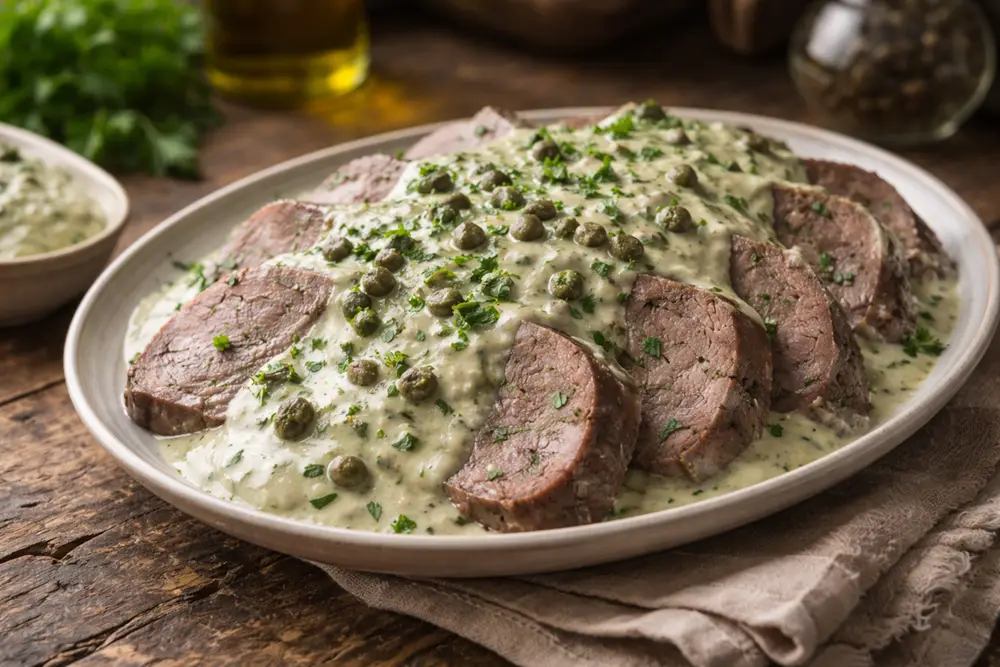
Beef tongue braised with herbs, larded with bacon and roasted until golden, served in a green sauce of capers, anchovy, parsley and sour cream.
Beef Kidney with Wine
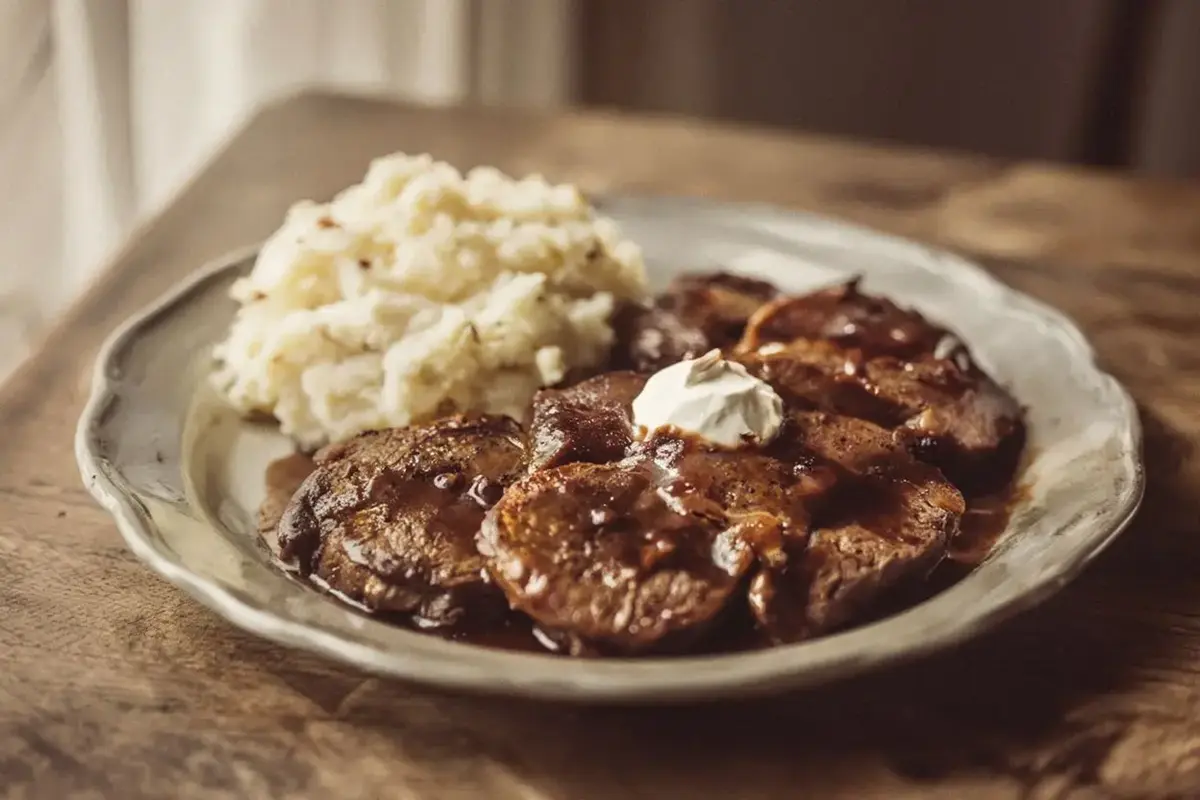
Beef kidney marinated in red wine, braised with herbs, finished with sour cream. Tender, rich, and deeply flavored.