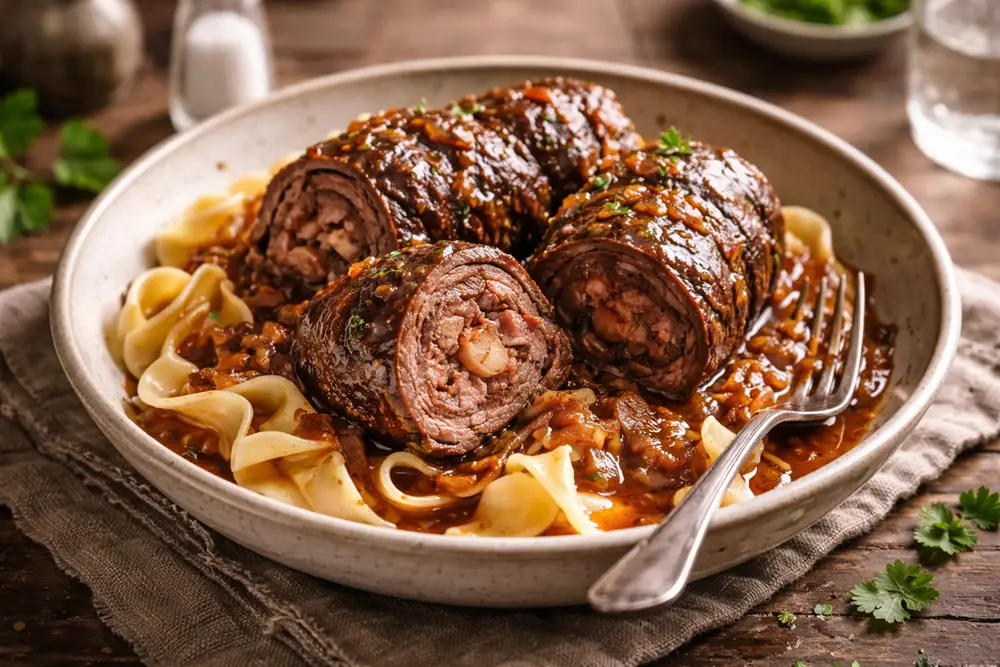
Little Birds — Stuffed Beef Rolls
Thin beef slices pounded flat, stuffed with bacon and garlic, rolled and braised in a thick onion and pepper sauce until tender.
Historical recipe
Modernised adaptation of an early 20th‑century source. Not independently kitchen-tested by Attic Recipes. Quantities, temperatures, and food safety guidance have been updated for a contemporary kitchen — results may vary and errors may exist. Nutritional values, where provided, are estimates only and have not been laboratory tested. Always follow current food safety guidelines for your region. If you have a health condition, allergy, or dietary requirement, consult a qualified professional before preparing this recipe.
Use of this recipe is entirely at your own risk and subject to our Terms of Service and Privacy Policy. Attic Recipes accepts no liability for any adverse outcome.
- Dairy
- Gluten
Additional notes
-
Note
This recipe is high in saturated fat (approximately 11g per serving). People managing cardiovascular risk or cholesterol levels should be aware of portion size.
-
Note
This recipe contains full-fat dairy (mileram or sour cream). For a dairy-free version, use the tomato variation described in step 8.
-
Caution
Remove all toothpicks and kitchen twine from the rolls before serving.
- 1
Pound each beef slice to approximately 3–4 mm thickness using a meat mallet. Season lightly with salt on both sides.
- 2
Combine the finely chopped dried bacon, minced garlic, chopped parsley, and a pinch of black pepper in a small bowl. Mix well.
- 3
Place a small spoonful of filling (approximately ½ tsp) in the center of each beef slice. Fold the sides inward and roll tightly, as you would a small sarma. Secure each roll with a toothpick or tie with kitchen twine.
Tip Don't overfill — rolls that are packed too tightly will split during braising. - 4
Heat the oil in a large deep skillet or Dutch oven over medium heat. Add the finely chopped onions and cook, stirring occasionally, until softened but not yet golden — about 8–10 minutes.
- 5
Add the chopped red bell peppers and stir to combine. Nestle the beef rolls into the pan. Fry, turning occasionally, until the meat takes on a light golden color and the onions are completely soft — about 15–20 minutes. Do not rush this step; the long frying is what builds the flavor base.
- 6
Sprinkle the flour evenly over the contents of the pan. Stir to coat and let the flour cook for 1–2 minutes until it loses its raw smell and turns slightly golden.
- 7
Pour in the water or stock gradually, stirring constantly to prevent lumps. The sauce should be thick — add only enough liquid to just cover the rolls. Bring to a gentle simmer.
Tip If the sauce is too thin, simmer uncovered for a few minutes. If too thick, add a splash of water. - 8
Stir in the mileram or sour cream. Reduce heat to low, cover partially, and simmer gently for 15–20 minutes until the meat is tender and the sauce is rich and cohesive.
Tip For the tomato variation: omit the mileram. Add 150 g of peeled, chopped fresh tomatoes (or 2 tbsp tomato paste thinned with a little water) at this stage instead. The sauce will be brighter and slightly sharper. - 9
Remove all toothpicks or twine before serving. Taste the sauce and adjust salt if needed. Serve hot over egg noodles, polenta, or potato dumplings.
Nutrition Information per 1 serving (approx. 290g)
Nutritional values are approximate estimates and may vary based on specific ingredients used, preparation methods, and portion sizes.
Serving Suggestions
Serve over wide egg noodles (the most traditional pairing), soft polenta, or boiled potato dumplings. A simple green salad dressed with vinegar cuts through the richness of the sauce.
About This Recipe
These small stuffed beef rolls have been a fixture of Central European home cooking for well over a century — appearing under a handful of regional names, always built on the same logic: a thin slice of beef, pounded flat, wrapped around a filling of cured meat and aromatics, then braised slowly until the sauce thickens around them. The name little birds refers to the shape. A tightly rolled piece of stuffed beef, secured at both ends, does look rather like a small sleeping bird — compact, rounded, tucked in.
The filling here is simple by design: dried bacon, garlic, parsley, and pepper. It doesn’t need to be elaborate. What it needs is contrast — the cured, smoky fat of the bacon against the mild beef, the sharpness of raw garlic that softens completely during braising. The sauce builds from a long fry of onions and bell peppers, thickened with flour and finished with mileram — a cultured full-fat cream that was standard in regional dairy traditions and gives the sauce its characteristic richness and slight tang.
This is comfort food in the truest sense: slow, unhurried, built on technique rather than expensive ingredients. It rewards patience in the frying stage and repays it with a sauce that needs nothing added.
Why It Works
The key step is the long fry before any liquid enters the pan — onions, peppers, and the sealed meat rolls cooked together over medium heat until everything is soft and beginning to caramelize. This is not a quick sear. It is closer to a dry braise, and it is where most of the flavor is built. The flour added at the end of this stage coats everything in the pan and cooks briefly in the residual fat, which prevents the starchy, raw-flour taste that shortcuts tend to produce. When the liquid goes in gradually, the sauce thickens evenly without lumps.
Mileram finishes the sauce with fat and acidity. The tomato variation works on the same principle — adding liquid, acidity, and body — but produces a brighter, sharper result that complements the bacon filling differently. Neither version is wrong; they reflect the two directions this dish took depending on what was available.
Modern Kitchen Tips
- Pound thoroughly. Thin, even slices roll cleanly and stay closed during braising. Uneven thickness leads to uneven cooking and rolls that burst.
- Don’t overfill. Half a teaspoon of filling per roll is enough. More than that and the roll won’t seal, or the filling will push out into the sauce during cooking.
- Keep the heat moderate. The long frying stage should never get hot enough to scorch the onions. If the pan looks dry, add a splash of water rather than more oil.
- Sauce consistency check: Before adding the mileram or tomatoes, the sauce should already coat the back of a spoon. If it doesn’t, simmer uncovered for a few minutes first.
A classic of early 20th century home cooking, preserved and adapted for the modern kitchen.
The Story Behind This Recipe
Historical Context
Early 20th century home cooking across Central Europe produced numerous variations of pounded, stuffed, and rolled meat — a technique that made modest cuts go further and allowed cooks to build flavor through the filling rather than relying on the quality of the meat alone. This version follows the regional pattern common in the Pannonian plain: a filling of dried, seasoned bacon with garlic and parsley, braised low and slow in an onion-heavy base until the sauce thickens naturally. The long frying of onions and meat together before any liquid is added — almost a dry braise — is characteristic of the period and produces a depth of flavor that shorter cooking cannot replicate. Mileram, a full-fat cultured cream common in regional dairy traditions, was the typical finishing agent; tomatoes appear as a period alternative in households where fresh dairy was less reliably available.
Modern Kitchen Adaptation
This dish is cooked entirely on the stovetop — no oven temperature applies. Dried bacon in the period sense likely refers to home-cured, heavily smoked slab bacon; smoked pancetta or speck are the closest modern equivalents. The crni luk called for in this recipe is standard yellow cooking onion — two medium heads. Mileram can be replaced with full-fat sour cream, crème fraîche, or schmand in equal quantity. For a dairy-free version, omit the cream entirely and finish with the tomato variation instead; the sauce will be slightly thinner but still flavorful. Nutrition is calculated for the mileram version.
This recipe is an independent modern adaptation developed from historical sources in the public domain. It is provided for informational and educational purposes only and does not constitute professional dietary, nutritional, or medical advice. Food preparation involves inherent risks. The reader assumes full responsibility for safe food handling, ingredient sourcing, and adherence to current local food safety guidelines. The site operator accepts no liability for outcomes resulting from the preparation or consumption of this recipe.
One recipe.
Every week.
You Might Also Like
More recipes from the same category
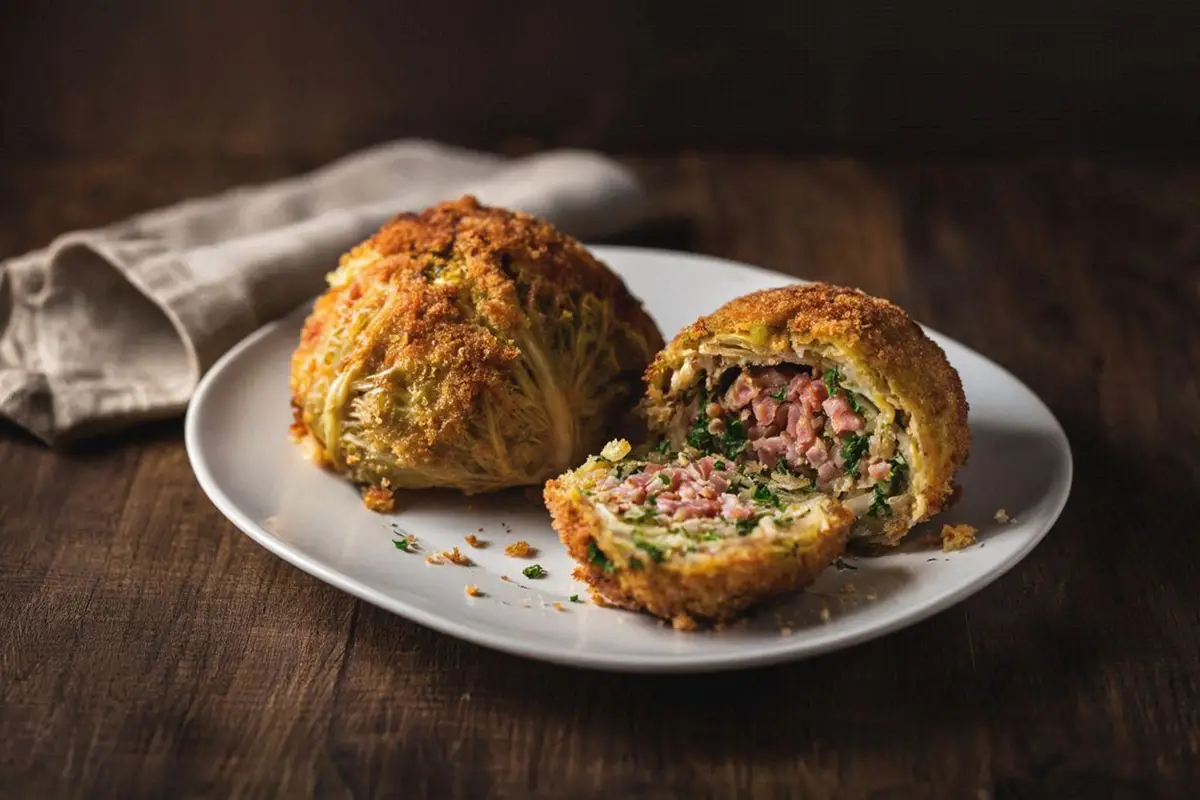
Breaded Savoy Cabbage Stuffed with Ham
Tender young savoy cabbage heads filled with ground ham, fried onion, and herbs, breaded and pan-fried until golden. A hearty Central European classic.
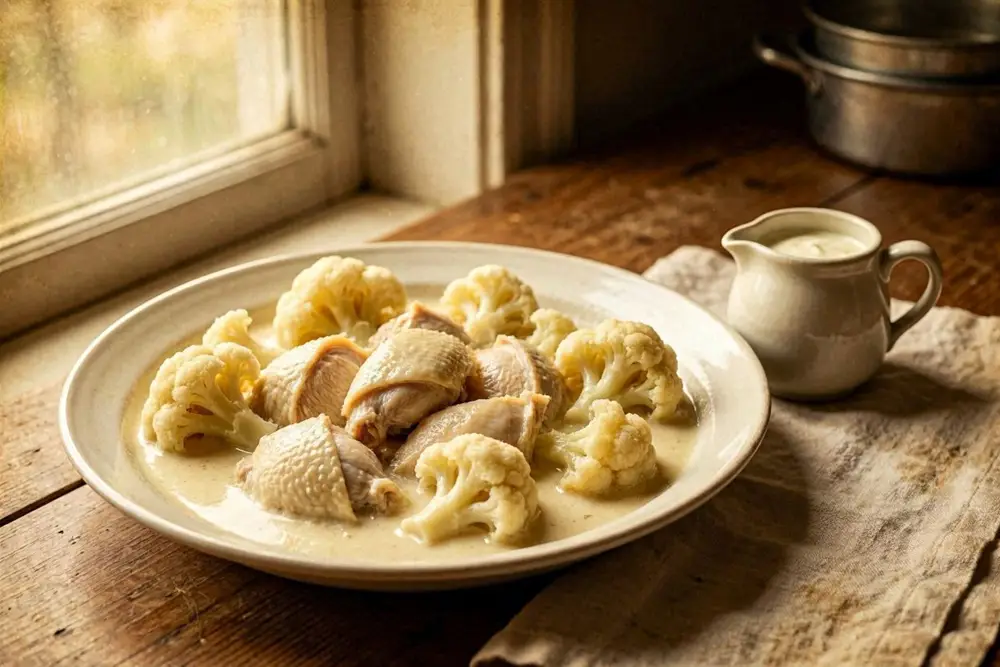
Chicken and Cauliflower in Sour Cream Sauce
A quartered young chicken cooked in a white sour cream roux, served with boiled cauliflower florets arranged around the meat and the cooking sauce poured over.
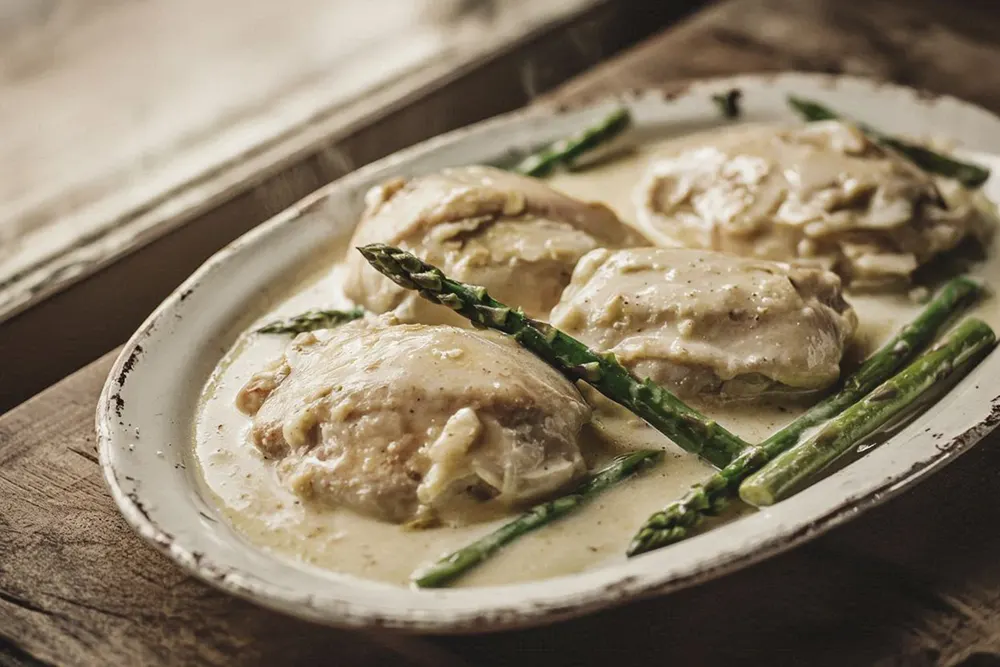
Chicken in Asparagus Sauce
A whole chicken poached in spiced broth, then finished in a silky velouté enriched with egg yolks and cream, garnished with tender asparagus tips.