Linden Leaf Sarma
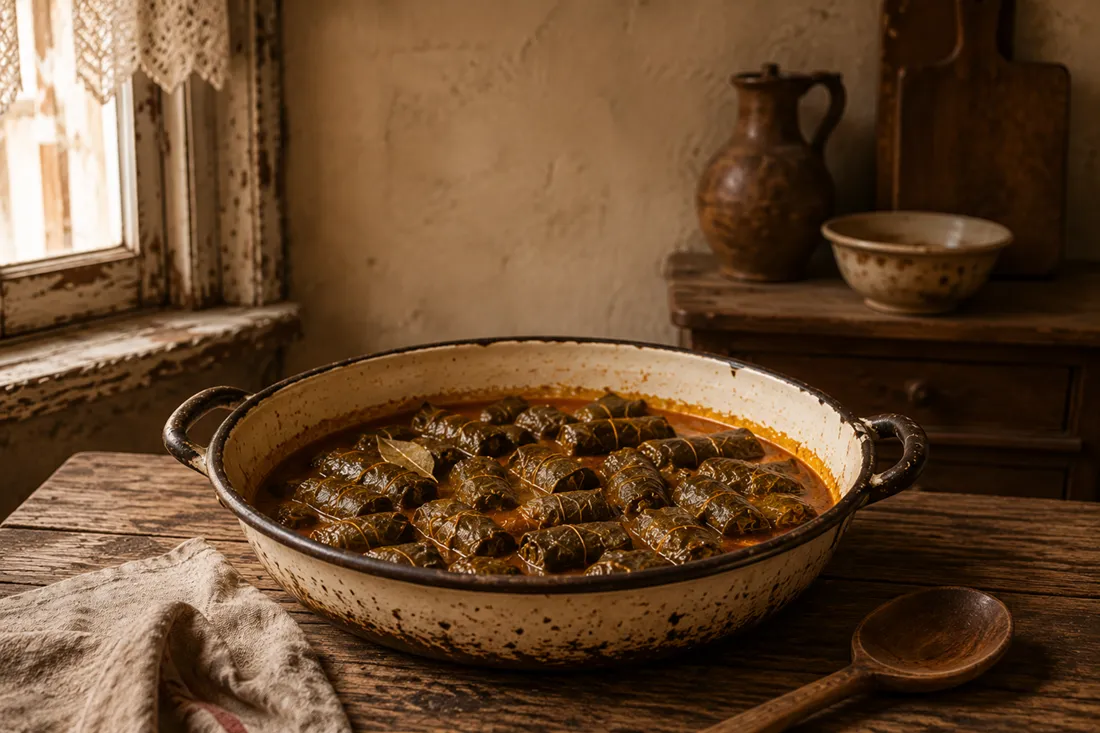
Small rolls of mixed ground meat and rice wrapped in young linden leaves, simmered gently and finished with a paprika roux.
Quick Summary
This sarma swaps cabbage or grape leaves for young linden leaves, wrapped around a mixed beef, veal, and pork filling with rice, then slow-simmered and finished with a paprika roux. Takes about 2 hours start to finish and serves 6.
Historical recipe
Modernised adaptation of an early 20th‑century source. Not independently kitchen-tested by Attic Recipes. Quantities, temperatures, and food safety guidance have been updated for a contemporary kitchen — results may vary and errors may exist. Nutritional values, where provided, are estimates only and have not been laboratory tested. Always follow current food safety guidelines for your region. If you have a health condition, allergy, or dietary requirement, consult a qualified professional before preparing this recipe.
Use of this recipe is entirely at your own risk and subject to our Terms of Service and Privacy Policy. Attic Recipes accepts no liability for any adverse outcome.
- Eggs
- Gluten
Additional notes
-
Caution
Correctly identify linden (Tilia) or horseradish (Armoracia rusticana) leaves before harvesting, and gather only young, tender leaves from unsprayed plants away from roadsides.
- 1
Sauté the chopped onion in 15g lard until softened.
- 2
Combine the sautéed onion with the ground beef, veal, and pork. The meat can be cooked briefly with the onion in the pan, or left raw and mixed in directly — either method works. If the meat was cooked, let it cool before continuing.
- 3
Once cooled (if cooked), season the meat mixture with salt and pepper, then mix in the egg and the parboiled rice.
- 4
Remove the stems from the young leaves, blanch them briefly in boiling water, then lift them out onto a board to drain.
- 5
Pair two small leaves together, undersides facing out. Spoon a small amount of filling onto each pair and roll into small, compact rolls.
Tip Keep the rolls on the smaller side — they hold together better through the long simmer than large ones do. - 6
Arrange the rolls in a pot, cover with 550ml water or bone broth, cover the pot, and simmer gently at the edge of low heat.
- 7
In a separate small pan, melt 15g lard and stir in the flour. Cook until the flour turns golden, then stir in the paprika if using.
Tip Work the roux until it's completely smooth before adding it to the pot — any lumps here will stay lumps in the finished sauce. - 8
Stir the roux into the pot with the sarma. Return to low heat and simmer for another 30 minutes, keeping the heat gentle so the rolls don't fall apart.
Nutrition Information per 1 serving (approx 235g, about 5-6 rolls with sauce)
Nutritional values are approximate estimates and may vary based on specific ingredients used, preparation methods, and portion sizes.
Serving Suggestions
Serve with soured milk (kiselo mleko) or a similar cultured milk drink on the side, as in the original.
About This Recipe
Long before cabbage or grape leaves became the default wrapper for sarma, home cooks reached for whatever tender leaf was available in the garden or nearby woods. This version uses young linden leaves — or, just as traditionally, young horseradish leaves — gathered in spring while they’re still soft enough to roll without tearing.
The filling itself is a familiar mix: ground beef, veal, and pork bound with rice and egg, seasoned simply, and rolled small enough to cook through evenly. What sets the dish apart is entirely in the wrapper, and in the paprika roux that finishes the sauce at the end.
Why It Works
Young linden and horseradish leaves are tender and slightly mucilaginous, which lets them wrap tightly around the filling without cracking — closer in behavior to a soft lettuce leaf than to a tough cabbage leaf, which is why the rolls stay small. Parboiling the rice before mixing it into the filling keeps it from swelling unevenly during the long simmer, and finishing with a roux rather than thickening the filling itself keeps the rolls intact while still giving the sauce body.
Modern Kitchen Tips
Blanch the leaves for no more than a minute — just enough to make them pliable. Over-blanching makes them fragile and prone to tearing once you start rolling. If you can’t source linden or horseradish leaves, this same method adapts well to any young, tender, non-toxic leaf traditionally used for wrapping.
A classic of early 20th century home cooking, preserved and adapted for the modern kitchen.
The Story Behind This Recipe
Historical Context
Wrapping a rice-and-meat filling in whatever tender leaf was in season was a resourceful variation on the more familiar cabbage or grape-leaf sarma, especially useful in spring before garden greens were ready. Home cooks of the period used young linden leaves — or, as an alternative, young horseradish leaves — gathered while they were still tender enough to roll without splitting. The rice was parboiled first so it wouldn't overcook during the long simmer, and the finished dish was traditionally served with soured milk on the side rather than mixed into the sauce.
Modern Kitchen Adaptation
The demitasse cup of parboiled rice from the original has been converted to 50g for reproducibility. Onion, salt, pepper, and the roux quantities were not given precise amounts in the original and have been estimated based on standard proportions for this type of filling and sauce. Ground meat cooked this way reaches a safe internal temperature well before the 75 minutes of simmering is complete, so no separate cooking-temperature adjustment was needed beyond the original timing.
This recipe is an independent modern adaptation developed from historical sources in the public domain. It is provided for informational and educational purposes only and does not constitute professional dietary, nutritional, or medical advice. Food preparation involves inherent risks. The reader assumes full responsibility for safe food handling, ingredient sourcing, and adherence to current local food safety guidelines. The site operator accepts no liability for outcomes resulting from the preparation or consumption of this recipe.
One recipe.
Every week.
You Might Also Like
More recipes from the same category
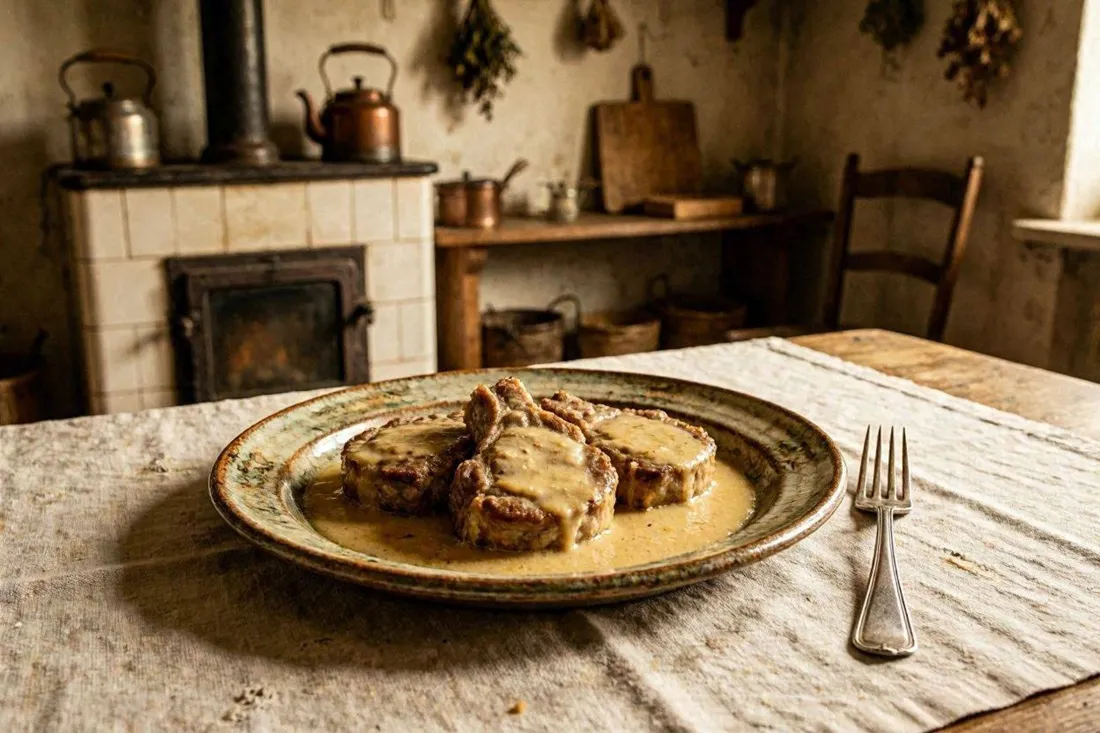
Braised Pork Chops in White Wine and Sour Cream Sauce
Pork loin chops braised with onion, carrot, parsley root, and celery root in white wine, then finished with a strained sour cream sauce.
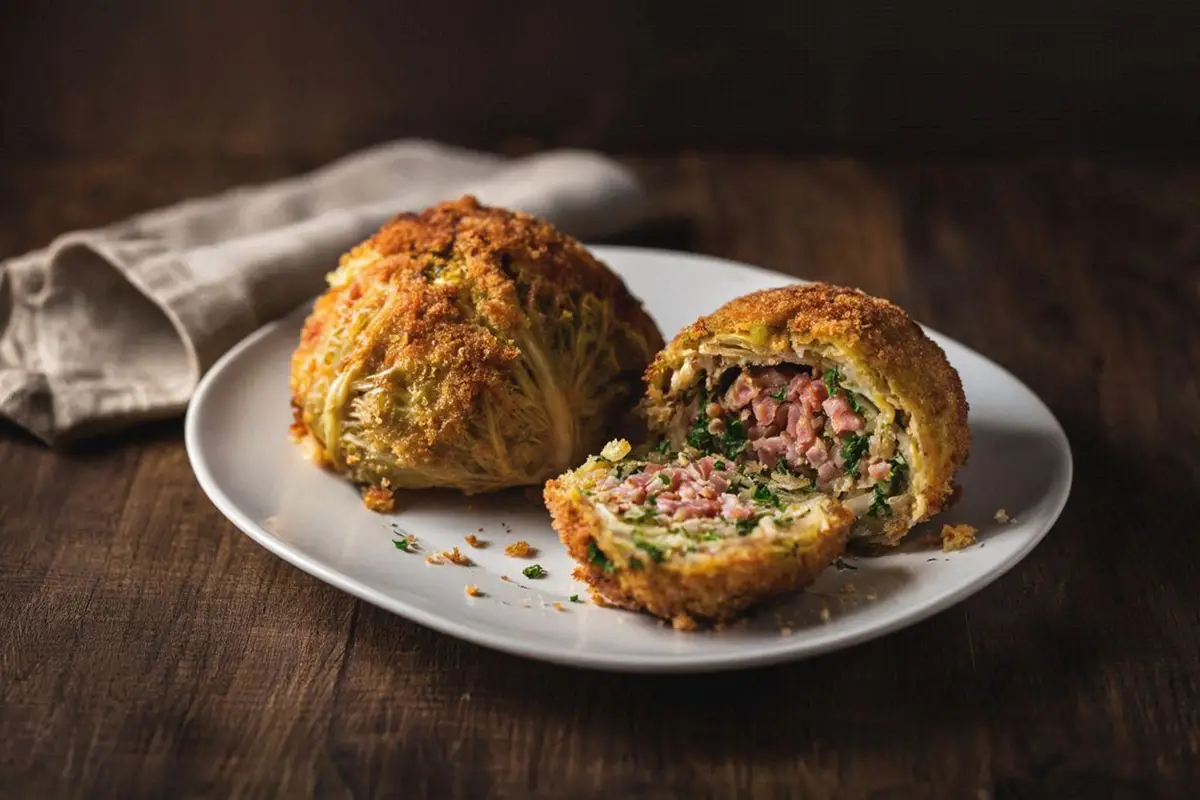
Breaded Savoy Cabbage Stuffed with Ham
Tender young savoy cabbage heads filled with ground ham, fried onion, and herbs, breaded and pan-fried until golden. A hearty Central European classic.
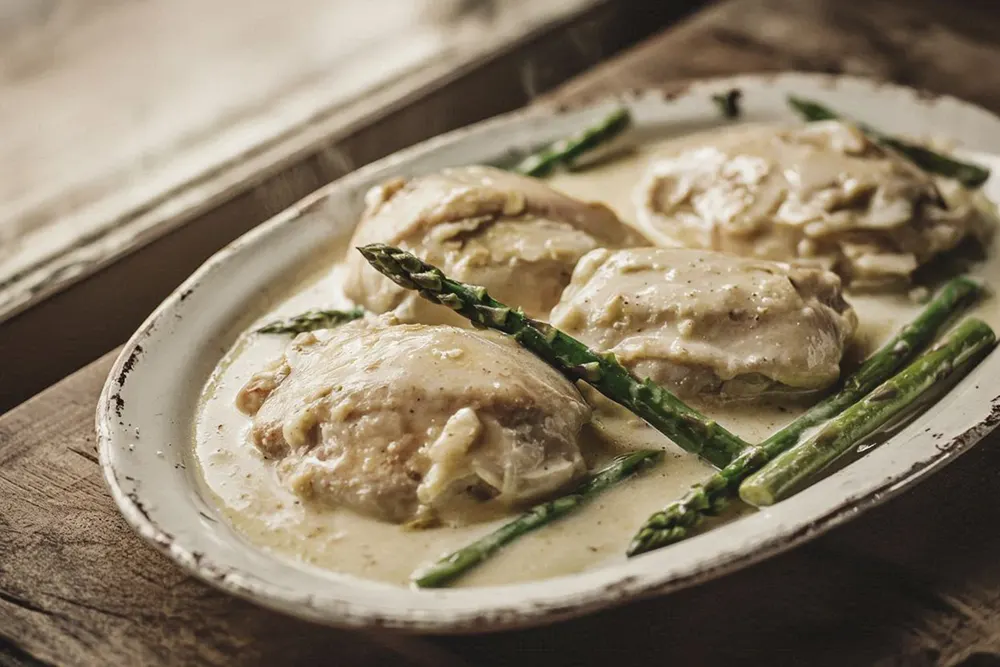
Chicken in Asparagus Sauce
A whole chicken poached in spiced broth, then finished in a silky velouté enriched with egg yolks and cream, garnished with tender asparagus tips.