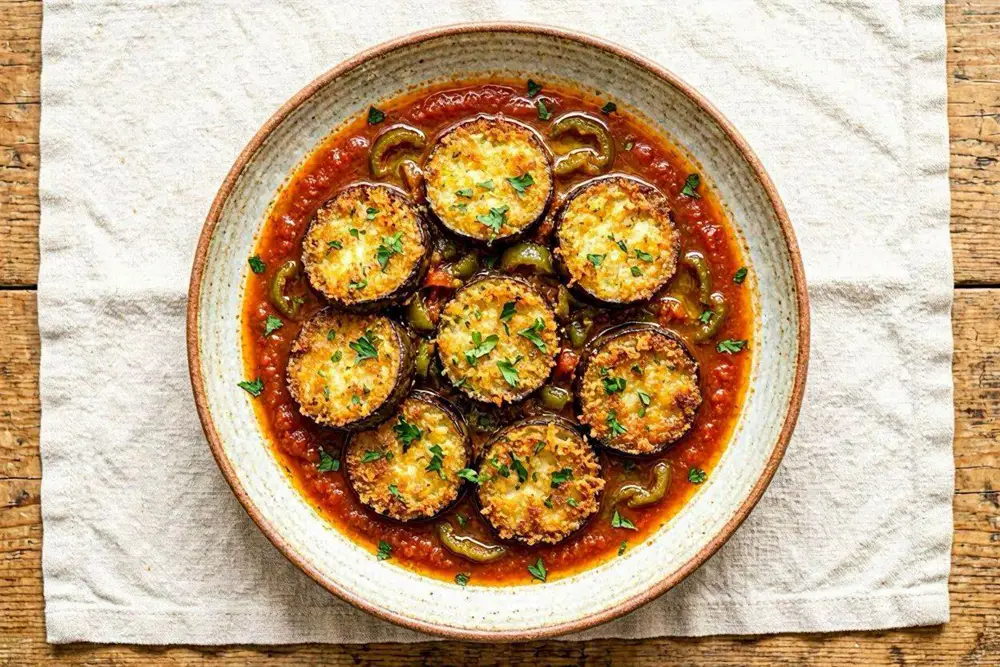
Lenten Eggplant & Tomato Stew
Thick rounds of salted, pan-fried eggplant simmered in a rich fresh-tomato sauce with green pepper and parsley — a traditional fasting dish served warm or cold.
Historical recipe
Modernised adaptation of an early 20th‑century source. Not independently kitchen-tested by Attic Recipes. Quantities, temperatures, and food safety guidance have been updated for a contemporary kitchen — results may vary and errors may exist. Nutritional values, where provided, are estimates only and have not been laboratory tested. Always follow current food safety guidelines for your region. If you have a health condition, allergy, or dietary requirement, consult a qualified professional before preparing this recipe.
Use of this recipe is entirely at your own risk and subject to our Terms of Service and Privacy Policy. Attic Recipes accepts no liability for any adverse outcome.
Additional notes
-
Note
This dish is cooked in significant quantities of oil. Those monitoring fat intake should note that eggplant absorbs oil readily during frying even after thorough degorging.
Oven-roast the eggplant slices brushed lightly with oil at 220°C for 20–25 minutes to reduce oil absorption substantially.
- 1
Slice eggplants into 2 cm rounds, leaving the skin on. Place in a deep bowl, sprinkle generously with salt, and toss to coat all sides. Leave to stand for 2 hours — the salt draws out bitter liquid and firms the flesh.
Tip The slices will release a significant amount of dark liquid. This step is essential for the texture of the final dish. - 2
After 2 hours, rinse the eggplant slices thoroughly under cold running water, changing the water several times. Press each slice firmly between your palms to squeeze out as much moisture as possible. Pat dry with a clean cloth.
- 3
Pour the oil into a wide, heavy saucepan or deep frying pan and heat over medium-high heat until shimmering. Arrange eggplant rounds in a single layer (work in batches if needed) and fry until deep golden brown and fully soft, turning once with a fork or tongs. Transfer the fried slices to a bowl and set aside.
Tip Do not crowd the pan — crowding steams the eggplant rather than frying it. The slices should be completely tender before you remove them. - 4
In the same pan with the remaining oil, add the peeled and chopped tomatoes, chopped green peppers, and parsley. Cook over medium heat, stirring occasionally, until the tomatoes break down completely and begin to fry in the oil rather than stew — approximately 10–15 minutes.
Tip The sauce is ready to move to the next step when it noticeably thickens and the oil starts to separate at the edges. - 5
Pour in approximately 100 ml of water and stir to loosen the sauce. Gently lower the fried eggplant slices back into the sauce, turning to coat each piece. The eggplant should be mostly submerged.
- 6
Reduce heat to low, cover partially, and simmer for 30 minutes. If the sauce reduces too quickly and risks scorching, add the remaining water in small splashes as needed. Do not add salt during cooking.
- 7
Remove from heat and taste. Season with salt only now — the eggplant has already absorbed salt from the degorging step and the sauce concentrates during cooking, so final seasoning should be minimal. Serve warm or allow to cool completely and serve cold.
Nutrition Information per 1 porcija (approx 280g)
Nutritional values are approximate estimates and may vary based on specific ingredients used, preparation methods, and portion sizes.
Serving Suggestions
Serve warm as a main Lenten dish with crusty bread to absorb the sauce, or allow to cool to room temperature and serve cold — the flavors deepen considerably after a few hours. Leftovers keep well refrigerated for 2–3 days and are often considered better the next day.
About This Recipe
Few dishes in the Central European Lenten repertoire are as quietly satisfying as this one. The technique is simple but deliberate: the eggplant is salted and pressed to draw out bitterness and moisture, then fried until deeply golden before being returned to a fresh tomato sauce to finish cooking slowly. The result is something far richer than the short ingredient list suggests — the eggplant absorbs the tomato, the tomato absorbs the oil, and the parsley perfumes everything.
What makes this recipe historically interesting is its restraint. There are no spices. No vinegar. No sugar. The seasoning rule — salt only at the very end — is practical wisdom, not an oversight: the degorging salt and the concentration of the sauce during the long simmer mean that the dish seasons itself through cooking.
The recipe works equally well warm from the stove and completely cold, which tells you something about the confidence of the original cook. Dishes that travel well across temperature are dishes that are fundamentally sound.
Why It Works
The two-hour salting step does more than remove bitterness. Salt draws water out of the eggplant cells by osmosis, partially collapsing the spongy interior structure. This means the flesh absorbs less oil during frying and holds its shape better during the subsequent simmer — without it, the eggplant would turn to mush long before the 30-minute cooking time was up.
Frying before simmering adds a second layer of structural reinforcement: the exterior firms and caramelizes, creating a surface that can withstand prolonged contact with acidic tomato without disintegrating. The final simmer is then less about cooking the eggplant (which is already done) and more about the exchange of flavors between the fried slices and the sauce.
Modern Kitchen Tips
When peeling tomatoes, score a shallow cross at the base of each one, blanch in boiling water for 30–60 seconds, then transfer immediately to cold water — the skin slips off cleanly. For the sauce, let the tomatoes cook long enough that the mixture noticeably tightens and the oil begins to pool at the edges before adding water; this brief “frying in oil” phase concentrates flavor and is what distinguishes this sauce from a simple tomato braise. The dish improves markedly after resting overnight in the refrigerator.
A classic of early 20th century home cooking, preserved and adapted for the modern kitchen.
The Story Behind This Recipe
Historical Context
Early 20th century Lenten recipes for eggplant frequently paired it with fresh tomatoes and herbs in this way — salt-drawing the eggplant first, then frying before simmering, was the standard approach to prevent the flesh from becoming waterlogged. The instruction to salt only at the end reflects the accumulated salinity from the degorging step, a practical technique that home cooks of the period understood intuitively. The original listing of what appears to be '2–3 green beans' alongside 1 kg of tomatoes is likely a transcription error or archaic usage; in Central European period cooking, this combination almost certainly refers to green bell peppers (then sometimes called by terms that could be confused with beans in older manuscripts), which were a common partner for eggplant and tomato in the region.
Modern Kitchen Adaptation
The original calls for frying in 'plenty of oil' without specifying a quantity; 200 ml is estimated as sufficient for shallow-frying in batches. For a lighter result, the eggplant can be brushed with oil and roasted at 220°C (425°F / 200°C fan) for 20–25 minutes, turning once, before adding to the sauce — this reduces total oil significantly while preserving the softness the original relies on. Green bell peppers are used here in place of what the original appears to list as 'green beans'; if you prefer a different reading of the source, 2–3 whole green beans are unlikely to contribute meaningfully to a dish of this scale. The dish is naturally vegan and gluten-free as written.
This recipe is an independent modern adaptation developed from historical sources in the public domain. It is provided for informational and educational purposes only and does not constitute professional dietary, nutritional, or medical advice. Food preparation involves inherent risks. The reader assumes full responsibility for safe food handling, ingredient sourcing, and adherence to current local food safety guidelines. The site operator accepts no liability for outcomes resulting from the preparation or consumption of this recipe.
One recipe.
Every week.
You Might Also Like
More recipes from the same category
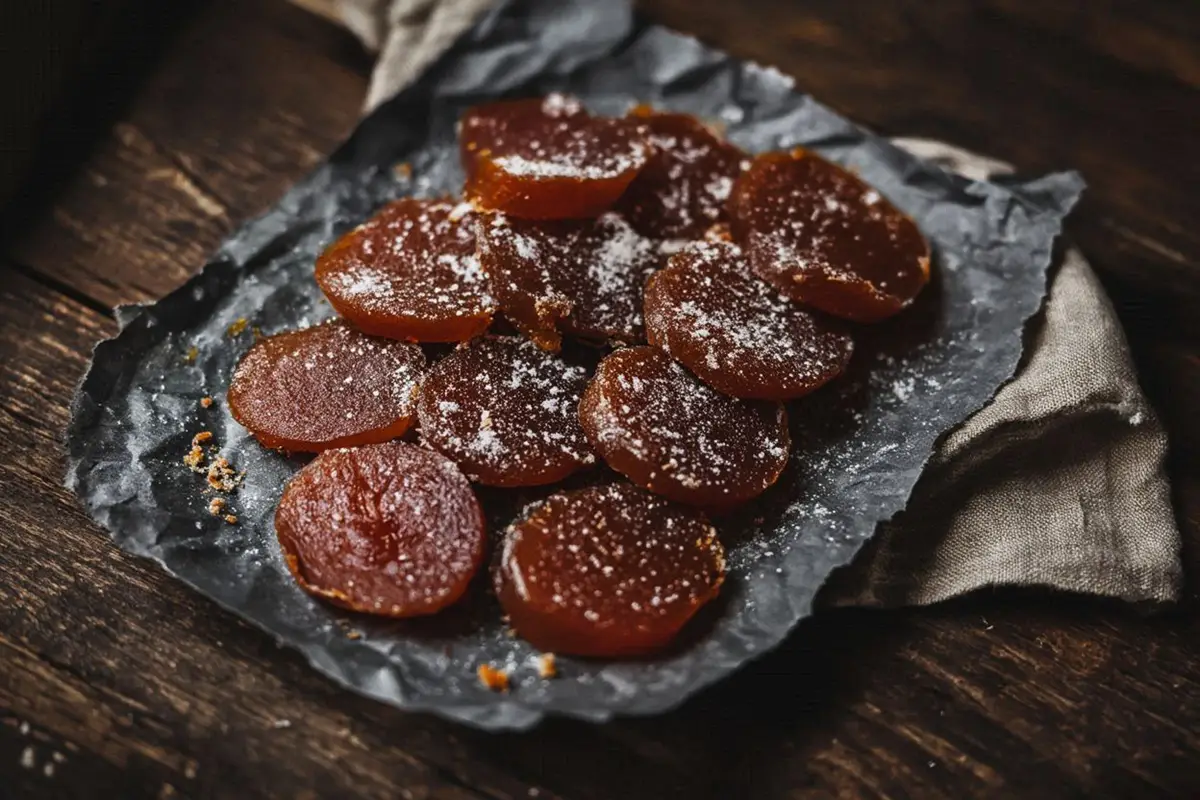
Apricot Fruit Paste
Sieved ripe apricots cooked with equal weight sugar and lemon juice, poured into molds and air-dried — from early 20th century Central European kitchens.
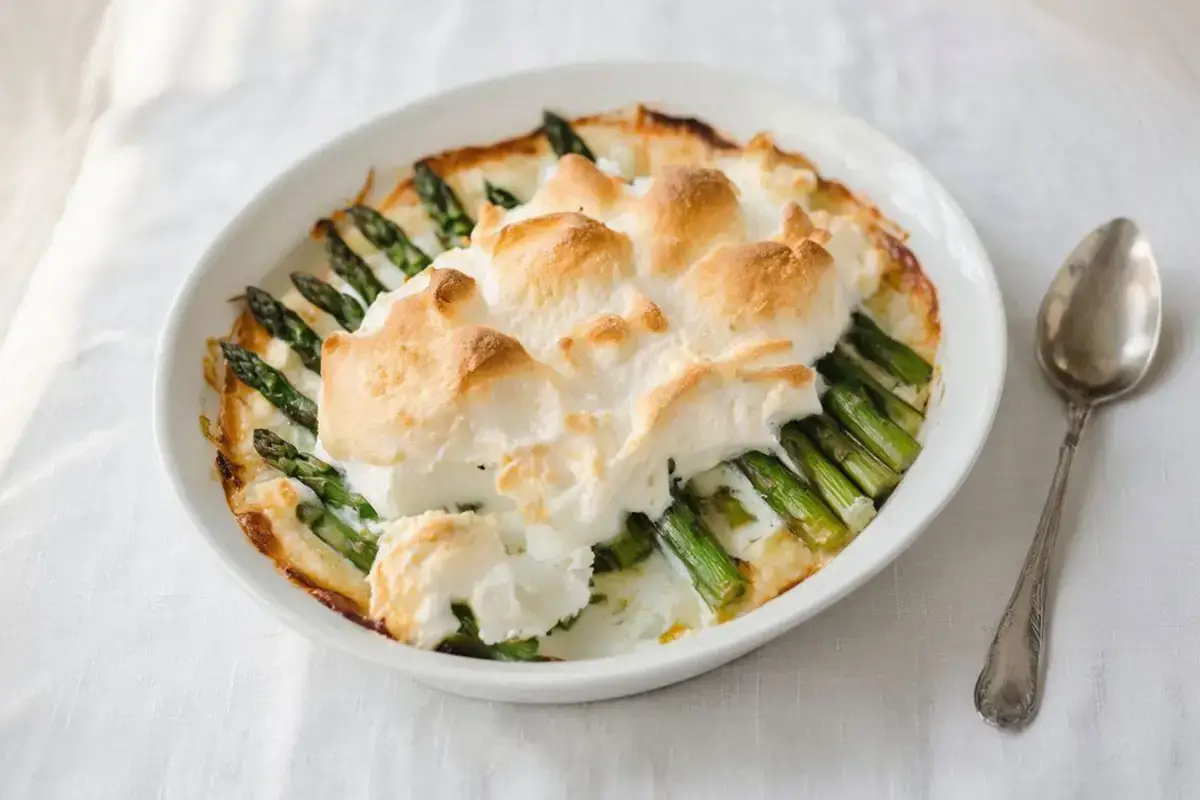
Asparagus Venetian Style
Fresh asparagus baked under a rich egg yolk cream sauce and a golden meringue-cheese topping. An elegant Central European appetizer.
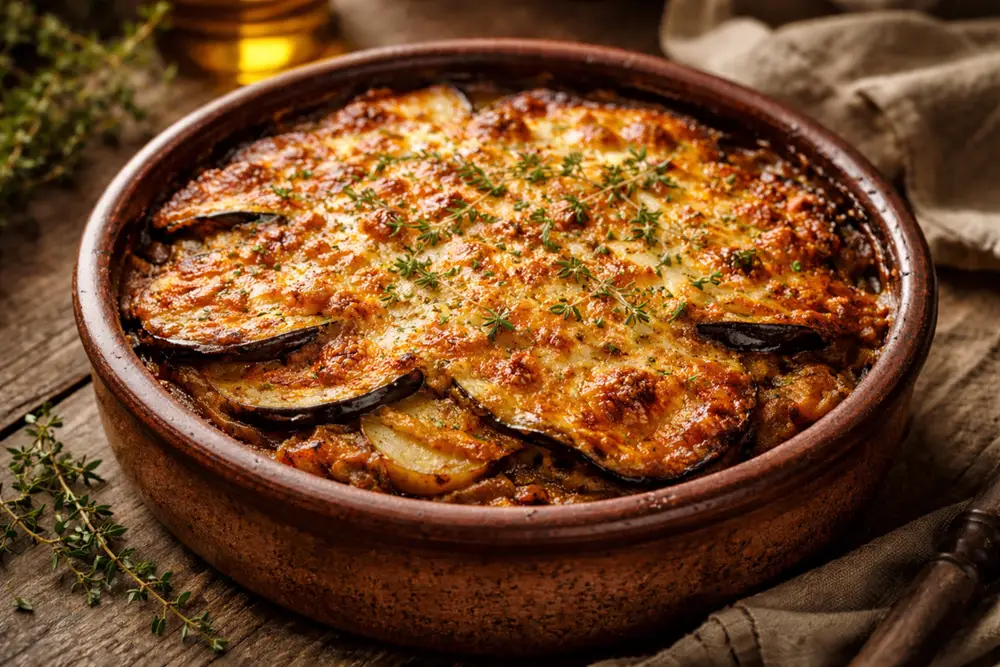
Baked Eggplant with Potatoes
A slow-baked layered casserole of eggplant, parboiled potatoes, golden fried onion, and melted cheese.