Leek with Ground Meat
Leek tubes filled with seasoned ground pork and sautéed leek centres, baked over a meat and tomato base. A deeply satisfying Central European oven dish.

Quick Summary
Leek tubes filled with seasoned ground pork and sautéed leek centres, baked over a meat and tomato base. A deeply satisfying Central European oven dish.
Historical recipe
Modernised adaptation of an early 20th‑century source. Not independently kitchen-tested by Attic Recipes. Quantities, temperatures, and food safety guidance have been updated for a contemporary kitchen — results may vary and errors may exist. Nutritional values, where provided, are estimates only and have not been laboratory tested. Always follow current food safety guidelines for your region. If you have a health condition, allergy, or dietary requirement, consult a qualified professional before preparing this recipe.
Use of this recipe is entirely at your own risk and subject to our Terms of Service and Privacy Policy. Attic Recipes accepts no liability for any adverse outcome.
Additional notes
-
Warning
Minced pork must reach an internal temperature of 71°C (160°F) throughout before serving. Use a meat thermometer inserted into the centre of a filled leek tube to verify — visual colour alone is not a reliable indicator. This applies particularly when serving to pregnant women, children under 18, elderly individuals, and people who are immunocompromised.
-
Note
Saturated fat content is approximately 10g per serving based on full-fat minced pork and lard. Those managing saturated fat intake may substitute lean minced pork (less than 10% fat) and neutral cooking oil; this reduces saturated fat to approximately 4–5g per serving.
- 1
Trim the leeks: remove and discard all green leaves, leaving only the white parts. Cut the white parts into pieces approximately 10cm long. Rinse well under cold running water, separating the layers slightly to flush out any grit between them.
- 2
Bring a large pot of unsalted water to a full boil. Add the leek pieces and blanch for 5 to 8 minutes — just long enough that the layers soften slightly and the centre can be pushed out cleanly. The leeks should still hold their shape and have some firmness. Drain and set aside to cool until comfortable to handle.
Tip Do not overcook at this stage — the leeks will cook further in the oven. They only need to be soft enough to core. - 3
Working with one leek piece at a time, use a fork or your fingers to push the inner layers out from one end, leaving only the two outermost layers intact as a firm tube. Set the cored tubes aside. Collect all the inner cores and chop them finely — these go into the meat filling.
Tip Thicker leek stalks give you sturdier tubes that are easier to fill and hold their shape better in the oven. If a tube tears, press it back together — it will hold once filled and baked. - 4
Heat the 1 tbsp of lard in a wide, heavy pan over medium heat. Add the 200g of finely chopped onion and fry, stirring occasionally, until softened and beginning to colour — about 8 minutes.
- 5
Add the 2000g of minced pork to the pan. Increase the heat to medium-high and fry together with the onion, breaking up the meat with a spoon, until the pork is cooked through and beginning to brown — about 15 minutes. The meat will release liquid first; continue cooking until this evaporates and the mixture begins to fry rather than steam.
- 6
Add the finely chopped leek centres to the browned meat. Stir to combine and continue frying for a further 5 minutes, until the leek pieces have softened into the meat and the mixture is cohesive. Season with the 1.5 tsp of salt, taste, and adjust. Remove from the heat and allow to cool slightly — the filling is easier to work with when it is warm rather than very hot.
Tip The filling should be well-seasoned at this stage — it will taste slightly less salty once baked inside the leek tubes. - 7
Preheat the oven to 180°C (350°F) / 160°C fan. Spoon a generous layer of the meat filling across the base of the casserole dish, spreading it evenly to cover the bottom.
- 8
Using a small spoon or your fingers, fill each leek tube firmly with the meat mixture. Pack the filling in well — loose filling will shrink back during baking. Arrange the filled tubes side by side on top of the meat base in the casserole dish. Spoon any remaining filling over and around the leeks.
- 9
Drizzle the second 1 tbsp of lard evenly over the filled leeks. Pour the 400ml of tomato juice over the leeks and around the edges of the dish — the liquid should come approximately halfway up the sides of the leek tubes.
- 10
Bake uncovered in the preheated oven for 45 to 55 minutes, until the top is lightly browned and the tomato liquid is bubbling and slightly reduced. Check that the internal temperature of the meat filling has reached at least 71°C (160°F) using a meat thermometer inserted into the centre of a filled leek tube before serving.
Tip If the top browns too quickly before the cooking time is up, cover loosely with foil for the remaining time.
Nutrition Information per 1 serving (approx. 350g)
Nutritional values are approximate estimates and may vary based on specific ingredients used, preparation methods, and portion sizes.
Serving Suggestions
Allow 2 stuffed leek tubes per person as a main course. Serve directly from the casserole dish with crusty bread for mopping the tomato juices. A simple cucumber salad or pickled vegetables alongside cuts through the richness of the meat. The dish reheats well the next day — add a splash of water or tomato juice before reheating to loosen the base.
About This Recipe
This dish belongs to the same family as stuffed peppers and cabbage rolls — a browned meat filling packed into a vegetable shell, baked in tomato liquid until everything melds together into something more than the sum of its parts. The leek is an unusual choice for stuffing, but it turns out to be a practical one: the blanched outer layers form a firm, naturally shaped tube, and the cored interior goes straight into the filling rather than being discarded.
The technique of incorporating the leek’s own centre into the meat mixture is worth noting. It gives the filling a mild, slightly sweet vegetable note that softens the richness of the pork, and it means nothing is wasted. The filling is fried until cohesive and well-seasoned before it goes anywhere near the leeks — this is not a dish where raw meat is stuffed and hoped for the best.
The base layer of meat at the bottom of the casserole is part of the recipe’s logic, not an afterthought. It keeps the stuffed tubes from sitting in liquid, gives them something to rest against, and produces a thick, concentrated meat-and-tomato layer at the bottom of the dish that is arguably the best part of the whole thing.
Why It Works
Blanching the leeks before coring serves two purposes: it softens the layers enough to push the centre out cleanly without tearing the outer tube, and it begins the cooking process so the leeks do not need a long time in the oven. The brief blanch — 5 to 8 minutes, no more — keeps the outer layers firm enough to hold the filling during the bake.
Frying the meat filling fully before stuffing is essential. Raw minced pork inside a leek tube, surrounded by tomato juice, would steam rather than brown, producing a pale, wet result. By the time the filling goes into the leek, it already has colour, flavour, and the right texture — the oven time is about bringing everything together, not cooking the meat from scratch.
The tomato juice keeps the dish moist during the long bake and provides acidity to balance the richness of the pork. It reduces slightly in the oven, concentrating around the base and producing a loose, flavourful sauce rather than a watery liquid.
Modern Kitchen Tips
Leek sizes vary considerably depending on the variety and season. Pre-packed white leek pieces sold by weight (typically 500g packs) are consistent and practical. For stuffing, thicker stalks are always preferable — they give you more to work with and the tubes hold their shape better. If a stalk is very thick, it may yield two 10cm tubes from a single white section.
A meat thermometer is the only reliable way to confirm the filling has reached a safe temperature throughout. Insert it into the centre of a filled leek tube at the thickest point — if it reads 71°C (160°F), the dish is ready.
Leftovers reheat well. Add a splash of tomato juice or water to the dish before covering with foil and reheating at 160°C for 15 to 20 minutes.
A classic of early 20th century home cooking, preserved and adapted for the modern kitchen.
The Story Behind This Recipe
Historical Context
Stuffed vegetable dishes built around a base of minced meat were a staple of early 20th century Central European household cooking, where the technique of using the vegetable itself as both container and flavouring was common. Leeks prepared this way — blanched, cored, and stuffed — appear in the same tradition as stuffed peppers and stuffed cabbage rolls, all relying on the same principle of a browned meat filling baked in a tomato-based liquid. Home cooks of the period worked with whatever leek varieties were available from kitchen gardens or markets, which were considerably smaller and more slender than the cultivated leeks sold today; a single stalk rarely yielded more than one usable tube of 10cm. The interior of the leek, rather than being discarded, was always incorporated into the filling — an economy of ingredients characteristic of the era.
Modern Kitchen Adaptation
Modern leeks are considerably larger than period varieties — a single thick stalk can yield two 10cm tubes, and pre-packed white leek pieces (typically sold in 500g packs) are a practical starting point. Thicker stalks are preferable as they produce sturdier tubes. The original recipe did not specify an oven temperature — 180°C (350°F) is an estimate based on the intended result of a lightly browned, bubbling tepsija-style bake. Tomato juice quantity was not stated in the source; 400ml is sufficient to keep the dish moist without making it soupy. Lard has been offered alongside neutral cooking oil as an alternative throughout; the dish works well with either, though lard gives a richer flavour to the meat base.
This recipe is an independent modern adaptation developed from historical sources in the public domain. It is provided for informational and educational purposes only and does not constitute professional dietary, nutritional, or medical advice. Food preparation involves inherent risks. The reader assumes full responsibility for safe food handling, ingredient sourcing, and adherence to current local food safety guidelines. The site operator accepts no liability for outcomes resulting from the preparation or consumption of this recipe.
One recipe.
Every week.
You Might Also Like
More recipes you'll enjoy
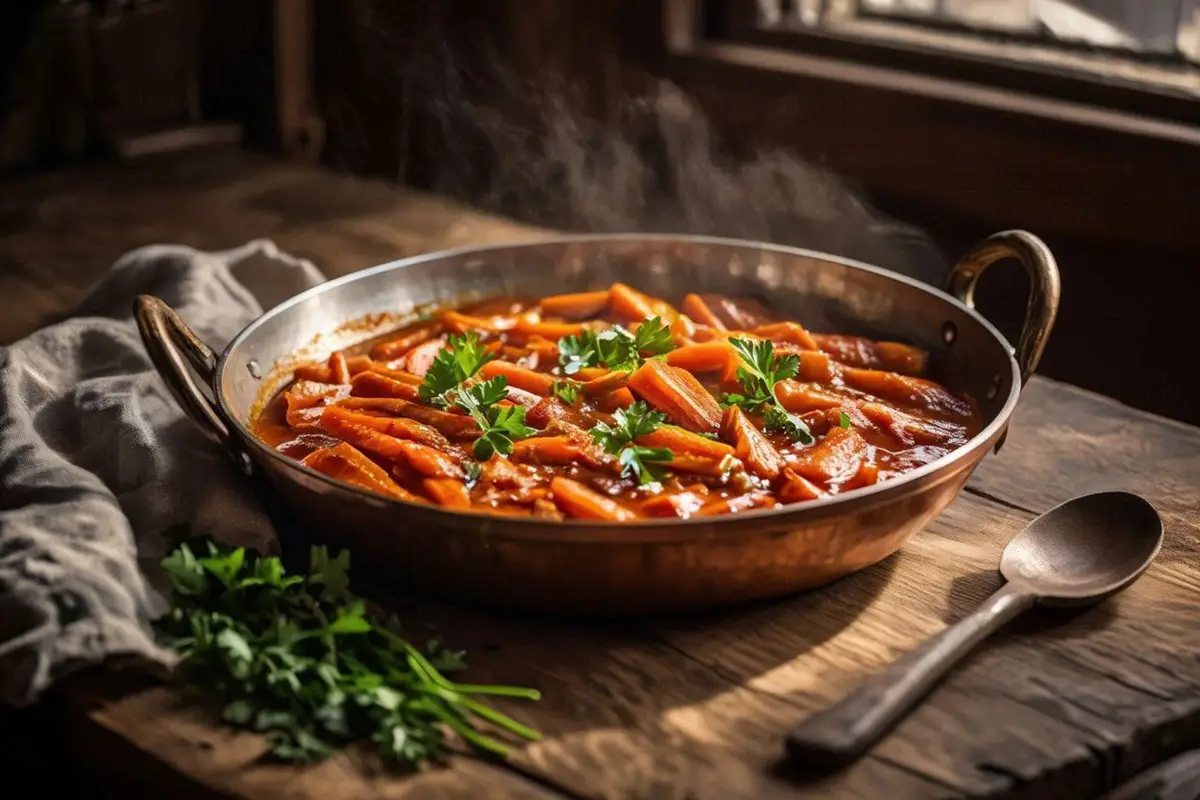
Carrot Stew with Tomatoes
Tender carrot strips slow-braised in bone broth with a touch of sugar, finished with tomato purée and parsley — a rich, old-fashioned vegetable stew.

Breaded Savoy Cabbage Stuffed with Ham
Tender young savoy cabbage heads filled with ground ham, fried onion, and herbs, breaded and pan-fried until golden. A hearty Central European classic.
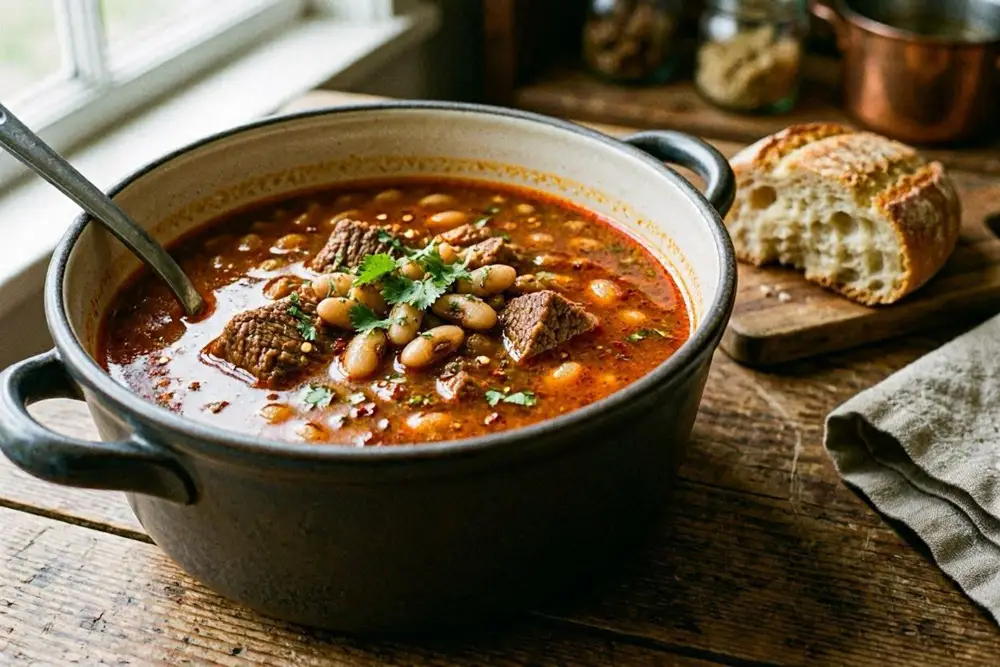
Bean Soup Cooked with Beef
White beans and beef shoulder slow-simmered with a bouquet garni, finished in the oven with a paprika-spiced pan roux. A deeply satisfying one-pot meal.