Layered Potato and Herring Bake with Sour Cream
Sliced potatoes layered with soaked salt-cured herring and an egg and sour cream custard, then baked under a buttered breadcrumb crust until golden.
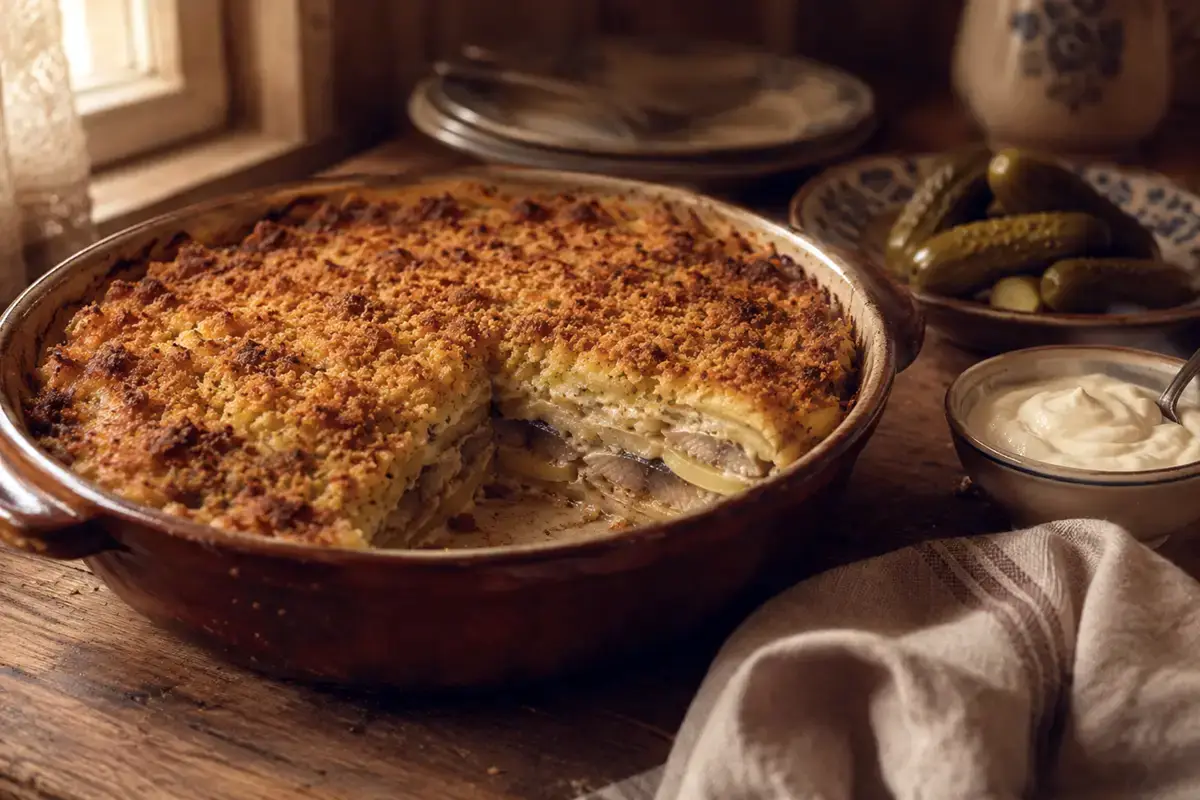
Quick Summary
Boiled potato slices are layered with milk-soaked salt-cured herring and an egg yolk and sour cream custard in a buttered, crumb-lined dish, then topped with crumbs and melted butter. It bakes in 45 minutes and serves six as a hearty main course.
Historical recipe
Modernised adaptation of an early 20th‑century source. Not independently kitchen-tested by Attic Recipes. Quantities, temperatures, and food safety guidance have been updated for a contemporary kitchen — results may vary and errors may exist. Nutritional values, where provided, are estimates only and have not been laboratory tested. Always follow current food safety guidelines for your region. If you have a health condition, allergy, or dietary requirement, consult a qualified professional before preparing this recipe.
Use of this recipe is entirely at your own risk and subject to ourTerms of Service andPrivacy Policy. Attic Recipes accepts no liability for any adverse outcome.
- Eggs
- Dairy
- Fish
- Gluten
Additional notes
Warning
The egg and sour cream custard and the cured herring must be baked until the center reaches at least 74°C (165°F). Cured fish is not cooked and can carry Listeria, so make sure it is heated through. This is especially important for pregnant women, children, older adults and immunocompromised people.
Note
This dish is high in saturated fat (about 12g per serving) from the butter, sour cream and egg yolks, so it is best eaten in moderate portions.
Note
Herring is naturally very salty, and a serving contains about 755mg of sodium even after soaking. Anyone limiting salt or with high blood pressure should take a smaller portion or soak the herring longer.
- 1
Rinse 4 salt-cured herring (about 450g fillets in total) under cold water and pick out any remaining bones. Put the fillets in 500ml whole milk, cover, and refrigerate for 1 hour to draw out the extra salt. Drain, pat dry, and chop finely, to about 5mm pieces.
TipTaste a small piece after soaking. It should be pleasantly salty, not harsh. If it is still too salty, soak for another 30 minutes in fresh milk. - 2
While the herring soaks, boil 1kg waxy potatoes in their skins for about 20 minutes, until almost tender, so that a knife meets slight resistance in the center. Drain, let them cool until you can handle them, peel, and slice about 4mm thick.
TipWaxy potatoes hold their shape. Do not cook them until fully soft, since they finish cooking in the oven. - 3
Preheat the oven to 180°C (350°F) / 160°C fan. Grease a deep 24 cm baking dish thoroughly with 20g softened butter, then coat the bottom and sides with 20g dry breadcrumbs.
- 4
Whisk 5 egg yolks in a bowl until smooth, then stir in 200ml sour cream until well combined.
- 5
Arrange one-third of the potato slices (about 330g), slightly overlapping, in an even layer over the bottom of the dish.
- 6
Scatter half of the chopped herring (about 225g) over the potatoes and pour half of the egg and sour cream mixture over it. Add a second third of the potatoes, then the remaining herring and the remaining egg and sour cream mixture. Finish with the last third of the potatoes as the top layer.
TipPress down gently on each layer so the custard seeps through. Keep the final layer of potatoes overlapping so it browns evenly. - 7
Sprinkle the top with the remaining 30g breadcrumbs and drizzle with 40g melted butter.
- 8
Bake for 45 minutes, until the top is golden and the custard is set and bubbling at the edges. The center should reach at least 74°C (165°F). Rest for 10 minutes before cutting and serving.
TipIf the crumbs brown too quickly, cover the dish loosely with foil for the last 15 minutes. Resting lets the custard firm up for clean slices.
Nutrition Informationper 1 serving (approx 265g)
Nutritional values are approximate estimates and may vary based on specific ingredients used, preparation methods, and portion sizes.
Serving Suggestions
Serve hot, cut into squares, with a crisp cucumber or green salad and a few pickles to cut the richness. Refrigerate leftovers within 2 hours, keep for up to 2 days, and reheat until steaming hot throughout (74°C / 165°F).
About This Recipe
This is a layered potato bake in which thin slices of boiled potato alternate with finely chopped salt-cured herring, all held together with a custard of egg yolks and sour cream. The top is finished with breadcrumbs and melted butter and baked until it forms a golden crust.
Herring that has been washed in milk loses its harshest saltiness and turns mild and savory, and the tangy sour cream suits the fish and the potatoes well. The result is a creamy, filling dish with distinct layers and a crisp top, a simple supper made from a handful of pantry ingredients.
It is best served hot from the oven, cut into squares, with something fresh and crisp on the side.
Why It Works
Salt-cured herring is very salty and firm, so washing it in milk draws out the excess salt and softens its flavor, and the milk’s fat and proteins help mellow the fishiness. Chopping the fish finely lets it spread through the layers instead of sitting in big pieces.
The yolk and sour cream mixture is a baked custard. As it heats it sets around the potatoes and fish and binds the layers, and the sour cream’s acidity balances the richness of the yolks and the salt of the herring. A buttered, crumb-lined dish and a crumb-and-butter top give the outside a crisp, golden finish.
Modern Kitchen Tips
Buy salt-cured or matjes-style herring, not herring pickled in vinegar or sold in a sauce. Taste a small piece after soaking and adjust the soaking time to suit your palate.
Slice the potatoes evenly, about 4 mm thick, so every layer cooks at the same rate. A mandoline helps.
Check the center of the bake with an instant-read thermometer, and let it rest for 10 minutes before cutting so the custard can set.
A classic of early 20th century home cooking, preserved and adapted for the modern kitchen.
The Story Behind This Recipe
Historical Context
Early 20th century recipes for baked potato and salted herring dishes typically relied on cured herring, which had to be cleaned of bones and washed in milk or water to draw out the salt before use. Home cooks of the period layered boiled, sliced potatoes with chopped fish and bound the layers with beaten egg and sour cream, finishing the top with breadcrumbs and melted butter, which turned a few pantry ingredients into a filling supper. The traditional approach did not specify the size of the baking dish, the amount of breadcrumbs or butter, the seasoning, or the oven temperature, describing the heat only as moderate.
Modern Kitchen Adaptation
'Herring' is read as salt-cured herring, which is why it is washed in milk; herring pickled in vinegar or sold in sauce is not suitable. The period wash in milk is made a 1-hour soak, estimated, so the fish is no longer harshly salty. Whole barrel-salted herring needs a longer soak in cold water first. The cream is read as sour cream: the period text mentions unwhipped cream and later sour cream, and 2 dl (200 ml, about 200 g) is used. The herring weight (about 450 g of fillets), the soaking milk (500 ml), the butter (60 g, divided 20 g and 40 g), the breadcrumbs (50 g, divided 20 g and 30 g), the dish size (24 cm and at least 6 cm deep), the oven temperature (180°C / 160°C fan) and the boiling time for the potatoes were not specified and have been estimated. No salt is added, because the herring supplies it, and pepper is optional. The layering follows the period order: potatoes, herring and custard, potatoes, herring and custard, and a last layer of potatoes. The dish is baked until the center reaches at least 74°C (165°F), so the egg custard and the cured fish are fully heated through.
Images on this site are AI-generated illustrations in a 1930s style; your finished dish may look different.
This recipe is an independent modern adaptation developed from historical sources in the public domain. It is provided for informational and educational purposes only and does not constitute professional dietary, nutritional, or medical advice. Food preparation involves inherent risks. The reader assumes full responsibility for safe food handling, ingredient sourcing, and adherence to current local food safety guidelines. The site operator accepts no liability for outcomes resulting from the preparation or consumption of this recipe.
One recipe.
Every week.
You Might Also Like
More recipes you'll enjoy
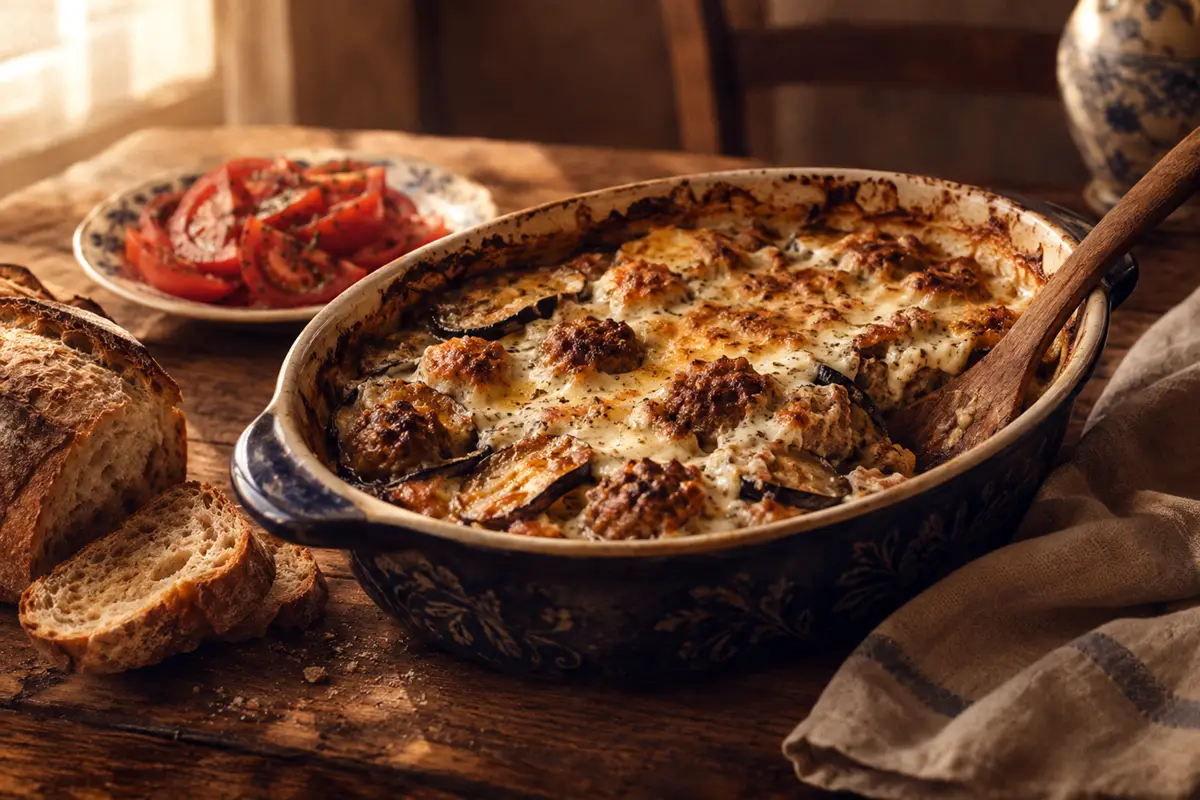
Pork Meatballs Baked in Roasted Eggplant and Sour Cream
Pork meatballs layered between roasted, minced eggplant and garlic, covered with sour cream and baked in a table-ready dish until bubbling.

Slow-Simmered Lamb Shoulder Pilaf with Tomato and Thyme
A one-pot pilaf of lamb shoulder simmered with tomato, peppers, garlic and thyme, then cooked with rice in a broth made from the bones.
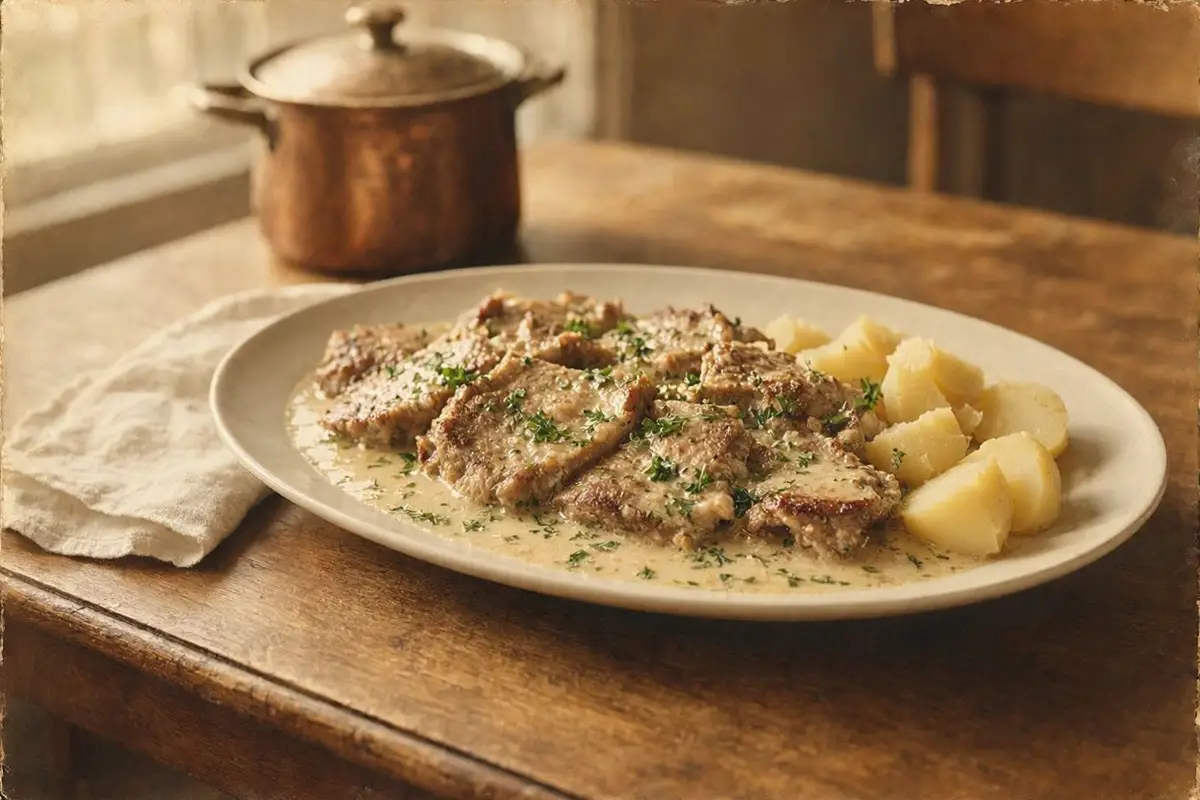
Braised Veal and Pork Cutlets in White Wine Sauce
Veal and pork cutlets braised slowly in white wine with onions, then covered with a silky parsley and egg sauce made from the cooking juices.