Kohlrabi Moussaka
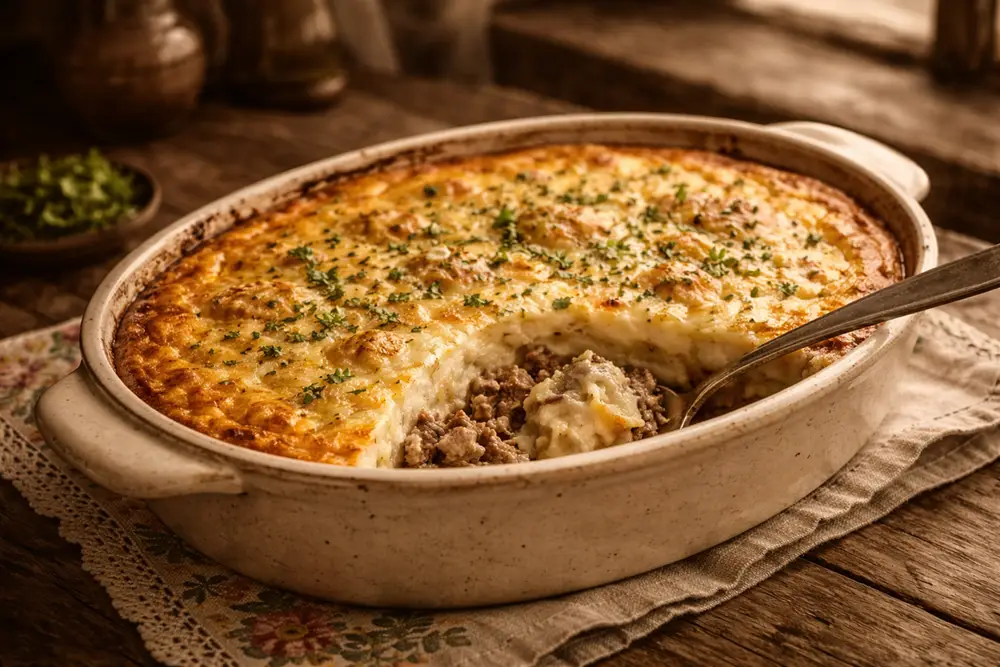
Layers of mashed kohlrabi and a seasoned mixture of minced meat and ham, baked under a creamy sour cream and egg topping until golden.
Quick Summary
Layers of mashed kohlrabi and a seasoned mixture of minced meat and ham, baked under a creamy sour cream and egg topping until golden.
Historical recipe
Modernised adaptation of an early 20th‑century source. Not independently kitchen-tested by Attic Recipes. Quantities, temperatures, and food safety guidance have been updated for a contemporary kitchen — results may vary and errors may exist. Nutritional values, where provided, are estimates only and have not been laboratory tested. Always follow current food safety guidelines for your region. If you have a health condition, allergy, or dietary requirement, consult a qualified professional before preparing this recipe.
Use of this recipe is entirely at your own risk and subject to our Terms of Service and Privacy Policy. Attic Recipes accepts no liability for any adverse outcome.
- Eggs
- Dairy
Additional notes
-
Warning
This dish contains raw minced meat, ham, and eggs before baking, finished with a sour cream and egg topping. Bake until the center reaches an internal temperature of at least 71°C (160°F) and the topping is fully set, particularly important for pregnant women, young children, elderly people, and immunocompromised individuals.
-
Note
This dish contains over 10g of saturated fat per serving from the meat, ham, sour cream, and milk. Individuals managing saturated fat intake, including pregnant women and those with cardiovascular conditions, may wish to enjoy this dish in smaller portions.
- 1
Melt the lard (15g) in a saucepan and add the chopped onion (200g). Fry until soft.
- 2
Add the mixed minced pork and beef (250g) to the pan and fry together with the onion until cooked through.
- 3
Remove the meat mixture from the heat and let it cool slightly. Stir in the pepper (1/4 tsp), salt (1 tsp), chopped parsley (8g), and 1 whole egg. Set aside.
- 4
Finely chop the ham (250g) and mix it into the meat mixture.
- 5
Peel and boil the kohlrabi (1.5kg) until soft, then mash it or pass it through a sieve. Season with salt (1/2 tsp) and stir in 30ml of the sour cream.
- 6
In a casserole dish, arrange alternating layers: a layer of mashed kohlrabi, then a layer of the meat mixture. Repeat, finishing with a final layer of kohlrabi on top.
- 7
In a bowl, whisk together the remaining sour cream (210ml), the milk (120ml), and the 2 remaining whole eggs until smooth. Pour this mixture evenly over the top of the casserole.
- 8
Bake at 200°C (400°F) / 180°C fan for about 45 minutes, until the topping is set and golden and the dish reaches an internal temperature of at least 71°C (160°F) at the center.
- 9
Serve the moussaka warm, accompanied by a tomato salad or a young green salad.
Nutrition Information per 1 portion (approx. 350g)
Nutritional values are approximate estimates and may vary based on specific ingredients used, preparation methods, and portion sizes.
Serving Suggestions
Serve warm, straight from the casserole dish, with a tomato salad or a young green salad on the side to balance the richness of the dish.
About This Recipe
Kohlrabi moussaka takes the layered casserole format familiar from many vegetable moussakas and builds it around kohlrabi rather than the more commonly used eggplant or potato. The mild, slightly sweet flavor of cooked and mashed kohlrabi pairs well with a rich filling of fried minced meat and chopped ham, and the whole dish is finished with a sour cream and egg topping that bakes into a soft, golden layer.
This is a hearty, satisfying dish, well suited to a main course on its own, though it’s traditionally served alongside something fresh and acidic — a tomato salad or a simple green salad — to cut through the richness of the meat, ham, and dairy topping.
Why It Works
Frying the onion and minced meat together before seasoning builds a deeper flavor base, while letting the mixture cool slightly before adding the egg prevents the egg from cooking prematurely and helps it bind the mixture together evenly. Mashing the boiled kohlrabi and seasoning it separately, with a small amount of sour cream worked in, gives the vegetable layers enough body to hold their shape between the meat layers. The sour cream, milk, and egg topping poured over the assembled casserole bakes into a custard-like layer that seals in moisture during cooking and gives the dish its characteristic golden top.
Modern Kitchen Tips
After boiling and mashing the kohlrabi, let it drain briefly in a sieve or press out any excess liquid with a spoon — kohlrabi holds a surprising amount of water, and skipping this step can leave the finished dish watery. When assembling the layers, press each one down gently to remove air pockets and help the casserole hold together when sliced. Check the topping near the end of baking; it should be golden and set, with no liquid pooling when the dish is gently tilted.
A classic of early 20th century home cooking, preserved and adapted for the modern kitchen.
The Story Behind This Recipe
Historical Context
Early 20th century recipes for this dish layered mashed kohlrabi with a seasoned mixture of minced meat and chopped ham in a casserole dish suitable for serving directly at the table, finished with a sour cream and egg topping poured over before baking. Home cooks of the period baked the dish until the liquid had fully evaporated and the top had set, without specifying an exact oven temperature or baking time.
Modern Kitchen Adaptation
The quantities of fat, onion, parsley, salt, pepper, sour cream, and milk were not specified with precise figures in the original and have been estimated based on standard proportions for this size of casserole. The oven temperature and baking time were not specified in the original and have been set at 200°C (400°F) / 180°C fan for 45 minutes, based on typical baking requirements for a layered casserole of this size topped with an egg and dairy mixture. Lard is retained as the historically correct fat; butter or a neutral oil in an equivalent quantity may be substituted.
This recipe is an independent modern adaptation developed from historical sources in the public domain. It is provided for informational and educational purposes only and does not constitute professional dietary, nutritional, or medical advice. Food preparation involves inherent risks. The reader assumes full responsibility for safe food handling, ingredient sourcing, and adherence to current local food safety guidelines. The site operator accepts no liability for outcomes resulting from the preparation or consumption of this recipe.
One recipe.
Every week.
You Might Also Like
More recipes you'll enjoy
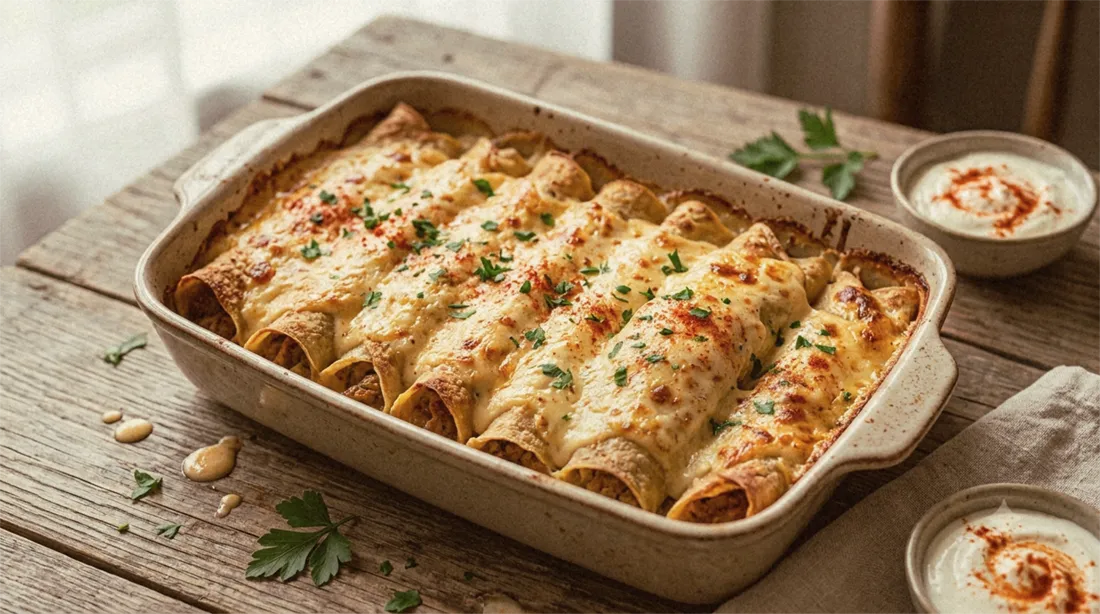
Gourmet Filled Crepes with Veal and Sour Cream
Thin crepes filled with braised, ground veal and onion, topped with a paprika-infused sour cream sauce and baked until golden.

Pickled Peppers Filled with Beans
Traditional casserole: roasted pickled peppers stuffed with creamy white beans, onions, and paprika. Hearty, economical, and deeply flavored.
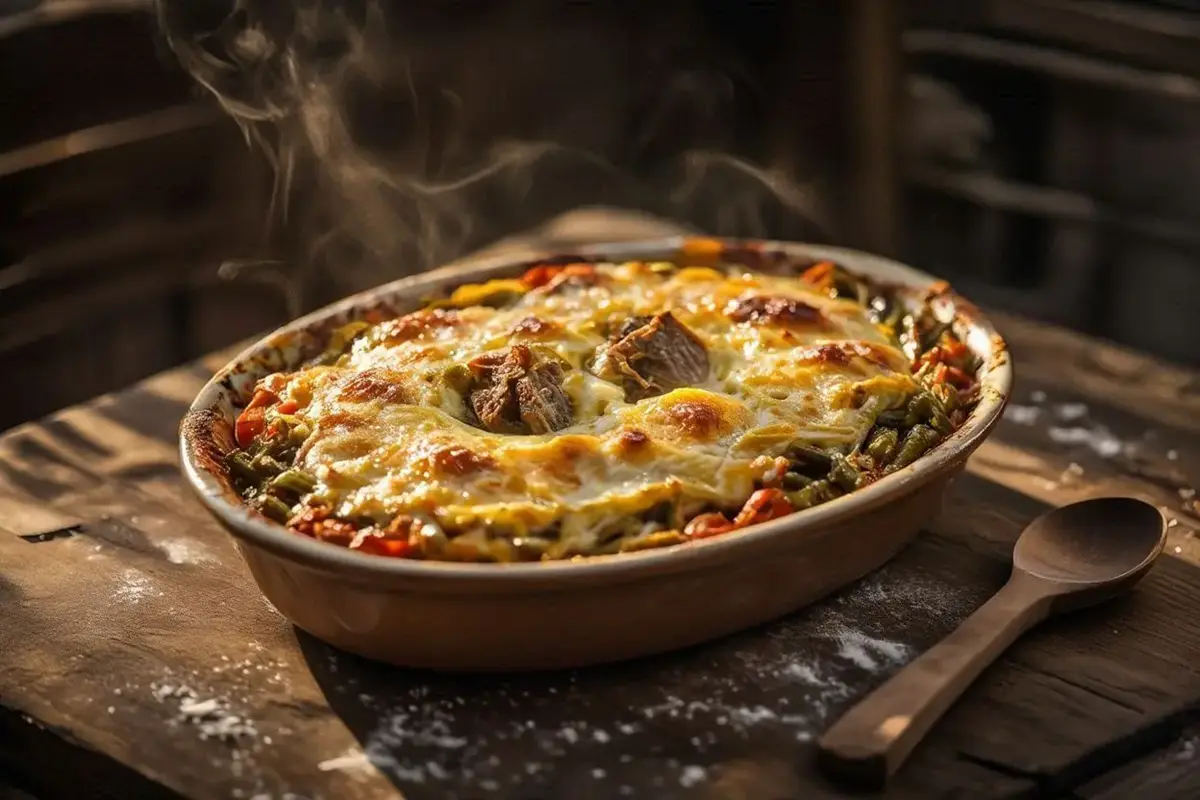
Green Bean Fluff
Traditional layered casserole with tender lamb, green beans, tomatoes, and a creamy lemon-sour cream topping.