Ground Beef Roast Steaks
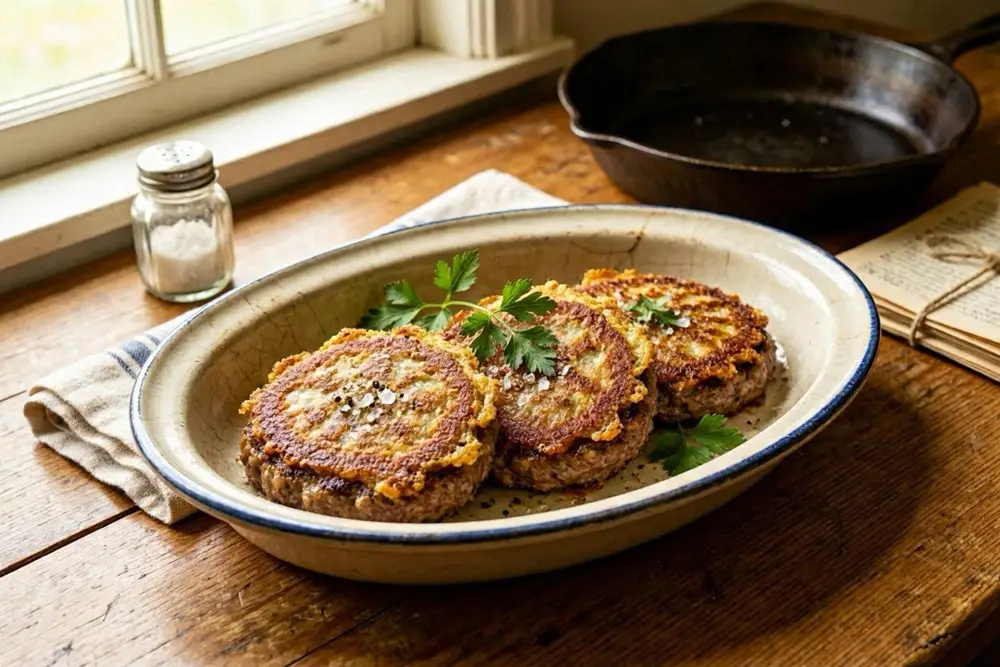
Freshly ground beef mixed with whipped butter, shaped into steaks, coated in flour and egg, and pan-fried in butter until golden — a Central European meat dish.
Historical recipe
Modernised adaptation of an early 20th‑century source. Not independently kitchen-tested by Attic Recipes. Quantities, temperatures, and food safety guidance have been updated for a contemporary kitchen — results may vary and errors may exist. Nutritional values, where provided, are estimates only and have not been laboratory tested. Always follow current food safety guidelines for your region. If you have a health condition, allergy, or dietary requirement, consult a qualified professional before preparing this recipe.
Use of this recipe is entirely at your own risk and subject to our Terms of Service and Privacy Policy. Attic Recipes accepts no liability for any adverse outcome.
- Eggs
- Dairy
- Gluten
Additional notes
-
Warning
This recipe uses freshly ground beef. Ground meat must reach an internal temperature of 71°C (160°F) throughout before serving — use an instant-read thermometer to verify. Unlike whole cuts, grinding distributes surface bacteria through the entire mass. Pregnant women, children under 18, elderly individuals, and immunocompromised persons are at higher risk from undercooked ground meat.
Use an instant-read thermometer to verify the internal temperature of every batch. Do not rely on colour alone — a golden crust does not guarantee the centre has reached a safe temperature.
-
Note
This recipe contains a high level of saturated fat — approximately 28g per serving — from butter in both the meat mixture and the frying fat. Individuals managing cardiovascular health or dietary fat intake should be aware of this.
- 1
Cut the 1000g beef chuck or round into chunks and pass through a meat grinder fitted with a medium die. If using a food processor, pulse in short bursts — do not over-process into a paste.
Tip Grinding your own meat from a whole cut produces a coarser, more open texture than pre-packaged mince, which holds together better when shaped. - 2
In a large bowl, beat the 250g softened butter with an electric mixer or whisk until pale, light, and foamy — approximately 3 minutes. Add the ground beef, 1 tsp salt, and 0.5 tsp black pepper. Mix thoroughly with your hands or a wooden spoon until completely combined and uniform.
Tip The butter must be genuinely soft, not melted. Melted butter will not aerate and will separate from the meat during frying. - 3
Divide the mixture into 10 equal portions of approximately 125g each. Shape each portion into an oval steak roughly 1.5cm thick. Place on a tray lined with baking paper and refrigerate for 10 minutes to firm up.
- 4
Set up a coating station: spread the 40g flour on a flat plate and beat the 2 large eggs in a shallow bowl. Working one at a time, dust each steak lightly in flour on all sides, shaking off any excess, then dip in the beaten egg until fully coated.
- 5
Melt the 60g butter in a large heavy-bottomed frying pan over medium-high heat. When the butter is foaming and just beginning to colour, add the steaks in a single layer — do not crowd the pan. Fry in batches if necessary.
Tip Crowding the pan lowers the temperature and causes the steaks to steam rather than fry — the crust will not form properly. - 6
Fry for 4–5 minutes on the first side without moving, until a deep golden-brown crust has formed. Flip and fry for a further 4–5 minutes on the second side. Check the internal temperature with an instant-read thermometer — the centre must reach 71°C (160°F) before removing from the pan.
Tip If the butter darkens too quickly, reduce the heat slightly and add a small knob of fresh butter to the pan. - 7
Remove the steaks from the pan and leave to rest on a warm plate for 3 minutes. Arrange on a serving platter and serve immediately with fresh salads.
Nutrition Information per 2 steaks (approx. 280g)
Nutritional values are approximate estimates and may vary based on specific ingredients used, preparation methods, and portion sizes.
Serving Suggestions
Serve hot directly from the pan with fresh cucumber salad, pickled vegetables, or a simple dressed green salad. A spoonful of the pan butter drizzled over the steaks before serving adds richness. Cold leftover steaks slice well and work in sandwiches the following day.
About This Recipe
What makes this recipe unusual is not the combination of ingredients — ground beef and butter are entirely unremarkable — but the ratio and the method. A quarter kilogram of butter to one kilogram of beef is not a seasoning quantity; it is a structural one. The butter is beaten to a foam first, then the meat is worked into it, so the fat is distributed as fine droplets throughout the mixture rather than sitting in separate pockets. The result, after frying, is a patty that is noticeably softer and richer inside than one made from plain ground beef, with a crust that stays crisp because the egg coating seals the surface.
This is a recipe from an era when home grinding of meat was standard practice. The instruction to grind a whole muscle cut of beef — not pre-packaged mince — reflects a domestic routine that has largely disappeared. Freshly ground meat from a whole cut behaves differently from commercial mince: it is coarser, drier, and holds its shape better when shaped into patties.
The dish is meant to be served alongside salads, which in the period would have meant dressed raw or pickled vegetables rather than leafy green salads in the modern sense.
Why It Works
Beating the butter to a foam before mixing it with the meat is not decorative — it changes the physical structure of the mixture. Aerated butter distributes as smaller, more even fat droplets when combined with the meat proteins, which means the fat melts more uniformly during cooking. The result is a more evenly tender interior and less risk of greasy pockets.
The egg-and-flour coating serves a dual function. The flour dries the surface of the patty and gives the egg something to grip; the egg sets quickly in the hot butter and forms a sealed crust that traps moisture inside. Without this coating, the butter in the meat mixture would simply melt out into the pan during frying, leaving a drier patty and a very rich pan sauce.
Chilling the shaped patties before coating is worth the ten minutes it requires. The cold firms the butter back into a solid, which makes the patties stiffer and easier to handle during the flour-and-egg stage without losing their shape.
Modern Kitchen Tips
- Verify internal temperature with an instant-read thermometer — 71°C (160°F) is non-negotiable for ground beef.
- Cast iron or stainless steel holds heat better than non-stick for this recipe — a good crust needs sustained high heat.
- Fry in batches of 4–5 steaks maximum to avoid dropping the pan temperature.
- Rest the steaks for 3 minutes after frying — the internal temperature continues to rise slightly and the juices redistribute.
- If the butter browns too fast, lower the heat and add a splash of neutral oil — oil raises the smoke point of the butter without significantly affecting flavour.
A rich pan-fried ground beef dish from early 20th century Central European home cooking, preserved and adapted for the modern kitchen.
The Story Behind This Recipe
Historical Context
Early 20th century recipes of this type typically called for grinding a whole cut of beef at home using a hand-cranked meat grinder — pre-ground mince was not commonly available in the domestic market. The technique of beating butter to a foam before combining it with the meat served two purposes: it distributed the fat evenly through the mixture and incorporated air, producing a lighter, more tender result than simply mixing cold butter into the meat. The ratio of one quarter kilogram of butter to one kilogram of meat was standard for enriched meat preparations of this period, where butter was used both as a flavouring and as a structural binder. The egg-and-flour coating was a common technique for pan-fried meat dishes of the era, producing a crust that sealed the surface and retained moisture during frying.
Modern Kitchen Adaptation
Freshly ground beef from a whole cut produces the best texture for this recipe; pre-packaged supermarket mince is a practical substitute but tends to be finer and wetter, which can make the mixture soft and harder to shape. If using store-bought mince, refrigerate the mixture for 20 minutes before shaping. The quantity of butter in the meat mixture — 250g per kilogram of beef — is historically accurate and produces a very rich result; it can be reduced to 150g for a less indulgent version without significantly affecting the structure. Lard was a common alternative to butter for pan-frying in the period; a neutral oil with a high smoke point (sunflower, rapeseed) is the modern substitute if butter is not preferred for frying. Internal temperature must reach 71°C (160°F) — see safetyWarnings.
This recipe is an independent modern adaptation developed from historical sources in the public domain. It is provided for informational and educational purposes only and does not constitute professional dietary, nutritional, or medical advice. Food preparation involves inherent risks. The reader assumes full responsibility for safe food handling, ingredient sourcing, and adherence to current local food safety guidelines. The site operator accepts no liability for outcomes resulting from the preparation or consumption of this recipe.
One recipe.
Every week.
You Might Also Like
More recipes from the same category

Baked Fish with Tomatoes
Whole fish baked over ripe tomatoes with generous olive oil and lemon — a simple, fragrant Central European oven dish.
Baked Tongue in Green Sauce
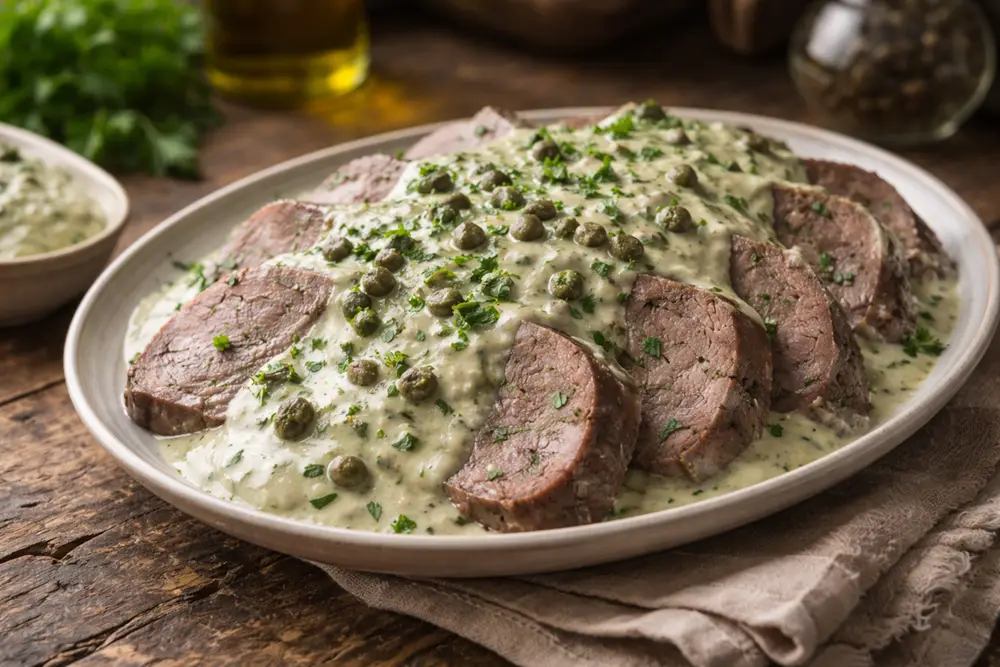
Beef tongue braised with herbs, larded with bacon and roasted until golden, served in a green sauce of capers, anchovy, parsley and sour cream.
Beef Kidney with Wine
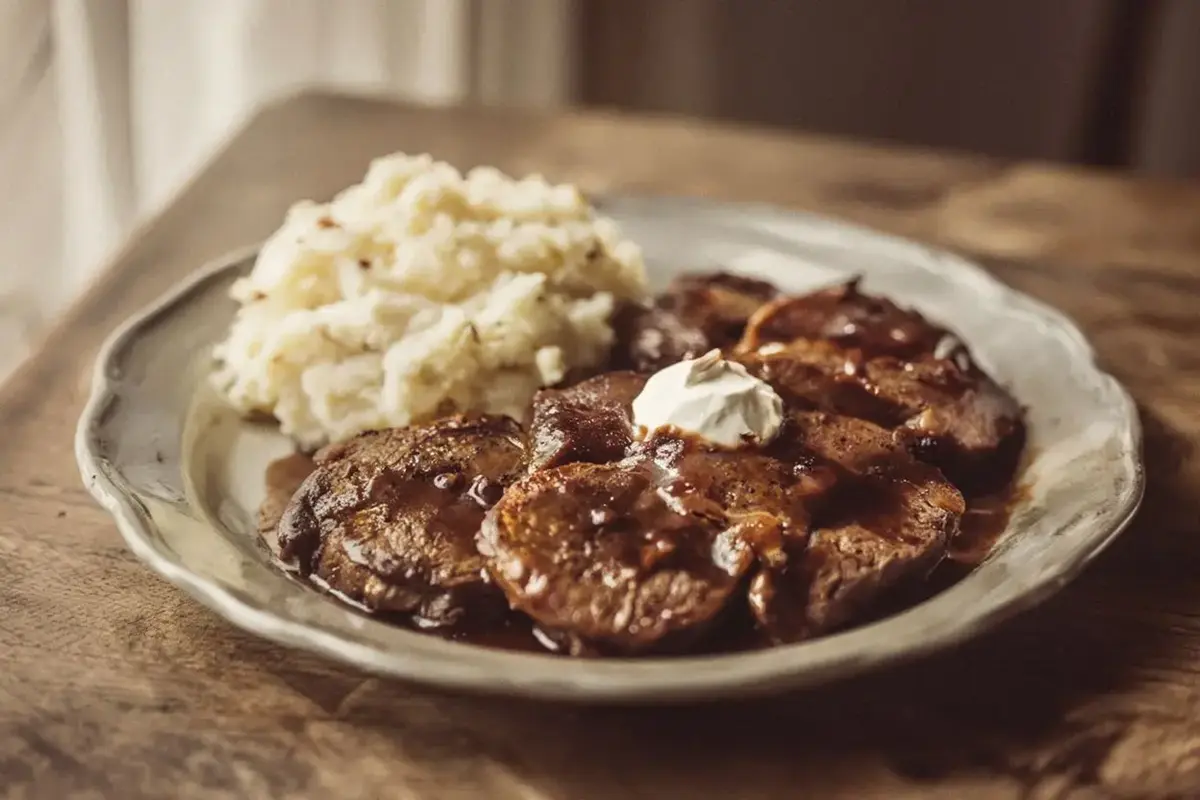
Beef kidney marinated in red wine, braised with herbs, finished with sour cream. Tender, rich, and deeply flavored.