Grilled Stuffed Trout
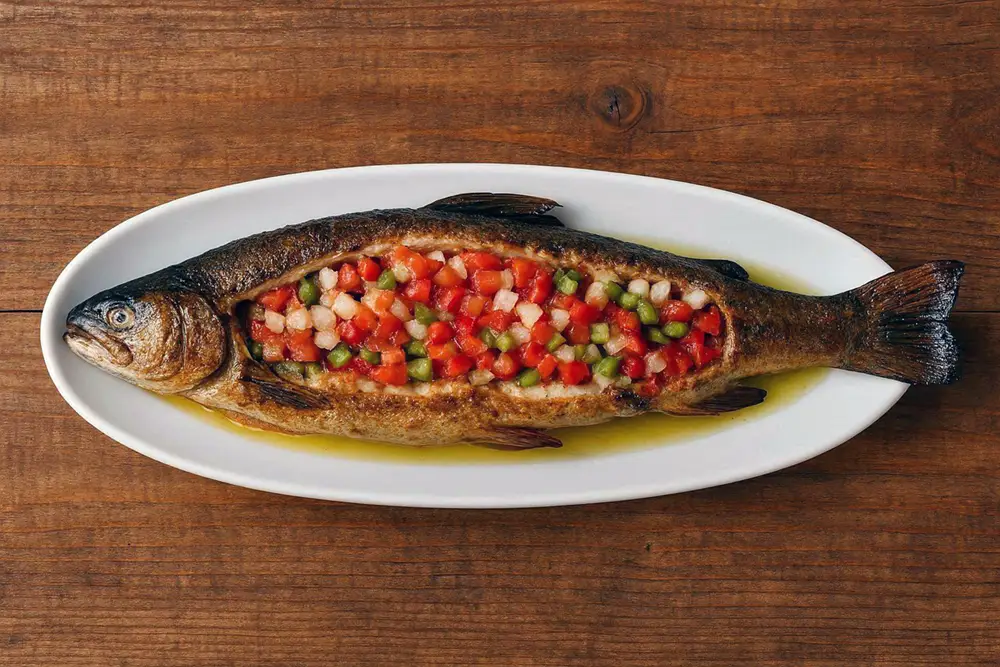
Whole grilled trout, deboned at the table, packed with a raw vegetable filling and finished with a pour of boiling oil and fresh lemon juice.
Historical recipe
Modernised adaptation of an early 20th‑century source. Not independently kitchen-tested by Attic Recipes. Quantities, temperatures, and food safety guidance have been updated for a contemporary kitchen — results may vary and errors may exist. Nutritional values, where provided, are estimates only and have not been laboratory tested. Always follow current food safety guidelines for your region. If you have a health condition, allergy, or dietary requirement, consult a qualified professional before preparing this recipe.
Use of this recipe is entirely at your own risk and subject to our Terms of Service and Privacy Policy. Attic Recipes accepts no liability for any adverse outcome.
- Fish
Additional notes
-
Warning
Boiling oil is poured directly over the fish in step 5. Use a long-handled ladle, keep bystanders away from the work area, and stand back when pouring — the oil will spit loudly on contact with moisture. Risk of serious burns if oil contacts skin.
-
Note
This dish is served cold after refrigeration. Ensure the trout reaches an internal temperature of 63°C (145°F) during grilling before deboning and stuffing. Pregnant women, children under 18, elderly, and immunocompromised individuals should verify doneness with a thermometer.
- 1
Rinse the trout thoroughly under cold running water. Pat the skin completely dry with paper towels — dry skin is essential to prevent sticking on the grill. Season lightly with salt on both sides.
Tip Do not oil the fish directly. Instead, oil the grill grate well just before placing the fish down. - 2
Heat the grill to high. Place the trout whole on the grill grate. Grill without moving until the skin releases naturally from the grate — approximately 5–7 minutes per side depending on thickness. Flip once only. The fish is ready when the flesh is opaque through to the bone and the internal temperature reaches 63°C (145°F). Transfer carefully to a long shallow platter.
Tip Only attempt to flip the fish when the skin releases on its own. Forcing it early tears the skin and the fish will fall apart. - 3
While the fish is still hot, use a sharp knife to cut along the entire length of the backbone from head to tail. Carefully lift out the spine in one piece. Remove any residual membrane or entrails from the cavity. Season the exposed flesh generously with salt and freshly ground black pepper.
- 4
Combine the finely chopped onion, tomato, green pepper, and parsley in a bowl. Do not cook or salt the mixture — it goes in raw. Pack the vegetable filling tightly into the cavity where the bone and entrails were removed.
Tip The rawness of the filling is intentional — the boiling oil in the next step flash-cooks the vegetables in place, softening their texture while preserving their fresh flavour. - 5
Pour the oil into a small saucepan and heat over high heat until it reaches a full rolling boil and begins to smoke slightly. Working carefully and quickly, pour the boiling oil evenly over the entire stuffed fish — you will hear a loud sizzle as the oil hits the filling and skin. Immediately pour the lemon juice over the fish.
Tip Stand back slightly when pouring — the oil will spit on contact with any moisture in the filling. Use a long-handled ladle or pour from a height for safety. - 6
Gently fold the top fillet back over the filling so the fish appears whole again. Allow to cool completely to room temperature, then refrigerate. Serve cold.
Tip This dish is always served cold — do not serve it warm. The cooling period allows the oil, lemon, and vegetable juices to fully penetrate the flesh.
Nutrition Information per 1 porcija (approx 320g)
Nutritional values are approximate estimates and may vary based on specific ingredients used, preparation methods, and portion sizes.
Serving Suggestions
Serve cold as a main course with crusty bread and a crisp green salad. The dish improves after several hours in the refrigerator as the oil and lemon fully absorb into the flesh. Leftovers keep well refrigerated for up to 2 days.
About This Recipe
This is one of the more technically striking recipes in the early 20th century Central European repertoire — not because it is complicated, but because its central technique is so counterintuitive. The fish is grilled whole, deboned, and then stuffed with entirely raw vegetables. The cooking of the filling happens in a single dramatic moment: boiling oil poured directly over the stuffed fish, which sizzles loudly on contact and flash-cooks the onion, tomato, and pepper inside the cavity without any further heat source.
The result is then left to cool completely before serving. This is not an oversight — the cooling is the point. The oil and lemon juice settle into the flesh, the vegetables soften further as they cool, and what emerges from the refrigerator is a composed, aromatic dish that looks entirely intact from the outside.
It is the kind of recipe that rewards a cook who trusts the process.
Why It Works
The deboning step, done while the fish is still hot, is far easier than it sounds. A freshly grilled trout releases its spine cleanly when the fish is at temperature — the connective tissue has relaxed and the bone lifts away in one piece. Attempting the same on a cold fish is a frustrating exercise in broken flesh.
The boiling oil serves two distinct purposes. It flash-cooks the raw filling without an oven or second cooking vessel, and it re-crisps the skin on contact. The immediate addition of lemon juice stops the oil from continuing to cook and adds acidity that balances the richness of the oil-soaked flesh. The fold back to “whole” is purely presentational — but in a dish this visually composed, presentation is part of the recipe.
Modern Kitchen Tips
The single most important variable is grill temperature: it must be high enough that the skin sears and releases cleanly rather than steaming and sticking. If using a cast-iron grill pan indoors, preheat it empty for at least five minutes before the fish goes in. For the oil pour, a small heavy-bottomed saucepan gives better control than a frying pan. Have the lemon juice ready to pour immediately after the oil — the sequence should take no more than ten seconds.
A classic of early 20th century home cooking, preserved and adapted for the modern kitchen.
The Story Behind This Recipe
Historical Context
Early 20th century versions of this dish specified pouring a full litre of oil over the fish, which is almost certainly a misprint — a quarter litre (250ml) produces the same flash-cooking effect without drowning the dish in oil. Home cooks of the period would have grilled the fish whole over wood or charcoal, deboned it at the table, and used the technique of pouring boiling fat over raw fillings as a standard method for cooking in place without a second heat source. The dish was always finished cold, suggesting it was prepared ahead and brought to the table as a composed presentation piece.
Modern Kitchen Adaptation
Oil quantity corrected from the stated 1 litre to 250ml — a quarter litre (¼ litre) is the almost certain original intent based on an OCR fraction misread (1/4 → 1). A gas or electric grill may be used in place of wood or charcoal; a cast-iron grill pan on the highest heat setting is a suitable indoor alternative. The internal temperature target of 63°C (145°F) is added as a modern safety reference — the original relied on visual doneness only. All vegetable quantities are estimated; the original listed ingredients without weights.
This recipe is an independent modern adaptation developed from historical sources in the public domain. It is provided for informational and educational purposes only and does not constitute professional dietary, nutritional, or medical advice. Food preparation involves inherent risks. The reader assumes full responsibility for safe food handling, ingredient sourcing, and adherence to current local food safety guidelines. The site operator accepts no liability for outcomes resulting from the preparation or consumption of this recipe.
One recipe.
Every week.
You Might Also Like
More recipes from the same category
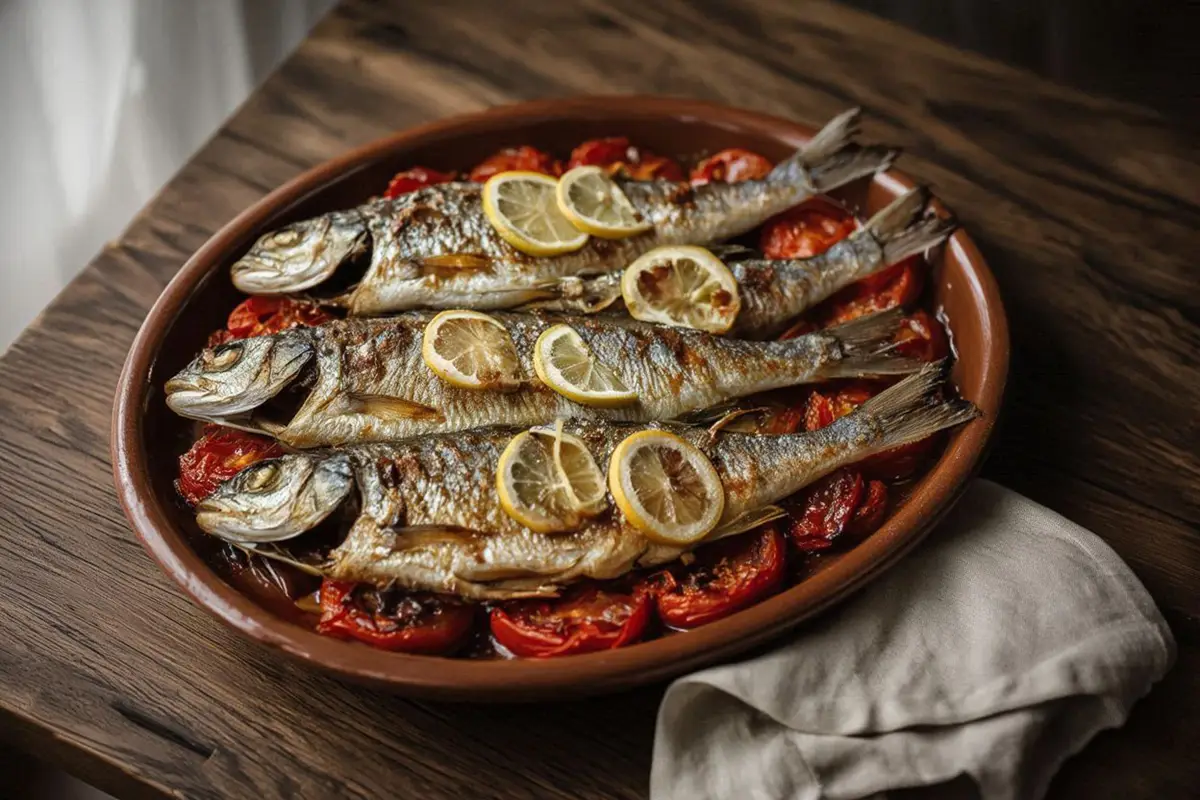
Baked Fish with Tomatoes
Whole fish baked over ripe tomatoes with generous olive oil and lemon — a simple, fragrant Central European oven dish.
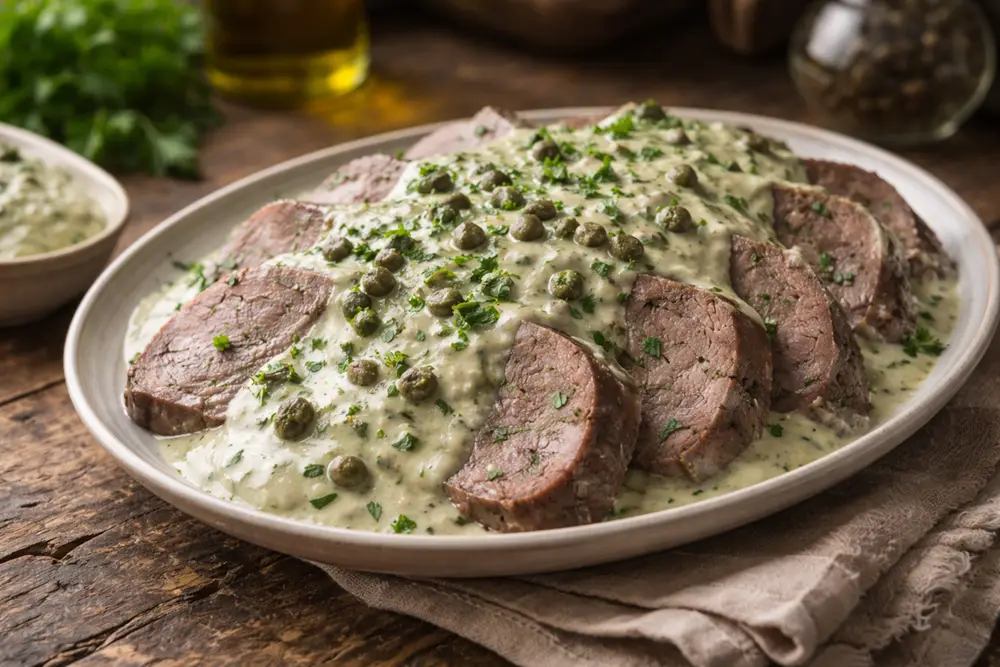
Baked Tongue in Green Sauce
Beef tongue braised with herbs, larded with bacon and roasted until golden, served in a green sauce of capers, anchovy, parsley and sour cream.
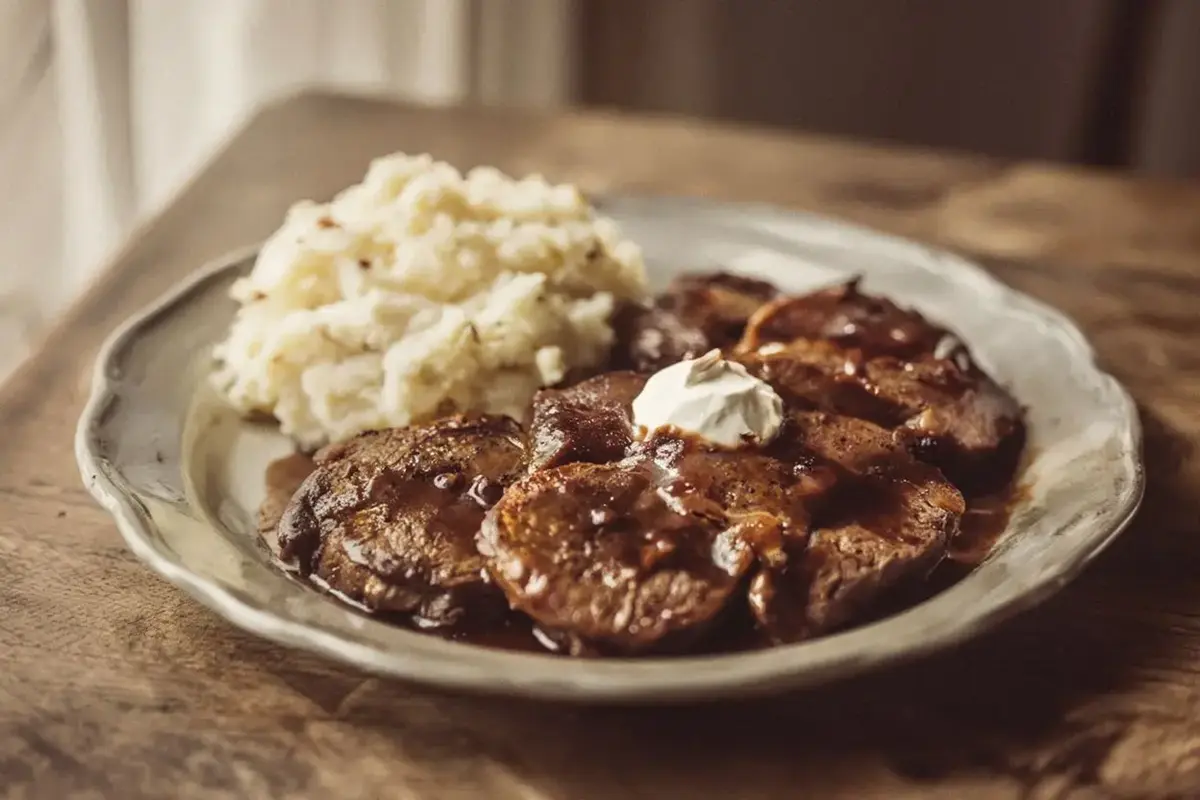
Beef Kidney with Wine
Beef kidney marinated in red wine, braised with herbs, finished with sour cream. Tender, rich, and deeply flavored.