Grilled Stuffed Eggplant
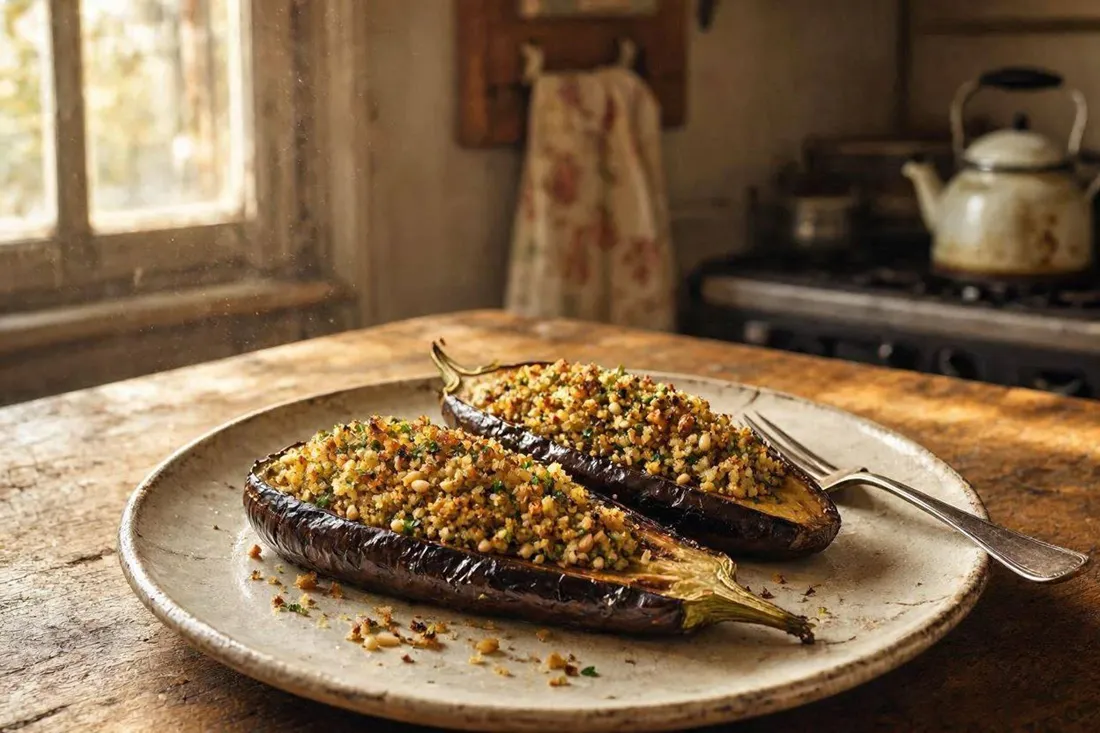
Eggplant halves salted to draw out bitterness, stuffed with a garlic and parsley breadcrumb filling, and finished on the grill.
Quick Summary
Halved eggplants are salted to pull out their bitter liquid, then filled with a simple breadcrumb, garlic, and parsley mixture, rested in oil, and grilled until soft. About an hour total, mostly passive resting time, and traditionally served alongside fried fish.
Historical recipe
Modernised adaptation of an early 20th‑century source. Not independently kitchen-tested by Attic Recipes. Quantities, temperatures, and food safety guidance have been updated for a contemporary kitchen — results may vary and errors may exist. Nutritional values, where provided, are estimates only and have not been laboratory tested. Always follow current food safety guidelines for your region. If you have a health condition, allergy, or dietary requirement, consult a qualified professional before preparing this recipe.
Use of this recipe is entirely at your own risk and subject to our Terms of Service and Privacy Policy. Attic Recipes accepts no liability for any adverse outcome.
- Gluten
- 1
Halve the eggplants lengthwise and scoop out the flesh with a spoon, leaving a shell with a fair amount of flesh next to the skin.
- 2
Salt the eggplant shells generously and let them sit in a bowl for 30 minutes.
- 3
Drain off the dark liquid that has collected and pat the shells dry.
- 4
Combine the breadcrumbs, garlic, and parsley. Season with salt and pepper and mix well.
- 5
Pack the filling into the eggplant shells.
- 6
Place the filled halves in a baking dish and drizzle generously with oil, letting them sit until the eggplant has absorbed most of it.
- 7
Lift the eggplant halves out of the dish, arrange them on the grill, and cook over medium-high heat, turning occasionally, until softened and lightly charred.
- 8
Serve warm alongside fried fish, or on its own as a vegetable side.
Nutrition Information per 1 serving (approx 330g, 2 eggplant halves)
Nutritional values are approximate estimates and may vary based on specific ingredients used, preparation methods, and portion sizes.
Serving Suggestions
Serve warm alongside fried fish, as in the original, or as a standalone vegetable side with crusty bread.
About This Recipe
This dish takes a straightforward approach to eggplant: halve it, draw out the bitterness with salt, then fill the shell with something simple enough to let the eggplant itself remain the point. Breadcrumbs, garlic, and parsley do the job here — no cheese, no meat, nothing that would turn it into a heavier course.
The resting step in oil before grilling is what gives the dish its character. Rather than oiling the eggplant just before it hits the heat, it sits and absorbs oil first, which keeps the flesh from drying out over the open flame.
Why It Works
Salting cut eggplant draws out the compounds responsible for its bitterness, along with excess moisture, through osmosis — the same principle used in many vegetable preparations that call for a resting period before cooking. Letting the shells sit in oil afterward allows the now-porous flesh to absorb fat before it meets direct heat, which helps it grill through evenly instead of scorching on the outside while staying underdone within.
Modern Kitchen Tips
If your eggplants are a modern, less bitter variety, the 30-minute salting step can be shortened somewhat — taste a small piece of the raw flesh before deciding. A charcoal or wood-fired grill will give the closest result to the original “žar” (open flame), but a gas grill or even a hot cast-iron grill pan works well too.
A classic of early 20th century home cooking, preserved and adapted for the modern kitchen.
The Story Behind This Recipe
Historical Context
Salting vegetables to draw out bitter liquid before cooking was a standard technique in early 20th century Central European kitchens, applied to eggplant well before the milder modern varieties became common. A simple filling of breadcrumbs, garlic, and parsley was a frugal, flexible way to add flavor and substance to grilled vegetables, and this dish was traditionally paired with fried fish rather than served as a standalone course, though home cooks of the period noted it held up well on its own too.
Modern Kitchen Adaptation
The scooped eggplant flesh isn't used in the filling in the original method; rather than discard it, it can be repurposed into another dish. The oil quantity has been estimated, since the original specifies only that the eggplant should 'drink up' the oil rather than giving an amount — not all of it is absorbed or eaten, and the nutrition figures below account for roughly half the stated quantity as consumed. No safety-related changes were needed, since this is a fully plant-based dish with no raw animal products.
This recipe is an independent modern adaptation developed from historical sources in the public domain. It is provided for informational and educational purposes only and does not constitute professional dietary, nutritional, or medical advice. Food preparation involves inherent risks. The reader assumes full responsibility for safe food handling, ingredient sourcing, and adherence to current local food safety guidelines. The site operator accepts no liability for outcomes resulting from the preparation or consumption of this recipe.
One recipe.
Every week.
You Might Also Like
More recipes from the same category
Asparagus Venetian Style
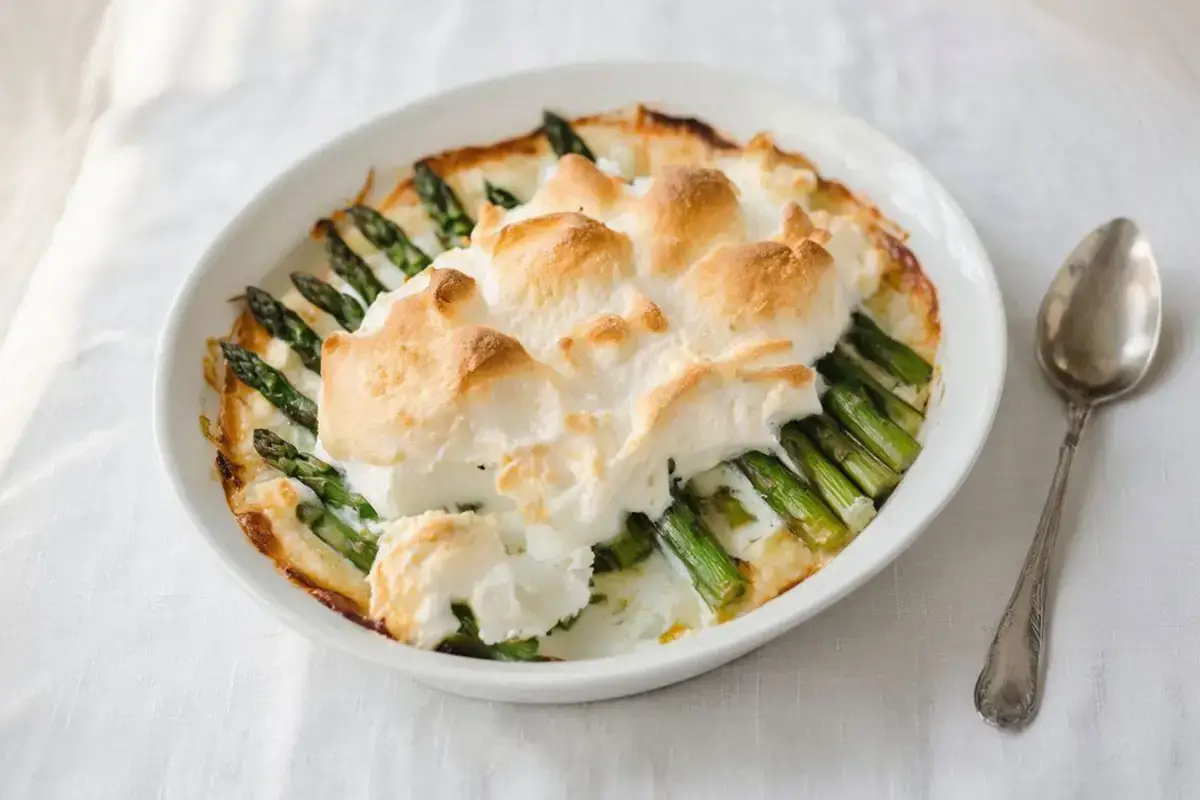
Fresh asparagus baked under a rich egg yolk cream sauce and a golden meringue-cheese topping. An elegant Central European appetizer.
Baked Mushrooms with Hard Cheese and Eggs
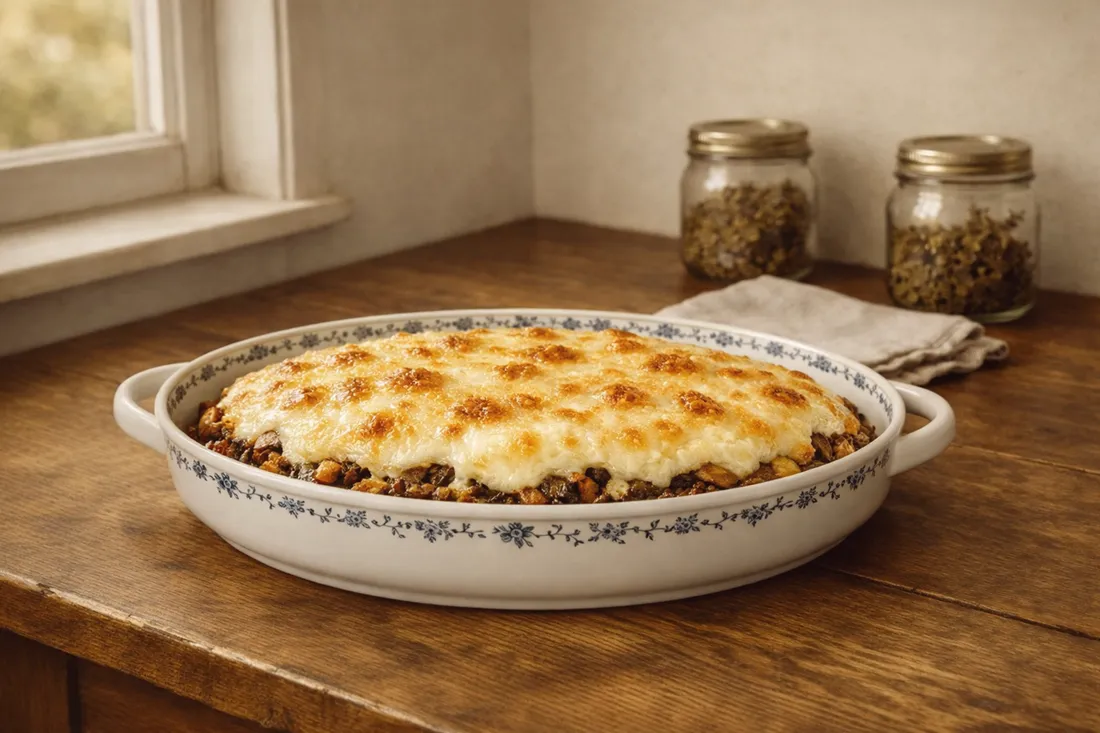
Layers of sliced hard-boiled eggs and grated cheese topped with sautéed mushrooms, baked under a rich egg-enriched sour cream topping.
Baked Eggplant with Potatoes
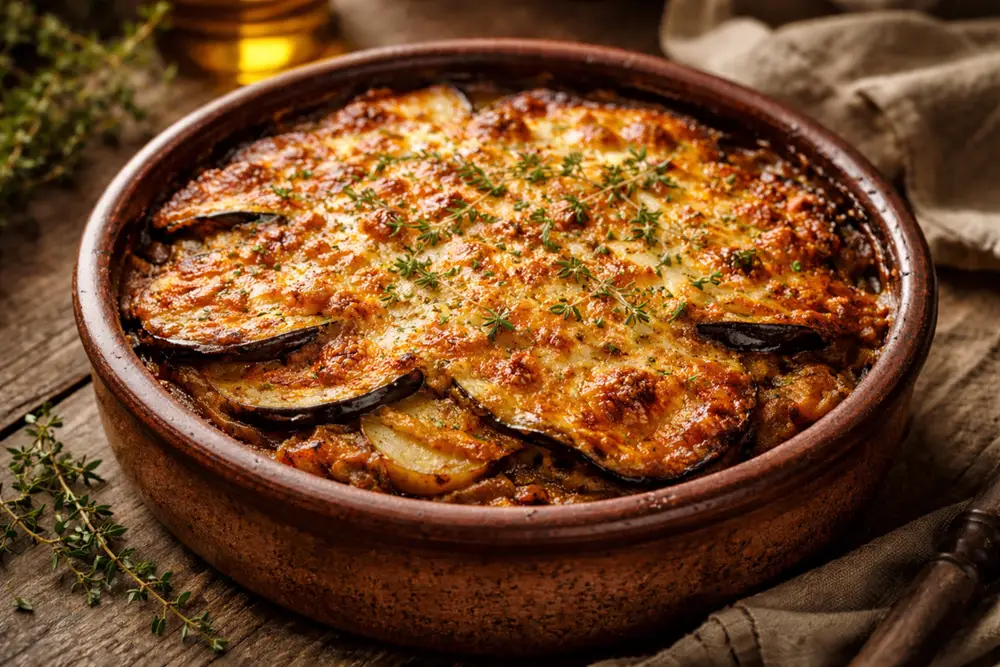
A slow-baked layered casserole of eggplant, parboiled potatoes, golden fried onion, and melted cheese.