Grilled Pork Skewers
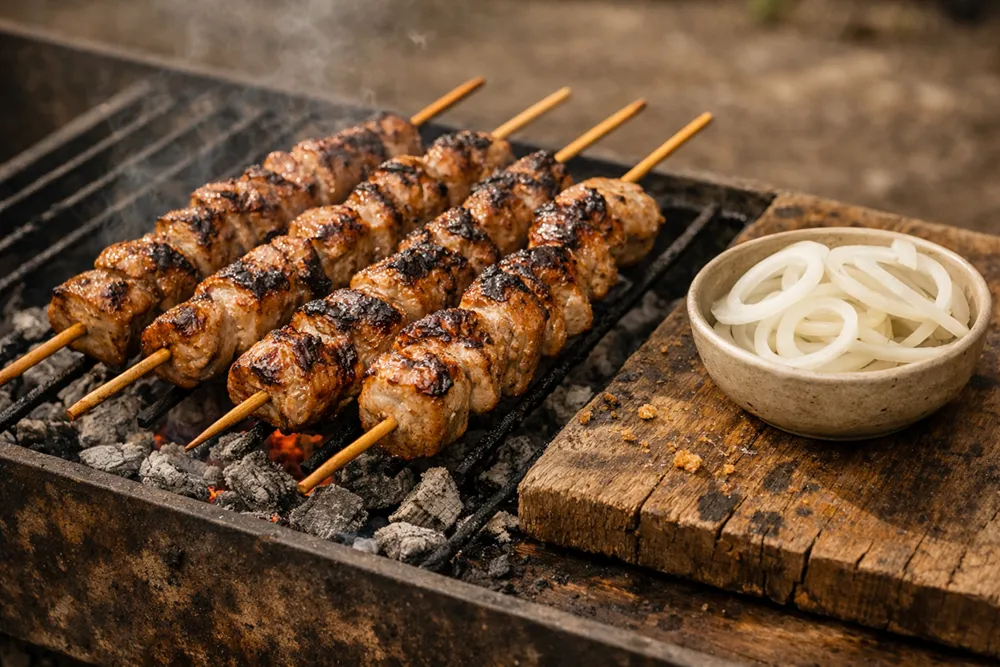
Simple grilled pork skewers made with tenderloin, charcoal-grilled and served with fresh sliced onion — a rustic Central European classic.
Quick Summary
Simple grilled pork skewers made with tenderloin, charcoal-grilled and served with fresh sliced onion — a rustic Central European classic.
Historical recipe
Modernised adaptation of an early 20th‑century source. Not independently kitchen-tested by Attic Recipes. Quantities, temperatures, and food safety guidance have been updated for a contemporary kitchen — results may vary and errors may exist. Nutritional values, where provided, are estimates only and have not been laboratory tested. Always follow current food safety guidelines for your region. If you have a health condition, allergy, or dietary requirement, consult a qualified professional before preparing this recipe.
Use of this recipe is entirely at your own risk and subject to our Terms of Service and Privacy Policy. Attic Recipes accepts no liability for any adverse outcome.
Additional notes
-
Warning
Pork must reach a minimum internal temperature of 63°C (145°F), followed by a 3-minute rest, to be safe to eat. This is especially important for pregnant women, young children, the elderly, and immunocompromised individuals.
-
Caution
Charcoal grilling must always be done outdoors in a well-ventilated area. Never burn charcoal indoors — this produces carbon monoxide, which is odorless and can be fatal in enclosed spaces.
- 1
If using wooden skewers, soak them in cold water for at least 30 minutes before use, and keep them in the water until ready to thread — this prevents them from scorching on the grill.
- 2
Rinse the 1kg pork tenderloin and pat dry. Cut into 3-4cm pieces, removing any visible fat.
- 3
Season the meat with the 8g salt. Thread 6-7 pieces onto each skewer, leaving about 1cm of space between pieces so the heat reaches all sides evenly.
- 4
Prepare an outdoor charcoal grill and let the coals burn down to a steady, even heat before grilling. Place the skewers over the coals.
- 5
Grill, turning occasionally, until the meat is browned on all sides and reaches an internal temperature of at least 63°C (145°F), then rest for 3 minutes before serving. Watch closely near the end — overcooking will dry the meat out quickly.
- 6
While the skewers grill, slice the 2-3 onions into rings. Serve the skewers hot, straight off the grill, with plenty of sliced onion alongside.
Nutrition Information per 1 serving (approx 250g, 2-3 skewers)
Nutritional values are approximate estimates and may vary based on specific ingredients used, preparation methods, and portion sizes.
Serving Suggestions
Serve immediately, straight off the grill, with the sliced onion and warm flatbread. A simple sliced tomato and cucumber salad on the side rounds out the meal well.
About This Recipe
Ražnjići are about as direct as grilling gets: lean pork, salt, fire, and not much else. What’s interesting isn’t the seasoning — there isn’t any beyond salt — but the method: home cooks built a real charcoal fire right inside their kitchen stove, pulling the metal rings off the stovetop so the skewers could rest directly over the coals. It’s a reminder that “grilling” and “the stove” weren’t always separate appliances in the way they are now.
The lack of marinade or spice rub is worth noting too. This is a dish that depends entirely on good meat and correct heat management — there’s nowhere for a cook to hide a dry or overcooked skewer behind a sauce.
Why It Works
Lean pork tenderloin cooks quickly and evenly in small pieces, which is exactly why the original recipe insists on precise spacing between pieces on the skewer — too close together and the heat can’t reach all sides, leading to uneven cooking. The plain salt seasoning and generous raw onion garnish were common in home cooking of the era, where the meat itself, not a sauce, was the point.
Modern Kitchen Tips
- Don’t skip soaking wooden skewers — this isn’t just a historical detail, it genuinely prevents them from catching fire partway through grilling.
- Keep the coals at a steady, even heat rather than very high heat; lean tenderloin dries out quickly if the outside chars before the inside is done.
- A meat thermometer takes the guesswork out of doneness far more reliably than color alone, especially with a cut this lean.
A classic of early 20th century home cooking, preserved and adapted for the modern kitchen.
The Story Behind This Recipe
Historical Context
Early 20th century recipes for this dish called for the meat to be grilled directly over an open charcoal fire, with the cook watching for color rather than measuring temperature — the meat was turned once the first side had browned, and removed as soon as it looked done to avoid drying it out. A period trick was to sprinkle salt directly onto the burning charcoal, which was believed to reduce the unpleasant smell of the smoke — a technique some outdoor grillers still use today.
Modern Kitchen Adaptation
The original method describes building a charcoal fire inside a wood-burning kitchen stove with the metal rings removed, and grilling the skewers directly over the coals within the stove itself. This setup does not exist in modern kitchens, and open charcoal fires should never be built indoors due to carbon monoxide risk. The direct modern equivalent is an outdoor charcoal grill, which replicates the same direct-heat, open-coal cooking method. The original also gave no internal temperature target, relying on visual browning alone — this version adds a food safety minimum of 63°C (145°F) with a 3-minute rest, per USDA guidance for whole cuts of pork, while still allowing for the traditional well-browned exterior.
This recipe is an independent modern adaptation developed from historical sources in the public domain. It is provided for informational and educational purposes only and does not constitute professional dietary, nutritional, or medical advice. Food preparation involves inherent risks. The reader assumes full responsibility for safe food handling, ingredient sourcing, and adherence to current local food safety guidelines. The site operator accepts no liability for outcomes resulting from the preparation or consumption of this recipe.
One recipe.
Every week.
You Might Also Like
More recipes you'll enjoy

Apricot Cream Torte
Traditional apricot cream cake combining sponge, vanilla custard, and meringue for a timeless European flavor.
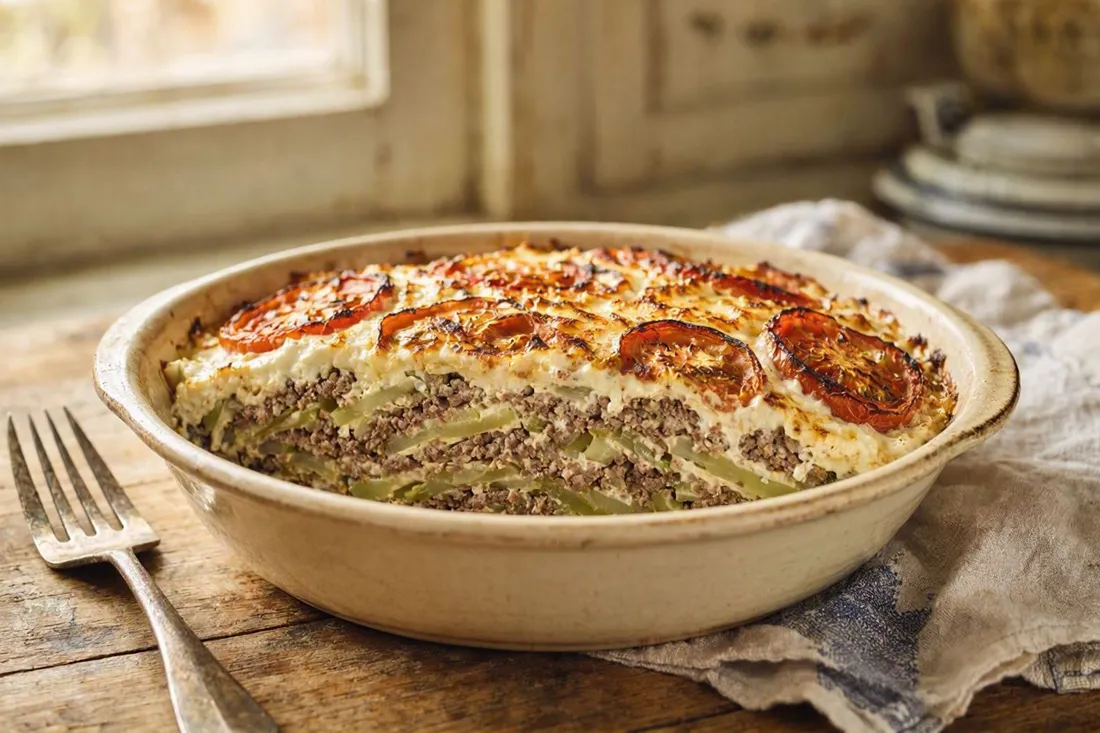
Kohlrabi and Veal Musaka
A layered casserole of braised kohlrabi and seasoned ground veal, baked under sour cream and tomato - a comforting vintage Central European dish.
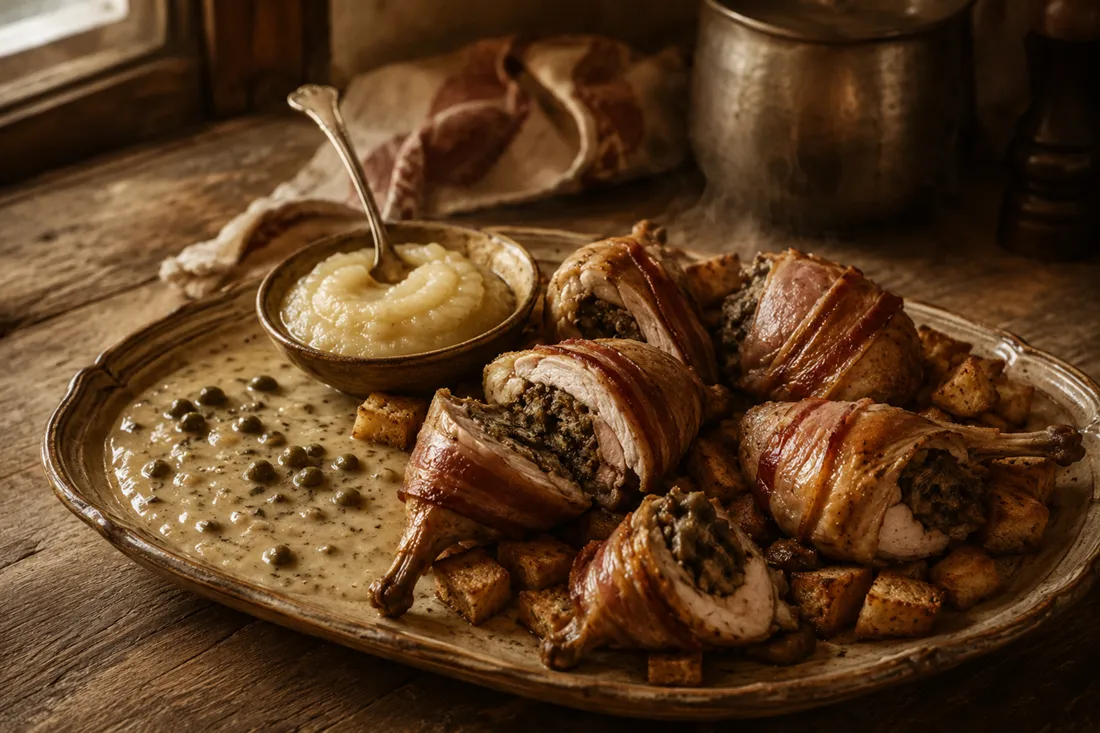
Partridge Stuffed with Mushrooms
Whole partridges wine-marinated, stuffed with mushroom-cognac filling, bacon-wrapped and roasted, served with caper sauce and apple puree.