Grilled Minced Beef Rolls
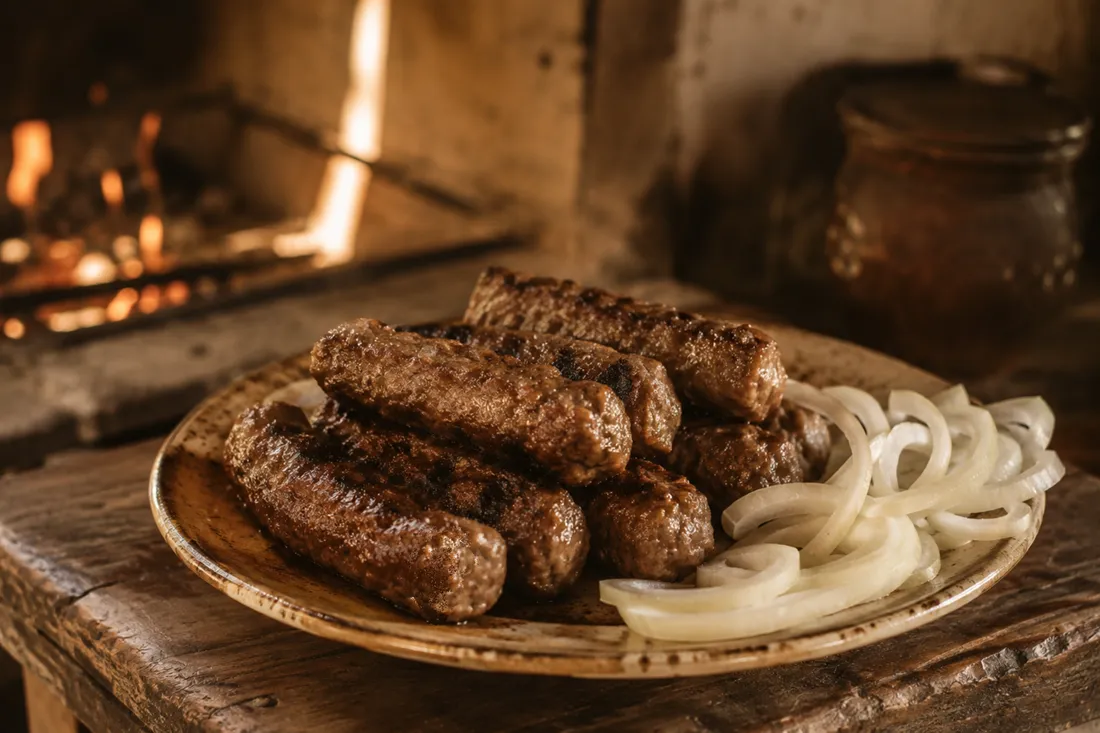
Coarsely mixed ground beef shaped into thumb-thick rolls and grilled, seasoned only with salt — a simple early 20th century technique.
Quick Summary
Coarsely hand-mixed ground beef, seasoned simply with salt and shaped into thumb-thick grilled rolls. The meat is worked and re-ground repeatedly by hand, a technique that builds texture without any binders or fillers.
Historical recipe
Modernised adaptation of an early 20th‑century source. Not independently kitchen-tested by Attic Recipes. Quantities, temperatures, and food safety guidance have been updated for a contemporary kitchen — results may vary and errors may exist. Nutritional values, where provided, are estimates only and have not been laboratory tested. Always follow current food safety guidelines for your region. If you have a health condition, allergy, or dietary requirement, consult a qualified professional before preparing this recipe.
Use of this recipe is entirely at your own risk and subject to our Terms of Service and Privacy Policy. Attic Recipes accepts no liability for any adverse outcome.
Additional notes
-
Warning
This recipe uses raw ground beef. Keep it refrigerated until shaping, use clean equipment and hands throughout, and cook to a minimum internal temperature of 71°C (160°F) to ensure it is safe to eat, particularly important for pregnant women, young children, the elderly, and immunocompromised individuals.
-
Note
At 20g of salt per kg of meat, this recipe is high in sodium (about 1053mg per serving). Those managing sodium intake, including people with high blood pressure, may want to reduce the salt to taste.
- 1
Choose the freshest, youngest beef available. Keep it completely dry throughout preparation — no water should touch the meat before cooking.
- 2
If the 1kg meat mixture is not fatty enough, add a little extra fat trimmed from the thigh or belly to reach roughly 15-20% fat.
- 3
Season with the 20g salt and mix by hand until evenly distributed.
- 4
Pass the meat through a grinder (or mince it finely by hand). Knead it thoroughly by hand, then pass it through the grinder a second time and knead again.
Tip The more the meat is worked and re-ground, the better the final texture — this repeated mixing is what gives the rolls their characteristic bind without any added egg or breadcrumbs. - 5
Shape the meat into rolls about 7-8cm long and roughly the thickness of a thumb, using your hands or a piping funnel.
- 6
Grill over medium-high heat, turning frequently with tongs rather than a fork, for about 8-10 minutes total, until the internal temperature reaches at least 71°C (160°F).
Tip Piercing the meat with a fork lets the juices escape and dries the rolls out — tongs or a spatula keep them juicier.
Nutrition Information per 1 serving (approx 4-5 rolls, 93g cooked)
Nutritional values are approximate estimates and may vary based on specific ingredients used, preparation methods, and portion sizes.
Serving Suggestions
Serve hot off the grill with raw onion, flatbread, and a simple side of ajvar or a fresh tomato and pepper relish.
About This Recipe
There’s a lot riding on technique in this recipe, since the ingredient list is about as short as it gets: ground beef and salt, nothing else. No egg, no breadcrumbs, no baking soda — the texture and bind come entirely from how thoroughly the meat is worked by hand and re-ground. It’s a good reminder that a lot of what makes a ground meat dish succeed happens well before it reaches the heat.
This style of grilled minced meat roll — often known as ćevapčići — will be familiar to anyone who has ordered it while traveling through southeastern Europe. The background and history of the dish is covered separately in a companion article, linked below, since it deserves more room than a recipe page allows.
Why It Works
Repeatedly grinding and kneading the meat develops the myosin proteins on the surface of the ground beef, which is what creates the springy, cohesive bite typical of well-made grilled meat rolls without needing any binder. Keeping the meat completely dry during preparation matters more than it might seem — water interferes with that same protein-binding process, which is why the original instructions are so insistent on it. Cooking over direct, fairly high heat for a short time sears the outside quickly while the small diameter of the rolls means the inside cooks through before the surface overcooks.
Modern Kitchen Tips
If you don’t have a meat grinder, ask a butcher to coarsely grind the beef for you, then do the hand-kneading and a second pass through a stand mixer’s grinder attachment (or just extra hand-kneading) at home — the repeated working matters more than the equipment. Wet your hands lightly with cold water when shaping the rolls to keep the meat from sticking, but keep the meat itself as dry as possible otherwise. A charcoal grill gives the most traditional flavor, but a hot cast-iron grill pan works well indoors.
A classic of early 20th century home cooking, preserved and adapted for the modern kitchen.
The Story Behind This Recipe
Historical Context
Early 20th century recipes for this dish specified using the youngest, freshest beef available, combining several specific cuts — meat from the neck, the area between shoulder and ribs, the section between chest and belly, and trimmed belly meat — each in equal parts. No water was permitted to touch the meat during preparation, and the mixture was worked by hand and passed through a grinder repeatedly, with the instruction that more mixing produced a better result. Shaping was done either with a sausage-stuffing machine or a purpose-made funnel with a notch cut for the thumb used to push the meat through.
Modern Kitchen Adaptation
The four traditional cuts (neck, shoulder-rib area, chest-belly section, and trimmed belly) have been consolidated into a single modern equivalent — coarsely ground beef from chuck and trimmed flank or plate, at roughly 15-20% fat — since these specific period cuts are not commonly sold by name today. Grill time, internal temperature target, roll size, and yield are estimated, since the traditional approach specified none of these precisely. Because this is ground beef, cooking to a minimum internal temperature of 71°C (160°F) is recommended, higher than the target for whole cuts, since grinding distributes any surface bacteria throughout the meat.
This recipe is an independent modern adaptation developed from historical sources in the public domain. It is provided for informational and educational purposes only and does not constitute professional dietary, nutritional, or medical advice. Food preparation involves inherent risks. The reader assumes full responsibility for safe food handling, ingredient sourcing, and adherence to current local food safety guidelines. The site operator accepts no liability for outcomes resulting from the preparation or consumption of this recipe.
One recipe.
Every week.
You Might Also Like
More recipes you'll enjoy
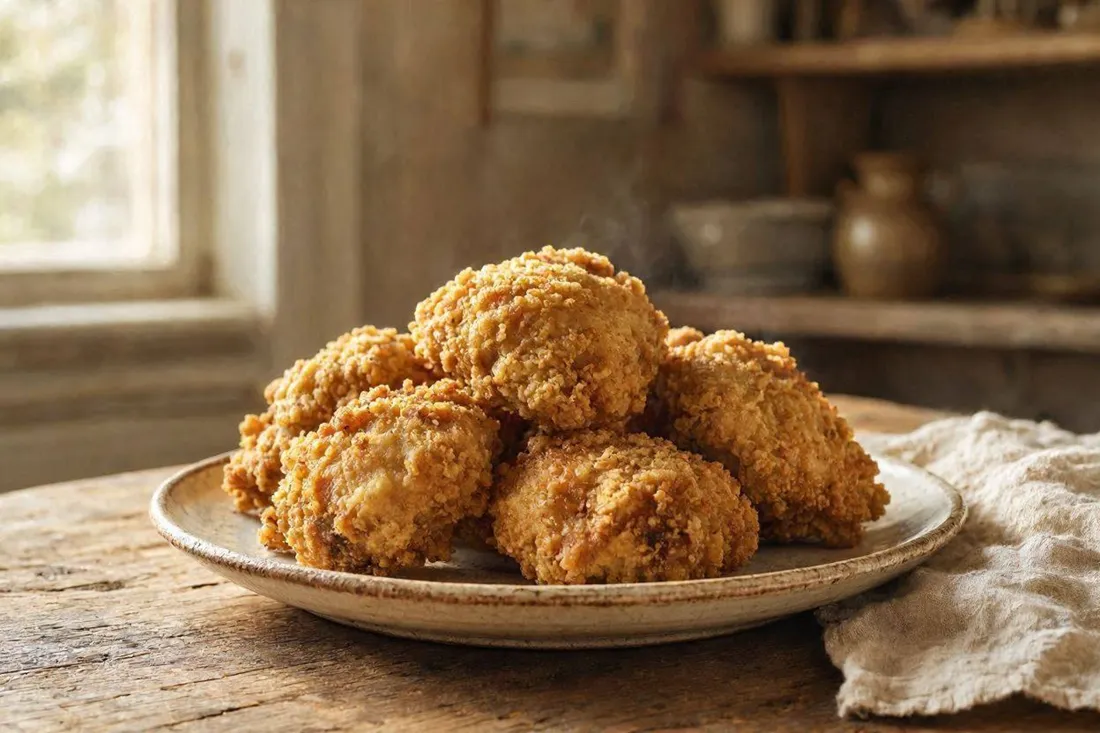
Beer-Battered Fried Chicken
Chicken pieces double-dredged in flour and a beer-and-egg batter, then fried until golden — a simple, crisp early 20th century technique.
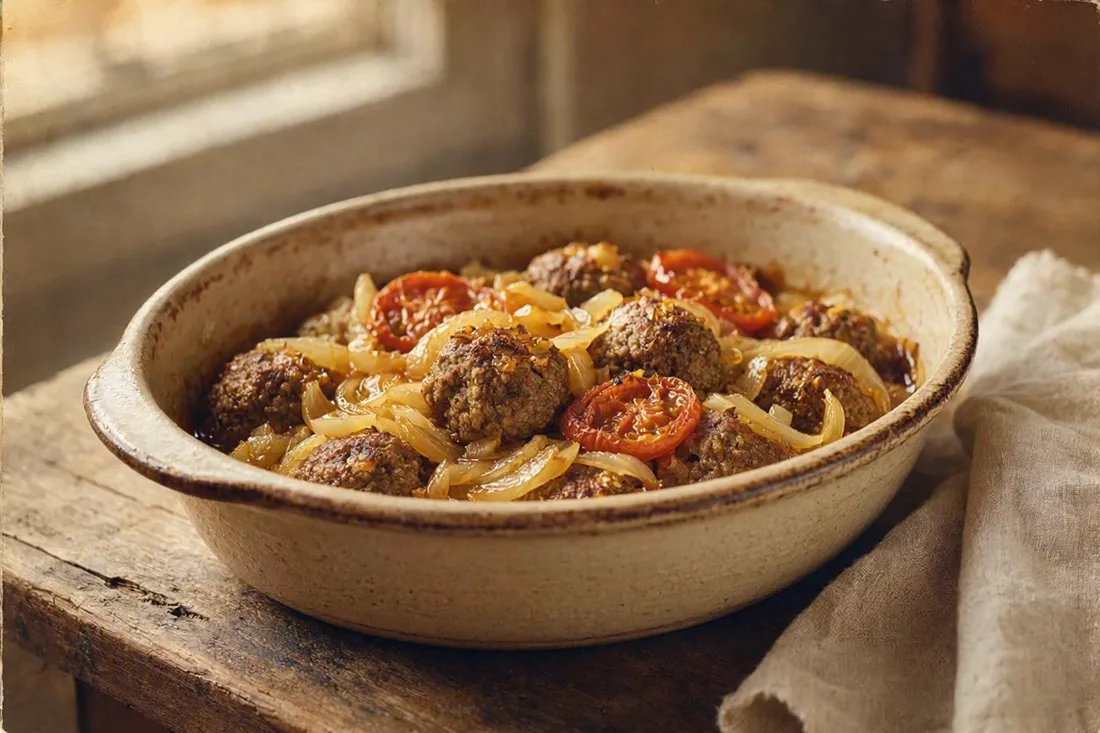
Baked Meatballs on Fried Onion with Tomatoes
Beef and pork meatballs baked over softened onion and sliced tomatoes in a light braising liquid — a comforting one-dish oven bake.
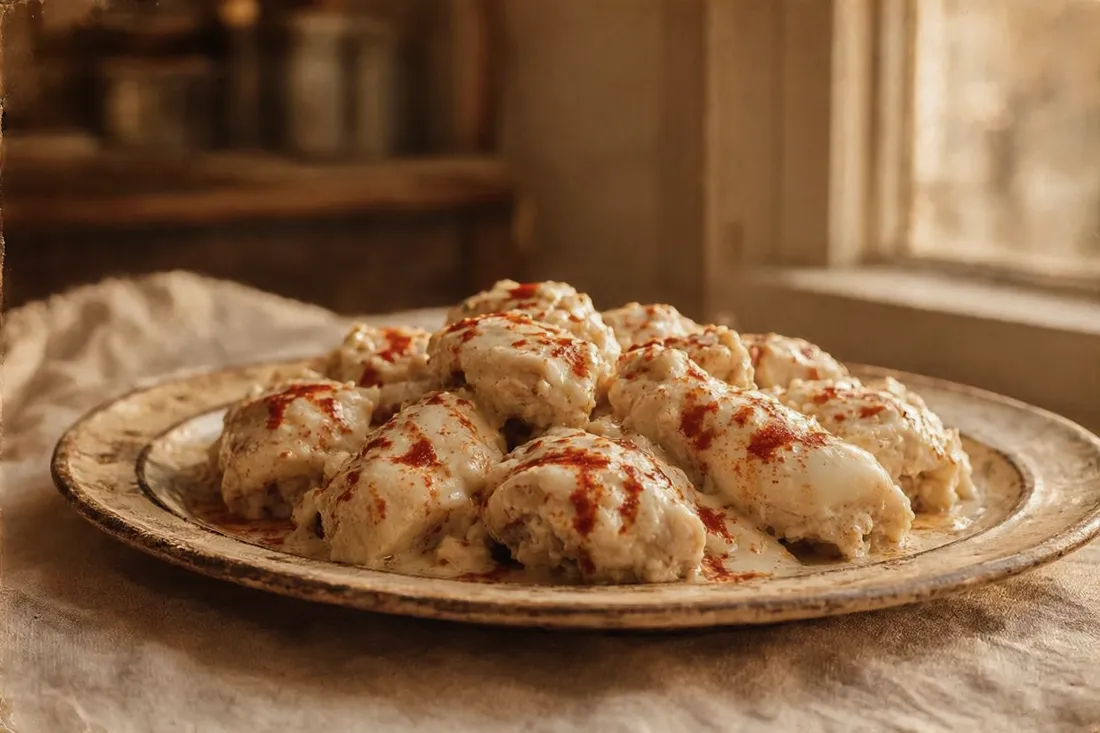
Poached Chicken in Buttermilk-Egg Sauce with Paprika Butter
Tender poached chicken pieces draped in a thick, tangy buttermilk-egg sauce and finished with a paprika butter drizzle — a rich, old-fashioned main dish.