Gourmet Filled Crepes with Veal and Sour Cream
Thin crepes filled with braised, ground veal and onion, topped with a paprika-infused sour cream sauce and baked until golden.

Quick Summary
This Central European main dish features thin crepes filled with slow-braised ground veal and onion. Ready in 165 minutes, it stands out as the braising liquid is used twice—mixed into the filling and stirred into the baked sour cream topping.
Historical recipe
Modernised adaptation of an early 20th‑century source. Not independently kitchen-tested by Attic Recipes. Quantities, temperatures, and food safety guidance have been updated for a contemporary kitchen — results may vary and errors may exist. Nutritional values, where provided, are estimates only and have not been laboratory tested. Always follow current food safety guidelines for your region. If you have a health condition, allergy, or dietary requirement, consult a qualified professional before preparing this recipe.
Use of this recipe is entirely at your own risk and subject to our Terms of Service and Privacy Policy. Attic Recipes accepts no liability for any adverse outcome.
- Gluten
- Dairy
- Eggs
Additional notes
-
Note
This dish is relatively high in saturated fat (approximately 13g per serving) from the lard, sour cream, and eggs. Those managing saturated fat intake, including people with cardiovascular risk factors, may wish to adjust portion size.
Substitute the lard with a neutral oil and use a reduced-fat sour cream to lower the saturated fat content.
- 1
Whisk together the flour, milk, water, eggs, salt, and 1 tablespoon of oil into a smooth, thin batter.
- 2
Heat a lightly oiled crepe pan or skillet over medium heat. Cook thin crepes, using the remaining oil to grease the pan as needed, until you have about 20 crepes. Set aside to cool.
- 3
Melt the lard in a large pot over medium heat. Add the chopped onion and cook, stirring, until softened and translucent.
- 4
Add the veal shoulder cubes to the pot and brown lightly. Reduce the heat and braise gently, adding the water a little at a time, until the meat is tender.
Tip Add just enough water at a time to keep the meat from sticking — the goal is a slow braise, not a boil. - 5
Stir in the paprika and the braising salt, add a small splash more water, and bring briefly to a simmer.
- 6
Remove the pot from the heat and let the meat cool in its liquid. Once cooled, lift the meat out and strain the cooking liquid, reserving it separately.
- 7
Grind or finely chop the cooled meat. Mix in the egg, black pepper, and half of the reserved strained cooking liquid until well combined.
- 8
Spoon the filling onto each crepe, roll or fold them closed, and arrange the filled crepes side by side in a baking dish.
- 9
Strain the remaining half of the reserved cooking liquid and stir it into the sour cream until smooth.
- 10
Pour the sour cream mixture evenly over the arranged crepes.
- 11
Bake at 180°C (350°F) / 160°C fan for 20-25 minutes, until the sauce is golden and the filling is heated through.
Tip Check that the center of the filling is hot throughout before serving, since it contains egg and previously-cooked ground meat.
Nutrition Information per 1 serving (approx 420g, about 3 filled crepes)
Nutritional values are approximate estimates and may vary based on specific ingredients used, preparation methods, and portion sizes.
Serving Suggestions
Serve hot as a main course with a simple green salad on the side.
About This Recipe
This dish takes ordinary crepes and turns them into a full main course: thin crepes rolled around a rich filling of slow-braised, ground veal and onion, arranged together in a baking dish, and finished with a paprika-tinted sour cream sauce baked until golden on top. It’s a more elaborate, “gourmet” take on the everyday crepe — hence the name — combining a braise, a grind, an assembly, and a bake into one dish.
What sets this apart from a simple meat-filled crepe is the use of the braising liquid twice: once mixed directly into the ground filling for extra moisture and flavor, and again stirred into the sour cream that coats the top. Nothing from the braise goes to waste.
Why It Works
Braising the veal slowly with onion and paprika, adding water gradually rather than all at once, allows the connective tissue in the shoulder cut to break down into gelatin while keeping the meat from drying out. Cooling the meat before grinding firms it up so it grinds cleanly rather than turning pasty. Splitting the reserved braising liquid between the filling and the sauce carries the same savory, paprika-forward flavor through both layers of the dish, tying it together. The final bake sets the sour cream sauce into a light golden crust through gentle heat and evaporation, without curdling it, since it’s stabilized by the flour already present in the assembled dish.
Modern Kitchen Tips
Make the crepes and the filling a day ahead if it helps — both keep well refrigerated, and assembling just before baking saves time on the day of serving. If the sour cream sauce looks too thick to pour evenly, thin it with a spoonful of milk or extra braising liquid before pouring it over the crepes.
A classic of early 20th century home cooking, preserved and adapted for the modern kitchen.
The Story Behind This Recipe
Historical Context
Early 20th century recipes for this dish typically called for a veal filling braised slowly with onion and paprika, ground once cooled, and mixed with egg and the reserved braising liquid before being rolled into crepes and baked under a sour cream sauce. Quantities for the fat, paprika, and braising water were traditionally measured with a wooden cooking spoon rather than precise measures, and the crepe batter itself was left entirely to the cook's own recipe.
Modern Kitchen Adaptation
The original did not include a crepe batter recipe at all — a standard thin crepe batter has been added here. The traditional wooden-spoon measures for the fat, paprika, and braising water have been converted to standard tablespoon and gram quantities, and an oven temperature and baking time have been estimated, since none were specified. Lard has been kept as the historically correct fat for browning the onion and meat; a neutral oil or butter can be substituted in equal quantity for a milder flavor.
This recipe is an independent modern adaptation developed from historical sources in the public domain. It is provided for informational and educational purposes only and does not constitute professional dietary, nutritional, or medical advice. Food preparation involves inherent risks. The reader assumes full responsibility for safe food handling, ingredient sourcing, and adherence to current local food safety guidelines. The site operator accepts no liability for outcomes resulting from the preparation or consumption of this recipe.
One recipe.
Every week.
You Might Also Like
More recipes you'll enjoy
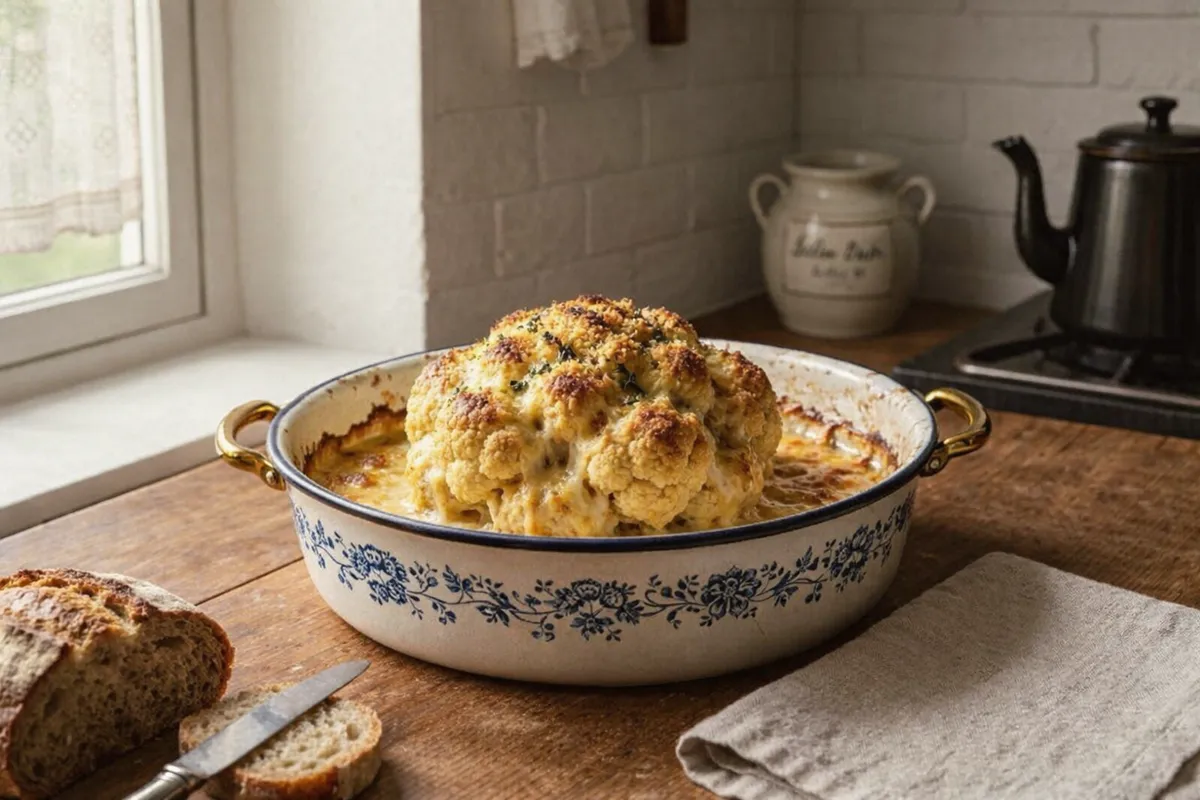
Baked Cauliflower with Cheese Béchamel
A whole head of tender boiled cauliflower coated in a rich egg-enriched cheese béchamel, topped with breadcrumbs and baked until golden.
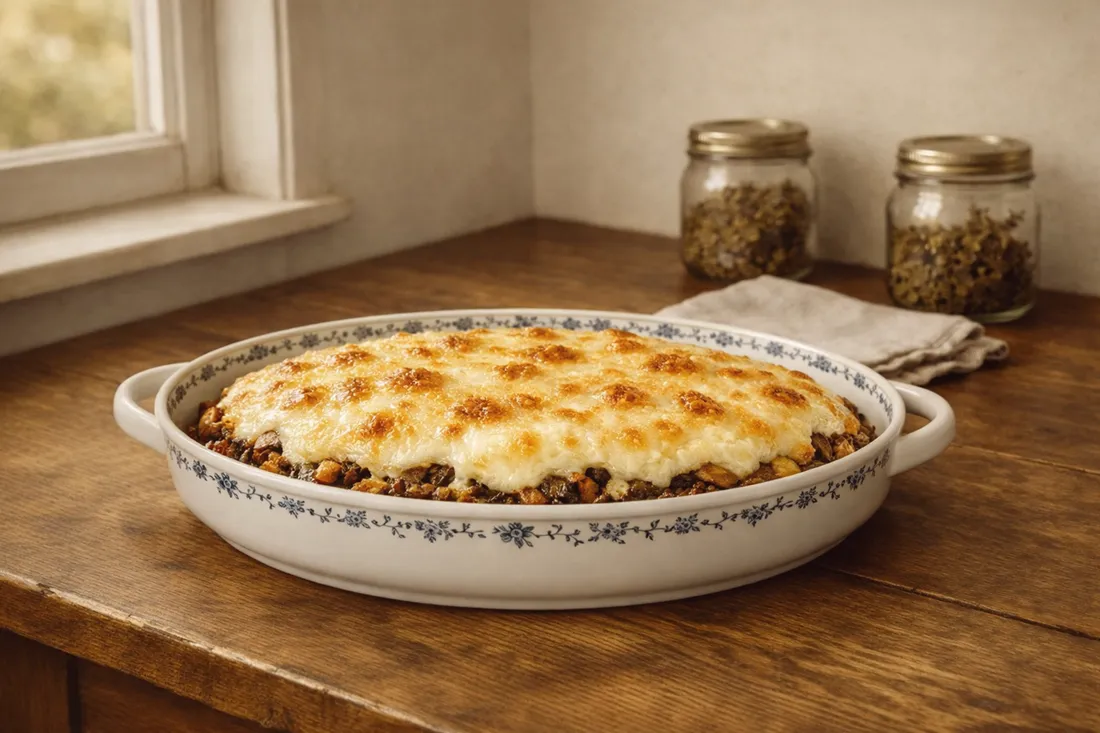
Baked Mushrooms with Hard Cheese and Eggs
Layers of sliced hard-boiled eggs and grated cheese topped with sautéed mushrooms, baked under a rich egg-enriched sour cream topping.
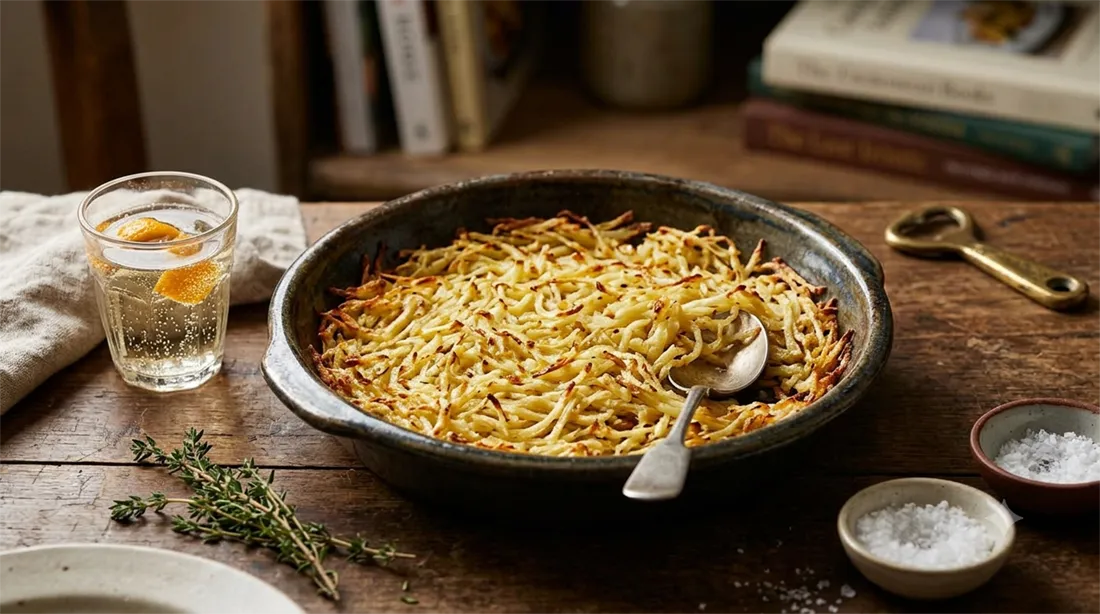
Oven-Baked Shredded Potatoes
Coarsely grated potatoes tossed with oil and salt, baked until golden brown — a simple appetizer to serve before the main meal.