Fish Croquettes
Cod is poached, ground, and bound with egg, parsley, and lemon zest, then breaded and pan-fried in butter until golden. A Central European classic.

Historical recipe
Modernised adaptation of an early 20th‑century source. Not independently kitchen-tested by Attic Recipes. Quantities, temperatures, and food safety guidance have been updated for a contemporary kitchen — results may vary and errors may exist. Nutritional values, where provided, are estimates only and have not been laboratory tested. Always follow current food safety guidelines for your region. If you have a health condition, allergy, or dietary requirement, consult a qualified professional before preparing this recipe.
Use of this recipe is entirely at your own risk and subject to our Terms of Service and Privacy Policy. Attic Recipes accepts no liability for any adverse outcome.
- Eggs
- Dairy
- Fish
- Gluten
- Celery
Additional notes
-
Warning
Contains fish, celery, and fish-derived ingredients. Persons with fish or celery allergies must not consume this dish. Celery is present in the poaching liquid and contact with the fish during cooking means celery allergens may be present in the finished croquettes. Cross-contamination risk exists if the same equipment is used for other fish or shellfish.
-
Caution
Frying in butter at medium heat carries a burn risk from hot fat splatter. Keep children away from the pan during frying. Use a pan with high enough sides to contain splatter.
-
Note
The croquette mixture contains whole eggs that are fully cooked during frying. No food safety concern for eggs applies to the finished dish.
- 1
Clean and gut the cod. Place it in a saucepan with the celery stalk, carrot, bay leaf, and 5 g salt. Cover with cold water and bring to a gentle boil. Poach for 20–25 minutes until the fish is cooked through and the flesh flakes easily.
Tip Keep the heat at a low simmer — a rolling boil toughens fish meat and breaks it apart, making deboning harder. - 2
Remove the fish from the poaching liquid and allow to cool enough to handle. Carefully separate all the flesh from the bones and skin. Discard the bones, skin, and poaching vegetables.
- 3
Pass the fish meat through a meat grinder, or pulse briefly in a food processor until finely minced but not paste-like.
- 4
Transfer the minced fish to a bowl. Add 10 g finely chopped parsley, 30 g softened butter, the zest of 1 lemon, 3 g salt, and 2 whole eggs. Mix well until the mixture is uniform and holds its shape when pressed.
Tip If the mixture is too soft to shape, cover and refrigerate for 20 minutes. Do not add flour directly to the mixture — this changes the texture of the finished croquette. - 5
With lightly dampened hands, shape the mixture into small sausage-like croquettes, approximately 6–7 cm long and 2.5 cm wide. This quantity yields approximately 12 croquettes.
- 6
Set up a breading station with three shallow bowls: 50 g flour in the first, 2 beaten eggs in the second, and 80 g breadcrumbs in the third. Roll each croquette in flour, shaking off the excess. Dip in beaten egg, letting the surplus drip off. Roll in breadcrumbs, pressing gently to adhere.
- 7
Melt 40 g butter in a large frying pan over medium heat (160–170°C if using a thermometer). When the butter is foaming but not yet browning, add the croquettes in a single layer without crowding. Fry for 3–4 minutes per side until evenly golden brown — approximately 8 minutes total.
Tip Fry in two batches if needed. Crowding the pan lowers the temperature and causes the croquettes to steam rather than fry, losing the crisp crust. - 8
Transfer the finished croquettes to a plate lined with kitchen paper to drain briefly. Serve immediately with a fresh green salad.
Nutrition Information per 3 croquettes (approx. 180g)
Nutritional values are approximate estimates and may vary based on specific ingredients used, preparation methods, and portion sizes.
Serving Suggestions
Serve immediately after frying, while the crust is still crisp. A simple dressed green salad is the traditional accompaniment. A wedge of lemon on the side works well. These croquettes do not hold well — the crust softens within 20–30 minutes and they do not reheat successfully.
About This Recipe
Fish croquettes appear in Central European home cooking from the early 20th century as a practical solution to a persistent kitchen problem: what to do with a whole fish, bones and all, in a domestic kitchen without specialized equipment. The answer was to boil the fish with aromatics, pick the meat clean from the bones by hand, grind it fine, and bind it into a shapeable mass — a technique that converts even a bony, awkward fish into something elegant and easy to eat.
This recipe specifies cod, which the original left open. The choice matters more than it might seem. Firm white fish with few intramuscular bones — cod, hake, pollock — produce a croquette mixture that holds its shape cleanly, fries to a crisp crust, and has a mild enough flavor to let the lemon zest and parsley come through. Oily fish produce a wet, heavy mixture that falls apart in the pan; very bony freshwater fish create a deboning problem that makes the recipe impractical at home. Cod solves both issues and is available fresh, chilled, or frozen in most markets.
The breading is a straightforward three-stage panel: flour, egg, breadcrumbs. The flour creates a dry surface for the egg to grip; the egg acts as glue; the breadcrumbs form the crust. The frying is done in butter, not oil, which gives the finished croquettes a richness that matches the lemon and parsley inside.
Why It Works
The boil-then-grind method does something that raw fish cannot: it sets the proteins in the fish flesh before the mixture is formed, which means the croquette holds together during shaping and frying without needing binders beyond egg. Raw fish forcemeat requires careful temperature control and often additional binders; boiled fish is already stable and cooperative.
The egg in the mixture serves two functions simultaneously — it adds moisture and acts as a binder as it sets during frying. The butter in the mixture adds fat that keeps the interior tender once the crust is formed, preventing the fish from drying out during the second cooking.
The three-stage breading creates an insulating shell. During frying, the crust browns and crisps while the interior heats through gently, staying moist. Without the breading, the fish mixture would dry out and toughen on contact with the hot fat.
Modern Kitchen Tips
A food processor works in place of a meat grinder but requires care — pulse in short bursts and stop as soon as the fish is finely minced. Over-processing turns the fish into a smooth paste with a gummy, bouncy texture that does not resemble the original.
If the mixture is too soft to shape after mixing — which can happen with fish that retains more moisture during poaching — refrigerate it for 20 minutes before forming. Do not add flour to the mixture to compensate; this changes the texture of the finished croquette.
Pure butter has a low smoke point and burns around 150°C. Keep the heat firmly at medium, and do not walk away from the pan. If the butter begins to darken before the croquettes are done, lower the heat immediately. A combination of butter and a neutral oil raises the smoke point while preserving most of the flavor — this is a practical adjustment that period recipes could not have anticipated.
A classic of early 20th century home cooking, preserved and adapted for the modern kitchen.
The Story Behind This Recipe
Historical Context
Early 20th century recipes for this dish typically called for whatever fish was locally available, and no particular variety was specified — the technique was designed to work with the catch of the day. The boil-then-grind method was the standard approach for transforming whole fish into a workable forcemeat in a domestic kitchen without specialized equipment; a fine-mesh sieve was the tool of choice before meat grinders became common household items. The greens added to the poaching liquid were the standard soup vegetables of the period — celery, carrot, and aromatic herbs — used to add depth to an otherwise plain boiling liquid. Home cooks of the period gave no quantities for any ingredient; the binding of the mixture with 'enough eggs' was left to the cook's judgment.
Modern Kitchen Adaptation
Period recipes of this type gave no quantities for any ingredient. All amounts have been estimated based on standard croquette ratios and food technology practice for fish forcemeat; every value is flagged as estimated. Cod has been selected as the default fish in place of the open-ended instruction common to recipes of this era — it is widely available across Europe and beyond, has firm white flesh that holds together well after grinding, and contains very few intramuscular bones that could remain after hand-deboning. Strongly flavored oily fish (mackerel, sardine, salmon) and bony freshwater fish (carp, pike) are not suitable for this technique. Hake is the closest alternative to cod and can be substituted at a 1:1 ratio. Butter is used for frying as specified; to reduce the risk of burning, the heat must be kept at medium rather than high, and the pan should not be left unattended.
This recipe is an independent modern adaptation developed from historical sources in the public domain. It is provided for informational and educational purposes only and does not constitute professional dietary, nutritional, or medical advice. Food preparation involves inherent risks. The reader assumes full responsibility for safe food handling, ingredient sourcing, and adherence to current local food safety guidelines. The site operator accepts no liability for outcomes resulting from the preparation or consumption of this recipe.
One recipe.
Every week.
You Might Also Like
More recipes from the same category
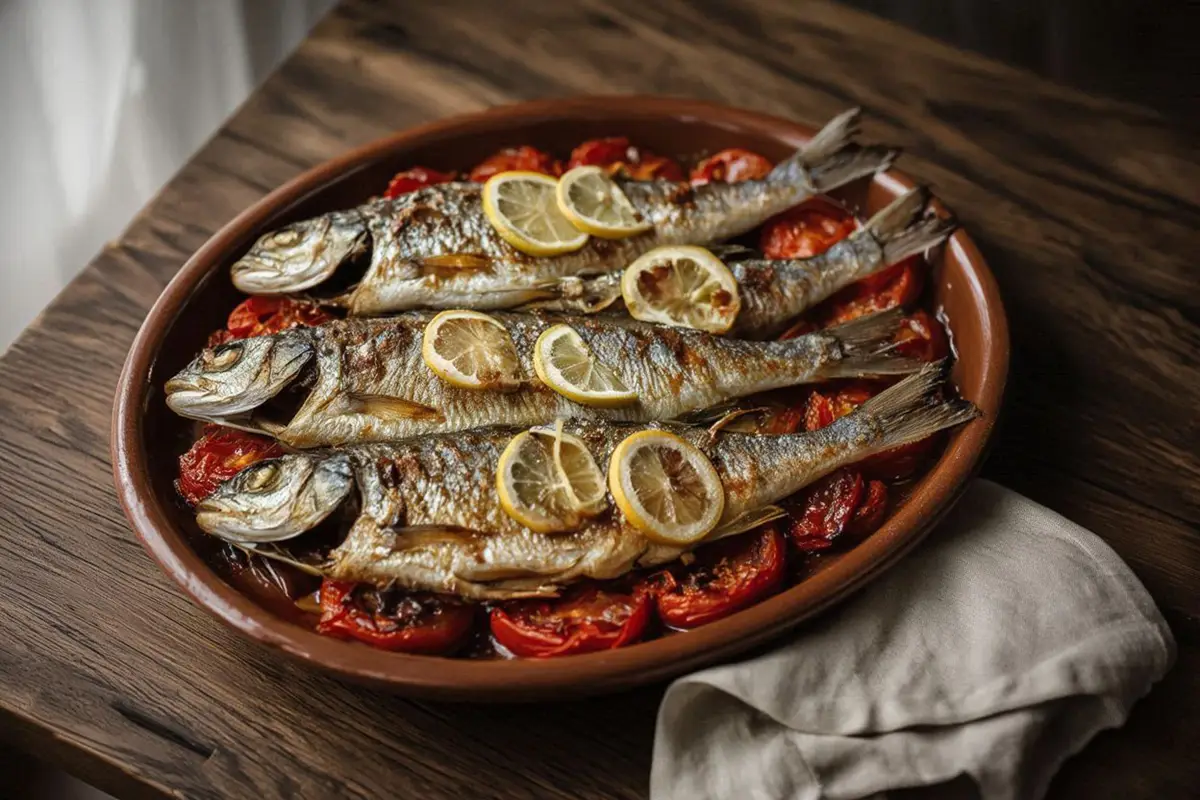
Baked Fish with Tomatoes
Whole fish baked over ripe tomatoes with generous olive oil and lemon — a simple, fragrant Central European oven dish.
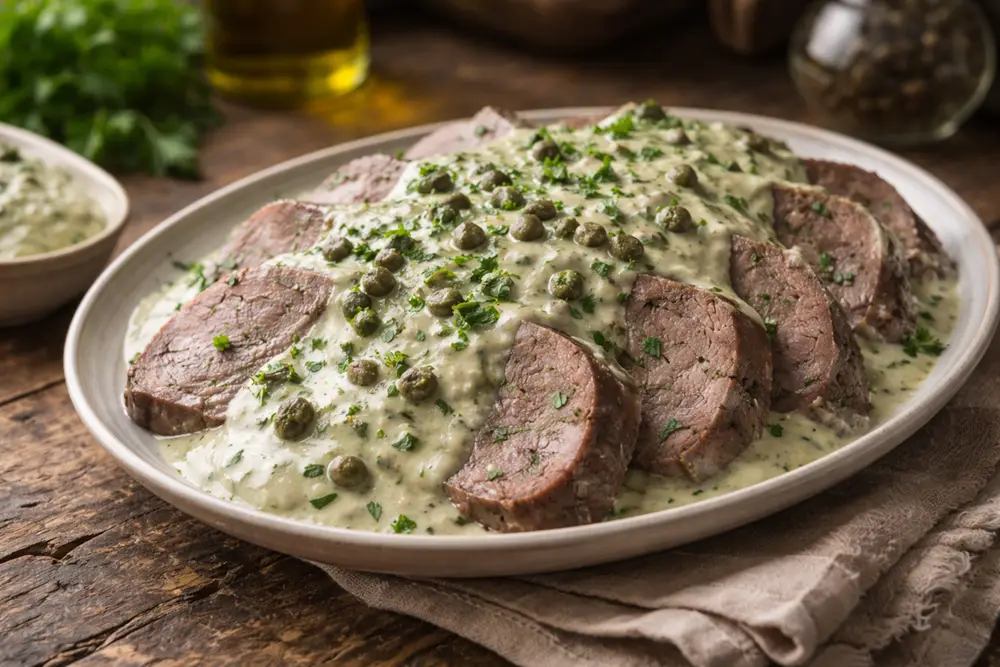
Baked Tongue in Green Sauce
Beef tongue braised with herbs, larded with bacon and roasted until golden, served in a green sauce of capers, anchovy, parsley and sour cream.
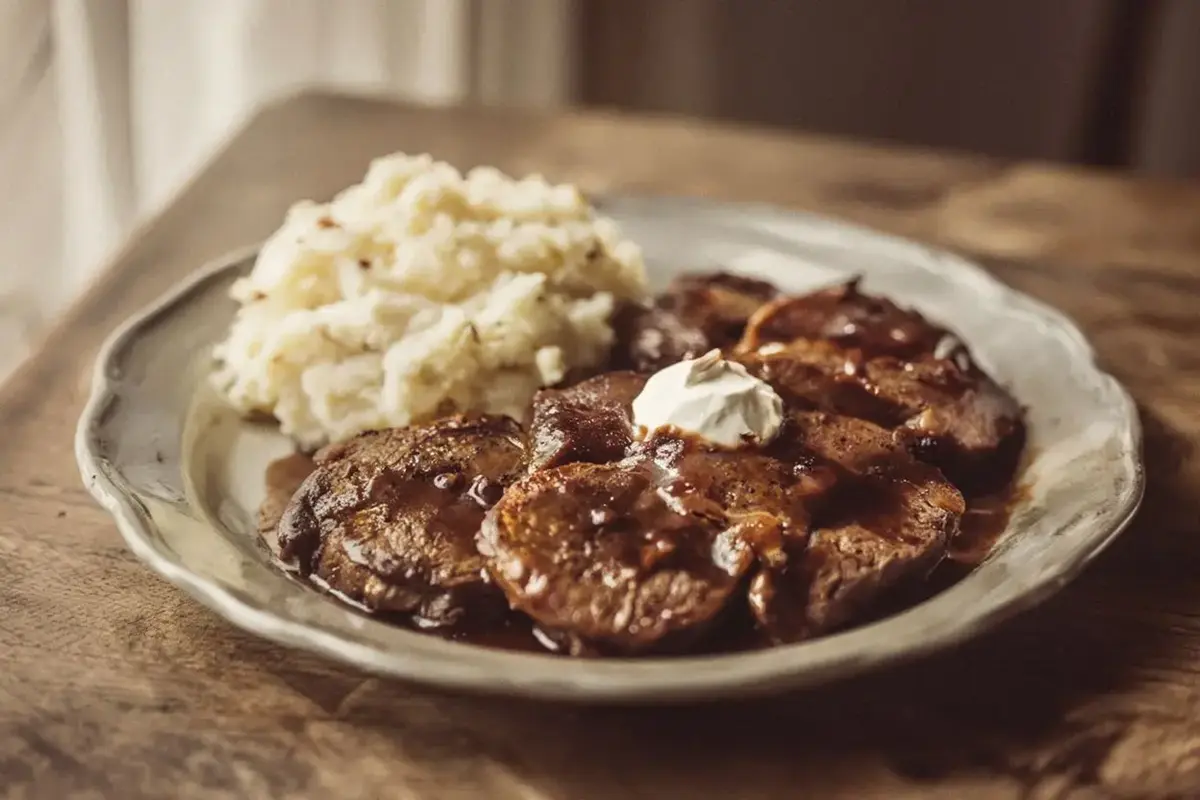
Beef Kidney with Wine
Beef kidney marinated in red wine, braised with herbs, finished with sour cream. Tender, rich, and deeply flavored.