Entrecôte with Olives
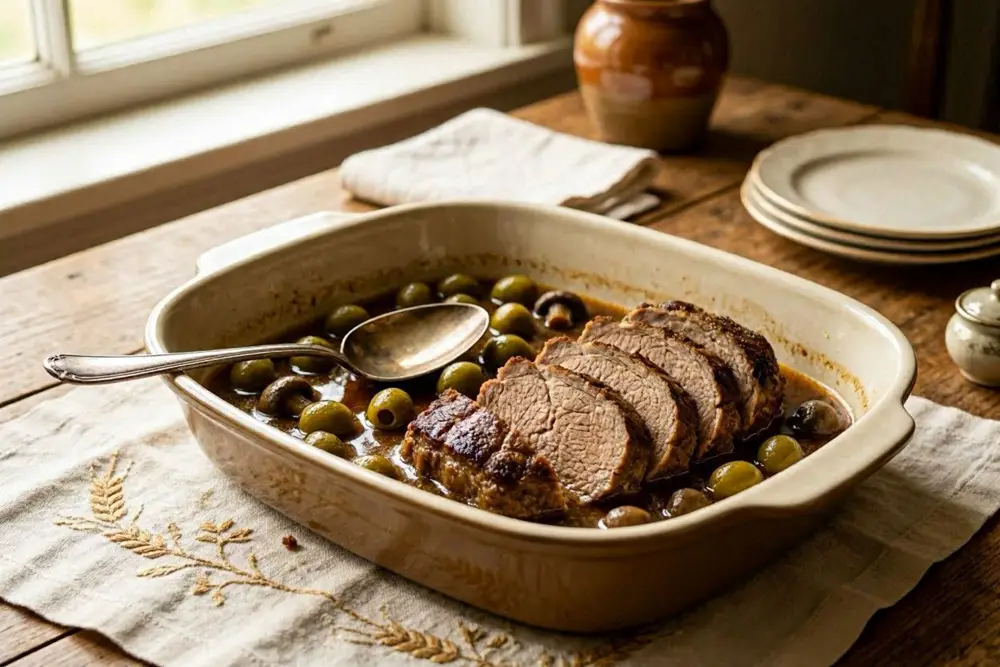
Beef rump roasted in a white wine, rum and broth sauce with sliced mushrooms, whole yellow onions and pitted green olives added in stages.
Historical recipe
Modernised adaptation of an early 20th‑century source. Not independently kitchen-tested by Attic Recipes. Quantities, temperatures, and food safety guidance have been updated for a contemporary kitchen — results may vary and errors may exist. Nutritional values, where provided, are estimates only and have not been laboratory tested. Always follow current food safety guidelines for your region. If you have a health condition, allergy, or dietary requirement, consult a qualified professional before preparing this recipe.
Use of this recipe is entirely at your own risk and subject to our Terms of Service and Privacy Policy. Attic Recipes accepts no liability for any adverse outcome.
- Dairy
- Gluten
- Sulphites
Additional notes
-
Warning
This recipe contains alcohol (white wine and rum). Although extended oven cooking reduces alcohol content, it does not eliminate it completely. This dish should not be served to pregnant women, children under 18, elderly individuals, or immunocompromised persons without confirming that alcohol has been fully cooked off — which requires a minimum of 2.5 hours of cooking at simmering temperature, longer than this recipe specifies.
Replace white wine with additional beef broth and a tablespoon of white wine vinegar for acidity. Replace rum with 1 tsp dark treacle or molasses stirred into the broth.
-
Warning
Use an instant-read thermometer to confirm the internal temperature of the meat before serving: 74°C (165°F) for well-done, or 63°C (145°F) with a minimum 3-minute rest for medium. Do not serve undercooked beef to pregnant women, children under 18, elderly individuals, or immunocompromised persons.
-
Note
Each serving contains approximately 8g saturated fat from butter and beef. Those monitoring saturated fat intake should be mindful of portion size.
- 1
Preheat the oven to 160°C (325°F) / 140°C fan. Pat the 1000g beef rump roast dry with paper towels. Tie firmly with kitchen string at 3–4 cm intervals to hold its shape during cooking.
Tip Drying the surface is essential for a proper sear — moisture steams the meat instead of browning it. - 2
Melt 50g butter in a heavy ovenproof casserole over medium-high heat. When the foam subsides, add the tied roast and sear for 3–4 minutes per side until deeply browned on all surfaces. Remove the meat and set aside on a plate.
Tip Do not move the meat while it is searing — let it release naturally when a crust has formed. Forced movement tears the crust and loses the flavour compounds you are building. - 3
Reduce the heat to medium. Add 8g flour to the butter remaining in the casserole and stir constantly for 2–3 minutes until the roux turns a light golden colour and smells nutty. This cooks out the raw flour taste.
- 4
Gradually whisk in 200ml beef broth, then 100ml white wine and 40ml dark rum. Add ½ tsp salt and ¼ tsp black pepper. Bring to a gentle boil, stirring, and simmer for 3 minutes until the sauce is smooth and slightly thickened.
- 5
Return the seared roast to the casserole. The liquid should come approximately halfway up the sides of the meat — add a splash more broth if needed. Cover with a tight-fitting lid and transfer to the preheated oven.
- 6
After 45–50 minutes, remove the casserole from the oven. Add 200g sliced mushrooms and 2 halved yellow onions to the sauce around the meat. Replace the lid and return to the oven.
Tip Adding the mushrooms and onions at the halfway point prevents them from becoming completely soft and losing their texture by the time the meat is done. - 7
After a further 40–50 minutes — approximately 90–100 minutes total oven time — test the internal temperature of the meat with an instant-read thermometer. For well-done (the period standard): 74°C (165°F). For medium: 63°C (145°F), then rest the meat for at least 3 minutes before slicing. The meat should feel tender when pierced with a skewer.
- 8
Add 250g pitted green olives to the casserole in the final 10 minutes of cooking, stirring them gently into the sauce to warm through. Do not add them earlier — prolonged heat makes olives bitter and mushy.
Tip If the olives are packed in heavily salted brine, rinse them briefly under cold water before adding. Taste the sauce before adding any extra salt at this stage. - 9
Remove the casserole from the oven. Lift the roast onto a board, remove and discard the kitchen string, and slice the meat across the grain into portions. Taste the sauce and adjust seasoning. Arrange the sliced meat in a serving dish, spoon the sauce, mushrooms, onions and olives over the top, and serve immediately.
Tip Slicing across the grain shortens the muscle fibres, making each slice significantly more tender to eat.
Nutrition Information per 1 portion (approx. 200g meat + sauce)
Nutritional values are approximate estimates and may vary based on specific ingredients used, preparation methods, and portion sizes.
Serving Suggestions
Serve with buttered egg noodles, roasted potatoes, or crusty bread to absorb the pan juices. A simple green salad alongside cuts the richness of the sauce. The dish reheats well — store the sliced meat in the sauce in a covered dish and reheat gently on the stovetop over low heat, adding a splash of broth if the sauce has thickened overnight.
About This Recipe
The name in the original recipe is “entrecôte” — but what follows in the instructions is a rump roast, tied with string, seared in butter, and braised in the oven for the better part of two hours. This was not unusual for the period. The term was applied loosely to large cuts of beef intended for slow, covered cooking, and the result was not a bistro steak but something closer to a pot roast: deeply flavoured, yielding, served in its own sauce.
The sauce is built in stages. First a roux from the searing butter and flour, then broth, white wine, and a small rakija glass of dark rum — a combination that reads as unusual until the dish comes out of the oven, at which point the rum has retreated into the background and left behind a particular depth that neither wine nor broth alone would produce. Mushrooms and onions go in at the halfway point so they retain some texture. The pitted green olives arrive last, warmed through but not cooked down, their brine cutting through the richness of the beef fat and butter.
This is a Sunday dish. It requires presence — not constant attention, but awareness. The oven does most of the work.
Why It Works
Braising is the correct technique for rump roast. The cut comes from a heavily worked muscle group that is flavourful but dense; long, slow cooking in liquid breaks down the collagen into gelatin, which thickens the sauce and gives the meat its characteristic tenderness. High heat would tighten the fibres and produce a tough, dry result. Low heat and time are what the cut requires.
The roux — flour cooked in butter before the liquids are added — serves two purposes. It thickens the braising liquid slightly and, more importantly, creates a stable emulsion that keeps the sauce from separating during the long oven time. A sauce built without a roux in a dish like this tends to split by the time the meat is done.
The alcohol in this dish is functional as well as flavoured. Wine and rum both carry aromatic compounds that are fat-soluble — they dissolve into the butter and meat fat during cooking and distribute flavour through the sauce in ways that water-based liquids cannot replicate. The rum in particular contains congeners — the by-products of fermentation and barrel ageing — that add complexity without being identifiable as rum in the finished dish.
Green olives are added at the end for a reason. Extended heat converts their phenolic compounds into bitter, astringent molecules that overwhelm rather than complement. Ten minutes in a hot sauce is sufficient to warm them through and allow their salt and brine to season the sauce without degrading their flavour.
Modern Kitchen Tips
A Dutch oven or heavy cast-iron casserole with a tight lid is ideal for this recipe. The seal matters: too much steam escaping during the oven time concentrates the sauce too quickly and leaves the meat sitting in too little liquid for the final stages.
Sear the meat properly before it goes into the oven. The Maillard reaction that produces the brown crust on the surface of the meat is the single largest contributor to the flavour of the finished sauce — the browned proteins and sugars dissolve into the braising liquid over the cooking time and cannot be replicated any other way.
Slice against the grain. Find the direction the muscle fibres run — they will be visible on the cut surface — and slice perpendicular to them. A rump roast sliced with the grain requires significant chewing; sliced against it, the same meat is noticeably tender.
If the sauce seems thin when the meat is done, lift the roast out, cover it loosely with foil to rest, and reduce the sauce in the open casserole over medium heat on the stovetop for 5–10 minutes. It will thicken considerably as it reduces and cools slightly.
A classic of early 20th century home cooking, preserved and adapted for the modern kitchen.
The Story Behind This Recipe
Historical Context
Early 20th century Central European cookbooks frequently applied the term 'entrecôte' to large cuts of beef intended for slow oven-roasting, regardless of anatomical origin — the label referred more to the preparation style than to the specific cut. The use of rum alongside white wine in a braised meat sauce is a period-specific flavour combination that appears occasionally in the region's more elaborate home cooking, reflecting both the availability of rum as a stored spirit and its perceived role as a flavour deepener in rich sauces. Mushrooms and olives were added in stages, as specified in period instructions, rather than at the start — an approach that reflects an early awareness of differential cooking times for different ingredients. The quantities of liquid were given as 'glasses' and 'decilitres' without standardised volumes, and no oven temperature or baking time was specified beyond the expectation that the cook would judge doneness by feel.
Modern Kitchen Adaptation
The cut has been specified as beef rump roast, which is what the original described anatomically despite the 'entrecôte' label in the title. Rum quantity standardised to 40ml, interpreted from 'čašica' (a small rakija glass, typically 30–50ml) — the original phrasing implied a very small quantity of rum relative to the other liquids, not a full drinking glass. Oven temperature estimated at 160°C / 140°C fan for a gentle braise appropriate to a rump roast of this size. Cooking time estimated at 90–100 minutes in the oven, with internal temperature guidance added. The flour-to-butter ratio produces a relatively light sauce that remains somewhat thin after braising; if a thicker consistency is preferred, remove the roast after cooking and reduce the sauce over medium heat on the stovetop for 5–10 minutes before serving. Button mushrooms have been specified as the default; the original named no variety.
This recipe is an independent modern adaptation developed from historical sources in the public domain. It is provided for informational and educational purposes only and does not constitute professional dietary, nutritional, or medical advice. Food preparation involves inherent risks. The reader assumes full responsibility for safe food handling, ingredient sourcing, and adherence to current local food safety guidelines. The site operator accepts no liability for outcomes resulting from the preparation or consumption of this recipe.
One recipe.
Every week.
You Might Also Like
More recipes from the same category
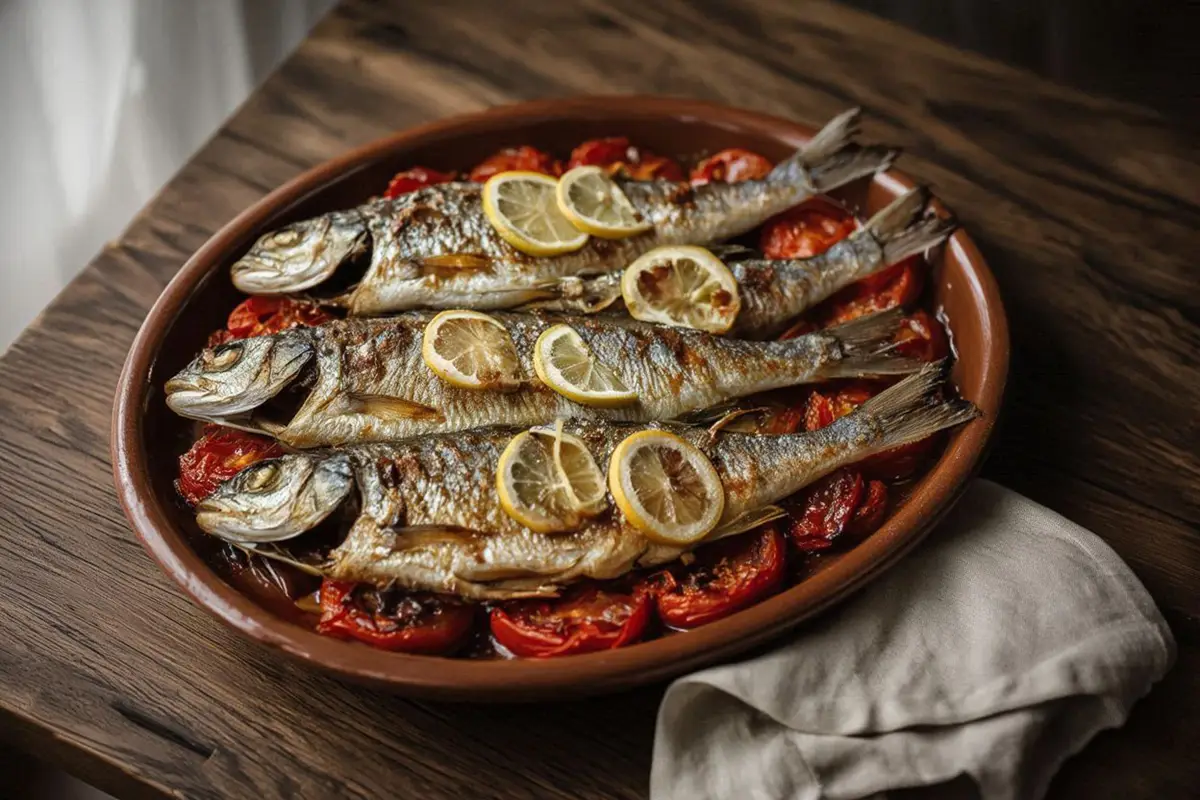
Baked Fish with Tomatoes
Whole fish baked over ripe tomatoes with generous olive oil and lemon — a simple, fragrant Central European oven dish.
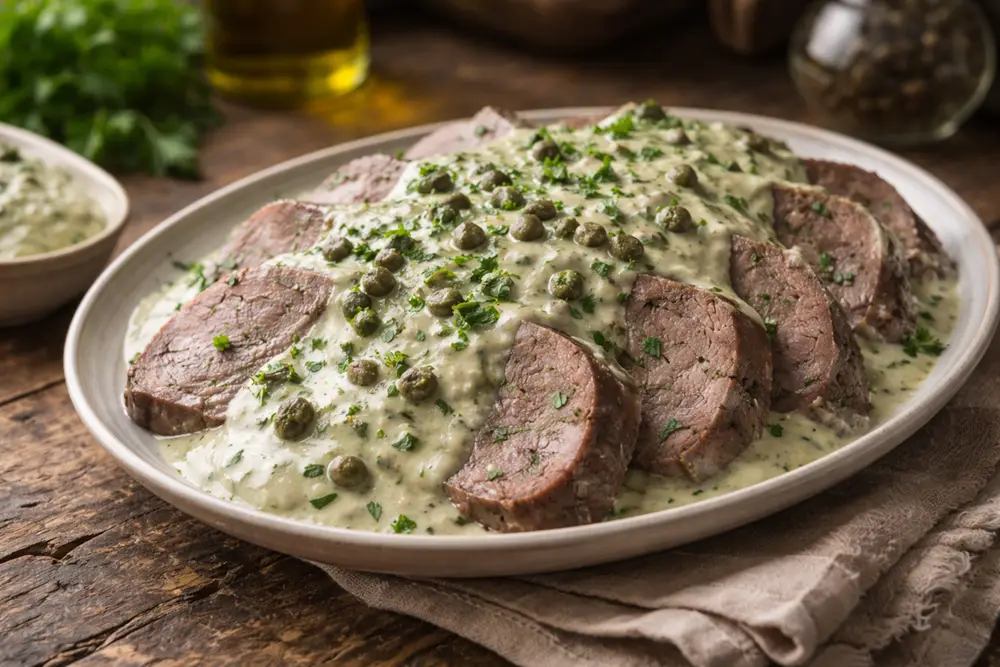
Baked Tongue in Green Sauce
Beef tongue braised with herbs, larded with bacon and roasted until golden, served in a green sauce of capers, anchovy, parsley and sour cream.
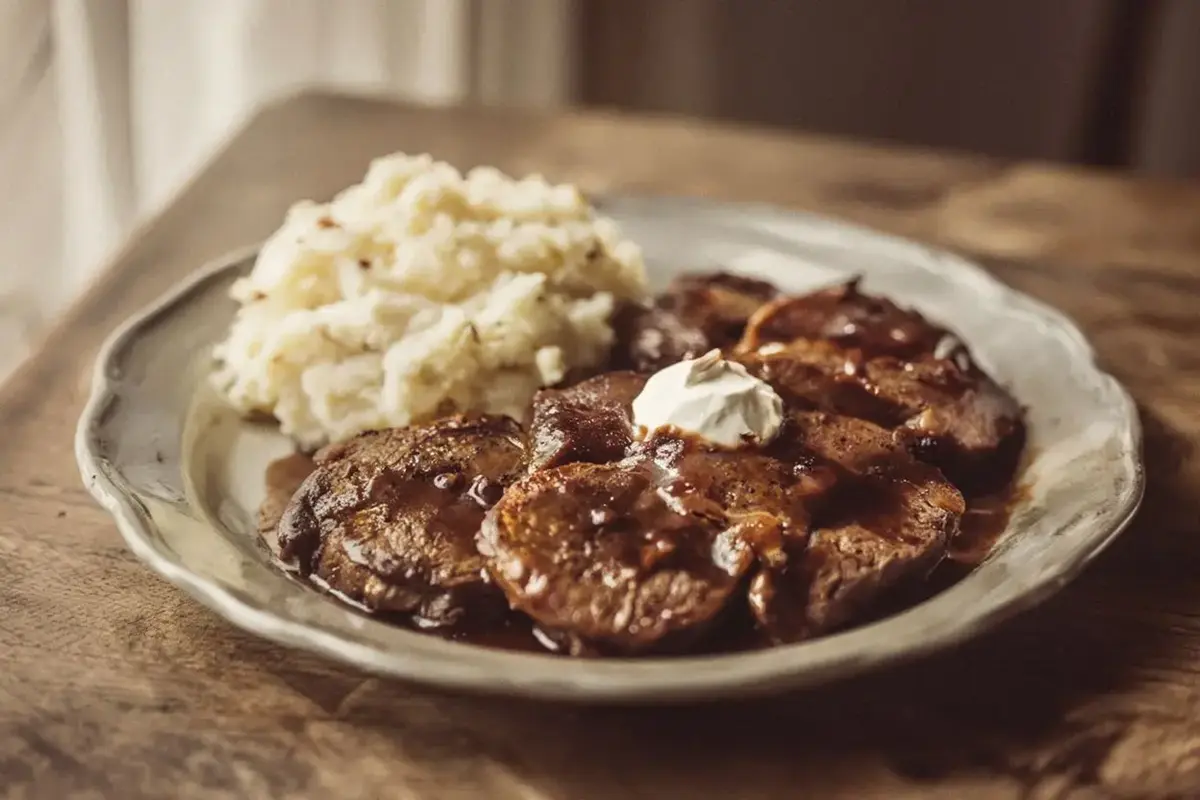
Beef Kidney with Wine
Beef kidney marinated in red wine, braised with herbs, finished with sour cream. Tender, rich, and deeply flavored.