Cucumber Sauce
A warm, tangy sauce of vinegar, fresh herbs, butter roux, and chopped pickles — made in two stages and finished without heat to keep the pickles crisp.
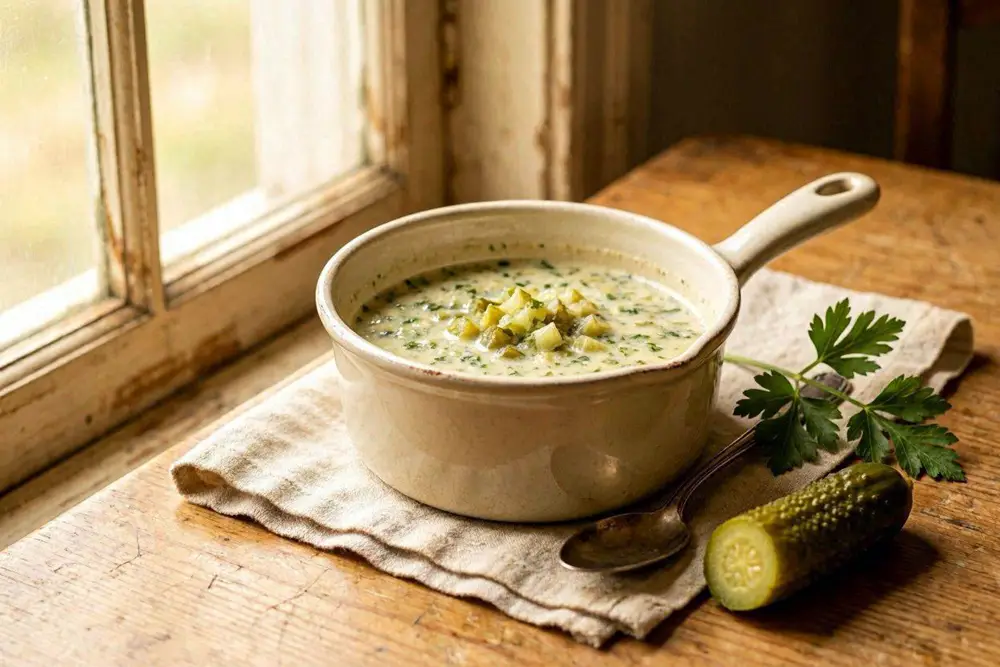
Historical recipe
Modernised adaptation of an early 20th‑century source. Not independently kitchen-tested by Attic Recipes. Quantities, temperatures, and food safety guidance have been updated for a contemporary kitchen — results may vary and errors may exist. Nutritional values, where provided, are estimates only and have not been laboratory tested. Always follow current food safety guidelines for your region. If you have a health condition, allergy, or dietary requirement, consult a qualified professional before preparing this recipe.
Use of this recipe is entirely at your own risk and subject to our Terms of Service and Privacy Policy. Attic Recipes accepts no liability for any adverse outcome.
- Dairy
- Gluten
Additional notes
-
Note
This sauce contains dairy. Use broth in place of milk for a dairy-free version, and replace butter with a neutral oil.
- 1
Combine the vinegar, black pepper, chopped parsley, chopped chives, and 15g butter in a small saucepan. Place over low heat and simmer gently for 2–3 minutes until the herbs soften and the butter melts. Remove from heat and set aside.
Tip Do not boil — you want the herbs to steep in the warm vinegar, not cook out their flavour. - 2
In a separate small saucepan, melt the remaining 15g butter over medium-low heat. Add the flour and stir continuously for 1 minute until the roux is smooth, bubbly, and just beginning to colour.
- 3
Gradually whisk in the milk or broth in a thin stream, whisking constantly to prevent lumps. Bring to a gentle boil, stirring, and cook for 2–3 minutes until the sauce thickens to a smooth, pourable consistency.
Tip Warm the milk or broth before adding — it incorporates more smoothly into a hot roux. - 4
Pour the herb-vinegar mixture into the thickened sauce. Stir to combine and bring back to a brief boil for 1 minute.
- 5
Remove from heat. Fold in the finely chopped pickles and serve immediately while warm.
Tip Adding the pickles off heat preserves their texture and keeps their acidity sharp. Cooking them dulls both.
Nutrition Information per 1 porcija (approx. 80ml)
Nutritional values are approximate estimates and may vary based on specific ingredients used, preparation methods, and portion sizes.
Serving Suggestions
Serve warm alongside boiled or pan-fried veal, poached chicken, or boiled beef. Also works well over steamed vegetables or as a sauce for veal cutlets.
About This Recipe
Cucumber sauce in early 20th century Central European cooking was not a cold condiment — it was a warm, pan-built sauce finished with chopped pickles at the last moment. The name refers to the gherkins folded in at the end, not to fresh cucumber. The result is something between a velouté and a herb butter sauce: a butter-flour base sharpened with vinegar, softened with herbs, and given texture by the pickles.
The two-stage method — aromatic base built separately from the roux — is characteristic of the period. It allowed each element to develop properly before combining, and it kept the pickles out of the heat until the final moment, preserving their texture.
This sauce appears in the archive as an accompaniment to veal cutlets, but it pairs equally well with poached chicken, boiled beef, or steamed vegetables.
Why It Works
The acidity of the vinegar does two things: it cuts through the richness of the butter roux, and it brightens the flavour of the herbs. Simmering the herbs briefly in warm vinegar before adding them to the sauce softens their raw edge without cooking out their flavour — a temperature-sensitive step that the original method handles correctly by using low heat and a short steep.
The pickles go in off heat for the same reason. Gherkins contain acetic acid and residual brine; brief heat intensifies their flavour, but extended cooking dulls them and releases excess liquid into the sauce, thinning it. Adding them last keeps both texture and sharpness intact.
Modern Kitchen Tips
Use warm milk or broth when building the roux sauce — cold liquid added to a hot roux can create lumps that are difficult to whisk out. A small ladle, added gradually while whisking, gives you control over the final consistency.
If the sauce tastes too sharp, a small pinch of sugar or a splash of cream will bring it into balance without changing the character of the dish.
The sauce does not hold well — it thickens as it sits and the pickle texture softens. Make it immediately before serving.
A classic of early 20th century home cooking, preserved and adapted for the modern kitchen.
The Story Behind This Recipe
Historical Context
Early 20th century versions of this sauce were built in two separate vessels — an aromatic vinegar base and a butter-flour thickener — combined only at the end. The pickles were stirred in last, directly before serving, a detail that preserved their texture in an era without refrigeration where pickles were a pantry staple rather than a fresh ingredient.
Modern Kitchen Adaptation
Butter quantities in early 20th century versions of this sauce were given as 'walnut-sized' and 'a little' — standardised here to 15g each based on roux proportions. Liquid quantity was not specified; 200ml is calculated for a 1 tablespoon flour roux and produces a sauce of pourable, coating consistency. Either milk or light meat broth works — milk gives a creamier result, broth a more savoury one. Use broth if serving alongside meat dishes.
This recipe is an independent modern adaptation developed from historical sources in the public domain. It is provided for informational and educational purposes only and does not constitute professional dietary, nutritional, or medical advice. Food preparation involves inherent risks. The reader assumes full responsibility for safe food handling, ingredient sourcing, and adherence to current local food safety guidelines. The site operator accepts no liability for outcomes resulting from the preparation or consumption of this recipe.
One recipe.
Every week.
You Might Also Like
More recipes from the same category
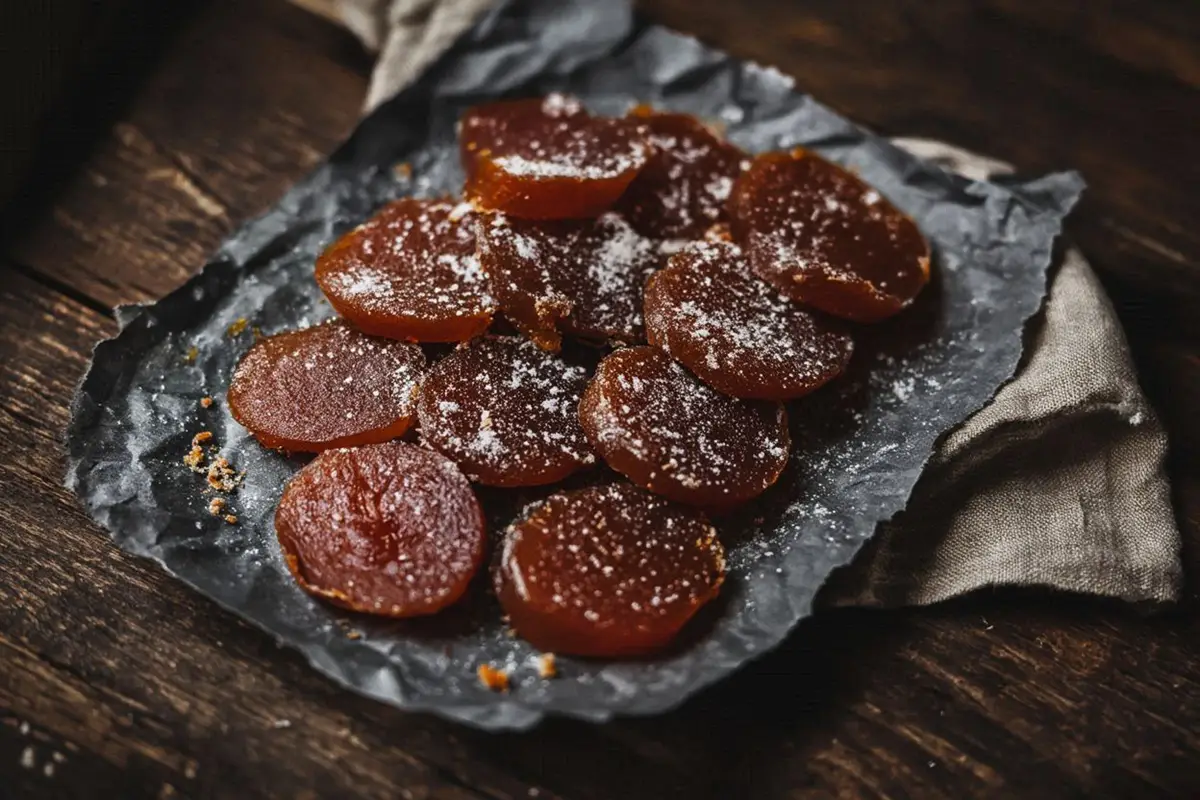
Apricot Fruit Paste
Sieved ripe apricots cooked with equal weight sugar and lemon juice, poured into molds and air-dried — from early 20th century Central European kitchens.
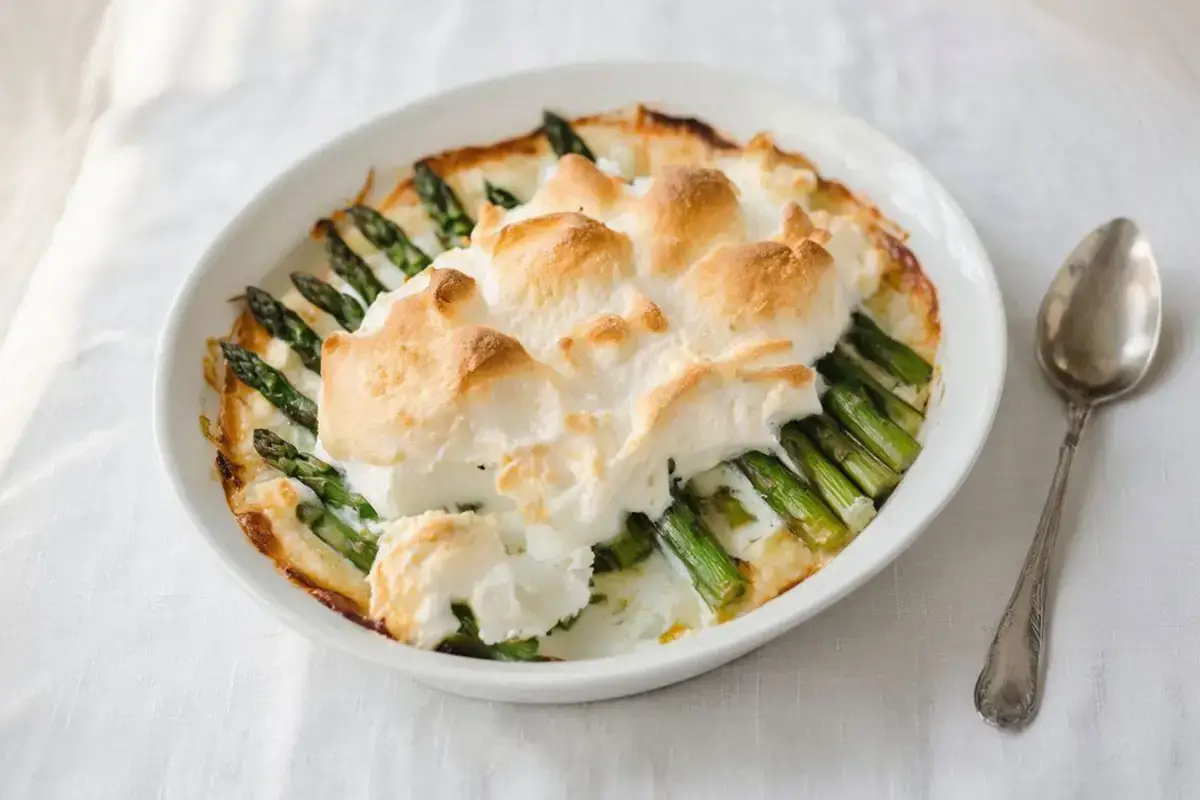
Asparagus Venetian Style
Fresh asparagus baked under a rich egg yolk cream sauce and a golden meringue-cheese topping. An elegant Central European appetizer.
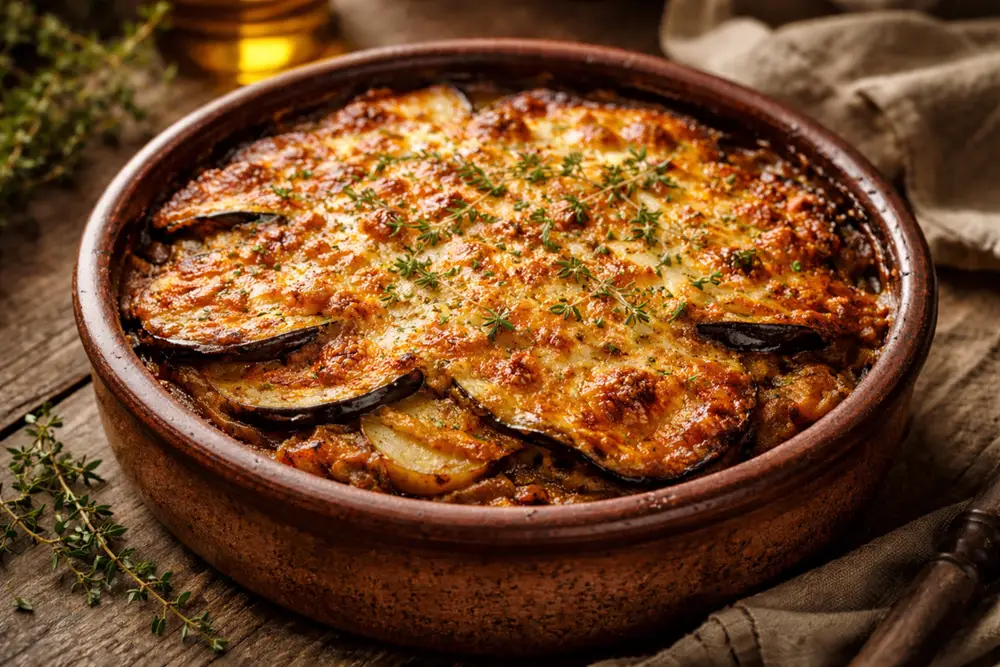
Baked Eggplant with Potatoes
A slow-baked layered casserole of eggplant, parboiled potatoes, golden fried onion, and melted cheese.