Chicken Stew with Spices
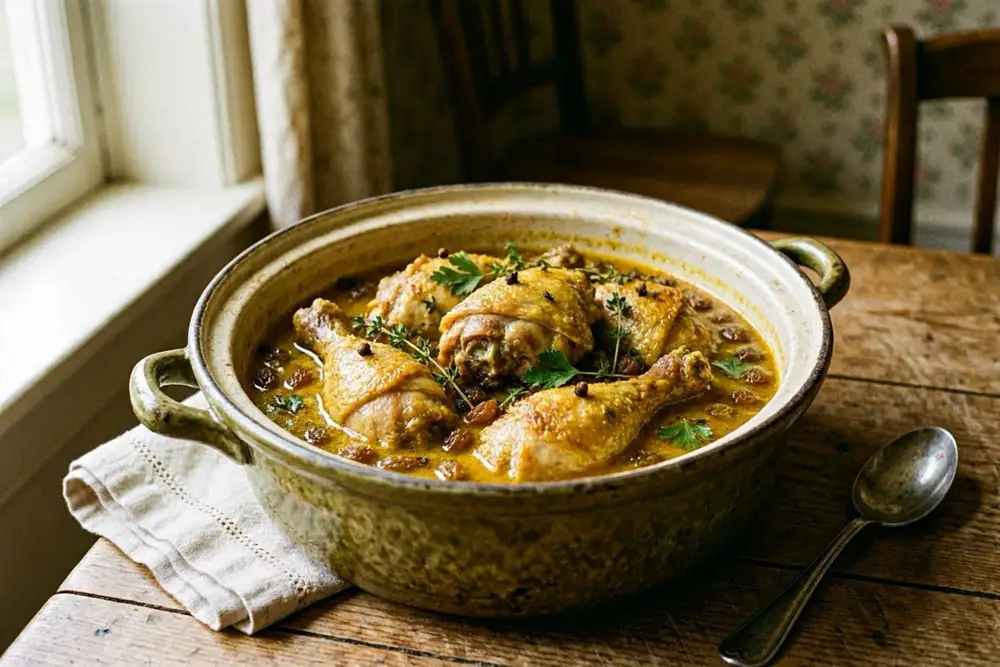
A fragrant braised chicken with walnuts, saffron, cinnamon, raisins, and savory — a Caucasian-inspired stew from a Central European cookbook.
Quick Summary
A fragrant braised chicken with walnuts, saffron, cinnamon, raisins, and savory — a Caucasian-inspired stew from a Central European cookbook.
Historical recipe
Modernised adaptation of an early 20th‑century source. Not independently kitchen-tested by Attic Recipes. Quantities, temperatures, and food safety guidance have been updated for a contemporary kitchen — results may vary and errors may exist. Nutritional values, where provided, are estimates only and have not been laboratory tested. Always follow current food safety guidelines for your region. If you have a health condition, allergy, or dietary requirement, consult a qualified professional before preparing this recipe.
Use of this recipe is entirely at your own risk and subject to our Terms of Service and Privacy Policy. Attic Recipes accepts no liability for any adverse outcome.
- Tree Nuts
- Celery
Additional notes
-
Note
Each serving contains approximately 1865mg of sodium, close to the recommended daily limit of 2000mg for adults. This reflects the use of 1 tablespoon of salt for the full batch as specified. Reduce the salt to 1 teaspoon if you are monitoring sodium intake.
-
Note
Each serving contains approximately 10g of saturated fat. Individuals managing cardiovascular health or cholesterol should be aware of the fat content from the chicken skin and bone-in pieces.
-
Note
This recipe contains walnuts. Individuals with tree nut allergies must not consume this dish.
- 1
Steep the saffron threads in 1 tablespoon of hot (not boiling) water and set aside for 5 minutes to bloom.
- 2
Clean and wash the chicken pieces thoroughly. Place them in a single layer in a large heavy-bottomed saucepan or Dutch oven.
- 3
Add all the remaining ingredients directly to the pot: the 250g of sliced onion, 2 tablespoons of ground walnuts, 10 whole cloves, 10 crushed peppercorns, 1 teaspoon of cinnamon, the chopped parsley leaves, the sliced parsley root, 2 tablespoons of raisins, 2 tablespoons of dried savory, 1 tablespoon of salt, and the 125ml of white wine vinegar. Add the bloomed saffron together with its soaking water. Pour over approximately 600ml of cold water, or enough to just cover the meat.
Tip The original method places everything in the pot together without browning — a one-pot technique that keeps the preparation simple and produces a braised rather than roasted character. - 4
Cover the saucepan with a lid and set over low heat. Bring slowly to a gentle simmer — do not boil hard, which would toughen the chicken and cloud the braising liquid. Cook for approximately 60 minutes, stirring every 15–20 minutes to prevent the ground walnuts from settling and catching on the bottom of the pan. The dish is ready when the meat is completely tender and pulls easily from the bone.
Tip Check the liquid level halfway through cooking. If the pot looks dry, add a splash of water. The finished sauce should be reduced and slightly thickened from the walnuts and onion — not watery. - 5
Taste and adjust seasoning if needed. Transfer the chicken pieces to a deep serving bowl, spoon the braising sauce and vegetables over the top, and serve immediately.
Nutrition Information per 1 serving (approx. 380g, based on 4 servings)
Nutritional values are approximate estimates and may vary based on specific ingredients used, preparation methods, and portion sizes.
Serving Suggestions
Serve with steamed rice or flatbread to absorb the braising sauce. A simple salad of cucumber and yogurt alongside balances the acidity of the vinegar in the stew.
About This Recipe
Some recipes travel. This chicken stew — listed simply as a Caucasian dish in its original source — carries the fingerprints of a culinary tradition far older and more widely travelled than the cookbook that preserved it. Ground walnuts, saffron, cinnamon, vinegar, and dried fruit in a braised meat dish: this is a flavour profile that runs across the Caucasus and Persia, finding its way into Central European kitchens through centuries of trade, migration, and the absorptive capacity of home cooks who were simply curious about what people elsewhere were eating.
The technique is unassuming. Everything goes into the pot at once — chicken, onion, spices, vinegar, water — and the lid goes on. There is no browning, no building in stages, no reduction separate from the braise. What emerges after an hour on low heat is something deeply aromatic, faintly sweet-and-sour from the raisins and vinegar, and coloured a warm gold from the saffron. The ground walnuts dissolve almost entirely into the sauce, thickening it slightly and lending a quiet richness that is easy to miss but noticeable by its absence.
Savory — čubar in Serbian, Satureja hortensis in botanical Latin — is the herb that grounds the dish. Dry and resinous, it has an affinity for both meat and vinegar that makes it more than a background note here. Home cooks of the period were advised that both savory and saffron could be found in pharmacies, which gives some sense of how exotic these ingredients remained in early 20th century Central European home cooking.
Why It Works
The one-pot method works for this dish because the goal is not a roasted character but a braised one — soft, unified, the flavours thoroughly merged. The vinegar acidifies the braising liquid, which helps break down the collagen in the chicken over the long, slow cook. The onion melts into the sauce. The raisins soften and plump, releasing their sugar gradually. The saffron colours everything.
Ground walnuts behave differently in a braise than whole ones. Finely ground, they disperse through the liquid and thicken it slightly as the starches and oils release — producing a sauce that is neither watery nor heavy, but has body. Stirring every 15–20 minutes is important: walnut solids will settle and scorch on the bottom of the pan if left alone.
The balance of sweet (raisins), sour (vinegar), bitter (walnut), aromatic (saffron, cinnamon, savory), and savoury (chicken, salt) is the point of the dish. None of these elements should dominate. Taste the sauce before serving and trust the balance the recipe has already established.
Modern Kitchen Tips
- Saffron blooming: Always steep saffron threads in hot water for at least 5 minutes before adding to the pot. Saffron releases its colour and aroma into liquid, not directly into fat or dry heat.
- Walnut grinding: Use a small spice grinder or mortar and pestle. Pre-ground walnuts from a bag will work but lose aromatic intensity quickly — grind fresh if possible.
- Parsley root: Common in Central European cooking but less available elsewhere. Substitute with a small piece of celeriac (celery root) — the flavour is similar, slightly more assertive.
- Čubar / savory: If unavailable, dried thyme is the closest substitute in terms of texture and intensity, though the flavour differs. Fresh savory, if you can find it, use double the dried quantity.
- Leftovers: The stew improves overnight as the spices continue to develop. Reheat gently over low heat with a splash of water.
A classic of early 20th century home cooking, preserved and adapted for the modern kitchen.
The Story Behind This Recipe
Historical Context
This recipe appears under a Caucasian designation in early 20th century Central European cookbooks — reflecting a well-established editorial tradition of including dishes from the Ottoman, Persian, and Caucasian regions that had reached Central European tables through centuries of trade, migration, and culinary exchange. The combination of ground walnuts, saffron, warm spice, vinegar, and dried fruit in a braised meat dish is characteristic of a broad family of sweet-and-sour stews found across the Caucasus and Persia. Home cooks of the period would have sourced saffron and savory from pharmacies, where aromatic herbs and spices were commonly sold alongside medicinal preparations. The one-pot method — meat, spices, and liquid combined from the start without preliminary browning — is consistent with the simplified domestic approach of the era.
Modern Kitchen Adaptation
The original method adds all ingredients at once without browning the meat or sweating the onions. This has been preserved as written — it produces a braised, gently flavoured dish distinct from the roasted depth achieved by searing. Cooks who prefer a richer, more complex sauce may brown the chicken pieces in a little neutral oil before adding the remaining ingredients; this is not traditional to the recipe but produces a fuller colour and flavour. Saffron is specified as threads rather than powder, with a brief blooming step added to maximise colour and aroma extraction.
This recipe is an independent modern adaptation developed from historical sources in the public domain. It is provided for informational and educational purposes only and does not constitute professional dietary, nutritional, or medical advice. Food preparation involves inherent risks. The reader assumes full responsibility for safe food handling, ingredient sourcing, and adherence to current local food safety guidelines. The site operator accepts no liability for outcomes resulting from the preparation or consumption of this recipe.
One recipe.
Every week.
You Might Also Like
More recipes you'll enjoy
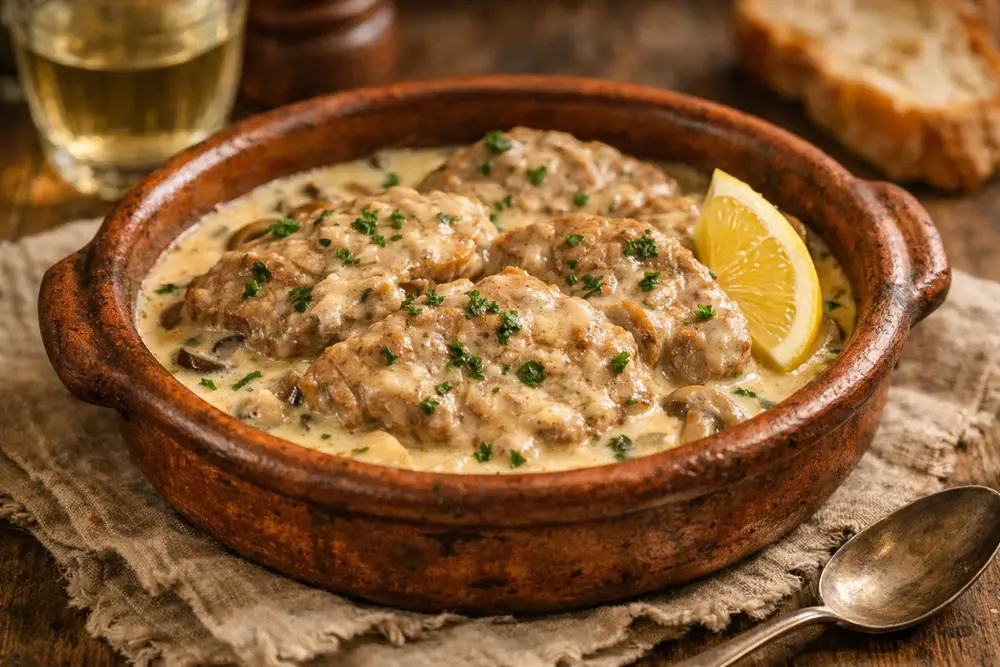
Veal Steaks in White Wine
Tender braised veal marinated in white wine, slow-cooked in a covered casserole, and finished with a light sour cream and lemon pan sauce.
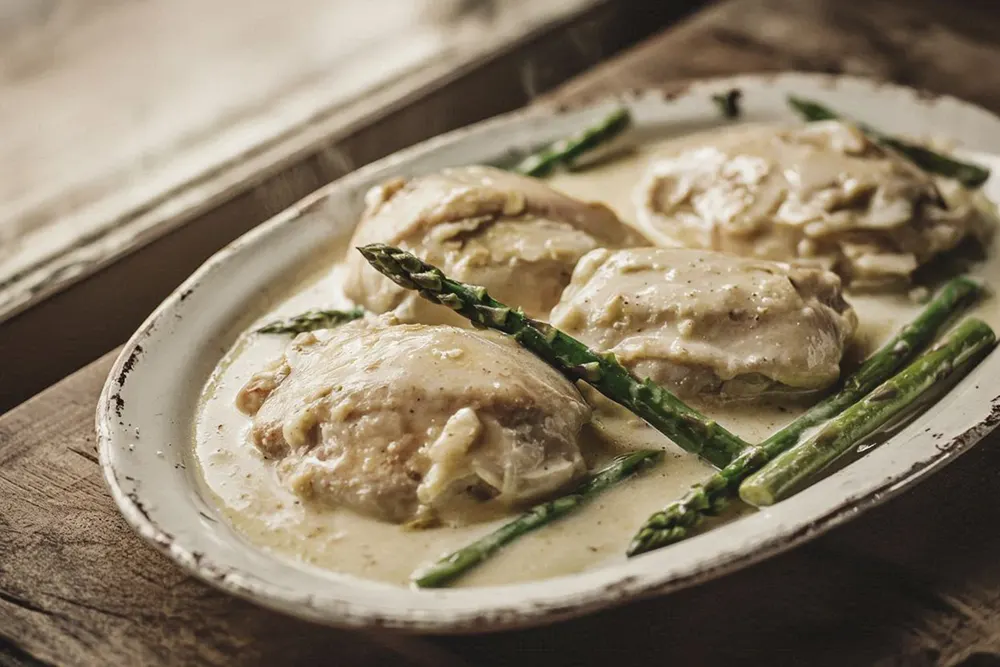
Chicken in Asparagus Sauce
A whole chicken poached in spiced broth, then finished in a silky velouté enriched with egg yolks and cream, garnished with tender asparagus tips.
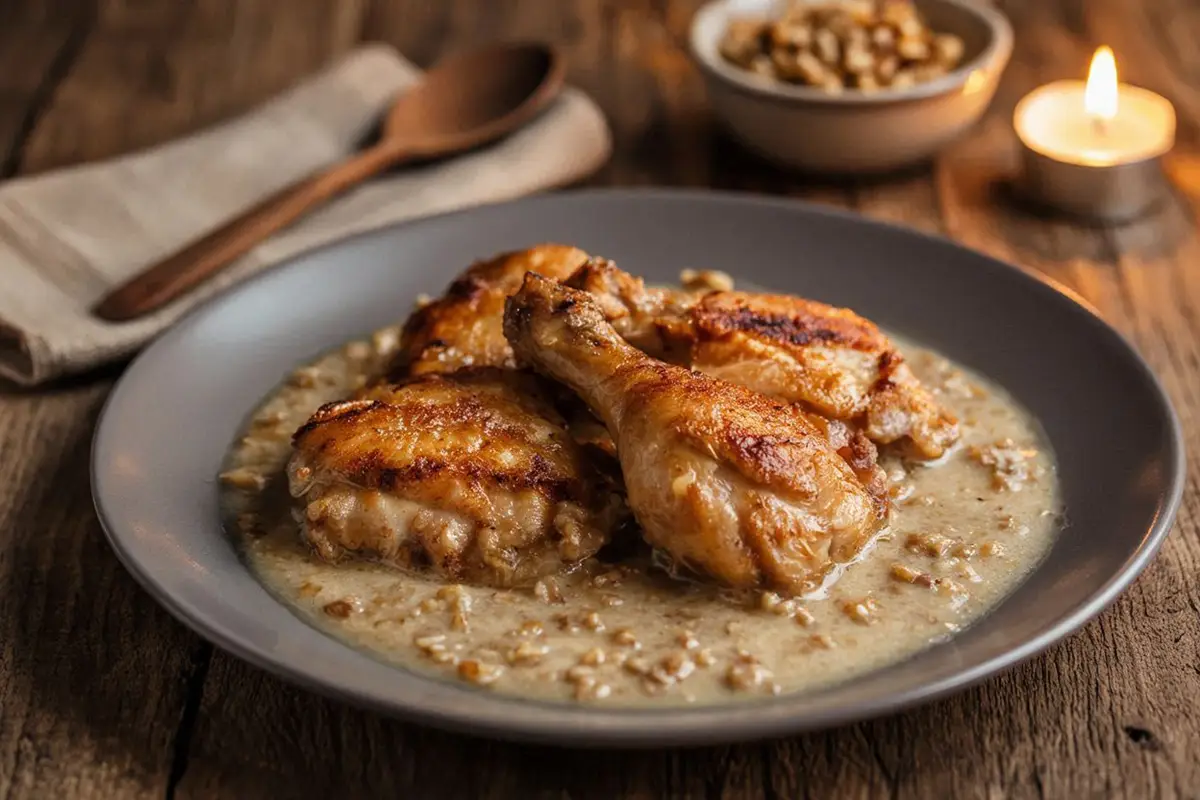
Chicken in Walnut Sauce
Tender boiled chicken pieces served over a rich, garlicky walnut sauce — a hearty Central European classic with deep, nutty flavor and satisfying weight.