Carrot and Sour Apple Jam
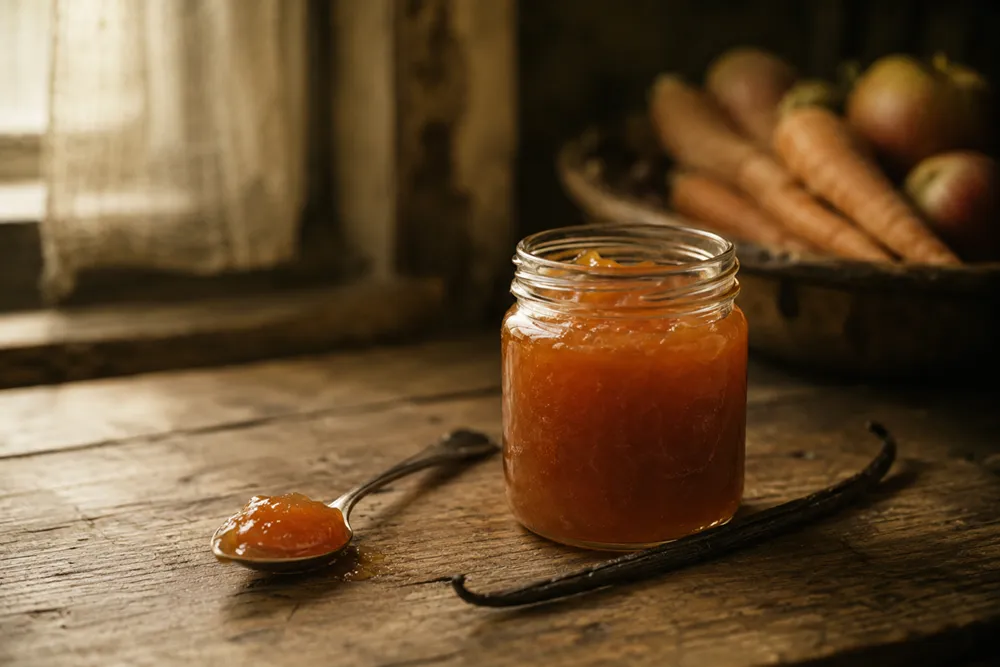
Carrots and sour apples, simmered soft, puréed, and slowly cooked down with sugar and vanilla into a smooth, spreadable jam.
Quick Summary
Carrots and sour apples, simmered soft, puréed, and slowly cooked down with sugar and vanilla into a smooth, spreadable jam.
Historical recipe
Modernised adaptation of an early 20th‑century source. Not independently kitchen-tested by Attic Recipes. Quantities, temperatures, and food safety guidance have been updated for a contemporary kitchen — results may vary and errors may exist. Nutritional values, where provided, are estimates only and have not been laboratory tested. Always follow current food safety guidelines for your region. If you have a health condition, allergy, or dietary requirement, consult a qualified professional before preparing this recipe.
Use of this recipe is entirely at your own risk and subject to our Terms of Service and Privacy Policy. Attic Recipes accepts no liability for any adverse outcome.
Additional notes
-
Warning
Carrots are a low-acid ingredient. Jars must be properly sterilized before filling and the filled, sealed jars processed in a boiling water bath afterward to prevent botulism risk — leaving jars unprocessed in a warm oven, as in the historical method, is not sufficient. Refrigerate after opening and use within a few weeks. Pregnant women, children under 18, the elderly, and immunocompromised individuals should be especially cautious with home-canned low-acid preserves.
- 1
Peel the carrots and cut into thin rounds. Place in a pot with the 250ml water and bring to a boil.
- 2
Peel and slice the sour apples. When the carrots are almost tender, add the apple slices to the pot.
- 3
Continue cooking until both the carrots and apples are completely soft.
- 4
Pass the cooked carrots and apples through a fine sieve or food mill, returning the cooking liquid to the puréed mass.
Tip In early twentieth-century Central European kitchens, this tool was called an ala — a perforated trough paired with a wooden pestle, used for puréeing tomatoes in bulk, fruit for preserves, and boiled root vegetables. A fine sieve or food mill achieves the same result today. - 5
Transfer the purée to a clean, heavy-bottomed pot. Add the vanilla pod and cook over medium heat, stirring constantly to prevent scorching.
- 6
When the mixture has visibly reduced, roughly halfway through cooking, stir in the sugar. Continue cooking, stirring constantly, until a spoon dragged along the bottom leaves a clear line that briefly holds before filling back in (the gel point).
Tip This is the classic spoon-line test for jam doneness — no thermometer needed, though the gel point typically falls around 104-105°C (219-221°F) if you want to confirm it. - 7
Remove the vanilla pod. Sterilize the jars in a boiling water bath for 15 minutes before filling.
Tip Because carrots are a low-acid vegetable, proper sterilization and processing are essential here to prevent botulism risk — this step is mandatory, not optional. - 8
Ladle the hot jam into the hot, sterilized jars, leaving a small headspace, and seal with lids.
- 9
Process the filled, sealed jars in a boiling water bath for 20 minutes to ensure a safe seal.
Tip This replaces the historical practice of leaving open jars in a warm oven overnight, which does not reach the temperature needed to eliminate botulism risk in a low-acid vegetable preserve. - 10
Cool completely, check that lids have sealed, label, and store in a cool, dark place.
Nutrition Information per 1 tbsp (approx 20g)
Nutritional values are approximate estimates and may vary based on specific ingredients used, preparation methods, and portion sizes.
Serving Suggestions
Spread on fresh bread or toast, swirl into plain yogurt or oatmeal, or serve alongside soft cheese.
About This Recipe
Carrot and apple make an unlikely-sounding pair, but this old-fashioned jam leans into it: the earthy sweetness of slow-cooked carrot rounds meets the sharp tang of sour apples, mellowed together with a single vanilla pod and hours of patient, constant stirring. Both vegetable and fruit are simmered until completely soft, then puréed and reduced with sugar into a smooth, spreadable preserve with a warm amber color.
It’s a jam built for a kitchen with time to spare — no rush, no thermometer, just the slow visual cues of reduction and a spoon dragged along the bottom of the pot to check for doneness.
Why It Works
Carrots contribute natural sweetness and body, while sour apples bring both acidity and pectin, which helps the mixture set properly as it reduces. Cooking the puréed vegetable and fruit mixture without sugar first, then adding the sugar only partway through, allows excess water to evaporate before the sugar is introduced — this prevents the sugar from binding water too early and scorching against the bottom of the pot, a common pitfall in slow-reduced preserves.
Modern Kitchen Tips
Use a heavy-bottomed pot and keep the heat moderate rather than high — this jam relies on slow, steady evaporation, and a wide, non-stick or enameled pot will make the constant stirring far more manageable. If you don’t have a food mill, a fine mesh sieve and the back of a ladle work just as well for puréeing the cooked carrots and apples.
A classic of early 20th century home cooking, preserved and adapted for the modern kitchen.
The Story Behind This Recipe
Historical Context
Early 20th century recipes for this jam gave no weight for the carrots or apples, only for the sugar, and relied on a spoon-line test to judge doneness rather than a thermometer. The purée itself was worked through an ala — a perforated trough and wooden pestle considered a genuinely new piece of kitchen equipment in its day. The period technique for sealing the jars involved leaving them uncovered in a warm oven overnight before tying them shut the next day, a method intended to form a skin on the surface rather than to sterilize the contents.
Modern Kitchen Adaptation
Carrot and apple weights (500g each) and the water quantity (250ml) are estimated, since the original specified only the sugar amount. Because carrots are a low-acid ingredient, the original overnight warm-oven method does not provide adequate protection against botulism in a sealed jar; it has been replaced here with mandatory jar sterilization before filling and boiling water bath processing after sealing. The ala referenced in the original is rendered here as a fine sieve or food mill.
This recipe is an independent modern adaptation developed from historical sources in the public domain. It is provided for informational and educational purposes only and does not constitute professional dietary, nutritional, or medical advice. Food preparation involves inherent risks. The reader assumes full responsibility for safe food handling, ingredient sourcing, and adherence to current local food safety guidelines. The site operator accepts no liability for outcomes resulting from the preparation or consumption of this recipe.
One recipe.
Every week.
You Might Also Like
More recipes you'll enjoy
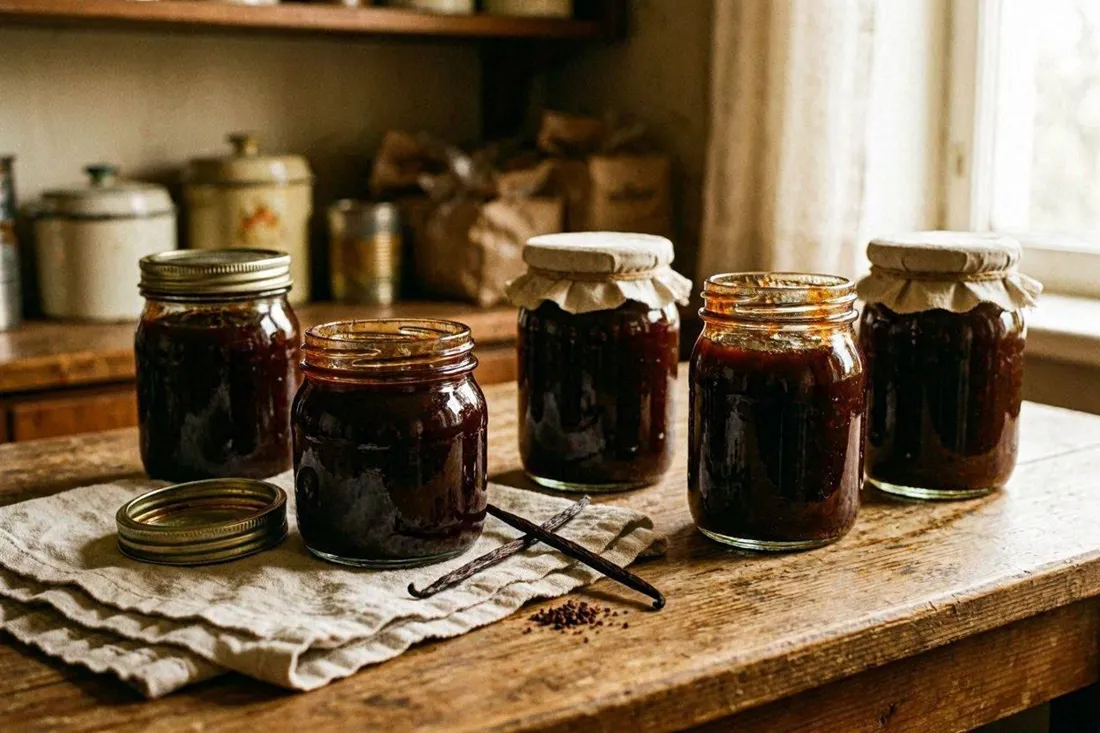
Mixed Fruit and Green Tomato Pekmez
A thick, slow-simmered fruit butter made from grapes, plums, apples, and unripe tomatoes, sweetened lightly and scented with vanilla.
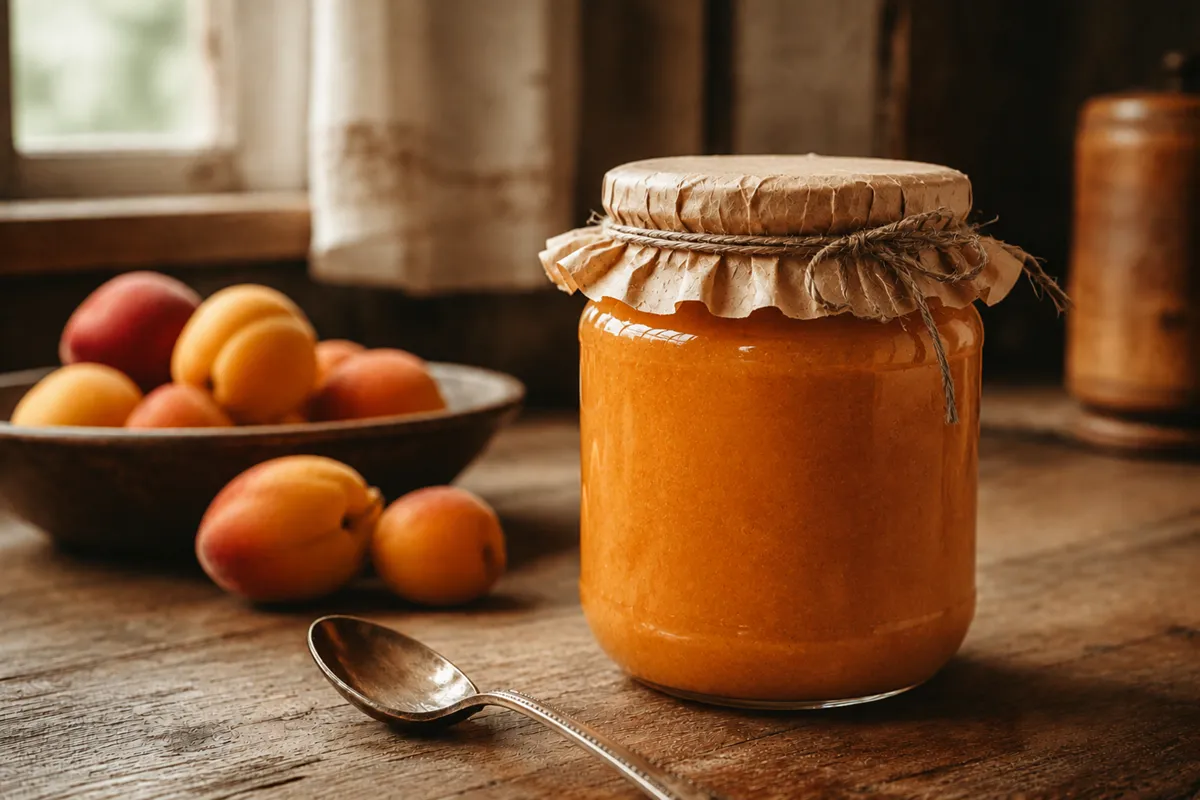
Whipped Apricot or Peach Preserve (No-Cook)
A silky, pale fruit spread made by whipping raw apricot or peach puree with sugar - no cooking required.
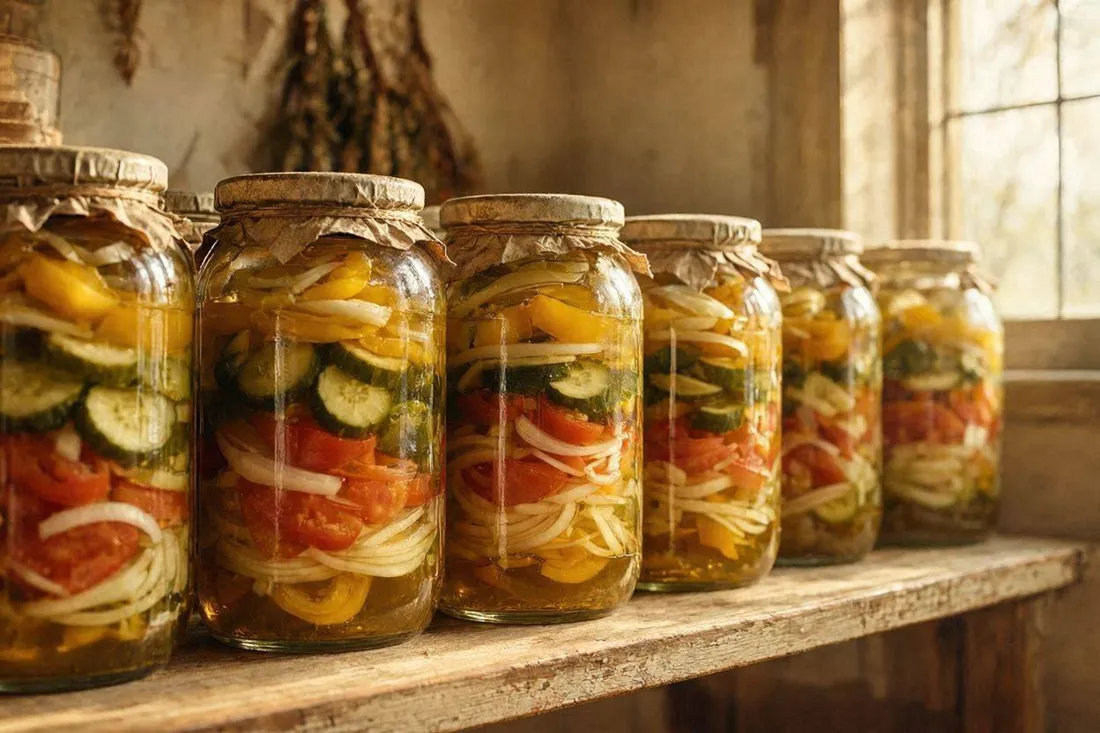
Mixed Vegetable Preserve in Sweet-Sour Brine
A mix of onion, green tomato, cucumber, and bell pepper in a sweet-sour vinegar brine, canned for winter storage — a Central European preserving classic.