Buttered Spring Vegetables with Spinach Cream Sauce
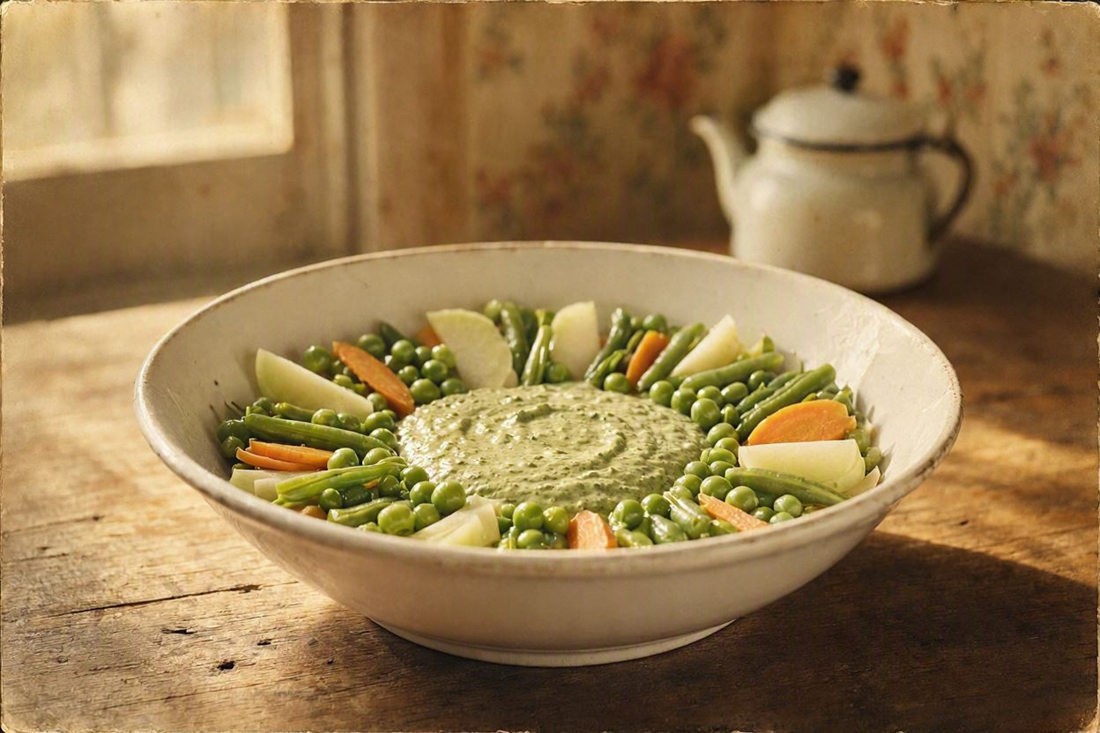
A buttery mix of peas, kohlrabi, carrot, and green beans arranged in a ring, with a rich spinach and sour cream sauce poured into the center.
Quick Summary
Young kohlrabi, carrot, peas, and green beans are boiled separately, then tossed in butter and arranged in a ring. The center is filled with a rich sour cream sauce brightened with parsley and pureed spinach, finished with a touch of tomato and sugar.
Historical recipe
Modernised adaptation of an early 20th‑century source. Not independently kitchen-tested by Attic Recipes. Quantities, temperatures, and food safety guidance have been updated for a contemporary kitchen — results may vary and errors may exist. Nutritional values, where provided, are estimates only and have not been laboratory tested. Always follow current food safety guidelines for your region. If you have a health condition, allergy, or dietary requirement, consult a qualified professional before preparing this recipe.
Use of this recipe is entirely at your own risk and subject to our Terms of Service and Privacy Policy. Attic Recipes accepts no liability for any adverse outcome.
- Dairy
Additional notes
-
Note
This dish is very rich in butter and cream, with an estimated 37g of saturated fat per serving — well above typical daily guidance in a single portion. Those monitoring saturated fat or cholesterol intake may want to treat this as a smaller side portion, or reduce the butter and sour cream slightly.
- 1
Boil the peas separately in salted water until tender, then drain.
- 2
Boil the julienned kohlrabi and carrot separately in salted water until tender, then drain.
- 3
Boil the green beans in salted water until tender, then drain.
- 4
Drain all the boiled vegetables well in a colander.
- 5
Melt the first 100g of butter in a pot on the stove, add all the drained vegetables, and mix gently to coat. Move the pot to the edge of the stove to keep warm while you make the sauce.
- 6
Wash the spinach and boil it in salted water until wilted, then push it through a sieve to purée.
- 7
In a separate pot, melt the second 100g of butter and add the chopped parsley and 2 tablespoons of the puréed spinach.
Tip The remaining spinach purée isn't used in this recipe — save it for a spinach soup or side dish rather than discarding it. - 8
Stir in the sour cream, tomato purée, salt, pepper, and sugar.
- 9
Cook the sauce for a few minutes, stirring, until it thickens slightly.
- 10
To serve, arrange the buttered vegetables in a ring around the edge of a round serving bowl, and pour the sauce into the center.
Nutrition Information per 1 portion (approx 250g)
Nutritional values are approximate estimates and may vary based on specific ingredients used, preparation methods, and portion sizes.
Serving Suggestions
Serve as a rich vegetable side alongside roasted or braised meat.
About This Recipe
This is a study in contrasts within a single dish: several young vegetables boiled separately to keep their own colors and textures, then tossed together in butter and arranged into a ring, with a rich, brightly colored sauce poured into the center. It’s the kind of presentation that turns an everyday vegetable side into something suited for a special-occasion table.
The sauce is where most of the character comes from — sour cream and butter carry the weight, with a small amount of spinach purée and a touch of tomato purée adding color and a gentle savory depth rather than dominating the flavor. A little sugar rounds out the acidity from the sour cream and tomato.
Boiling each vegetable in its own pot, rather than combining them from the start, is a small extra step that pays off visually — the peas, kohlrabi, carrot, and green beans all keep their own distinct color and bite instead of blending into one uniform texture.
Why It Works
Boiling vegetables separately means each one cooks for exactly as long as it needs, since kohlrabi, carrot, peas, and green beans don’t all soften at the same rate. Tossing the drained vegetables in butter afterward, rather than cooking them in it, coats them evenly without overcooking. The sauce relies on sour cream’s fat and tang as its base, with the small amount of spinach purée there mainly for color and a mild vegetal note rather than as the dominant flavor.
Modern Kitchen Tips
Cut the kohlrabi and carrot into similarly sized matchsticks so they cook at the same pace and look uniform once plated. If you’d rather not boil a full 1/2 kg of spinach for just 2 tablespoons of purée, blanch and purée a smaller handful instead — about 100g is plenty for this sauce. Warm the serving bowl before plating, since this dish loses heat quickly once it’s out of the butter.
A classic of early 20th century home cooking, preserved and adapted for the modern kitchen.
The Story Behind This Recipe
Historical Context
Presenting a mix of young spring vegetables in a wreath shape, with a rich sauce poured into the center, turned a simple boiled side into something suited for a more formal table. Boiling each vegetable separately before combining them kept individual textures and colors distinct, rather than cooking everything down together.
Modern Kitchen Adaptation
The traditional method doesn't give quantities for the peas, kohlrabi, carrot, or green beans, so this version estimates roughly equal parts of each, enough for four servings — adjust freely based on what's in season. It also calls for boiling and puréeing a full 1/2 kg of spinach but only uses 2 tablespoons of that purée in the sauce; the rest can be saved for another dish, such as a spinach soup, or you can scale the spinach down to about 100g if you only want enough for this sauce. This dish is quite rich in butter and sour cream by modern standards — a lower-fat sour cream or a slightly reduced amount of butter will lighten it without changing the method.
This recipe is an independent modern adaptation developed from historical sources in the public domain. It is provided for informational and educational purposes only and does not constitute professional dietary, nutritional, or medical advice. Food preparation involves inherent risks. The reader assumes full responsibility for safe food handling, ingredient sourcing, and adherence to current local food safety guidelines. The site operator accepts no liability for outcomes resulting from the preparation or consumption of this recipe.
One recipe.
Every week.
You Might Also Like
More recipes you'll enjoy

Baked Stuffed Squash with Veal and Egg Filling
A whole young squash parboiled, then stuffed with ground veal, hard-boiled and raw egg, milk-soaked bread, and sour cream, baked until the filling sets.
Cucumbers in Butter Sauce
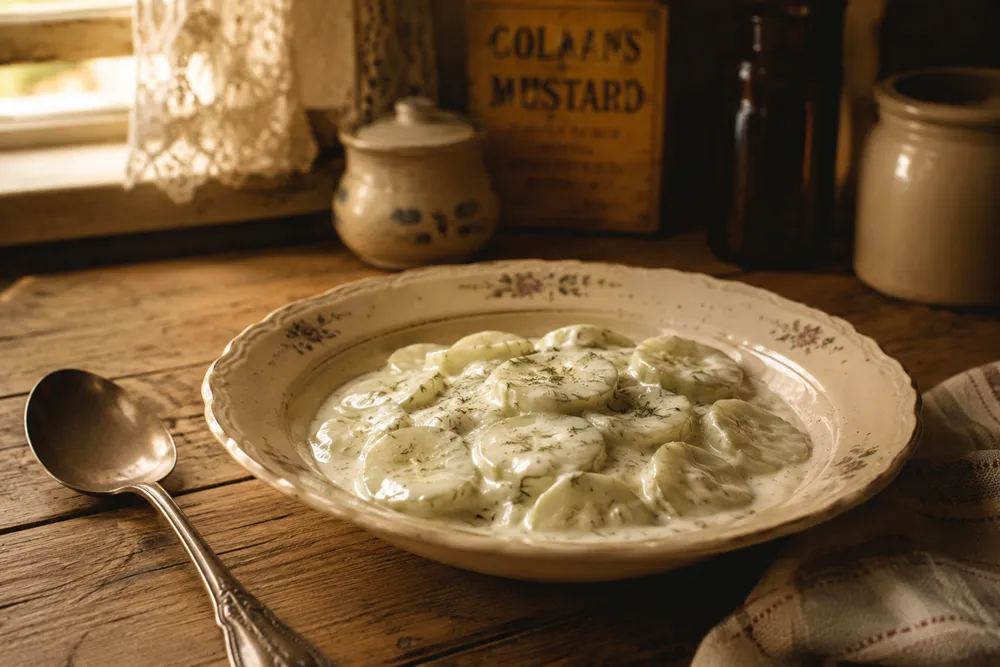
Blanched cucumber rounds gently simmered in a pale butter-and-flour roux sauce made with milk and a touch of nutmeg.
Peas with Artichoke
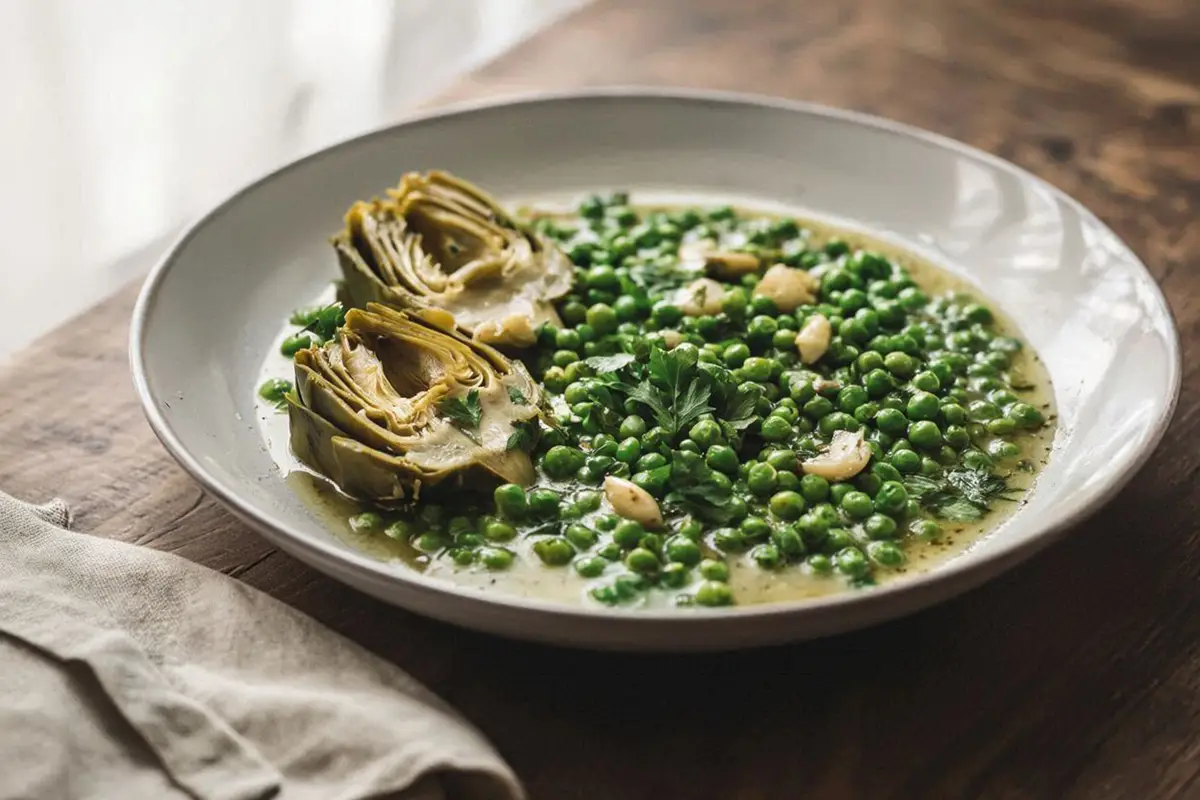
Young peas slowly braised with garlic and parsley, finished with tender artichokes and a light white roux — a delicate early 20th century spring side dish.