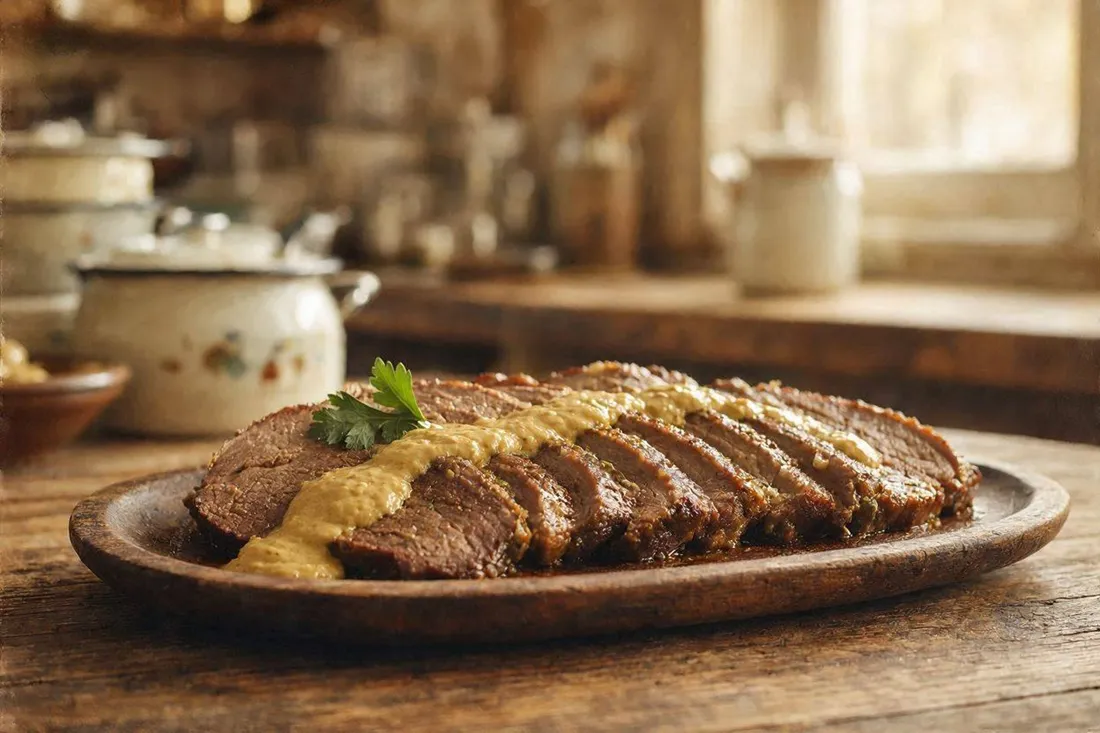
Braised Beef Topside in Mustard Sauce
A lean cut from the leg, slow-braised with onion, garlic, and bacon, then sliced and served in a smooth mustard and lemon sauce.
Quick Summary
A Central European braised beef topside, slow-cooked with onion, garlic, and bacon, then sliced and served in a smooth mustard-lemon sauce made from the braising vegetables. Takes about 4 hours total, with the sauce built entirely from the braise itself.
Historical recipe
Modernised adaptation of an early 20th‑century source. Not independently kitchen-tested by Attic Recipes. Quantities, temperatures, and food safety guidance have been updated for a contemporary kitchen — results may vary and errors may exist. Nutritional values, where provided, are estimates only and have not been laboratory tested. Always follow current food safety guidelines for your region. If you have a health condition, allergy, or dietary requirement, consult a qualified professional before preparing this recipe.
Use of this recipe is entirely at your own risk and subject to our Terms of Service and Privacy Policy. Attic Recipes accepts no liability for any adverse outcome.
- Mustard
Additional notes
-
Note
This dish is relatively high in saturated fat per serving, largely from the oil, lard, and bacon used in browning and finishing the sauce. Those managing saturated fat intake may wish to adjust portion size or reduce the oil slightly.
- 1
Bone the meat, keeping the piece of topside whole. Place the bone in a pot with the 2 carrots, 1 parsley root, 50g celery root, and 700ml water. Simmer to make a light stock while you prepare the meat.
- 2
Heat the 120ml oil in a separate pot until hot. Add the meat and season with the 6g salt, searing on all sides.
- 3
Add the 450g sliced onion, 3 garlic cloves, 50g bacon strips, bay leaf, and 10 peppercorns to the pot with the meat. Cook everything together, stirring occasionally, until well browned.
- 4
Begin ladling in the bone stock a little at a time, keeping the meat moist, and continue simmering covered until the meat is completely tender.
Tip Add stock gradually rather than all at once — this keeps the browning concentrated rather than diluting it too early. - 5
Remove the meat from the braising liquid and set aside in a clean pot with the 20g lard.
- 6
Pass the braising vegetables — onion, garlic, and bacon — through a food mill or fine sieve into a smooth purée, using a little of the braising liquid to loosen it if needed.
- 7
Stir the 15g mustard, 20ml lemon juice, and 3g salt into the puréed sauce until well combined.
- 8
Pour the sauce over the meat and simmer briefly together so the meat absorbs some of the sauce.
- 9
Slice the meat, arrange on a serving platter, and pour the remaining sauce over the top.
Nutrition Information per 1 portion (approx 280g meat with sauce)
Nutritional values are approximate estimates and may vary based on specific ingredients used, preparation methods, and portion sizes.
Serving Suggestions
Serve warm with boiled potatoes, rice, or crusty bread to soak up the sauce.
About This Recipe
This dish takes a lean, tender cut from the inner leg — historically called “ruža,” or “rose,” in period butchery terminology — and gives it a long, slow braise in a mix of onion, garlic, and bacon before finishing everything in a smooth, tangy mustard sauce. The braising vegetables don’t get discarded; they’re puréed into the base of the sauce itself, so nothing from that first stage of cooking goes to waste.
Cuts from this part of the leg were prized in Central European kitchens precisely because they held up well to both quick cooking and long braising, making them versatile across many different preparations. Here, the long braise builds deep flavor, while the mustard and lemon at the end keep the dish from feeling heavy.
Why It Works
Browning the meat and aromatics together before adding liquid builds a foundation of flavor that plain simmering wouldn’t achieve. Passing the braising vegetables through a sieve turns what would otherwise be a chunky pan sauce into something silky, without needing any flour or additional thickener — the softened onion itself does that work. Finishing the sliced meat briefly in the sauce lets it absorb some of that flavor right before serving, rather than the sauce simply sitting on top.
Modern Kitchen Tips
- If the sauce feels too thick after puréeing, thin it with a splash of the reserved bone stock rather than water, to keep the flavor concentrated.
- Taste the sauce before adding all the mustard — different mustards vary quite a bit in strength, and it’s easier to add more than to correct an overly sharp sauce.
- This dish reheats well and the flavor deepens overnight, making it a good make-ahead option for a weekend dinner.
A classic of early 20th century home cooking, preserved and adapted for the modern kitchen.
The Story Behind This Recipe
Historical Context
The cut used here — known in period butchery terminology as 'ruža,' or 'rose' — refers to the inner portion of the leg, traditionally considered one of the most tender and desirable cuts available from that part of the animal. This vocabulary, along with related terms for other leg cuts, was standard in Central European kitchens and butcher shops of the era. Long, slow braising in a mixture of aromatics before finishing in a smooth sauce was a common technique for cuts like this one, even when the meat itself was already tender enough for quicker cooking.
Modern Kitchen Adaptation
No cooking times were specified in the period approach for either the stock or the braise; both have been estimated based on standard braising times for a cut of this size. The instruction to cook the bone 'in a pot with vegetables' has been clarified as a separate light stock, used gradually to baste the meat as it braises, which matches how the sauce is built later in the method. Neutral oil has been used for browning as specified, with lard reserved for finishing the sauce pot, matching the two fats named in the period approach.
This recipe is an independent modern adaptation developed from historical sources in the public domain. It is provided for informational and educational purposes only and does not constitute professional dietary, nutritional, or medical advice. Food preparation involves inherent risks. The reader assumes full responsibility for safe food handling, ingredient sourcing, and adherence to current local food safety guidelines. The site operator accepts no liability for outcomes resulting from the preparation or consumption of this recipe.
One recipe.
Every week.
You Might Also Like
More recipes from the same category
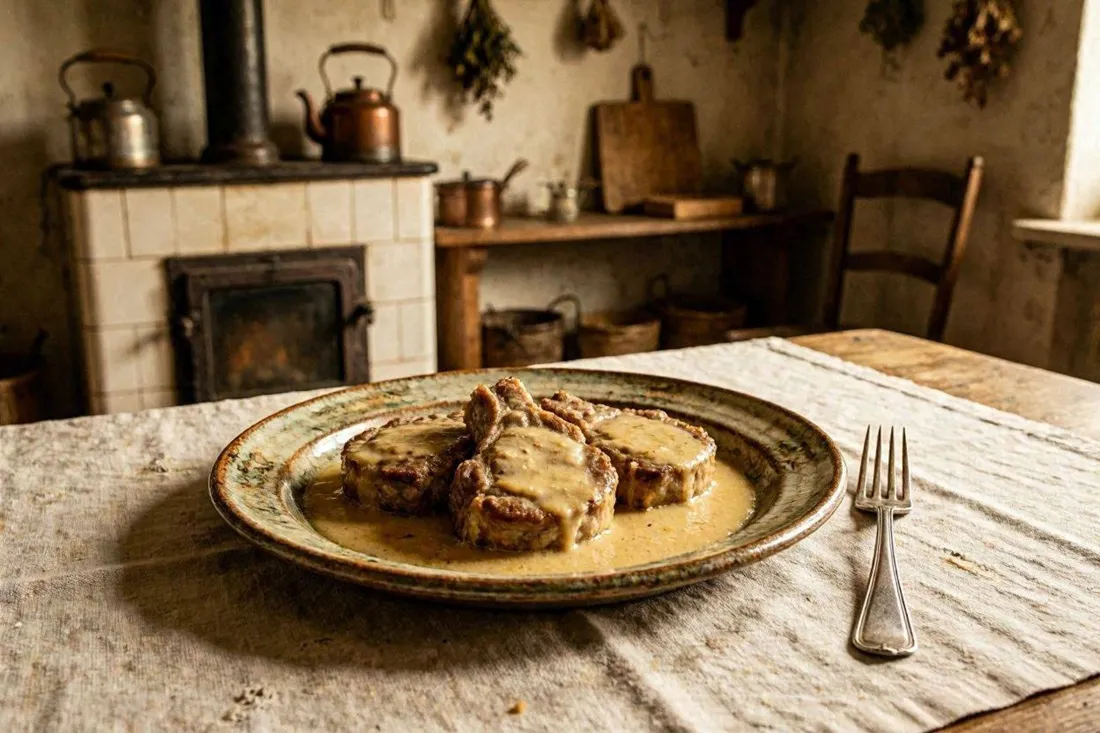
Braised Pork Chops in White Wine and Sour Cream Sauce
Pork loin chops braised with onion, carrot, parsley root, and celery root in white wine, then finished with a strained sour cream sauce.
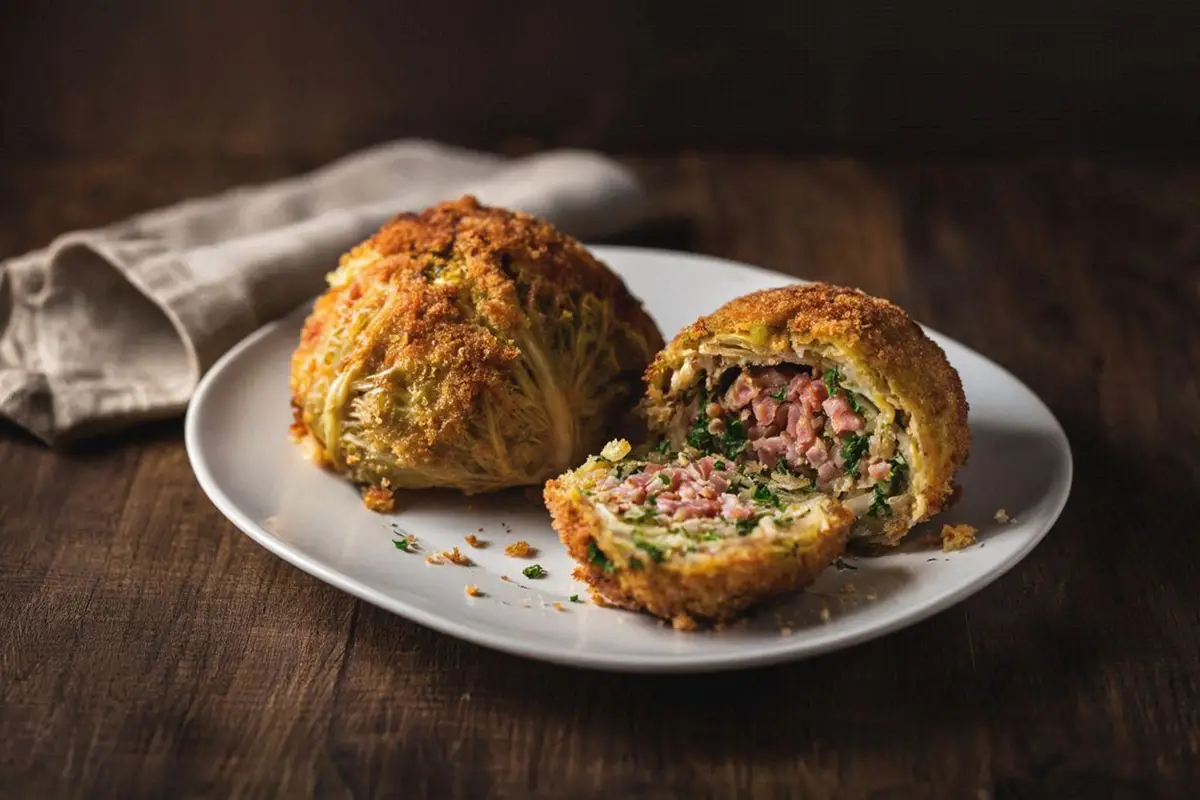
Breaded Savoy Cabbage Stuffed with Ham
Tender young savoy cabbage heads filled with ground ham, fried onion, and herbs, breaded and pan-fried until golden. A hearty Central European classic.
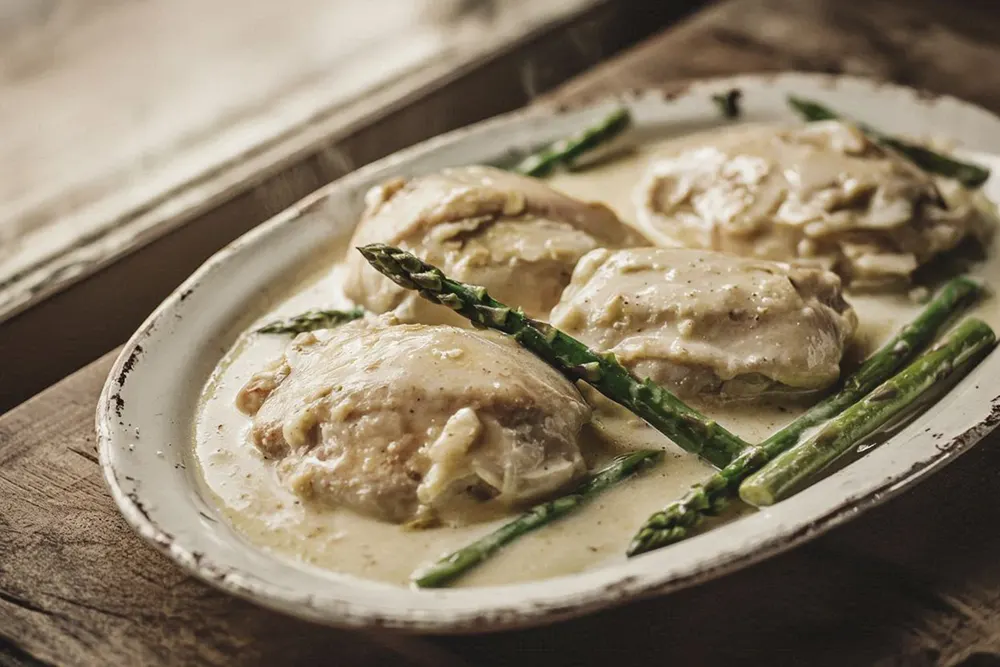
Chicken in Asparagus Sauce
A whole chicken poached in spiced broth, then finished in a silky velouté enriched with egg yolks and cream, garnished with tender asparagus tips.