Baked Cauliflower with Cheese Béchamel
A whole head of tender boiled cauliflower coated in a rich egg-enriched cheese béchamel, topped with breadcrumbs and baked until golden.
Quick Summary
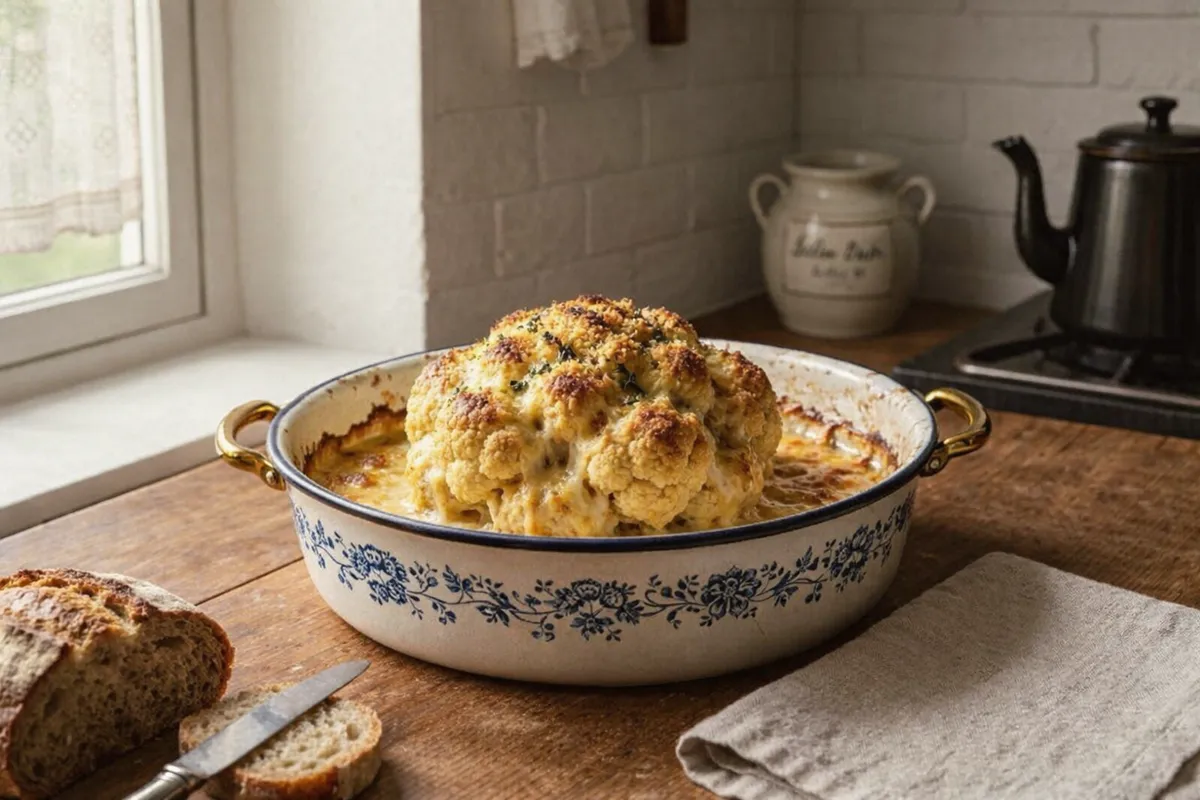
Baked Cauliflower with Cheese Béchamel is a Central European dish of whole cauliflower coated in an egg-enriched cheese sauce, topped with breadcrumbs, and baked. It takes about 50 minutes, with a roast-style presentation from baking it whole.
Historical recipe
Modernised adaptation of an early 20th‑century source. Not independently kitchen-tested by Attic Recipes. Quantities, temperatures, and food safety guidance have been updated for a contemporary kitchen — results may vary and errors may exist. Nutritional values, where provided, are estimates only and have not been laboratory tested. Always follow current food safety guidelines for your region. If you have a health condition, allergy, or dietary requirement, consult a qualified professional before preparing this recipe.
Use of this recipe is entirely at your own risk and subject to our Terms of Service and Privacy Policy. Attic Recipes accepts no liability for any adverse outcome.
- Dairy
- Eggs
- Gluten
Additional notes
-
Warning
This sauce is thickened with egg yolks and must be tempered and heated to at least 74°C (165°F) before serving to ensure the eggs are safely cooked. This is especially important for pregnant women, young children, elderly people, and anyone with a weakened immune system.
Pasteurized eggs can be used for extra peace of mind, particularly when serving vulnerable groups.
-
Note
This dish is high in saturated fat (approximately 26g per serving) from the butter, cheese, milk, and egg yolks. Those managing saturated fat intake, including people with cardiovascular risk factors, may wish to adjust portion size.
Reduce the butter and cheese quantities slightly, or use a reduced-fat milk, to lower the saturated fat content.
- 1
Trim the leaves from the cauliflower and wash the head whole. Bring the water to a boil, add the salt, and lower the cauliflower head into the pot.
- 2
Boil the cauliflower until just tender when pierced but still holding its shape, about 15-20 minutes. Do not let it fall apart.
Tip Test gently with a knife tip near the core — it should meet slight resistance, not slide in freely. - 3
Carefully lift out and drain the cauliflower, keeping it whole, and place it in an oven-safe baking dish.
- 4
While the cauliflower boils, melt the butter in a saucepan over medium heat. Whisk in the flour and cook briefly, stirring constantly, keeping the roux pale — do not let it brown.
- 5
Gradually whisk in the milk, a little at a time, whisking continuously to prevent lumps. Simmer gently until the sauce lightly thickens.
- 6
Season the sauce with the sauce salt and nutmeg, then stir in the grated cheese until fully melted and smooth. Remove from the heat.
- 7
In a small bowl, whisk the egg yolks. Gradually add a few spoonfuls of the hot sauce to the yolks, whisking constantly, to temper them.
Tip Adding the yolks straight to the hot sauce without tempering will scramble them — always warm them gradually first. - 8
Pour the tempered yolk mixture back into the saucepan with the remaining sauce. Return to low heat and stir constantly until the sauce reaches 74°C (165°F). Do not let it boil.
- 9
Pour the sauce over the whole cauliflower — it should be thick enough to cling rather than run off.
- 10
Combine the topping cheese with the breadcrumbs and sprinkle evenly over the sauced cauliflower. Dot the top with the small pieces of butter.
- 11
Bake at 200°C (400°F) / 180°C fan for 10-15 minutes, until golden and bubbling. Serve immediately.
Nutrition Information per 1 serving (approx 425g)
Nutritional values are approximate estimates and may vary based on specific ingredients used, preparation methods, and portion sizes.
Serving Suggestions
Serve as a side dish alongside roasted or pan-fried meat, or on its own as a light main course with crusty bread.
About This Recipe
This dish takes a whole head of cauliflower — boiled gently until tender but still intact — and coats it in a rich, cheese-laced béchamel enriched with egg yolks. The whole thing is topped with more cheese and breadcrumbs, dotted with butter, and baked just long enough to turn golden and bubbling on top. It’s a simple vegetable transformed into something substantial enough to anchor a meal.
Keeping the cauliflower whole rather than breaking it into florets is part of what makes the presentation memorable — the head arrives at the table intact, sauced and gratinéed, ready to be portioned at the table like a small roast.
The egg yolks stirred into the béchamel at the end give the sauce extra richness and a slightly deeper color than a plain white sauce, while the baking step at the end sets the top into a golden, faintly crisp crust.
Why It Works
A béchamel starts with a roux — butter and flour cooked briefly together — which is then loosened with milk to form a smooth, lump-free sauce as the starch in the flour gelatinizes and thickens the liquid. Adding cheese enriches the sauce with fat and flavor, while the egg yolks, properly tempered, add further richness and a silkier texture without curdling. The final bake under moderate heat browns the cheese and breadcrumb topping through the Maillard reaction and residual moisture evaporation, giving the dish its characteristic golden crust while the sauce underneath stays creamy.
Modern Kitchen Tips
Salt the boiling water generously, since cauliflower absorbs very little seasoning once it’s coated in sauce. If the sauce seems too thick after adding the cheese, thin it with a splash more warm milk before pouring it over the cauliflower — it should coat generously but still be pourable. A shallow, wide gratin dish will brown the top faster than a deep one, so keep an eye on it near the end of baking.
A classic of early 20th century home cooking, preserved and adapted for the modern kitchen.
The Story Behind This Recipe
Historical Context
Early 20th century recipes for this dish typically called for a whole boiled cauliflower head coated in a butter-and-flour sauce enriched with egg yolks and cheese, without giving an exact quantity for the milk, salt, or nutmeg — these were added by the cook's judgment until the sauce reached the right consistency and flavor. Baking time was described simply as "a few minutes," left to the cook to judge by color.
Modern Kitchen Adaptation
The original did not specify a milk quantity for the sauce, an oven temperature, an exact baking time, or precise amounts for the salt, nutmeg, cheese, breadcrumbs, or finishing butter — these have been estimated here based on standard béchamel proportions and marked as estimated. The seasoning originally described as a rare aromatic nut-like spice has been standardized to ground nutmeg, its most likely intended meaning. The cheese type is left generic as a hard grating cheese, since the original did not specify a variety. The egg yolks are tempered into the hot sauce and brought to 74°C (165°F) before baking, in line with modern food safety guidance for egg-thickened sauces.
This recipe is an independent modern adaptation developed from historical sources in the public domain. It is provided for informational and educational purposes only and does not constitute professional dietary, nutritional, or medical advice. Food preparation involves inherent risks. The reader assumes full responsibility for safe food handling, ingredient sourcing, and adherence to current local food safety guidelines. The site operator accepts no liability for outcomes resulting from the preparation or consumption of this recipe.
One recipe.
Every week.
You Might Also Like
More recipes you'll enjoy
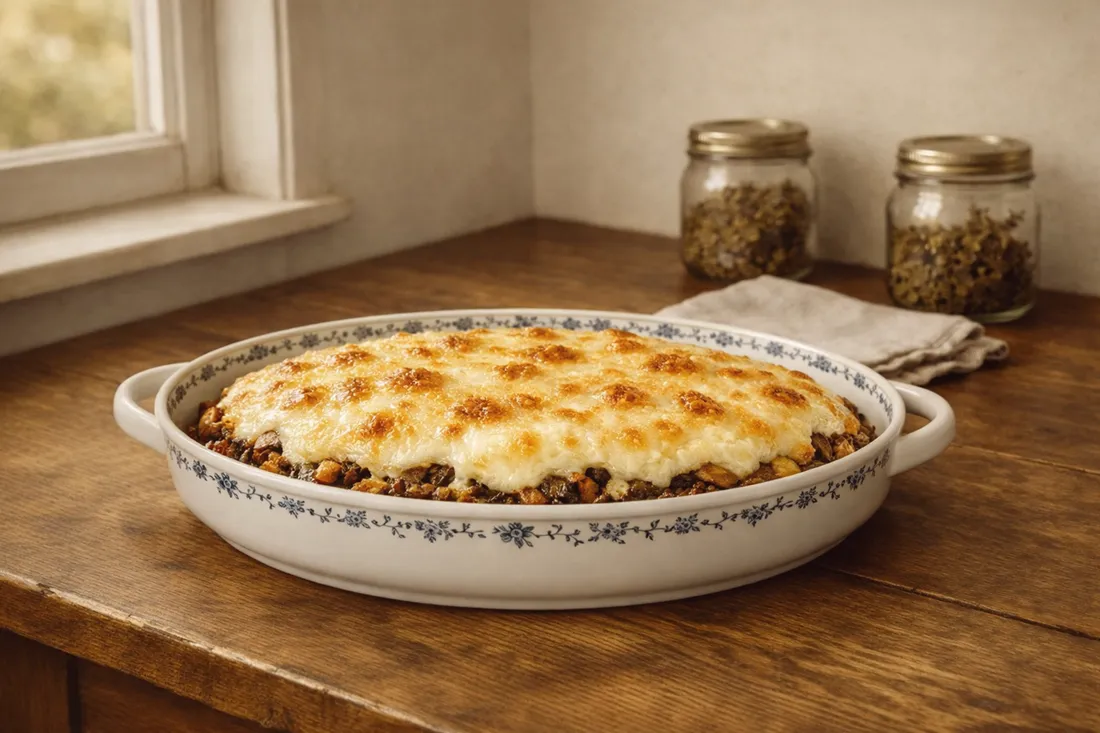
Baked Mushrooms with Hard Cheese and Eggs
Layers of sliced hard-boiled eggs and grated cheese topped with sautéed mushrooms, baked under a rich egg-enriched sour cream topping.
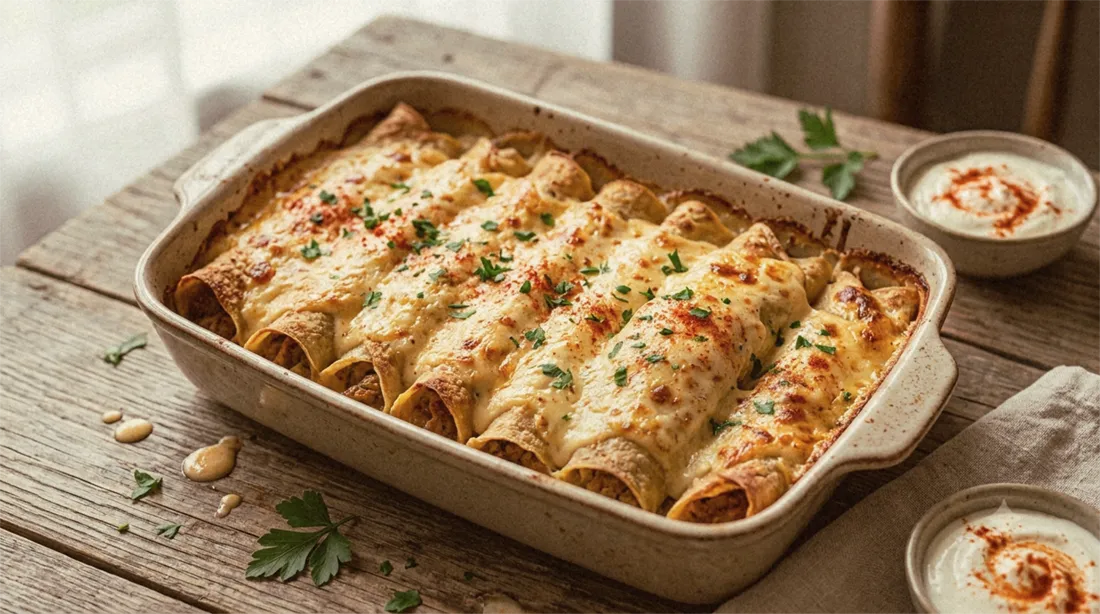
Gourmet Filled Crepes with Veal and Sour Cream
Thin crepes filled with braised, ground veal and onion, topped with a paprika-infused sour cream sauce and baked until golden.
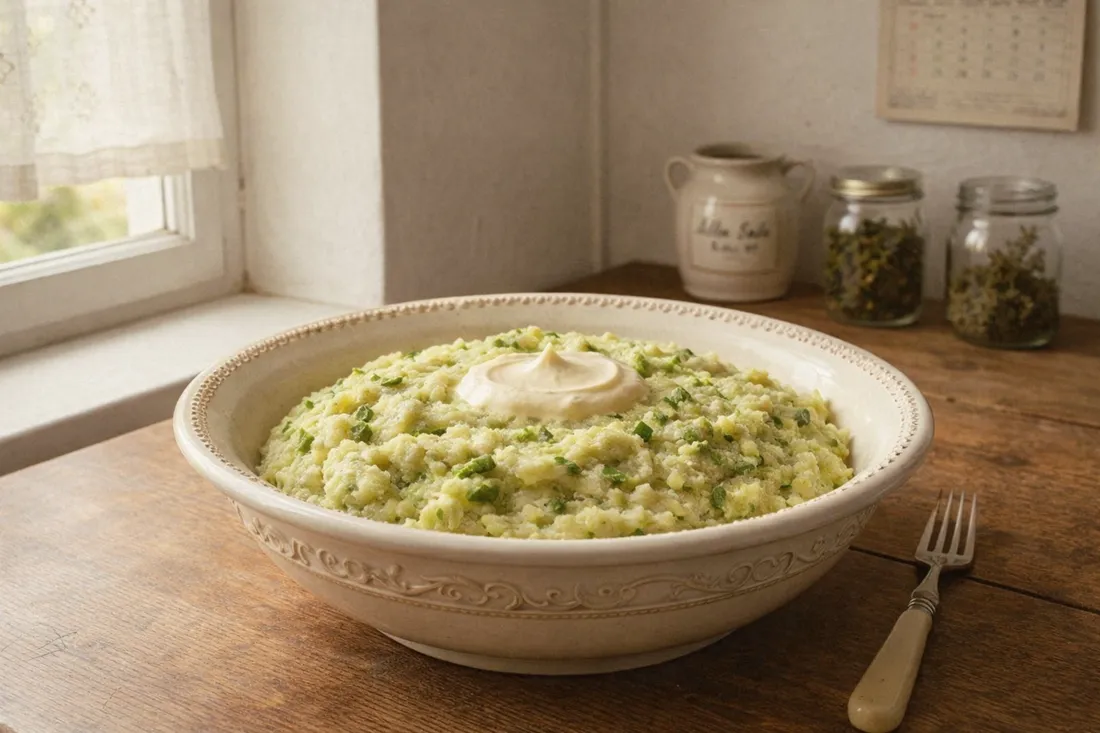
Green Lettuce and Potato Purée
A smooth purée of boiled green lettuce and potato, enriched with butter and sour cream, served warm as a side dish with meat.