Something Sweet with Coffee: A Central European Tradition
Why does coffee always come with something sweet? The answer reaches back centuries — from Ottoman coffeehouses to Viennese café culture to home kitchens.
Coffee in Central Europe has never arrived alone. Long before the café became an institution, before the espresso machine, before the glass of water that now accompanies a small cup as a matter of course — there was already an expectation that coffee and something sweet belonged together. This post is about where that expectation came from, and why it has lasted.
Coffee Arrives, and It Does Not Arrive Quietly
Coffee reached Central Europe through Ottoman trade routes in the sixteenth and seventeenth centuries, and the culture it carried with it was already formed. In Ottoman coffeehouses, coffee was not drunk in isolation — it came alongside lokum, honey, or small sweets. The beverage was bitter and potent, and the sweet offered alongside it was understood as part of the experience, not an optional addition.
When coffeehouses began to open in cities like Vienna, Budapest, and Prague in the seventeenth century, this combination came with them. Early Central European coffeehouses adapted the Ottoman model to local tastes and local ingredients, but they kept the essential logic: coffee is accompanied.
What changed over time was the form the accompaniment took. Ottoman sweets made with rosewater, pistachios, and honey gave way to pastries made with butter, walnuts, poppy seeds, and sour cream — ingredients that reflected the pantries and agricultural traditions of the region.
The Coffeehouse as Standard-Setter
The Viennese coffeehouse, which reached its social peak in the nineteenth and early twentieth centuries, formalized the pairing in ways that shaped home practice across the region. Coffee in a coffeehouse came with something. This was not a luxury — it was the expectation.
What made the coffeehouse significant was not just its menu but its social role. It was a place where professionals, writers, merchants, and students spent hours over a single cup, reading newspapers, conducting business, or doing nothing in particular. The coffee and its accompaniment were the price of admission to that extended stay. The coffeehouse’s approach to coffee — unhurried, ceremonious, always with something alongside — became the model against which home hospitality measured itself.
Middle-class households of the late nineteenth and early twentieth centuries understood that offering coffee to a guest meant offering it properly. Properly meant with something made. A slice of cake, a plate of walnut rolls, a few cookies — the specific form mattered less than the fact of it.
What Home Kitchens Made
Home bakers did not replicate coffeehouse pastry directly. The layered strudel, the elaborate torte, the precisely laminated Kipferl of professional kitchens required time, technique, and equipment that everyday households did not always have. What home kitchens produced instead were simpler, more economical versions of the same idea.
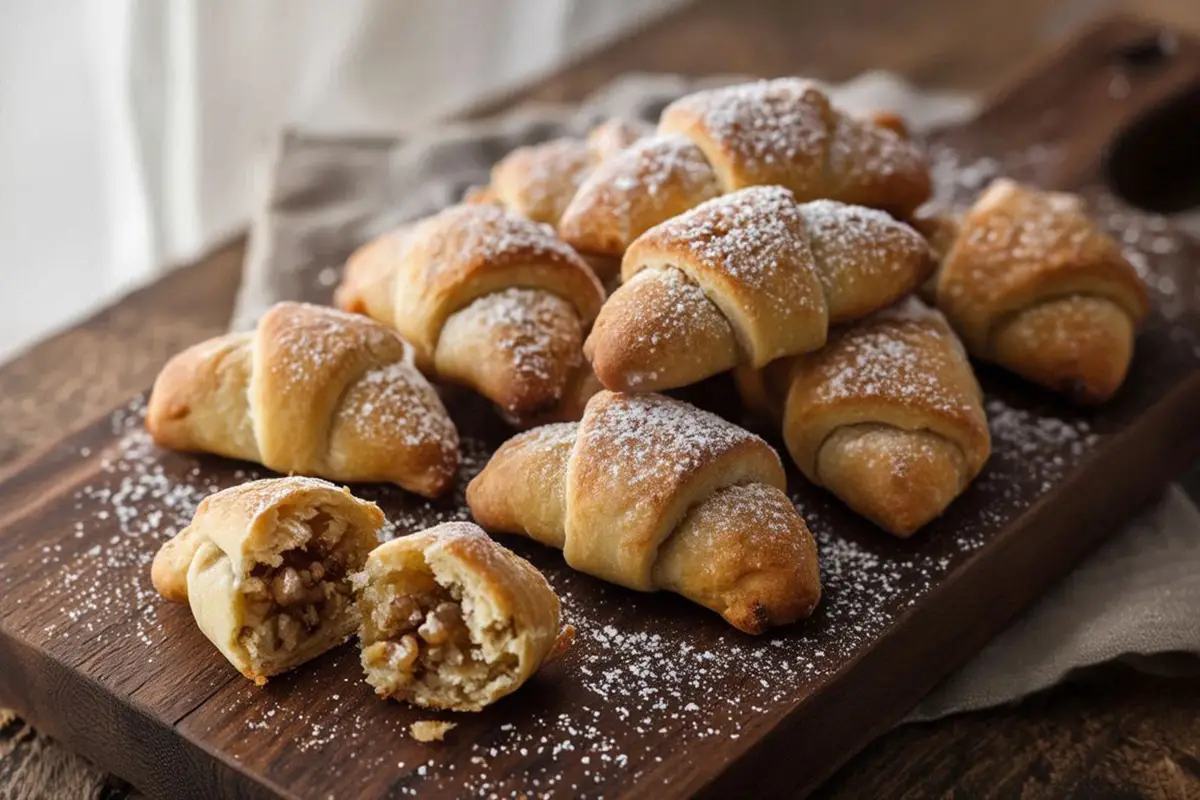
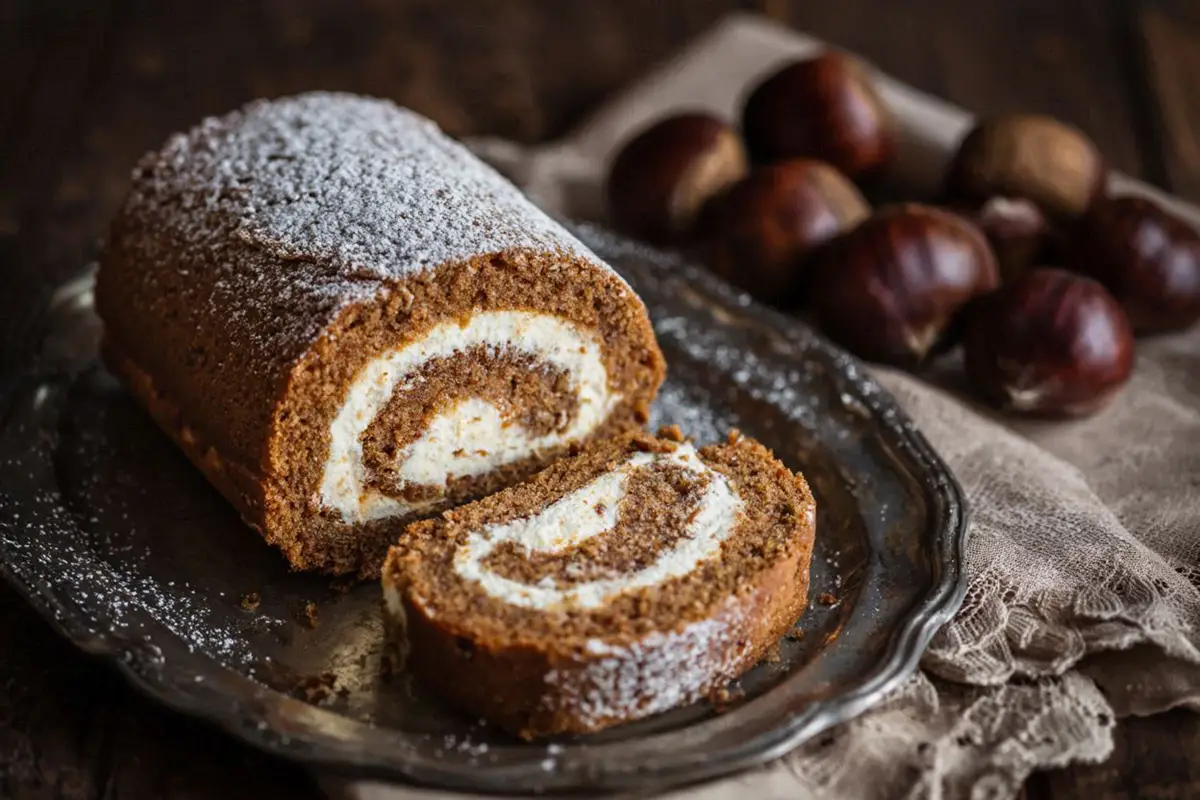
Rolled sweets — doughs filled with walnuts, poppy seeds, or chestnuts, then sliced — were practical. They could be made in quantity, they kept well, and they required no special equipment beyond a rolling pin and a pan. Sour cream enriched doughs and extended their shelf life. Walnuts provided substance and flavor from an ingredient that was widely grown across the region. These were not compromise versions of something grander — they were their own tradition, developed in response to the real conditions of domestic kitchens.
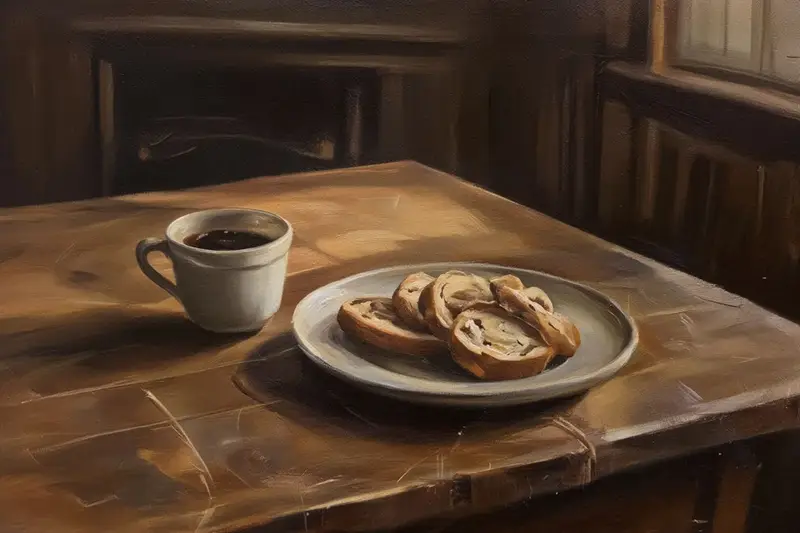
The sour cream walnut roll that appears consistently across early twentieth century home cooking records is a good example of this logic. Its dough is tender and slightly enriched. Its filling is simple — walnuts, sugar, a little spice. It slices cleanly, keeps for several days, and tastes best at room temperature, beside a cup of strong coffee.
Why the Pairing Holds
The practical explanation for why sweet and bitter work together is straightforward: sweetness suppresses the perception of bitterness by competing for the same taste receptors. A small amount of sugar eaten alongside a bitter drink reduces the intensity of the bitterness without eliminating it. The coffee still tastes like coffee — it simply tastes like a more complete version of itself.
But the persistence of this pairing across centuries and across significant changes in how coffee is prepared and consumed suggests that the explanation is not only chemical. The sweet alongside the coffee is also a form of hospitality made visible. It says that someone anticipated your arrival, made something, and considered what you would enjoy. That meaning has proven more durable than any particular recipe.
Practical Takeaways
The tradition of serving something sweet with coffee in Central Europe is not a recent food trend or a coffeehouse affectation. It is a practice with a traceable history — from Ottoman coffeehouses to Viennese cafés to the home kitchens of the interwar period — and a logic that holds whether the coffee is strong and black in a small cup or milky and slow in a larger one.
The simplest home expression of this tradition is a rolled dough filled with walnuts. It requires no special technique, keeps well, and produces something that genuinely improves a cup of coffee. That is, in essence, what this tradition has always been about.
Attic Recipes — digitizing and adapting Central European home cooking from the early twentieth century.
Frequently Asked Questions
01Why is something sweet traditionally served with coffee?▶
The pairing developed through Ottoman coffeehouse culture, where coffee was served with lokum or honey to balance its bitterness. As coffee spread into Central European café culture, the habit of accompanying it with pastry or confection followed — and stayed.
02What sweets were traditionally served with coffee in Central European homes?▶
Home kitchens typically offered small, unfussy baked goods — walnut rolls, crescent-shaped cookies, simple pound cakes, or preserved fruit. These were things that could be made in advance and kept well, ready when guests arrived.
03Is the coffee-and-sweets pairing just about taste?▶
Partly, but not entirely. Coffee was expensive and socially charged — serving it well, with something carefully made alongside, signaled hospitality and care. The sweet was as much about the gesture as the flavor.
04How did café culture influence home baking in Central Europe?▶
The coffeehouse set a standard: coffee deserved accompaniment. Home bakers adapted what they saw in public establishments into simpler, more economical versions — using pantry staples like walnuts, sour cream, and lard rather than the layered pastries of professional kitchens.