Poisonous Mushrooms Around the World: What Makes Them Dangerous
The world's most dangerous toxic mushroom species by continent — their toxins, symptoms, and why expert identification is essential.
Introduction
Critical notice: This post is strictly informational and educational. It exists to help readers understand why certain wild mushrooms are dangerous — not to help identify mushrooms for consumption. The information here must not be used as a foraging or identification guide. Many toxic species can only be definitively distinguished from edible lookalikes through spore prints, microscopy, or chemical analysis performed by trained mycologists. Always buy mushrooms from a reputable supplier. If you forage, do so only under the guidance of a qualified expert.
Of the approximately 14,000 known species of mushrooms, only a small number are truly deadly — but those that are can kill with as little as half a cap. What makes this particularly dangerous is that the deadliest mushrooms in the world do not look like popular imagination suggests. They are not dramatically colored, they do not smell bad, and they do not cause immediate symptoms. The Death Cap, responsible for the majority of fatal mushroom poisonings worldwide, looks unremarkable. It can smell pleasant. And it causes no pain for the first six to twenty-four hours while its toxins are already destroying liver and kidney cells.
The other complicating factor is resemblance. Many toxic species closely resemble edible varieties, and some cannot be told apart without advanced techniques such as chemistry or microscopy. This is not a problem that experience alone solves — experienced foragers have died from misidentification. Smartphone identification apps have contributed to serious poisonings and fatalities. The only reliable protection is a combination of expert knowledge, multiple identification methods, and caution.
How Mushroom Toxins Work
Before looking at specific species, it is useful to understand that mushroom toxins are not all the same. They act through different mechanisms, cause different symptoms, and operate on very different timescales.
Amatoxins are the most dangerous class. Found primarily in Amanita species (Death Cap, Destroying Angel, Death Angel) and also in Galerina marginata and some Lepiota species, these cyclic peptides are heat-stable — they are not destroyed by cooking. They are absorbed through the gut into the bloodstream and then concentrate in the liver and kidneys, causing irreversible cell death. The deceptive feature of amatoxin poisoning is its delayed onset: the first gastrointestinal symptoms appear 6 to 24 hours after consumption. The patient may appear to recover briefly, only to suffer acute liver and kidney failure 3 to 5 days later. Without prompt medical intervention — and in severe cases, liver transplant — amatoxin poisoning can be fatal.
Orellanin is found in webcap mushrooms (Cortinarius species). It is even slower-acting than amatoxins — symptoms may not appear for 2 to 20 days after ingestion, by which time kidney damage is typically severe and often irreversible. This delayed onset makes diagnosis extremely difficult.
Muscarine is found in several Clitocybe and Inocybe species. It acts on the nervous system and causes excessive salivation, sweating, vomiting, diarrhea, vision disturbances, and respiratory distress. Unlike amatoxins, muscarine poisoning acts quickly — within 30 minutes to 2 hours.
Gyromitrin is found in false morels (Gyromitra species). It converts in the body to monomethylhydrazine, a compound also used in rocket fuel. Some gyromitrin can be volatilized by cooking, but not reliably enough to make these mushrooms safe without specific preparation.
Europe
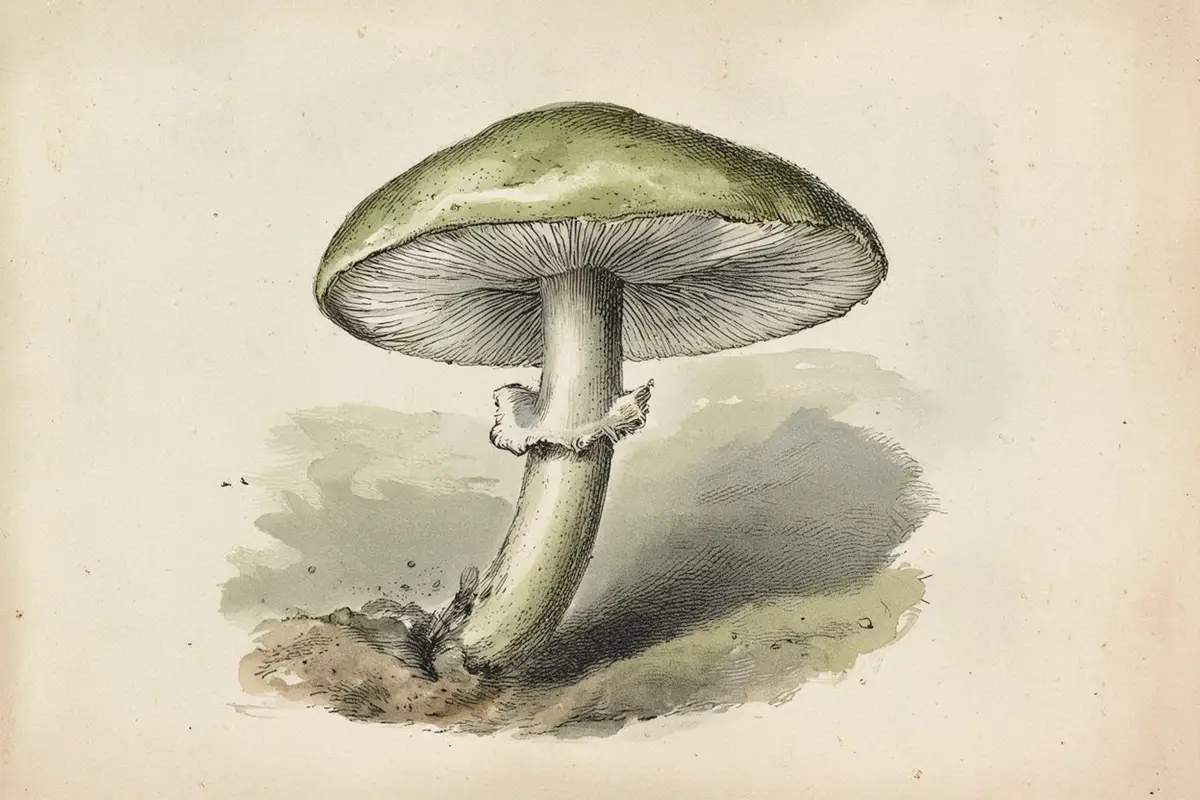
Death Cap — Amanita phalloides Responsible for the majority of fatal mushroom poisonings worldwide, the Death Cap is found throughout Europe and closely resembles edible straw mushrooms and young Caesar’s mushrooms. Its heat-stable amatoxins withstand cooking temperatures and cause progressive damage to liver and kidney tissue. Gastrointestinal symptoms — severe abdominal pain, vomiting, bloody diarrhea — typically appear 6 to 24 hours after consumption, followed by apparent brief recovery, and then acute organ failure. The cap color ranges from pale green to olive yellow — not the dramatic red that popular imagination associates with danger.
Destroying Angel — Amanita virosa, A. bisporigera, A. verna The destroying angels are several species of all-white mushrooms in the genus Amanita. These highly toxic fungi are visually similar to edible button mushrooms and meadow mushrooms, and have been collected by mistake on numerous occasions. They grow from a white volva egg-like sac at the base — checking the base of any suspected edible mushroom is an essential safety step. Contain the same amatoxins as the Death Cap.
Deadly Webcap — Cortinarius rubellus and Fool’s Webcap — C. orellanus Native to northern Europe, both webcap species closely resemble a number of edible varieties. They contain orellanin, which initially causes symptoms similar to the common flu, with the full extent of kidney damage only apparent weeks later. Ingestion can be fatal without dialysis or kidney transplant.
Autumn Skullcap / Funeral Bell — Galerina marginata Common throughout the Northern Hemisphere and parts of Australia, this gilled, wood-rotting mushroom contains the same amatoxins as the Death Cap. Several fatal poisonings have been attributed to foragers mistaking it for other small brown mushrooms.
False Morel — Gyromitra esculenta Resembles true morels closely enough to cause annual poisonings across Europe, particularly in Scandinavia and Central Europe. Contains gyromitrin. Some preparation methods (extended boiling with ventilation) reduce but do not eliminate toxicity. Not considered safe by current food safety standards.
Brown Roll-rim — Paxillus involutus Long considered edible in parts of Central and Eastern Europe, this species is now known to cause a cumulative immune reaction that can prove fatal after repeated consumption. The toxin builds in the immune system over multiple exposures, causing a sudden hemolytic crisis — a warning about a mushroom that appeared on dinner tables for generations before its danger was understood.
North America
Death Cap — Amanita phalloides The Death Cap is responsible for the majority of fatal mushroom poisonings globally. Originally from Europe, it arrived in North America most likely transported with tree and lumber shipments. Over time it has adapted to native trees and is now found widely across the continent, particularly in California where it fruits under introduced oaks and chestnuts.
Destroying Angel — Amanita bisporigera Grows near meadow edges in association with specific trees across North America. Contains amatoxins. Symptoms typically appear 5 to 24 hours after ingestion, followed by liver and kidney involvement.
Autumn Skullcap — Galerina marginata Common throughout North America, growing in clusters on or near conifer wood. Has caused poisonings when mistaken for honey mushrooms and other edible species.
Deadly Conocybe — Pholiotina rugosa A common lawn mushroom prevalent in the Pacific Northwest. Contains the same amatoxins as the Death Cap. Its conical brown cap makes it easily confused with other small brown mushrooms.
Fool’s Funnel — Clitocybe rivulosa Contains muscarine. Easily mistaken for edible species like the Fairy Ring mushroom. Causes severe gastrointestinal symptoms as well as difficulty breathing, blurred vision, and potentially death.
Jack O’Lantern — Omphalotus olearius and O. illudens Causes severe gastrointestinal poisoning. Most poisonings occur when it is mistaken for chanterelles, which it can superficially resemble in color. Unlike chanterelles, Jack O’Lanterns grow in dense clusters at the base of trees, and their gills emit a faint bioluminescence in darkness.
Asia
Deadly Lepiota — Lepiota spp. Several small Lepiota species found across Asia and Europe contain amatoxins and are often confused with edible parasol mushrooms (Macrolepiota procera). Misidentifications occur seasonally and have caused fatal poisonings.
Autumn Skullcap — Galerina marginata Also present across temperate Asia, growing on wood in forests from Japan to the Himalayas.
Inocybe species Multiple Inocybe species found across Asian forests contain muscarine. Patouillard’s Inocybe (I. erubescens) has caused hospitalizations when confused with edible species.
South America
Death Cap — Amanita phalloides Has spread to South America, particularly Chile and Argentina, following the introduction of European tree species. As with Australia, the mushroom arrived with its host trees and has established itself in plantation forestry regions.
Various Amanita species South America has numerous native Amanita species, some toxic and some edible. The mycological documentation of South American toxic fungi remains incomplete, making foraging in unfamiliar South American forests particularly risky.
Africa
Death Cap — Amanita phalloides Present in Northern Africa and increasingly in parts of sub-Saharan Africa where European tree species have been introduced. The pattern mirrors Australia and South America — the fungus follows its host trees.
False Parasol — Chlorophyllum molybdites (Green-spored Parasol) One of the most commonly consumed toxic mushrooms in the world by volume of poisonings. Frequently causes severe gastrointestinal poisoning when confused with edible parasol mushrooms or puffballs. Present across tropical and subtropical Africa, the Americas, and Australia.
Australia
Death Cap — Amanita phalloides Found under introduced oak trees in urban areas including Canberra and Melbourne, where it has caused deaths. Its presence in parks and gardens makes it accessible to people with no foraging experience who encounter it without recognizing the danger.
Autumn Skullcap — Galerina marginata Common throughout Australia, growing in clusters on rotting wood.
False Parasol — Chlorophyllum molybdites Widespread in Australia’s lawns and parks. Among the most common causes of mushroom poisoning in Australia by number of incidents.
Cortinarius archeri A purple-colored Australian webcap species found in Tasmanian forests, containing orellanin. Like its European relatives, it is nephrotoxic with delayed symptom onset.
A Note on Spore Prints
One tool that amateur foragers use — with appropriate caution and as one step among many — is the spore print. To make one, a mushroom cap is placed gill-side down on paper (half white, half dark) for several hours. The color of the deposited spores is a characteristic feature of the species. White spore prints on a dark background, combined with white gills and a volva at the base of the stem, are a strong warning sign of dangerous Amanita species. However, spore prints alone are not sufficient for identification. Some toxic species require microscopic spore examination for definitive identification. This is why the message throughout both of these posts remains the same: do not forage without an expert.
Practical Takeaways
The pattern across every continent is consistent: the most dangerous toxic mushrooms resemble edible ones. The Death Cap looks like a straw mushroom. The Destroying Angel looks like a button mushroom. The Autumn Skullcap looks like a honey mushroom. The Webcap looks like a chanterelle. The False Parasol looks like an edible parasol.
The toxins most responsible for fatalities are heat-stable and cannot be neutralized by cooking. Symptoms are often delayed, creating a false sense of safety. And identification apps have proven unreliable — people have died using them.
The message of this post is not that mushrooms are to be feared. The edible species described in our companion post represent some of the most extraordinary culinary ingredients in the world. The message is simply this: buy mushrooms from a shop, or forage only with someone who genuinely knows what they are doing. The difference between the two is not about caution — it is about knowledge that cannot be acquired from a photograph or an app.
Literature and Further Reading
- Benjamin, D. R. (1995). Mushrooms: Poisons and Panaceas. New York: W.H. Freeman and Company. — The definitive English-language reference on mushroom toxicology.
- Michelot, D. & Toth, B. (1991). “Poisoning by Gyromitra esculenta — A Review.” Journal of Applied Toxicology.
- Beug, M. W., Shaw, M., & Cochran, K. W. (2006). “Thirty-Plus Years of Mushroom Poisoning: Summary of the Approximately 2,000 Reports in the NAMA Case Registry.” McIlvainea.
- Noordeloos, M. E. (2012). Fungi of Temperate Europe. Princeton University Press.
- Buczacki, S., Shields, C., & Ovenden, D. (2012). Collins Fungi Guide. HarperCollins Publishers.
- Encyclopaedia Britannica — “7 of the World’s Most Poisonous Mushrooms.” https://www.britannica.com/story/7-of-the-worlds-most-poisonous-mushrooms
- PMC / NCBI — “Toxicological Profiles of Poisonous, Edible, and Medicinal Mushrooms.” https://pmc.ncbi.nlm.nih.gov/articles/PMC4206786/
- Wikipedia — List of deadly mushroom species. https://en.wikipedia.org/wiki/List_of_deadly_mushroom_species
Disclaimer: This post is for informational and educational purposes only. It must not be used to identify mushrooms for consumption or as a foraging guide. The authors accept no responsibility for any harm arising from the use of this information. If you suspect mushroom poisoning, contact emergency services immediately.
Attic Recipes — digitizing and adapting Central European home cooking from the early twentieth century.
Frequently Asked Questions
01Can cooking destroy mushroom toxins?▶
For many toxins, yes — but not for the most dangerous ones. Amatoxins, found in Death Cap, Destroying Angel, and Autumn Skullcap, are heat-stable and survive boiling, frying, and drying completely. Boiling a Death Cap does not make it safe. Never assume cooking renders an unidentified mushroom edible.
02How long does it take to show symptoms of mushroom poisoning?▶
It depends entirely on the toxin. Some cause symptoms within 30 minutes. Amatoxins — found in Death Cap and related species — show no symptoms for 6 to 24 hours, during which organ damage is already occurring. Orellanin in webcaps can take 2 to 20 days to cause noticeable symptoms, by which time kidney damage is often irreversible.
03Are there reliable visual rules for telling safe mushrooms from dangerous ones?▶
No. Folk rules — avoid mushrooms that blacken a silver spoon, only brightly colored species are dangerous, peeling proves a mushroom is edible — have no botanical basis. Some of the world's deadliest species are pale, odorless, and visually unremarkable. The only reliable method is precise taxonomic identification, ideally confirmed by a trained mycologist.
04Can mushroom identification apps be trusted?▶
Not reliably enough. Current apps have significant error rates with species that have dangerous lookalikes, and several documented poisoning cases have been linked to app-assisted misidentification. They can be a useful learning tool, but they should never be the sole method of identification before eating a wild-foraged mushroom.
05Why do experienced foragers still make fatal mistakes?▶
Because many deadly species closely resemble edible ones at specific growth stages, in certain lighting, or in regional variations that differ from field guide photographs. The Death Cap can resemble edible button mushrooms when young. Destroying Angels have been mistaken for edible species across multiple continents by experienced foragers. Confidence is not a reliable safety metric.
06What should I do if I suspect mushroom poisoning?▶
Go to an emergency room immediately — do not wait for symptoms. Bring a sample or photograph of the mushroom if possible. Do not induce vomiting unless specifically instructed by a medical professional. Time is critical: amatoxins cause a deceptive symptom-free window while organ damage is already occurring.
07Is it safe to touch poisonous mushrooms?▶
Generally yes — skin contact with most toxic mushrooms does not cause poisoning, as the dangerous compounds require ingestion. Washing hands thoroughly after handling any unidentified mushroom is sensible practice, particularly before eating or touching the face.
08Is it safe to buy wild mushrooms from markets or roadside sellers?▶
Not without reservation. Fatal poisonings from market-bought wild mushrooms are documented across Europe, including in countries with long foraging traditions. A seller's confidence in their identification is not a safety guarantee. If you cannot independently verify the species, the safest choice is not to eat it.
09What happens to mushroom poisoning survivors?▶
Survival is not always a full recovery. Severe amatoxin poisoning frequently causes permanent liver or kidney damage, and in serious cases a liver transplant becomes the only remaining option. Even edible species can become dangerous if foraged from contaminated soil — heavy metals and pesticides accumulate in mushroom tissue regardless of species.