Jam, Marmalade, Fruit Butter, and Pekmez: What Actually Sets Them Apart
Jam, marmalade, and fruit butter each have a precise technical definition — and pekmez has a stricter one than most kitchens realize.
Introduction
Jam, marmalade, fruit butter, pekmez — in most kitchens these words get used somewhat interchangeably, as though they’re all just different names for “thick fruit stuff in a jar.” They’re not. Each one refers to a specific method of turning fruit into something spreadable, and the differences aren’t just about texture or which fruit went in — they come down to what’s actually thickening the mixture, and whether sugar is doing preservation work or just adding sweetness.
Understanding these distinctions matters more than it might seem, especially for anyone working from older recipes. A period recipe that calls itself a pekmez but doesn’t ask for very much sugar isn’t cutting corners — it’s following an entirely different technical logic than a jam recipe would. Getting that logic right is the difference between a preserve that behaves as expected and one that spoils faster than anticipated.
The Technical Categories: Jam, Marmalade, and Fruit Butter
Home food preservation guidance from agricultural extension services gives fairly precise definitions for these three, based on what’s actually happening in the pot.
Jam is made by cooking crushed or chopped fruit with sugar until it thickens. The thickening comes from pectin — a natural component of fruit cell walls — forming a gel in the presence of sugar and acid. Because whole or chopped fruit is used, jam retains texture and small pieces, and it holds its shape on a spoon without being completely firm.
Marmalade, by the standard definition used in food labeling, is specifically a citrus preserve made with the peel included. The peel is what gives marmalade its characteristic bitterness and contributes plenty of natural pectin, since citrus pith and rind are unusually rich in it. Outside of citrus, the word gets used loosely in everyday speech, but that usage doesn’t match the technical definition.
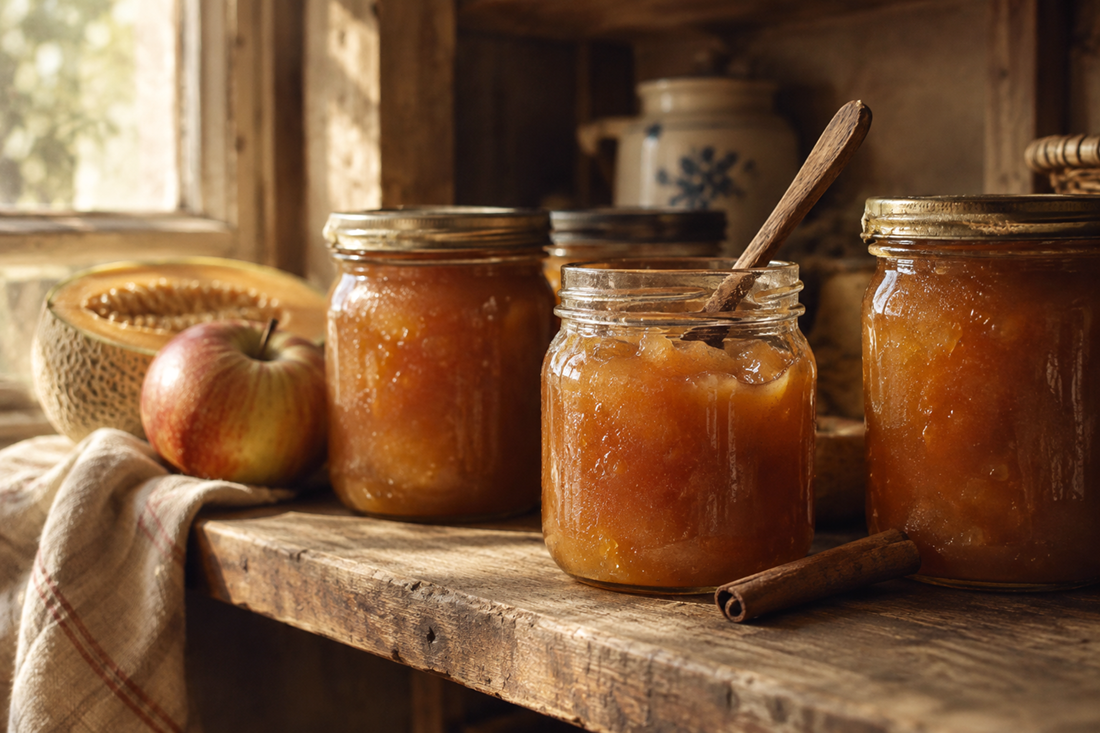
Fruit butter works differently from both. It’s made by cooking fruit pulp with sugar down to a thick, smooth, spreadable consistency — but it isn’t gelled. There’s no pectin structure holding it together; the thickness comes purely from how much water has cooked out of the pulp. This is why fruit butter tends to be smoother and less bright in color than jam, and why it holds a slightly looser consistency even at the same thickness.
Where Pekmez Fits — and Where the Term Gets Stretched
This is where things get more interesting, because “pekmez” doesn’t map cleanly onto any of the three categories above.
In its strictest, most technically documented sense — the definition used in food science literature on the subject — pekmez is a fruit juice, most often grape juice, reduced by boiling until it concentrates into a thick syrup, with no sugar added at any point. The fruit’s own natural sugars are what get concentrated; nothing is added to assist that process. This puts true pekmez closer to a molasses than to a jam — it’s a syrup made purely from reduction, not from a gelling reaction, and not from added sweetener. It’s typically made only from strained juice, not whole fruit pulp.
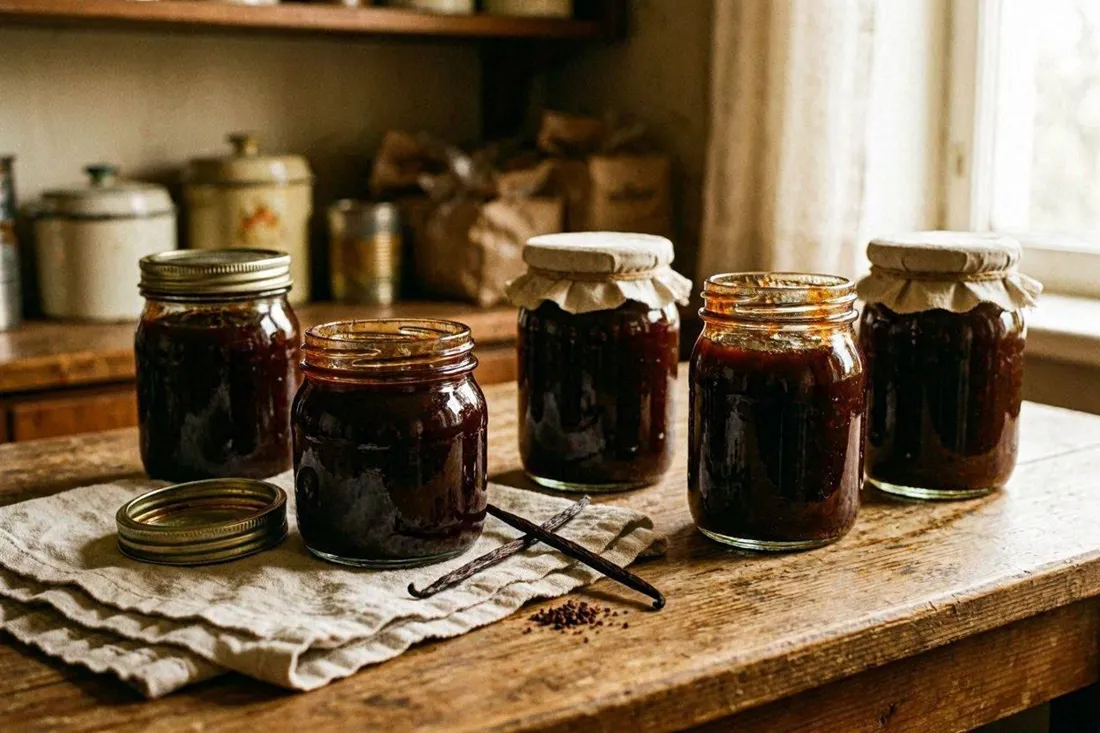
That’s a meaningfully different product from what a lot of home recipes — including many passed down through Central European households — call pekmez. In everyday kitchen use, the word is applied more broadly: to a long-cooked, low-sugar (but not necessarily sugar-free) fruit preserve, often made from the whole fruit pulp rather than strained juice, and typically much darker than jam because of how long it spends over heat. Some sugar is usually present, just far less than a standard jam would use.
Neither use of the word is “wrong,” exactly — they’re just doing different jobs. The strict definition describes a specific product with a specific process. The broader, vernacular use describes a family of home preserves that share pekmez’s key traits — low sugar, long reduction, no added pectin — without matching its most rigid definition ingredient-for-ingredient.
Why the Vernacular Usage Persists
Standardized food categories like jam, jelly, and marmalade exist largely because of commercial food labeling — a legal framework built to make sure a jar labeled “marmalade” on a store shelf actually contains what a customer expects. Home kitchens were never operating under those rules. Recipes and terminology passed down through families followed their own internal logic, shaped by what worked, what fruit was available, and what a household had always called the result.
By the early 20th century, home cooks across Central Europe were already using terms like pekmez somewhat flexibly — describing the technique and the character of the finished product (low sugar, long cooking, dense texture) more than a rigid formula. That looseness isn’t a modern corruption of an older, purer definition; it reflects how kitchen vocabulary has always worked outside of formal food categories. The exact point at which home usage diverged from the stricter juice-only, no-sugar definition isn’t precisely documented, but the pattern of home cooks applying preservation terms more broadly than industry standards is well established across this kind of traditional food writing.
Practical Takeaways
- Jam gels from pectin + sugar + acid, and keeps chunks of fruit.
- Marmalade, strictly speaking, is a citrus-and-peel preserve — not a general term for any fruit spread.
- Fruit butter is thick from reduction alone, with no gel structure.
- Pekmez, strictly defined, is a sugar-free juice reduction — closer to a fruit molasses than to jam.
- The pekmez many home cooks make and call by that name is a broader, vernacular use of the word: a low-sugar, long-cooked whole-fruit preserve that shares pekmez’s core logic without matching its strictest definition.
- If a period recipe uses very little sugar, that’s not a mistake to “correct” — it’s a sign the recipe is working on reduction rather than pectin gelling, and needs longer cooking time and, in a modern kitchen, proper canning technique to be safe.
Attic Recipes — digitizing and adapting Central European home cooking from the early twentieth century.
Frequently Asked Questions
01Is pekmez the same thing as jam?▶
Not technically. Jam is thickened by pectin forming a gel with sugar and acid, while pekmez in its strict sense is thickened purely by reducing fruit juice through evaporation, with no added sugar or gelling agent.
02Does pekmez use pectin to set?▶
No. Its thick, spreadable texture comes entirely from water loss during long, slow cooking, not from a pectin gel. This is what separates it from jam even when both end up similarly thick.
03Can pekmez be made from fruits other than grapes?▶
Yes. Grapes are the most common base, but pekmez has traditionally been made from mulberries, plums, apples, pears, figs, and other fruits with enough natural sugar to concentrate well.
04Is marmalade only made from citrus fruit?▶
By the standard definition used in food labeling, yes — marmalade specifically refers to a citrus preserve that includes the peel. The word is often used more loosely in everyday conversation, but that broader use isn't technically accurate.
05Why do some home recipes for pekmez include sugar if the traditional definition has none?▶
In home kitchens, 'pekmez' is often used more broadly than its strict definition — for a family's own low-sugar, long-cooked fruit preserve, even when a modest amount of sugar is added. It's a vernacular use of the word rather than the industrial one.