Venison Loin in Red Wine Marinade
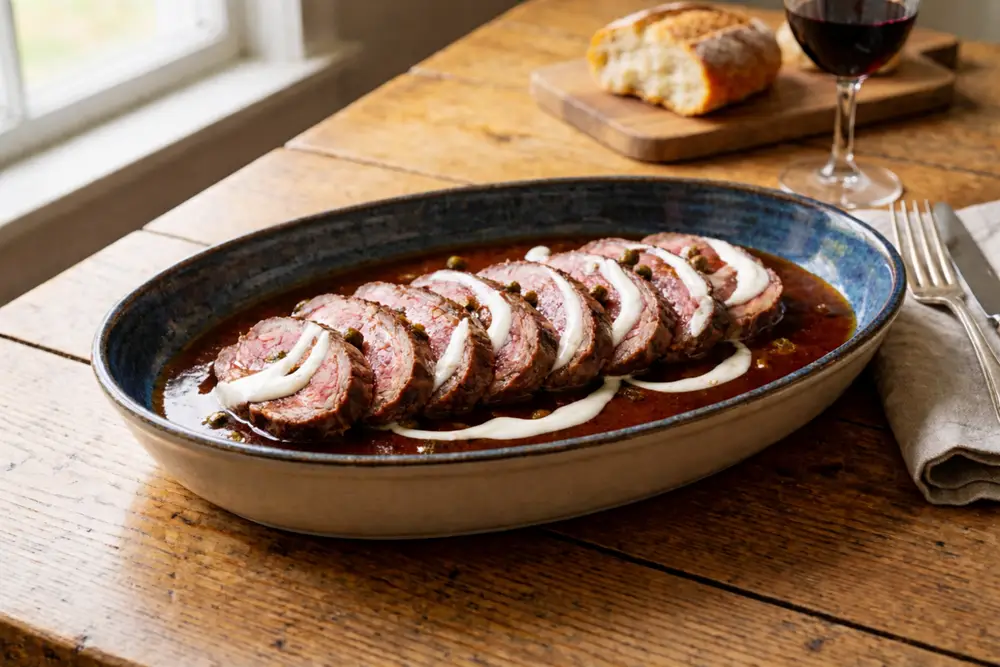
Roe deer loin marinated two days in red wine, larded with dry bacon, braised until tender, and finished with a caper and sour cream sauce.
Historical recipe
Modernised adaptation of an early 20th‑century source. Not independently kitchen-tested by Attic Recipes. Quantities, temperatures, and food safety guidance have been updated for a contemporary kitchen — results may vary and errors may exist. Nutritional values, where provided, are estimates only and have not been laboratory tested. Always follow current food safety guidelines for your region. If you have a health condition, allergy, or dietary requirement, consult a qualified professional before preparing this recipe.
Use of this recipe is entirely at your own risk and subject to our Terms of Service and Privacy Policy. Attic Recipes accepts no liability for any adverse outcome.
- Gluten
- Dairy
- Sulphites
Additional notes
-
Warning
Venison must reach a minimum internal temperature of 71°C (160°F) at the thickest point before serving. Use a meat thermometer to verify — visual colour alone is not a reliable indicator for game meat. Wild venison may carry pathogens including E. coli, Trichinella, and Brucella, and in some regions poses a risk of Chronic Wasting Disease (CWD). Pregnant women, elderly individuals, children under 18, and immunocompromised individuals should ensure the meat is thoroughly cooked to at least 74°C (165°F). If using wild-caught venison, verify the source and do not consume meat from animals showing signs of neurological illness.
-
Note
This recipe contains sulphites from red wine and wine vinegar, present both in the marinade and the finished sauce. People with sulphite sensitivity or sulphite allergy should be aware. The alcohol from the wine is substantially reduced during the two-day open marinade and further during cooking, but trace amounts may remain in the sauce.
-
Note
Wild game meat provenance: if using wild-caught venison rather than farmed, verify the source complies with local game hygiene regulations. In the EU, wild game intended for sale must be inspected by a trained hunter or official veterinarian (EU Regulation 853/2004).
- 1
Remove all sinew and silver skin from the loin. Mix 15ml of oil with 15ml of lemon juice and brush the meat thoroughly on all sides. Place in a deep non-reactive dish.
- 2
Prepare the marinade: combine 250ml of red wine, 60ml of wine vinegar, the finely chopped carrot, parsley root, and onion, 10 peppercorns, 3 bay leaves, and the lemon zest. Pour over the meat. The meat should be fully submerged — if it is not, add a little more wine to cover.
Tip Use a dish just large enough for the meat so the marinade covers it completely with minimal extra liquid. - 3
Press the meat down with a heavy object — a plate weighted with a full jar works well. Cover and refrigerate for 24 hours.
- 4
After 24 hours, turn the meat over in the marinade, press again, and refrigerate for another 24 hours.
- 5
On the third day, remove the meat from the marinade. Strain the marinade through a fine-mesh sieve and reserve the liquid — you will need at least 80ml in total (50ml for braising, 30ml for the sauce). Pat the meat dry with kitchen paper.
- 6
Using a larding needle or thin sharp knife, pierce the meat at regular intervals and insert the 80g of smoked bacon sticks into the cuts, distributing them evenly across the surface of the loin. Season the meat with salt.
Tip Larding introduces fat into lean venison, which bastes the meat from within during cooking and prevents the loin from drying out. - 7
Heat 15ml of lard or butter in the casserole over medium-high heat. Sear the larded loin on all sides until browned, approximately 3–4 minutes per side. Do not skip this step.
- 8
Add 50ml of the reserved marinade to the casserole. Cover tightly with the lid. Cook over low heat on the stovetop, or transfer to the oven at 160°C (320°F) / 140°C fan, for approximately 75–90 minutes, until the meat is tender and cooked through. Check the internal temperature with a meat thermometer — it should read a minimum of 71°C (160°F) at the thickest point.
Tip Venison loin is a small, lean cut — check the temperature at 60 minutes. Overcooking will make it dry and tough despite the marinade. - 9
When the meat is done, remove it from the casserole and set aside to rest on a warm plate, loosely covered with foil, for 10–15 minutes before slicing. Do not skip the rest — slicing immediately will lose the juices.
- 10
Make the sauce: sprinkle 15g of flour into the cooking juices remaining in the casserole. Cook over medium heat, stirring constantly, until the flour turns light golden brown, approximately 2 minutes.
- 11
Add 45ml of beef broth and 4 finely chopped capers. Stir well and cook together for 2–3 minutes.
- 12
Add 30ml of the reserved marinade. Stir to combine and bring to a gentle simmer.
- 13
In a small bowl, stir 75ml of sour cream with a spoonful of the hot sauce to temper it. Pour the tempered sour cream into the casserole and stir to incorporate. Bring just to the boil, then remove from the heat immediately.
Tip Do not boil the sauce vigorously after adding the sour cream — sustained high heat will cause it to split. - 14
Slice the rested loin into pieces and arrange in a long serving dish. Pour the sauce over and serve immediately.
Nutrition Information per 1 portion (approx. 250g with sauce)
Nutritional values are approximate estimates and may vary based on specific ingredients used, preparation methods, and portion sizes.
Serving Suggestions
Serve with bread dumplings (bread knedli), egg noodles, or spätzle to absorb the sauce. Braised red cabbage or roasted root vegetables are the traditional accompaniments. A glass of the same robust red wine used in the marinade pairs well.
About This Recipe
This is a recipe that asks for patience before it asks for skill. The venison loin sits in its marinade of red wine, wine vinegar, root vegetables, and aromatics for two full days, pressed under a weight, turned once at the halfway point. By the time it reaches the casserole, the meat has already been transformed — the acidity of the wine and vinegar has worked through the muscle fibers, moderating the intensity of wild game and beginning the long process of tenderizing a cut that has no fat of its own to protect it during cooking.
Roe deer loin — srneća pečenica — is the finest cut from the animal: lean, fine-grained, and delicately flavoured compared to the more robust shoulder or haunch. It is precisely because it is so lean that it is larded before roasting, strips of dry smoked bacon pushed into the flesh at intervals so that the fat can baste the meat from within as it cooks. This was not a technique for special occasions — it was simply how you cooked game in a period kitchen if you wanted it to arrive at the table moist.
The sauce that finishes the dish is a small masterpiece of economy: the pan drippings, a spoonful of flour browned in the fat, a little broth, a few capers, a splash of the reserved marinade, and sour cream. Nothing is wasted. The marinade that tenderized the meat for two days earns its place a second time in the sauce.
Why It Works
The two-day marinade does more than add flavour. Wine and vinegar are mild acids that denature the surface proteins of the meat and begin to break down the collagen in the connective tissue — not enough to cook it, but enough to create pathways for the aromatic compounds from the vegetables and spices to penetrate deeper than they could in a shorter soak. The result is meat that tastes seasoned through its full thickness, not just on the surface.
Larding addresses the fundamental problem of cooking lean game: there is nothing in the muscle itself to lubricate the fibers as heat contracts them. The bacon sticks, distributed through the loin, melt slowly during braising and provide that lubrication from within. This is why larded venison stays moist at temperatures that would make unlarded venison dry and stringy.
The sour cream in the sauce must be tempered — a small amount of hot sauce stirred into the cream before it is added to the pan — because cold dairy protein added to a hot acidic liquid will seize and curdle before it can emulsify. The original recipe does not mention this step, but it is implied by any cook who has made this sauce before.
Modern Kitchen Tips
A meat thermometer is not optional here. Venison loin is a small, uneven cut and oven temperatures vary; the difference between 68°C and 74°C is the difference between perfectly cooked and dry. Check the temperature at 60 minutes and every 10 minutes thereafter.
If you cannot find parsley root (a common ingredient in Central European cooking but not always available), substitute a small piece of celeriac or simply omit it — the carrot and onion carry the marinade adequately on their own.
The marinade can be prepared and the meat submerged the evening before day one, meaning the total elapsed time from start to table is closer to 2.5 days than 3. Plan accordingly.
Two days of patience, an hour and a half of cooking, a sauce made from what remains — this is how game was cooked when nothing was wasted.
The Story Behind This Recipe
Historical Context
Home cooking recipes for marinated game from the early 20th century consistently follow a two- to three-day marinating process as standard practice, not an exceptional technique. The marinade of wine, wine vinegar, root vegetables, and aromatics is the period-typical approach to preparing larger game cuts — the acidity of both the wine and vinegar serving to tenderize muscle fibers and moderate the strong flavour of wild game. The larding technique, inserting strips of fat into lean meat before roasting, was a fundamental skill in period kitchens: venison and other game were considered too lean to roast dry, and larding was the standard solution before barding with bacon sheets became more common. The sauce technique described — browning flour in the pan drippings, adding broth, then finishing with sour cream — is a classic Central European pan sauce method, lighter than a French roux-based sauce but with a similar structure. Capers as a seasoning accent in game sauces appear consistently in period recipes from across the region.
Modern Kitchen Adaptation
The original recipe does not specify an oven temperature, stating only 'bake for an hour and a half.' The estimated temperature of 160°C (320°F) conventional / 140°C fan is appropriate for a covered casserole braise. Venison loin is a smaller and leaner cut than a haunch or shoulder, and the internal temperature should be monitored with a thermometer rather than relying on time alone — 90 minutes is a maximum, not a target. Lard is the historically correct fat for the casserole; butter is an acceptable substitute and produces a slightly richer sauce. The sour cream must be tempered before adding to the hot sauce — a step not mentioned in the original but essential to prevent splitting. The reserved marinade used in the sauce has already done its primary work as a tenderizing medium and carries concentrated flavour; only a small amount is needed and the quantities in the original (2 tablespoons) are correct. Farmed venison, now widely available in larger supermarkets, is an excellent choice for this recipe: it is consistently portioned, milder in flavour than wild-caught game, and eliminates the food safety concerns associated with wild meat. It requires no modification to the recipe.
This recipe is an independent modern adaptation developed from historical sources in the public domain. It is provided for informational and educational purposes only and does not constitute professional dietary, nutritional, or medical advice. Food preparation involves inherent risks. The reader assumes full responsibility for safe food handling, ingredient sourcing, and adherence to current local food safety guidelines. The site operator accepts no liability for outcomes resulting from the preparation or consumption of this recipe.
One recipe.
Every week.
You Might Also Like
More recipes from the same category
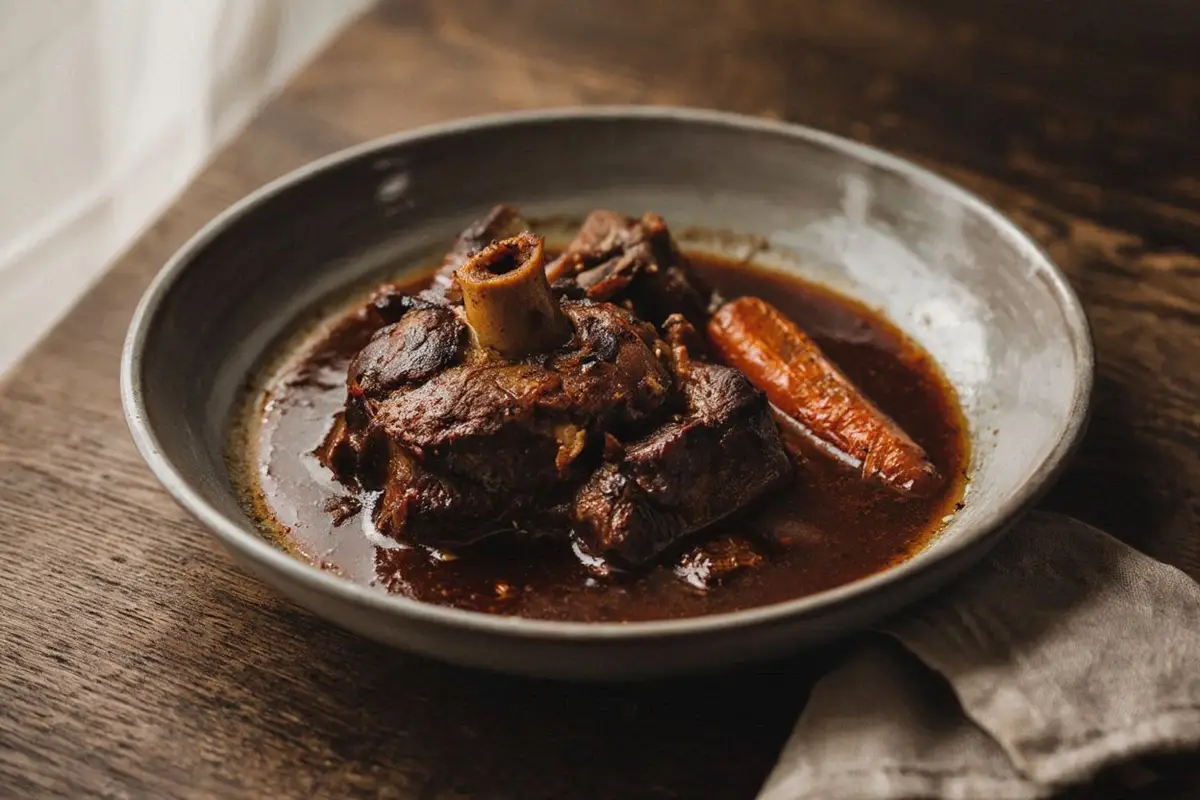
Beef Tail in Red Wine Sauce
Slow-braised oxtail in a rich red wine broth with carrots, lemon zest, and a silky roux-thickened sauce. A forgotten Central European classic.
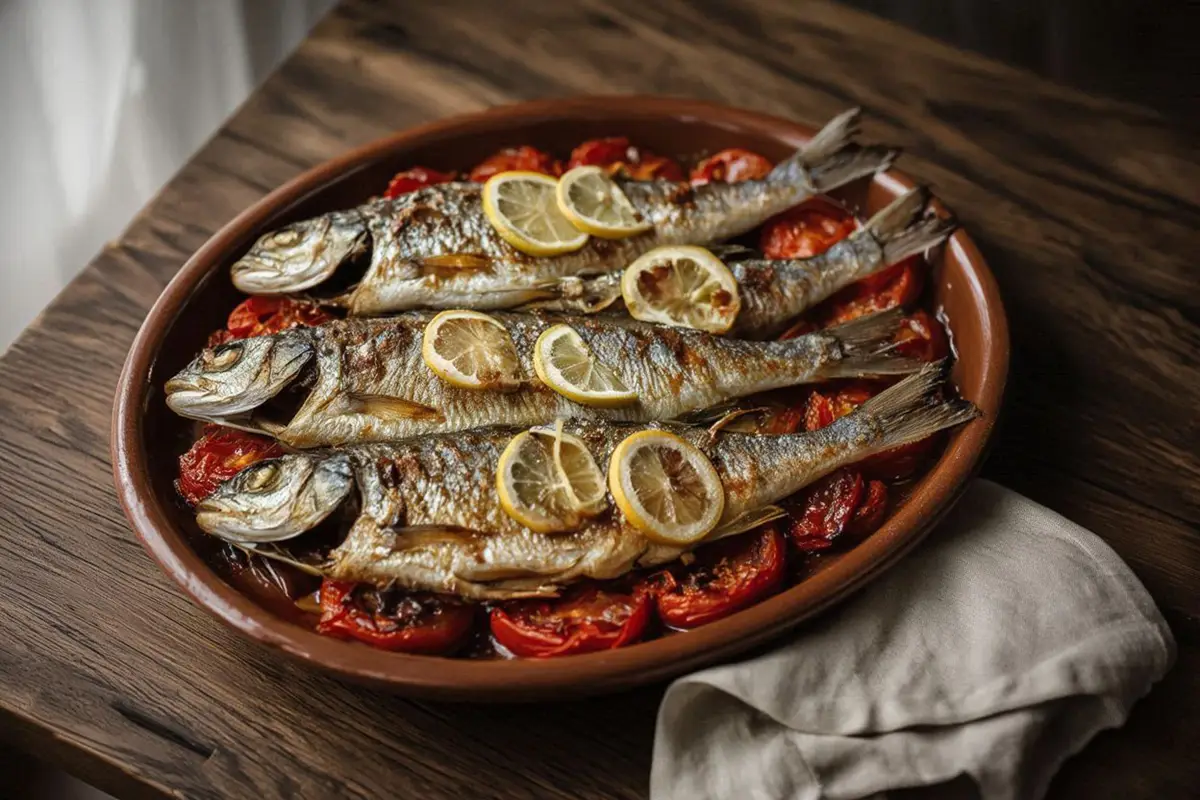
Baked Fish with Tomatoes
Whole fish baked over ripe tomatoes with generous olive oil and lemon — a simple, fragrant Central European oven dish.
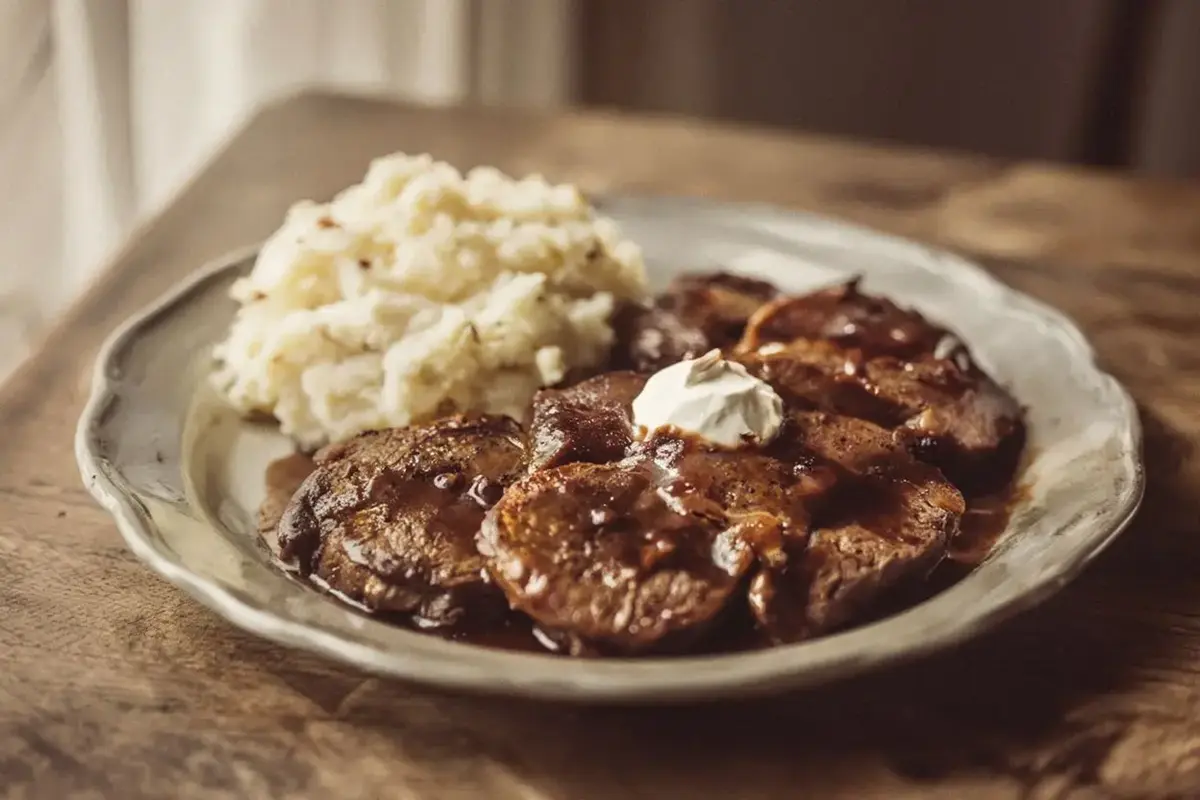
Beef Kidney with Wine
Beef kidney marinated in red wine, braised with herbs, finished with sour cream. Tender, rich, and deeply flavored.