Vegetarian Janija
A traditional meatless janija stew: onions softened in olive oil, then simmered with garlic, herbs, tomato, and potato until rich and tender.
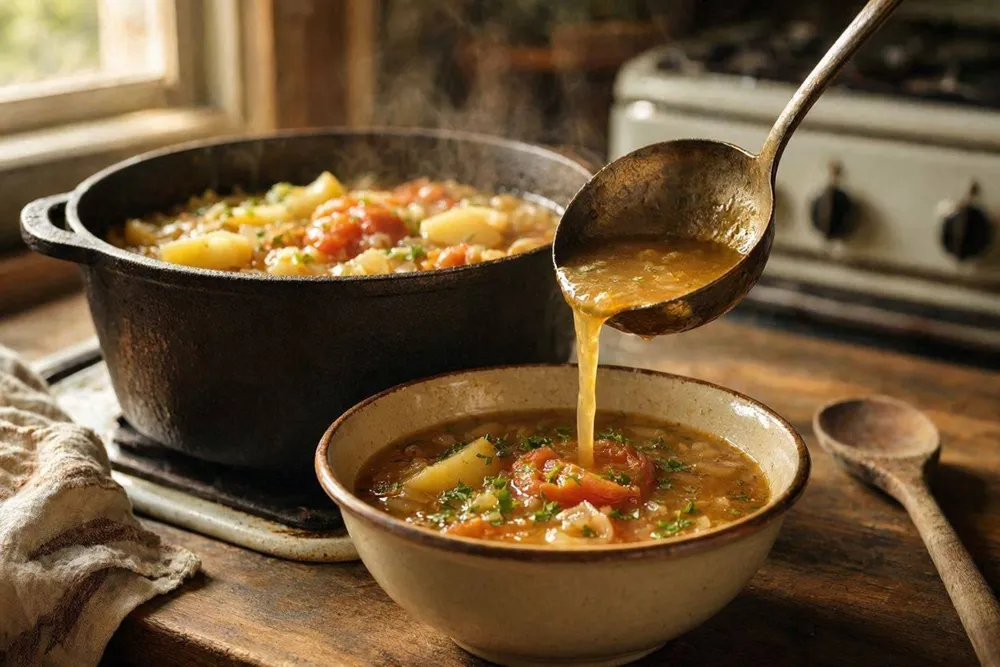
Historical recipe
Modernised adaptation of an early 20th‑century source. Not independently kitchen-tested by Attic Recipes. Quantities, temperatures, and food safety guidance have been updated for a contemporary kitchen — results may vary and errors may exist. Nutritional values, where provided, are estimates only and have not been laboratory tested. Always follow current food safety guidelines for your region. If you have a health condition, allergy, or dietary requirement, consult a qualified professional before preparing this recipe.
Use of this recipe is entirely at your own risk and subject to our Terms of Service and Privacy Policy. Attic Recipes accepts no liability for any adverse outcome.
- Gluten
- 1
Heat the 45ml olive oil in a heavy pot. Add the 2 chopped onions and cook over medium heat until softened, but not browned.
- 2
Sprinkle the onions with the 6g flour and let it cook for a minute or two, until it just begins to turn golden.
- 3
Add the 2 minced garlic cloves and the bouquet garni (bay leaf, thyme, celery, and parsley roots tied together). Stir briefly.
- 4
Add the 300g chopped tomatoes and 400g cubed potatoes. Season with the 6g salt and 1 teaspoon black pepper, then stir everything well.
- 5
Pour in the 700ml cold water, enough to nearly cover the vegetables. Bring to a near-boil, then cover and reduce to a low simmer.
- 6
Simmer gently for 35-40 minutes, until the potatoes are tender and the stew has thickened. Remove the bouquet garni before serving.
- 7
Sprinkle with the 2 tablespoons chopped parsley leaves and serve hot.
Nutrition Information per 1 serving (approx 330g)
Nutritional values are approximate estimates and may vary based on specific ingredients used, preparation methods, and portion sizes.
Serving Suggestions
Serve as a light main course with crusty bread, or as a hearty side alongside a simple roast. Leftovers keep well and taste even better the next day, once the flavors have had time to meld.
About This Recipe
Vegetarian janija takes its name from the technique, not the ingredient — “janija” (from the Turkish yahni) describes a slow-simmered stew built on softened onions, traditionally made with meat but just as easily built entirely from vegetables. This version leans on tomato, potato, and a generous bouquet of herbs to do the work that meat would normally do, resulting in a stew that’s genuinely satisfying rather than a meat dish with the meat simply left out.
It’s also a good example of how home cooks of the era thought about meatless eating — not as a modern dietary trend, but as a regular seasonal rhythm, tied to both religious practice and simply giving the stomach a rest from richer food.
Why It Works
The flour added to the softened onions thickens the stew slightly as it cooks, giving it body without needing a meat-based stock. The bouquet garni — bay, thyme, celery, and parsley root tied together — infuses the broth throughout the simmer and is easy to remove whole at the end, a simple technique that keeps the finished stew clean rather than full of woody herb stems.
Modern Kitchen Tips
- Tie the bouquet garni tightly with kitchen twine; it makes a big difference in flavor extraction and makes cleanup effortless.
- Don’t rush the initial onion-softening step — a slow, even cook here builds the base flavor for the whole stew.
- This stew keeps and reheats very well, making it a good make-ahead option.
A classic of early 20th century home cooking, preserved and adapted for the modern kitchen.
The Story Behind This Recipe
Historical Context
Early 20th century recipes for this dish specified Dalmatian olive oil as the preferred fat, and called for small pearl-type planting onions rather than the standard yellow onion used today. Home cooks of the period prepared meatless dishes like this one regularly, particularly in autumn when fresh vegetables were abundant, as a way to observe periodic dietary abstinence from meat that was common practice at the time.
Modern Kitchen Adaptation
The original recipe specified Dalmatian olive oil and small pearl-type planting onions (arpadžik), both regional specifics that have been generalized here — any good quality extra virgin olive oil works, and standard yellow onion has been substituted for the onions in a comparable quantity, since today's arpadžik refers to a different product used mainly for growing green onions rather than eating. Quantities for potato, salt, pepper, and water were not precisely specified in the original and have been estimated based on standard proportions for a stew of this size. Cooking time was also not given and has been estimated at 35-40 minutes based on the technique and vegetable sizes described.
This recipe is an independent modern adaptation developed from historical sources in the public domain. It is provided for informational and educational purposes only and does not constitute professional dietary, nutritional, or medical advice. Food preparation involves inherent risks. The reader assumes full responsibility for safe food handling, ingredient sourcing, and adherence to current local food safety guidelines. The site operator accepts no liability for outcomes resulting from the preparation or consumption of this recipe.
One recipe.
Every week.
You Might Also Like
More recipes from the same category
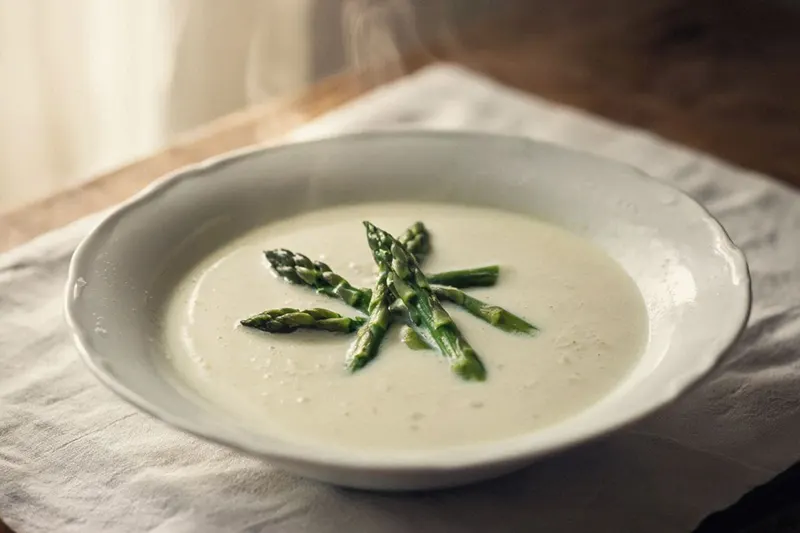
Asparagus Tip Soup
A silky, cream-enriched asparagus soup built on a white roux and finished with tempered egg yolks — an elegant first course from early 20th century cooking.
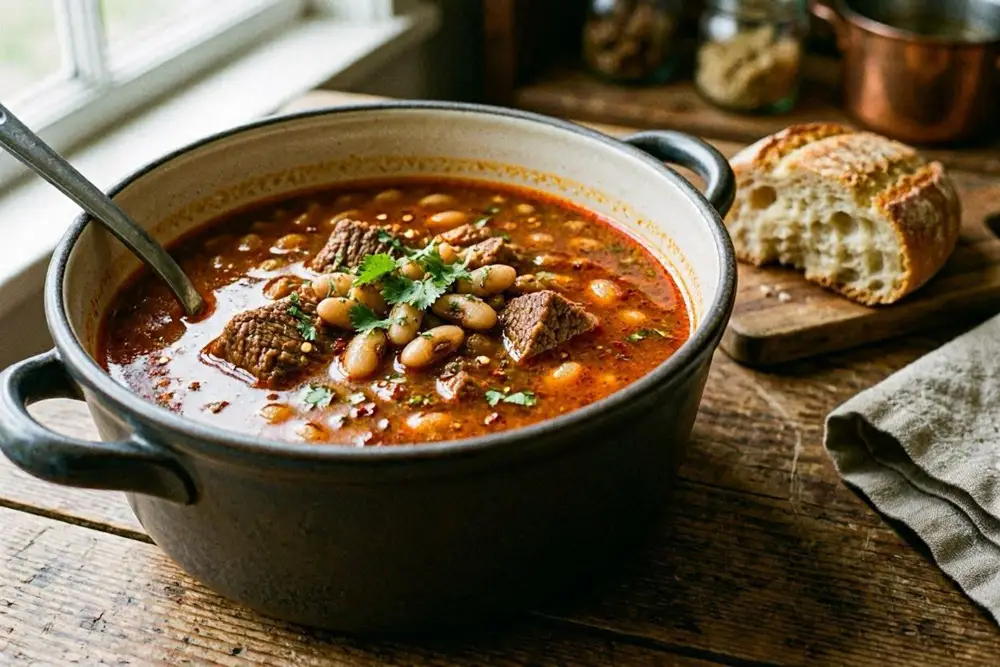
Bean Soup Cooked with Beef
White beans and beef shoulder slow-simmered with a bouquet garni, finished in the oven with a paprika-spiced pan roux. A deeply satisfying one-pot meal.
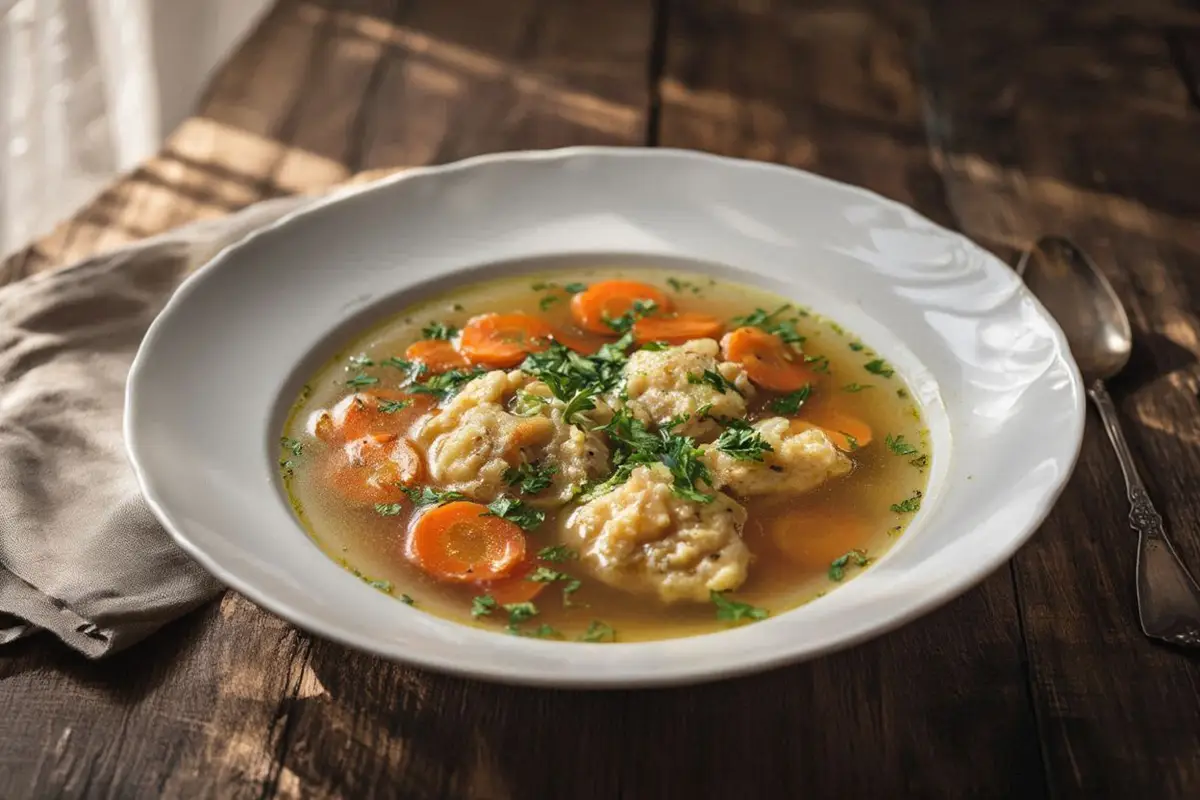
Beef Soup with Carrot-Colored Broth
A rich, golden Central European beef soup with carrot-colored broth, served with semolina or liver dumplings. Hearty, clear, and deeply flavorful.