Veal Steaks in White Wine
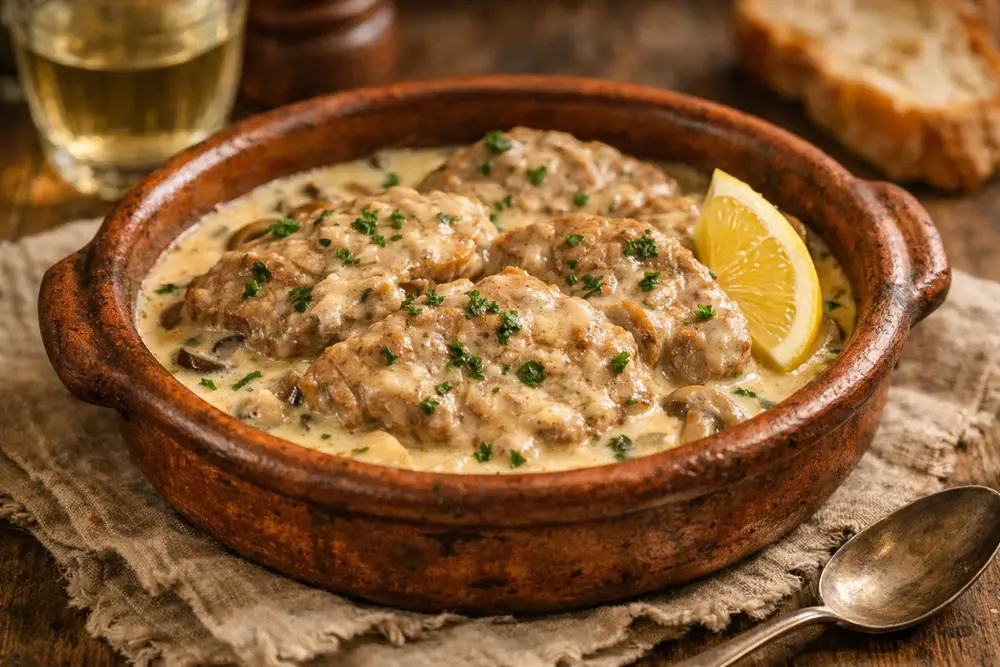
Tender braised veal marinated in white wine, slow-cooked in a covered casserole, and finished with a light sour cream and lemon pan sauce.
Historical recipe
Modernised adaptation of an early 20th‑century source. Not independently kitchen-tested by Attic Recipes. Quantities, temperatures, and food safety guidance have been updated for a contemporary kitchen — results may vary and errors may exist. Nutritional values, where provided, are estimates only and have not been laboratory tested. Always follow current food safety guidelines for your region. If you have a health condition, allergy, or dietary requirement, consult a qualified professional before preparing this recipe.
Use of this recipe is entirely at your own risk and subject to our Terms of Service and Privacy Policy. Attic Recipes accepts no liability for any adverse outcome.
- Dairy
- Sulphites
Additional notes
-
Note
This recipe contains white wine. The alcohol does not fully evaporate during braising at low temperatures. Not suitable for pregnant women, children under 18, elderly individuals, or those with compromised immune systems.
Replace white wine with a mixture of white grape juice and a splash of white wine vinegar (1 tsp per 100ml) for an alcohol-free version.
- 1
Wash the veal steaks under cold running water and pat dry with paper towels. Place each steak between sheets of baking parchment and pound with a meat mallet to an even 1cm thickness. Season both sides with salt and black pepper.
- 2
Arrange the steaks in a single layer in a non-reactive bowl. Pour over 300ml of dry white wine — the steaks should be fully submerged. Cover and refrigerate for 2–3 hours.
Tip Do not marinate longer than 3 hours. The wine will begin to denature the surface proteins and can make the texture mealy. - 3
Preheat the oven to 160°C (325°F) / 140°C fan. Grease a covered casserole dish evenly with 15g of butter.
- 4
Remove the steaks from the marinade and discard the used marinade. Arrange the steaks in a single layer in the prepared casserole dish. Pour over 200ml of fresh white wine and 100ml of stock.
- 5
Cover the casserole dish tightly with its lid (or seal with foil if lidless). Place in the centre of the oven and braise for 60–75 minutes, until the steaks are very tender and yield easily when pressed.
Tip Resist the urge to uncover early. The sealed environment is what produces the gentle steam braise. - 6
Remove the steaks from the casserole and transfer to a warm plate, tented loosely with foil. Pour the braising liquid into a small saucepan.
- 7
Whisk 60ml of sour cream into the warm braising liquid over low heat. Add 15ml of fresh lemon juice and stir to combine. Do not boil — heat gently until the sauce is uniform and slightly thickened, about 2–3 minutes.
Tip If the sauce breaks or looks grainy, remove from heat immediately and whisk in a small knob of cold butter. - 8
Arrange the steaks on warmed plates or return them to the casserole. Spoon the sour cream sauce generously over the top and serve immediately.
Nutrition Information per 1 porcija (approx. 280g with sauce)
Nutritional values are approximate estimates and may vary based on specific ingredients used, preparation methods, and portion sizes.
Serving Suggestions
Serve with buttered egg noodles, potato purée, or steamed rice to absorb the sauce. A simple cucumber salad dressed with vinegar and dill balances the richness. A glass of the same unoaked white wine used in the braise pairs naturally.
About This Recipe
Braised veal in white wine is a dish that appears in virtually every serious Central European cookbook of the early twentieth century, and for good reason. Veal — particularly leg steaks cut thin and pounded — responds beautifully to a slow, covered braise: the connective tissue softens without the meat drying out, and the pan juices concentrate into something that barely needs embellishment.
What makes this version interesting is its restraint. There are no aromatics, no herbs, no flour to thicken the sauce. The flavour comes entirely from the meat, the wine, and a modest amount of stock — and the finishing move of stirring sour cream and lemon juice directly into the braising liquid is both simple and unexpectedly good. The acidity of both the wine and the lemon keeps the richness of the cream in check.
Why It Works
The two-to-three hour wine marinade serves a dual purpose: it begins tenderising the muscle fibres and it seasons the meat throughout rather than just on the surface. Veal is a lean, delicate protein, and even a short marinade makes a measurable difference in texture after braising.
The braising liquid — wine, stock, and the juices released by the meat — does most of the cooking work. Kept at a very low temperature under a tight lid, the steam circulates continuously, preventing the surface of the meat from drying while the gentle heat slowly breaks down the collagen. The result is tender without being mushy.
The sauce comes together in minutes because all the work has already been done. The braising liquid is already seasoned, already reduced slightly, and already flavoured with the meat’s own gelatin. Sour cream stabilises easily at low heat without curdling, and the lemon juice — added last — lifts everything.
Modern Kitchen Tips
If your casserole lid does not seal tightly, press a sheet of foil firmly over the dish before setting the lid on top. Any gap will allow steam to escape and the liquid to reduce too quickly — you may end up with very little sauce by the time the meat is done.
Check the braising liquid at the 60-minute mark. If it has reduced to less than a few tablespoons, add a splash of stock or water and re-cover. If it seems thin and plentiful after 75 minutes, remove the steaks and reduce briefly on the stovetop before adding the sour cream.
Sour cream can split if exposed to high heat or added to a boiling liquid. Remove the pan from the heat, whisk in the cream off the flame, then return to the lowest possible setting just long enough to warm through.
A classic of early 20th century Central European home cooking, preserved and adapted for the modern kitchen.
The Story Behind This Recipe
Historical Context
Early 20th century recipes for braised veal in this tradition consistently call for a ćuvech — a covered clay vessel — rather than a metal roasting pan. The distinction mattered: clay retains moisture and moderates heat in a way metal cannot, producing the gentle, almost steamed braise described in early 20th century recipes as 'истиха пирјане' — quietly simmering. The marinade step, two to three hours in white wine before cooking, was standard practice before refrigeration made tenderising less critical for young veal. The finishing sauce — braising juices stirred with kisela pavlaka and a little lemon — follows the classic Central European method of enriching pan juices at the table rather than building a separate sauce.
Modern Kitchen Adaptation
The original specifies no oven temperature; 160°C (325°F) / 140°C fan is estimated to match the low, slow braise implied by the text. A Dutch oven or heavy ceramic casserole substitutes well for a clay ćuvech; reduce temperature by 5–10°C if using cast iron, which holds heat more aggressively. Full-fat crème fraîche can replace Serbian kisela pavlaka with nearly identical results. The original gives no meat weight — 700g total (four steaks of approximately 175g each) is a standard portion yield for a main course and is marked as estimated.
This recipe is an independent modern adaptation developed from historical sources in the public domain. It is provided for informational and educational purposes only and does not constitute professional dietary, nutritional, or medical advice. Food preparation involves inherent risks. The reader assumes full responsibility for safe food handling, ingredient sourcing, and adherence to current local food safety guidelines. The site operator accepts no liability for outcomes resulting from the preparation or consumption of this recipe.
One recipe.
Every week.
You Might Also Like
More recipes from the same category
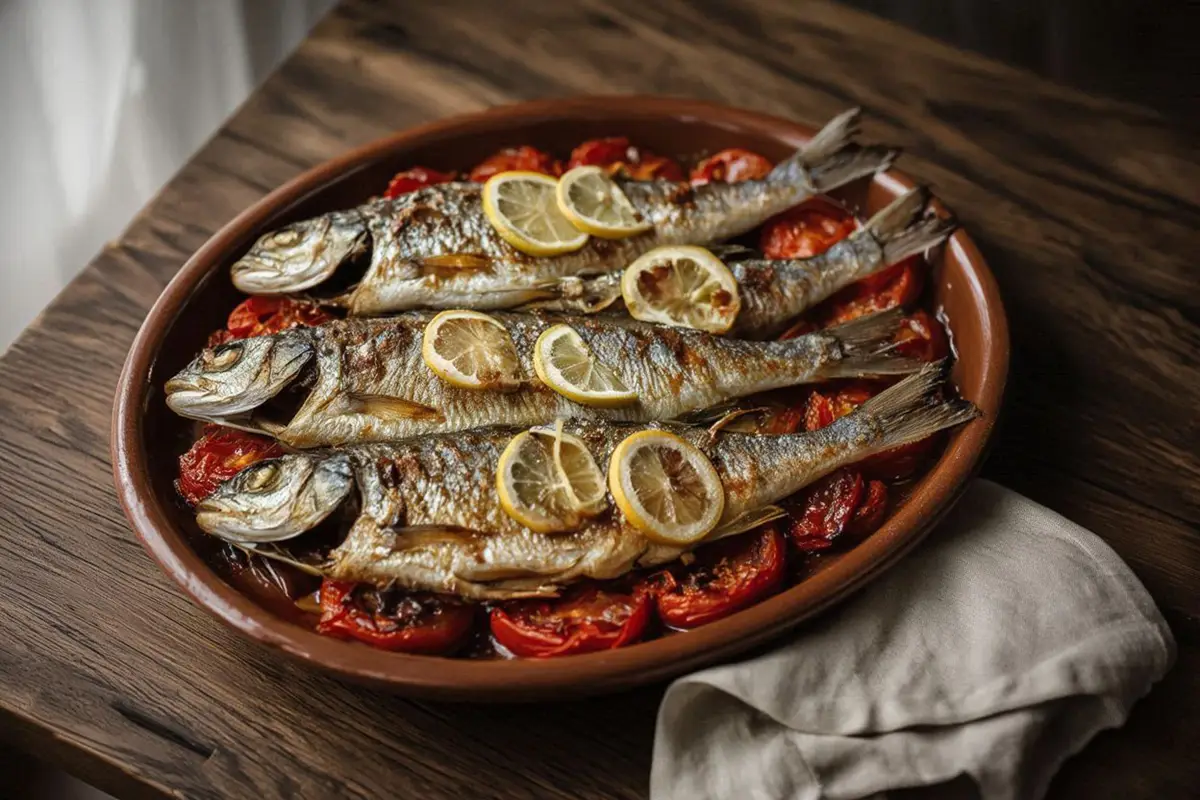
Baked Fish with Tomatoes
Whole fish baked over ripe tomatoes with generous olive oil and lemon — a simple, fragrant Central European oven dish.
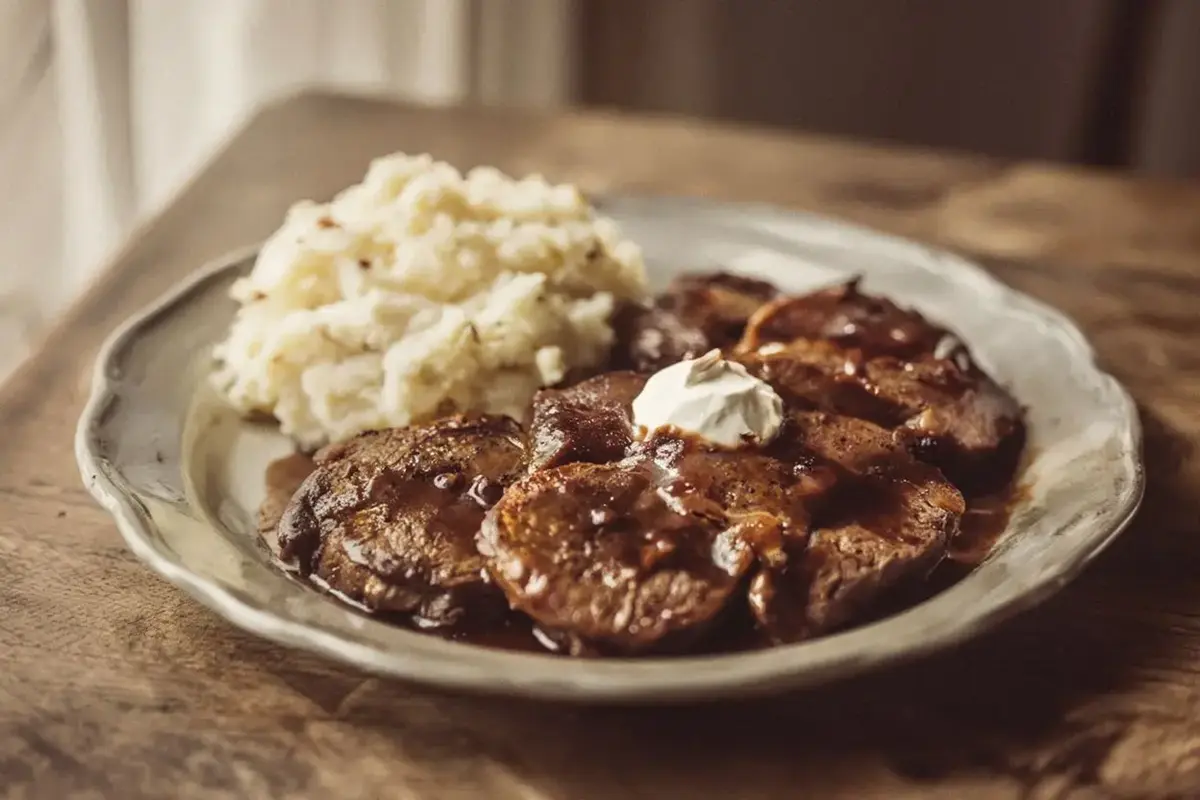
Beef Kidney with Wine
Beef kidney marinated in red wine, braised with herbs, finished with sour cream. Tender, rich, and deeply flavored.
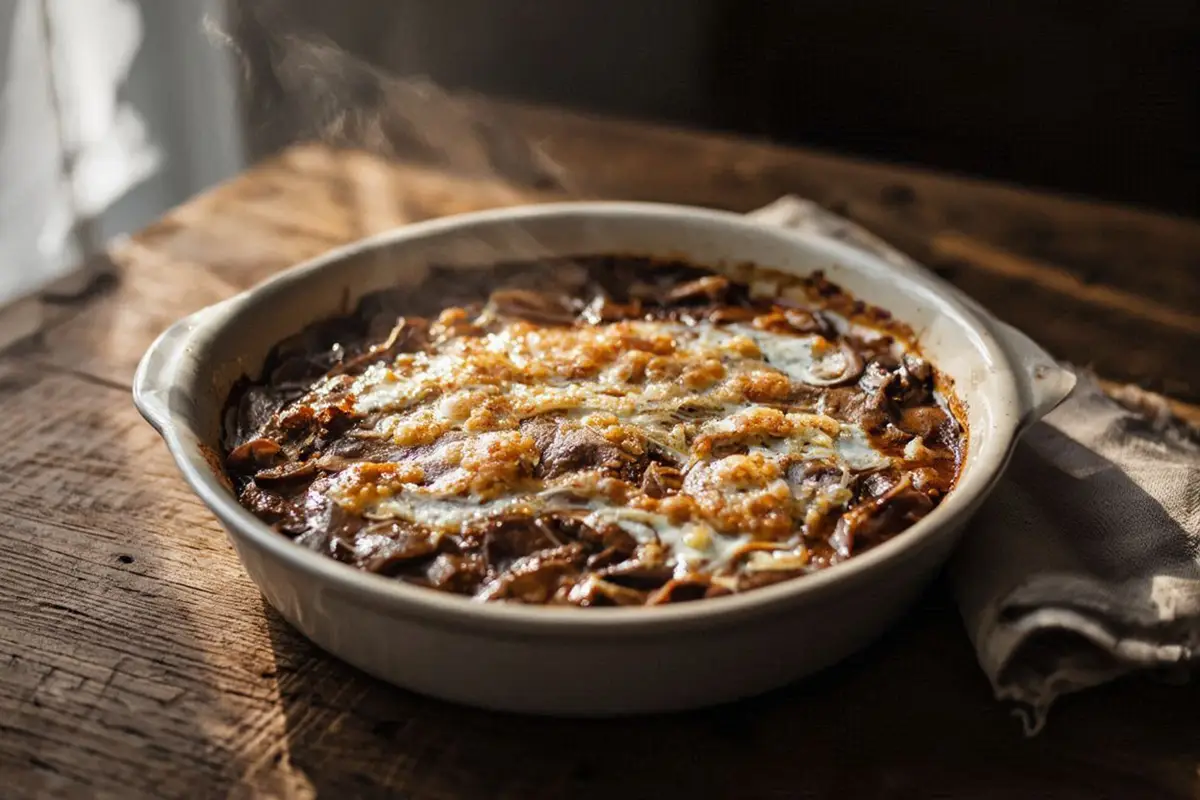
Beef Tongue in Mushroom Sauce
Tender sliced beef tongue layered in a rich dark mushroom sauce, finished with sour cream, Parmesan, and a golden oven crust.