Vanilice with Sour Cream
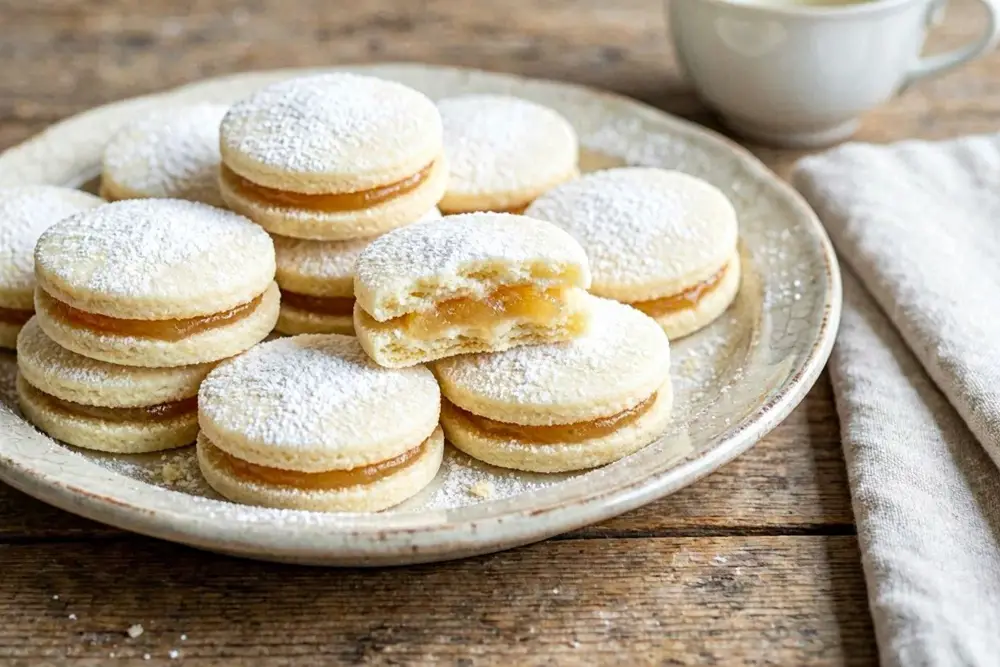
Delicate Central European sandwich cookies — tender shortbread rounds filled with apricot or melon jam, rolled in vanilla powdered sugar.
Historical recipe
Modernised adaptation of an early 20th‑century source. Not independently kitchen-tested by Attic Recipes. Quantities, temperatures, and food safety guidance have been updated for a contemporary kitchen — results may vary and errors may exist. Nutritional values, where provided, are estimates only and have not been laboratory tested. Always follow current food safety guidelines for your region. If you have a health condition, allergy, or dietary requirement, consult a qualified professional before preparing this recipe.
Use of this recipe is entirely at your own risk and subject to our Terms of Service and Privacy Policy. Attic Recipes accepts no liability for any adverse outcome.
- Eggs
- Gluten
- Dairy
Additional notes
-
Note
This recipe contains raw egg yolks incorporated into the dough, which is fully baked. No raw egg consumption is involved.
- 1
Beat 200g of softened lard or butter in a bowl until light and foamy. Add 3 tablespoons of sour cream and the finely grated zest of 1 lemon. Mix until well combined.
Tip Fat must be at room temperature — cold fat will not beat to a foam and the dough will be dense. - 2
Sift 1000g of flour onto a large mixing board or clean work surface. Add the beaten fat mixture, 2 egg yolks, the remaining 2 tablespoons of sour cream, and 80g of granulated sugar. Knead together until a smooth, uniform dough forms.
Tip Work quickly and avoid overworking the dough — you want it just combined. If the kitchen is warm, chill the dough for 15 minutes before rolling. - 3
Roll out the dough to approximately 1 cm thickness (about the thickness of a finger).
- 4
Use a small cup, shot glass, or round cookie cutter (4–5 cm diameter) to cut out rounds. Re-roll the scraps and continue cutting until all dough is used.
- 5
Arrange the rounds on a parchment-lined baking sheet with a small gap between each. Bake at 160°C (320°F) / 140°C fan for 12–15 minutes. The cookies must remain completely white — do not allow them to colour. They should feel firm and dry to the touch when done.
Tip Every oven is different. Check at 10 minutes. If the edges start to take on any golden tint, reduce the temperature immediately. - 6
In a shallow bowl, mix 200g of powdered sugar with 2 packets of vanilla sugar. Set aside.
- 7
While the cookies are still warm, spread a small amount of apricot or melon jam on the flat side of one cookie and press a second cookie on top to form a sandwich. Immediately roll each sandwich generously in the vanilla powdered sugar mixture, coating all sides.
Tip Work while warm — the slight warmth helps the sugar adhere. The jam acts as the glue; don't overfill or the cookies will slide apart. - 8
Allow the assembled cookies to cool completely on a wire rack or board. Let them rest for at least 1 hour before serving — overnight is ideal. Store in an airtight tin at room temperature for up to 1 week.
Tip Vanilice are deliberately not eaten fresh. Resting allows the jam to slightly soften the cookie from within, creating the characteristic texture. They are not crumbly straight from the oven — they become themselves only after they rest.
Nutrition Information per 1 sandwich cookie (approx. 25g)
Nutritional values are approximate estimates and may vary based on specific ingredients used, preparation methods, and portion sizes.
Serving Suggestions
Vanilice are a classic Christmas cookie across Central Europe, traditionally made in large batches and served throughout the holiday season. They are an ideal companion to a small cup of strong black coffee or a cup of mild black or herbal tea — the delicate vanilla sweetness pairs well with both. Store in a tin, layered with parchment, and they will keep well for up to a week, improving with each day.
About This Recipe
Vanilice are one of the most beloved Christmas cookies across Central Europe — and one of the most deceptively simple. The dough is short, enriched with fat and sour cream rather than milk or cream, and barely sweetened. The real sweetness comes later, from the generous coating of vanilla powdered sugar that covers every surface of the assembled sandwich cookie.
What sets this version apart from the more common crescent-shaped vaníliás kifli is the shape: flat rounds cut with a small cup, sandwiched with apricot or melon jam. The melon jam in the original recipe is worth noting — it was made from a now-rare category of starchy, floury-fleshed melons that cooked down to a dense, intensely sweet preserve. Apricot jam is the practical modern substitute, but if you encounter an old-variety melon at a market, it is worth making the jam. The result is something between a shortbread and a petit four — delicate enough to crumble at a touch when still warm, but settling into a tender, yielding texture after resting overnight with the jam.
The sour cream in the dough is not decoration. Its acidity slightly inhibits gluten development, keeping the crumb soft and preventing any chewiness. Combined with a fat beaten to a foam before mixing, the result is a cookie that is genuinely melt-in-the-mouth rather than merely light.
Why It Works
The key to Vanilice is restraint at every stage. The dough is barely sweetened because the cookie is not meant to be sweet on its own — it is the platform for the vanilla sugar coating. The oven temperature is kept deliberately low, not just for aesthetics (though keeping them white matters), but because a higher temperature would set the exterior too quickly, compromising the even, sandy texture throughout. And the cookies are not eaten fresh — they are left to rest, sometimes overnight, while the jam and the vanilla sugar coating slowly work their way into the surface of the cookie.
The sour cream performs double duty: its fat content enriches the dough while its acidity tenderises the gluten, resulting in a crumb that holds together just enough to be handled but dissolves immediately on the palate.
Modern Kitchen Tips
Use lard if you can find it — the texture difference is noticeable. Lard has a different fat crystal structure than butter, which produces a slightly more layered, flakier crumb. If you use butter, make sure it is fully softened before beating; cold butter will not aerate and the dough will be heavy.
The cutter size determines your yield. A 4 cm cutter gives a more delicate, bite-sized cookie; 5–6 cm gives something closer to a proper biscuit. Whatever size you choose, cut consistently so the pairs match.
Do not skip the resting time. These cookies are not enjoyable straight from the oven. One hour minimum, overnight if possible.
A classic of Central European Christmas baking — made in batches large enough to last the season, and better on the second day than the first.
The Story Behind This Recipe
Historical Context
Home baking recipes of this type from the early 20th century are remarkably consistent across the region — fat beaten to a foam, sour cream folded in, the dough kept simple and unenriched by modern standards. The instruction to use 'a small cup' as a cutter reflects a practical pre-equipment kitchen: no specialty tools, just whatever was at hand. Sugar is listed as 'to taste,' which in period context likely meant very little — the vanilla sugar coating was the intended sweetness, not the dough itself. Home cooks of the period prepared this style of cookie in nearly identical proportions across a wide geographic area, suggesting a shared tradition that predates national codification. Melon jam — made from starchy, floury old-variety melons that are now rare — was the traditional filling; the melon varieties used had a dense, low-water flesh that reduced to a thick, intensely flavoured preserve quite unlike modern melon.
Modern Kitchen Adaptation
The original recipe does not specify an oven temperature — 'bake until done but still white' was the instruction. 160°C (320°F) conventional / 140°C fan is the estimated appropriate range for a cookie that must cook through without any browning. Butter is given as an alternative to lard; lard produces a slightly more tender and flaky result due to its different fat crystal structure, but butter is a perfectly valid substitute. The sugar quantity in the dough (80g) is a minimum estimate — the original 'to taste' instruction accommodates a range of 0g to around 120g, but since the cookies are rolled generously in sweetened vanilla sugar after assembly, a lightly sweet dough is traditional and intentional. For the vanilla powdered sugar, commercial vanilin šećer packets (standard in Central and Eastern European markets) are the traditional choice and keep the coating bright white. Making your own vanilla sugar by infusing powdered sugar with a split vanilla bean is an excellent alternative, but note that flecks of vanilla bean will slightly darken the coating.
This recipe is an independent modern adaptation developed from historical sources in the public domain. It is provided for informational and educational purposes only and does not constitute professional dietary, nutritional, or medical advice. Food preparation involves inherent risks. The reader assumes full responsibility for safe food handling, ingredient sourcing, and adherence to current local food safety guidelines. The site operator accepts no liability for outcomes resulting from the preparation or consumption of this recipe.
One recipe.
Every week.
You Might Also Like
More recipes from the same category
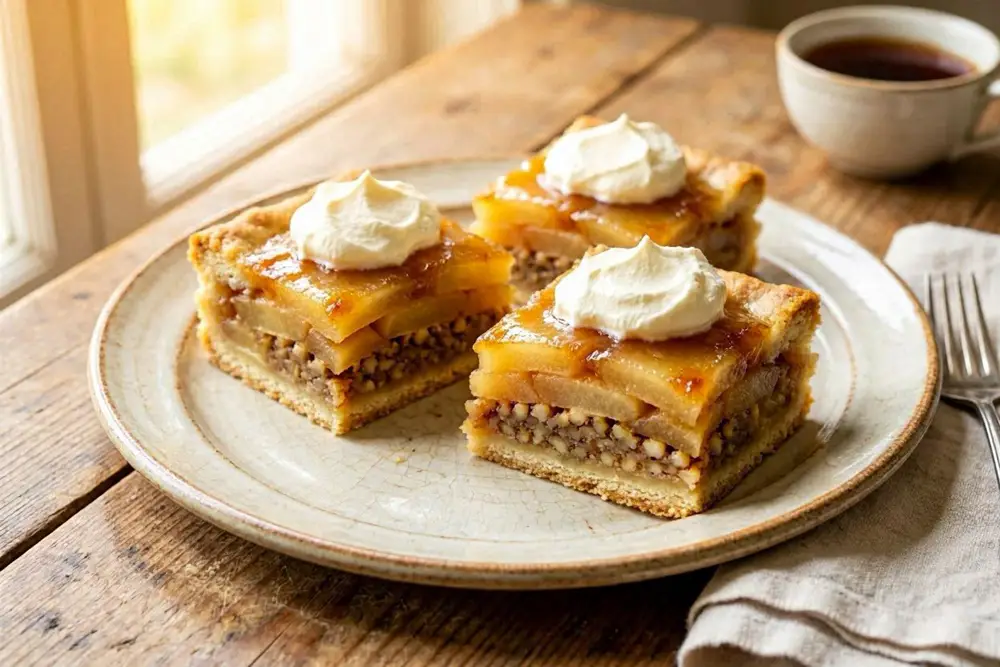
Apple Pie with Whipped Cream
A crisp almond shortcrust base layered with ground walnuts, poached apples, apricot jam, and a thick cloud of sweetened whipped cream.
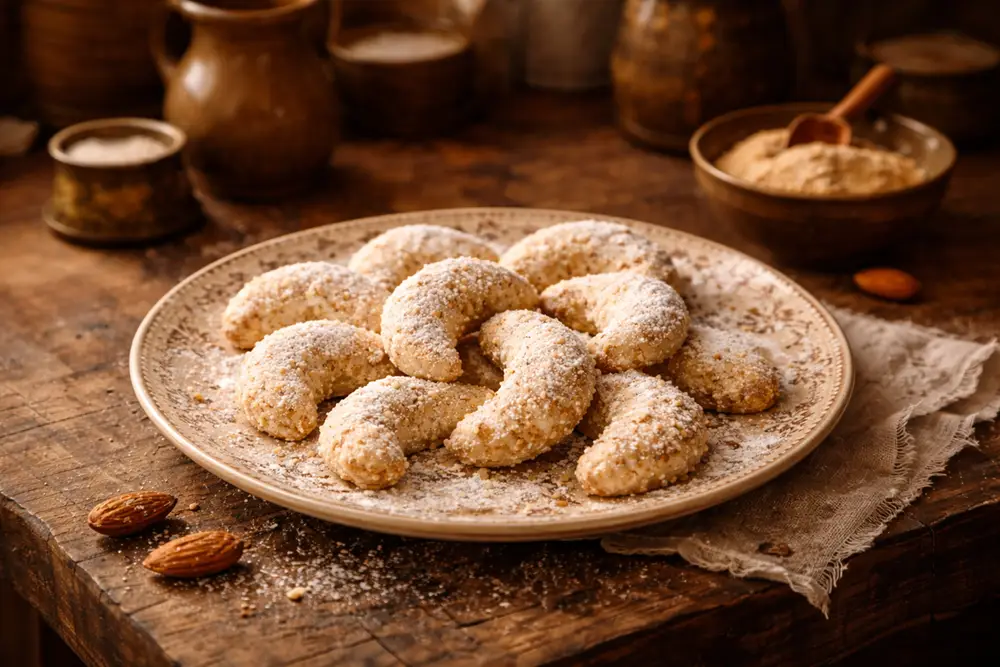
Almond Meringue Crescents
Crisp Central European confections of Swiss meringue shaped into crescents, coated in ground almonds, oven-dried until white and firm.
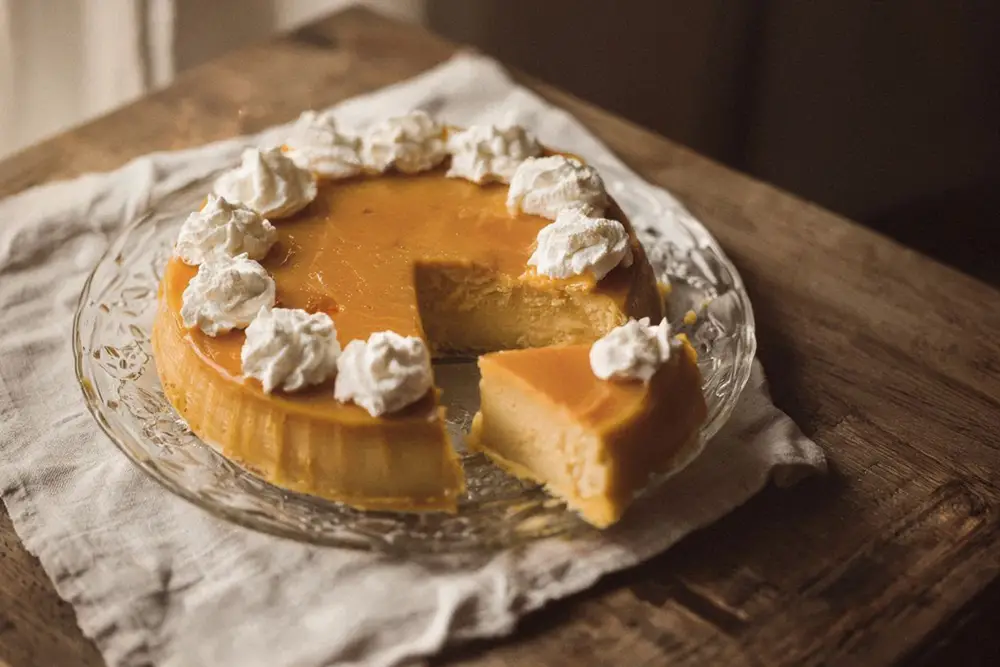
Apricot Cream
A rich chilled cream of apricot marmalade, egg yolks, sugar, and gelatin, set in a mould and served unmoulded with whipped cream.