Turkey Giblet Soup
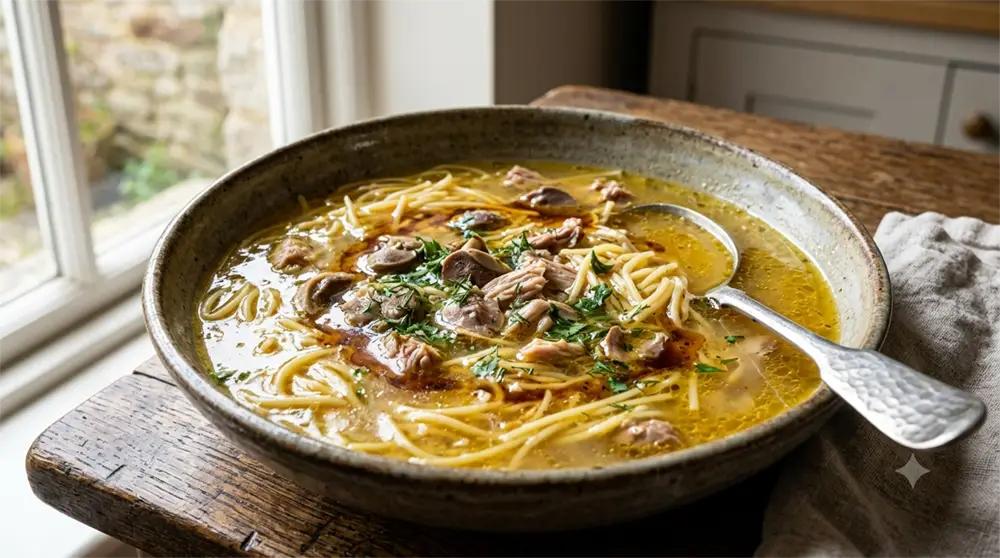
A deeply savory turkey soup made from the whole bird's offal and bony cuts, enriched with a classic egg-and-yogurt liaison and finished with browned butter.
Quick Summary
A Central European soup of poached turkey offal and bony cuts in a rich broth with rice or vermicelli. Takes 110 minutes total. Enriched off the heat with a tempered egg-and-yogurt liaison and finished with a drizzle of browned butter before serving.
Historical recipe
Modernised adaptation of an early 20th‑century source. Not independently kitchen-tested by Attic Recipes. Quantities, temperatures, and food safety guidance have been updated for a contemporary kitchen — results may vary and errors may exist. Nutritional values, where provided, are estimates only and have not been laboratory tested. Always follow current food safety guidelines for your region. If you have a health condition, allergy, or dietary requirement, consult a qualified professional before preparing this recipe.
Use of this recipe is entirely at your own risk and subject to our Terms of Service and Privacy Policy. Attic Recipes accepts no liability for any adverse outcome.
- Eggs
- Dairy
- Gluten
Additional notes
-
Warning
This recipe uses a cooked egg-and-yogurt liaison (terbiye). The soup must reach 74°C (165°F) after the liaison is added to ensure food safety. Use a kitchen thermometer to verify. Do not allow the soup to boil after the liaison is incorporated — boiling will cause the eggs to curdle and may produce an uneven texture. Particularly important for pregnant women, elderly individuals, young children, and immunocompromised persons.
-
Note
This recipe is high in dietary cholesterol due to egg yolks and poultry giblets. Individuals managing cardiovascular conditions or following a low-cholesterol diet should consult their physician regarding portion frequency.
- 1
Wash all turkey parts and giblets thoroughly under cold running water. Place in a large saucepan with 1200ml cold water. Bring to a boil over medium-high heat.
Tip Starting in cold water draws more flavor and collagen from the bones than starting in boiling water. - 2
As soon as the water boils, add 1 tsp of salt. Skim off any grey foam that rises to the surface with a ladle or spoon. Reduce heat to a steady simmer.
- 3
Simmer uncovered for 60–70 minutes, until the meat is fully cooked and beginning to pull away from the bone. Add hot water in small amounts if the liquid reduces below the level of the meat.
- 4
Remove all turkey parts from the broth and set aside to cool slightly. Pull the meat from the neck, wings, and legs. Discard bones and skin. Slice the giblets into bite-sized pieces. Return the pulled meat and giblets to the broth.
- 5
Bring the broth back to a gentle simmer. Add the 40g of rinsed rice or vermicelli and cook until tender — approximately 15 minutes for rice, 8 minutes for vermicelli.
- 6
Remove the saucepan from heat completely. In a mixing bowl, whisk together the 2 eggs and 75ml of yogurt until fully combined and smooth.
Tip The soup must be off direct heat before the next step. A rolling boil will curdle the liaison immediately. - 7
Temper the egg-yogurt liaison: slowly ladle approximately 100–150ml of the hot broth into the egg-yogurt mixture while whisking constantly. Add a second ladle and whisk again. The mixture should now be warm to the touch and visibly thickened.
Tip This tempering step is essential. It gradually raises the temperature of the eggs without scrambling them, ensuring a smooth, creamy result. Target temperature of the liaison before adding to the soup: 60–65°C. - 8
Pour the tempered liaison back into the saucepan while stirring the soup gently. Return to the lowest possible heat and stir for 2–3 minutes until the soup thickens slightly and reaches 74°C (165°F). Do not boil.
- 9
In a small frying pan, melt the 30g of butter over medium heat. Cook until it foams and turns a light golden-brown color with a nutty aroma — approximately 2–3 minutes. Remove from heat immediately.
Tip Watch the butter closely. It goes from browned to burnt in seconds. - 10
Ladle the soup into bowls. Drizzle the browned butter over each serving immediately before bringing to the table. Taste and adjust salt.
Nutrition Information per 1 bowl (approx 350ml)
Nutritional values are approximate estimates and may vary based on specific ingredients used, preparation methods, and portion sizes.
Serving Suggestions
Serve as a standalone main course with crusty bread. The browned butter drizzle is not optional — it is the finishing element that ties the dish together. A light dry white wine or sparkling water with lemon makes a good accompaniment.
About This Recipe
There is a kind of cooking that treats the whole animal as the ingredient, not just the premium cuts. This turkey giblet soup is that kind of dish. Head, neck, wings, legs, and giblets go into the pot together, simmered long enough to give up everything they have — collagen, flavor, depth — into a broth that no stock cube can replicate. What comes out after ninety minutes of quiet simmering is the foundation of a complete meal.
The finishing technique is what elevates this from a plain broth to something memorable. An egg-and-yogurt liaison, carefully tempered and stirred into the hot soup off the heat, transforms the texture entirely. The result is silky rather than watery, rich without being heavy. A final pour of browned butter over each bowl adds a nutty, aromatic note that pulls everything together at the moment of serving.
This is resourceful cooking at its most refined — not a recipe born of scarcity alone, but of an understanding that the less fashionable parts of the bird carry the most flavor.
Why It Works
The long simmer of bony cuts and connective tissue extracts collagen, which dissolves into gelatin in the broth. This is what gives the finished soup its body — not starch, not cream, but the structural protein of the animal itself. The rice or vermicelli adds bulk and a small amount of starch that further rounds the texture.
The egg-yogurt liaison works through protein coagulation. Egg proteins begin to set around 63°C and are fully cooked by 74°C. By tempering — gradually raising the egg mixture’s temperature before it meets the full volume of hot broth — you control this process precisely. The yogurt’s acidity stabilizes the proteins further, reducing the risk of curdling. The result is a liaison that thickens smoothly rather than scrambling.
Browned butter is not decoration. When butter is heated past its melting point, the water evaporates and the milk solids toast, producing hundreds of aromatic compounds — including diacetyl and various lactones — that have a distinctly nutty, almost caramel-like character. Drizzled onto the finished soup, it adds an aromatic counterpoint to the acidity of the yogurt.
Modern Kitchen Tips
Buy the turkey offal and bony cuts from a butcher rather than a supermarket — most supermarkets do not stock turkey heads or giblets separately, but a poultry butcher will have them. Call ahead.
If you are using vermicelli instead of rice, add it at the very end of the cooking time — vermicelli cooks in 7–8 minutes and will dissolve to mush if added too early.
Use a thermometer for the liaison step. The difference between 70°C (safe, smooth) and 85°C (starting to curdle) is invisible to the eye until it is too late. A simple instant-read thermometer removes all uncertainty.
The browned butter must be made fresh and used immediately. It cannot be prepared ahead — it continues to cook in the pan after the heat is removed and will turn from golden to burnt within a minute if left unattended.
A classic of early 20th century home cooking, preserved and adapted for the modern kitchen.
The Story Behind This Recipe
Historical Context
Early 20th century home cooks used every part of the bird as a matter of course — the head, neck, wings, legs, and giblets together made a single pot of soup that could feed a family. Discarding these cuts was not a common practice. The egg-and-soured-milk enrichment technique was standard in Central European home cooking for thickening broths without flour, producing a silky, protein-rich finish. The original recipe offered lemon juice as an alternative to soured milk, reflecting regional and seasonal availability of dairy. The instruction to 'strengthen' the broth (pojačati) with this mixture is a direct reference to the liaison technique — the term itself signals that cooks of the period understood its function precisely.
Modern Kitchen Adaptation
The original specified 6 regional cups of water (approximately 900ml), which is sufficient only if the turkey parts are small and the pot is tightly covered. This recipe uses 1200ml to account for the evaporation of a 90-minute simmer and to ensure adequate broth yield for four servings. The 'soured milk' of the original is best replaced with plain whole-milk yogurt or buttermilk, both of which replicate the acidity and fat content. Fresh lemon juice (approximately 1–2 tablespoons) may be used instead, stirred in after the liaison is incorporated — this was the period's own suggested alternative and produces a lighter, more acidic finish. Giblets: if turkey giblets are unavailable, chicken giblets can be substituted without altering the method.
This recipe is an independent modern adaptation developed from historical sources in the public domain. It is provided for informational and educational purposes only and does not constitute professional dietary, nutritional, or medical advice. Food preparation involves inherent risks. The reader assumes full responsibility for safe food handling, ingredient sourcing, and adherence to current local food safety guidelines. The site operator accepts no liability for outcomes resulting from the preparation or consumption of this recipe.
One recipe.
Every week.
You Might Also Like
More recipes you'll enjoy

Vegetarian Janija
A traditional meatless janija stew: onions softened in olive oil, then simmered with garlic, herbs, tomato, and potato until rich and tender.
Zucchini Soup
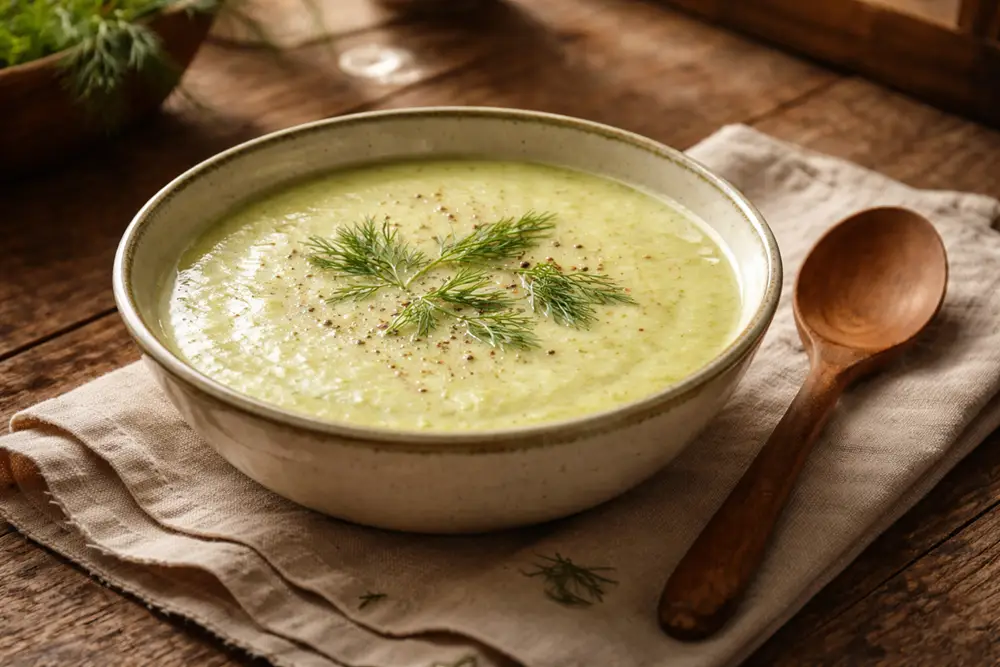
Young zucchini and spring onion soup built on a butter roux, finished with fresh dill and a tempered yogurt and egg yolk liaison. Serve with black pepper.
Tripe with Potatoes
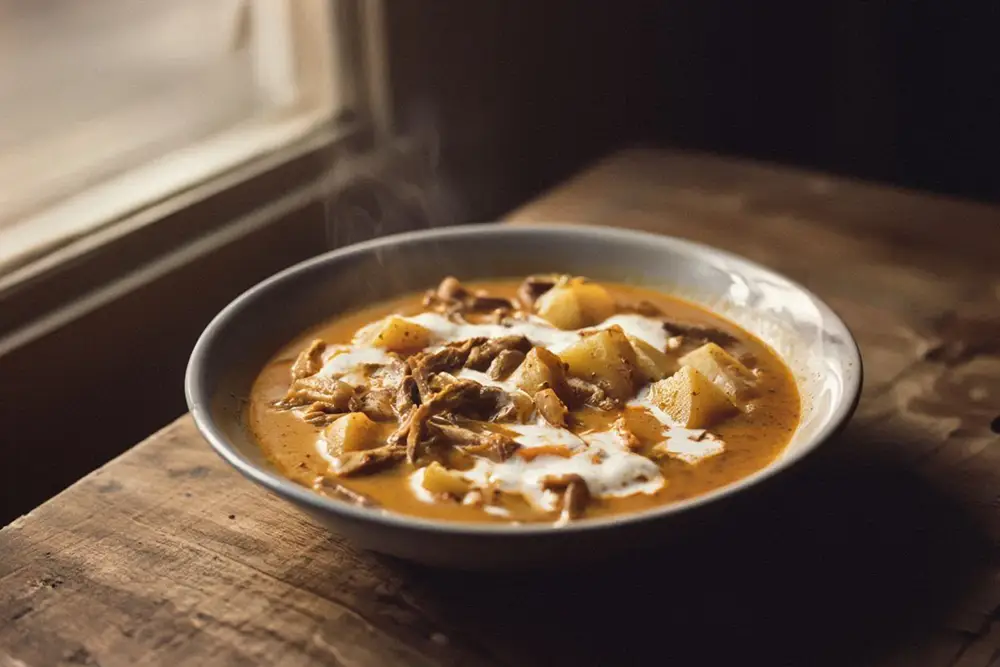
Slow-cooked tripe cut into strips, simmered with onion and sweet paprika, finished with sour cream.