Tomato Ketchup with Isot Pepper
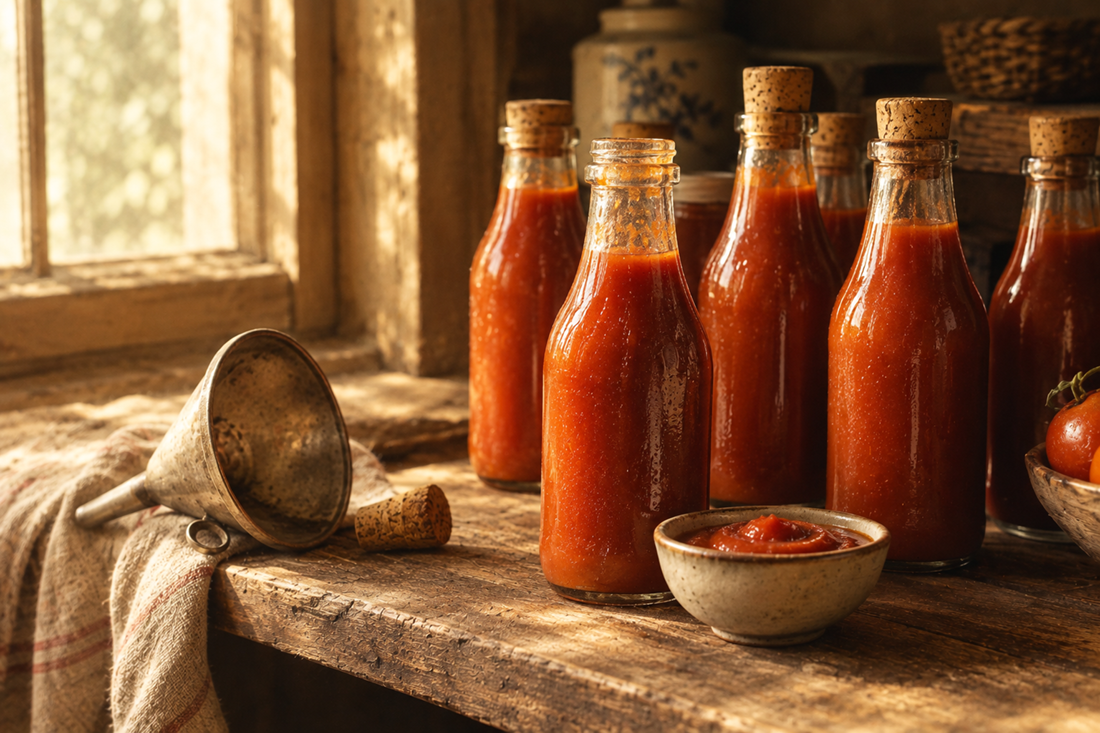
A tangy, vinegar-forward ketchup flavored with isot pepper and mustard, cooked down slowly and bottled hot for shelf-stable keeping.
Quick Summary
This homemade ketchup gets its edge from ground isot pepper and a generous amount of vinegar, which also keeps it shelf-stable once bottled hot. It simmers for about two hours before being strained smooth. Expect a thinner, sharper condiment than store-bought ketchup.
Historical recipe
Modernised adaptation of an early 20th‑century source. Not independently kitchen-tested by Attic Recipes. Quantities, temperatures, and food safety guidance have been updated for a contemporary kitchen — results may vary and errors may exist. Nutritional values, where provided, are estimates only and have not been laboratory tested. Always follow current food safety guidelines for your region. If you have a health condition, allergy, or dietary requirement, consult a qualified professional before preparing this recipe.
Use of this recipe is entirely at your own risk and subject to our Terms of Service and Privacy Policy. Attic Recipes accepts no liability for any adverse outcome.
- Mustard
- Sulphites
Additional notes
-
Warning
This condiment is preserved primarily through its high vinegar content and hot-fill bottling. Sterilize bottles and lids before filling, fill while the ketchup is still at or near boiling temperature, and seal immediately. The substantial vinegar content brings the pH well below the threshold generally considered safe for room-temperature storage of tomato-based products, which is what allows this to be kept unrefrigerated — reducing the vinegar would require switching to refrigerated storage instead.
-
Note
Once opened, refrigerate the bottle and use within a few weeks for best quality and safety.
- 1
Peel and mash the 1000g of tomatoes. Cut the onions into wedges.
- 2
Finely chop the green peppers.
- 3
Combine the tomatoes, onions, and peppers in a large pot with the salt, sugar, isot pepper, mustard powder, and grated nutmeg. Add the 2 liters of vinegar.
- 4
Bring to a boil, then reduce to a steady simmer. Cook for about 2 hours, stirring frequently, until the vegetables have broken down and the mixture has reduced slightly.
Tip Stir more often toward the end as the mixture thickens — it scorches easily once most of the liquid has cooked off. - 5
Pass the mixture through a fine sieve or food mill to remove the skins, seeds, and any fibrous bits, leaving a smooth sauce.
- 6
While the ketchup is still hot, pour it into sterilized bottles and seal immediately. Store in a cool, dry place.
Tip Sterilize bottles and lids by boiling them for at least 10 minutes, or running them through a hot dishwasher cycle, before filling. Fill while the ketchup is still at or near boiling temperature to form a proper seal.
Nutrition Information per 1 tablespoon (about 15ml)
Nutritional values are approximate estimates and may vary based on specific ingredients used, preparation methods, and portion sizes.
Serving Suggestions
Use it anywhere you'd reach for regular ketchup, though its sharper, thinner character makes it especially good drizzled over roasted or grilled meats and sausages, or whisked into a quick pan sauce.
About This Recipe
This tomato ketchup leans heavily on vinegar rather than sugar and thickened tomato paste, giving it a thinner, sharper profile than the ketchup most people know today. Isot pepper, a smoky, mildly hot ground chili, gives it a distinctive depth that plain paprika doesn’t quite replicate.
Because the finished sauce is so vinegar-forward, it doesn’t need refrigeration to stay shelf-stable once bottled — a practical feature for a condiment meant to last through the year without a fridge.
Why It Works
Modern commercial ketchup is built around reduced tomato paste, sugar, and a comparatively small amount of vinegar for tang. This version inverts that ratio: with roughly two liters of vinegar to one kilogram of tomatoes, the finished product’s acidity sits well below the pH threshold generally considered safe for unrefrigerated storage of tomato-based sauces. That’s what makes hot-fill bottling and pantry storage possible here, and it echoes how early ketchups — originally thin, vinegar-based sauces rather than thick tomato condiments — were made before the shift toward today’s sweeter, thicker style.
Modern Kitchen Tips
- If you can’t find isot pepper, a mix of pul biber and sweet or smoked paprika gets you closer than paprika alone — start light, since isot tends to run more intense and saltier.
- Sterilize your bottles and lids before filling; a properly sealed bottle is what keeps this shelf-stable.
- Once a bottle is opened, treat it like any other condiment and refrigerate it.
- Because this ketchup is thinner than store-bought, it works well thinned further as a base for a quick pan sauce.
A classic of early 20th century home cooking, preserved and adapted for the modern kitchen.
The Story Behind This Recipe
Historical Context
Home-bottled ketchups of the early 20th century relied on vinegar and salt for preservation, long before refrigeration was common in most households. Recipes from the period were often much more vinegar-forward than what became standard later, producing a thinner, sharper condiment rather than the thick, sweet ketchup familiar today.
Modern Kitchen Adaptation
The spice listed in the traditional method as ground 'isiot' most closely matches ground isot pepper (Urfa biber), a smoky Turkish chili; if it isn't available, a mix of pul biber and sweet or smoked paprika gets closer than paprika alone, starting light since isot tends to run more intense and saltier. The vinegar amount has been kept as written rather than reduced for a milder taste, since it's what makes hot-fill bottling and room-temperature storage safe here — cutting it back would mean switching to refrigerated storage and a shorter shelf life instead. An explicit sterilization step has been added for the bottles, since the traditional approach only implies it through hot bottling. Nutrition values assume a finished yield of about 1.8 liters after straining and reducing; actual yield will vary depending on how much the mixture reduces during the simmer.
This recipe is an independent modern adaptation developed from historical sources in the public domain. It is provided for informational and educational purposes only and does not constitute professional dietary, nutritional, or medical advice. Food preparation involves inherent risks. The reader assumes full responsibility for safe food handling, ingredient sourcing, and adherence to current local food safety guidelines. The site operator accepts no liability for outcomes resulting from the preparation or consumption of this recipe.
One recipe.
Every week.
You Might Also Like
More recipes you'll enjoy
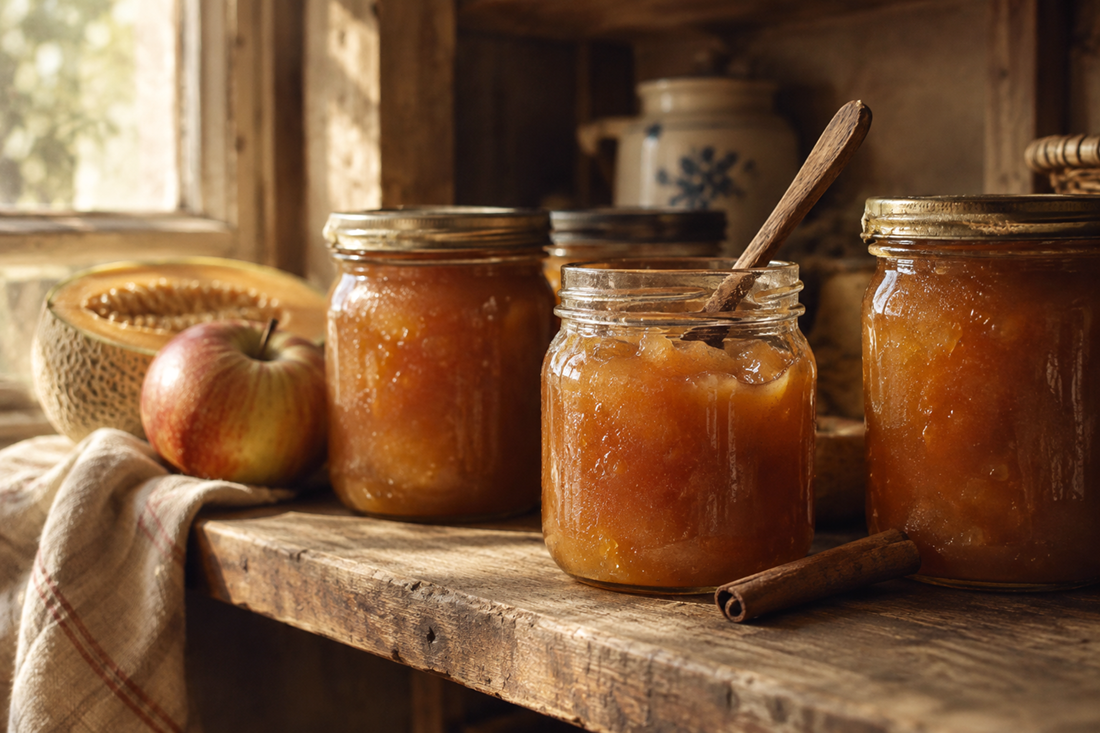
Melon and Apple Pekmez (Fruit Butter)
A slow-cooked melon and apple fruit butter (pekmez), lightly spiced with cinnamon and canned for shelf-stable keeping.
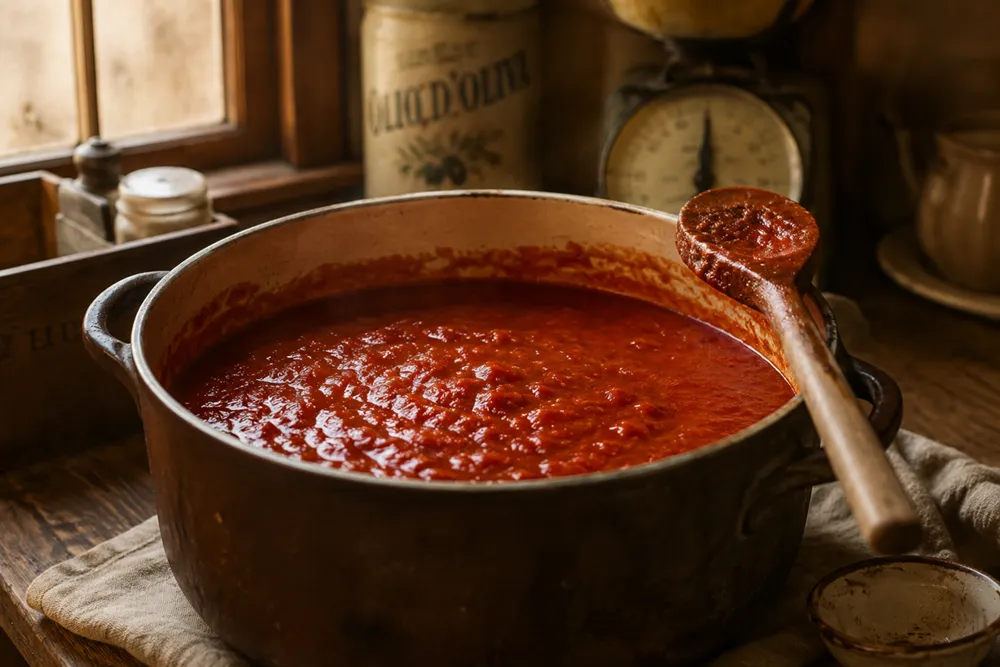
Slow-Simmered Tomato Sauce
A simple, aromatic tomato sauce simmered with onion, garlic, and herbs, then passed through a sieve for a silky, seed-free finish.

Baked Meatballs on Fried Onion with Tomatoes
Beef and pork meatballs baked over softened onion and sliced tomatoes in a light braising liquid — a comforting one-dish oven bake.