Spinach Steak
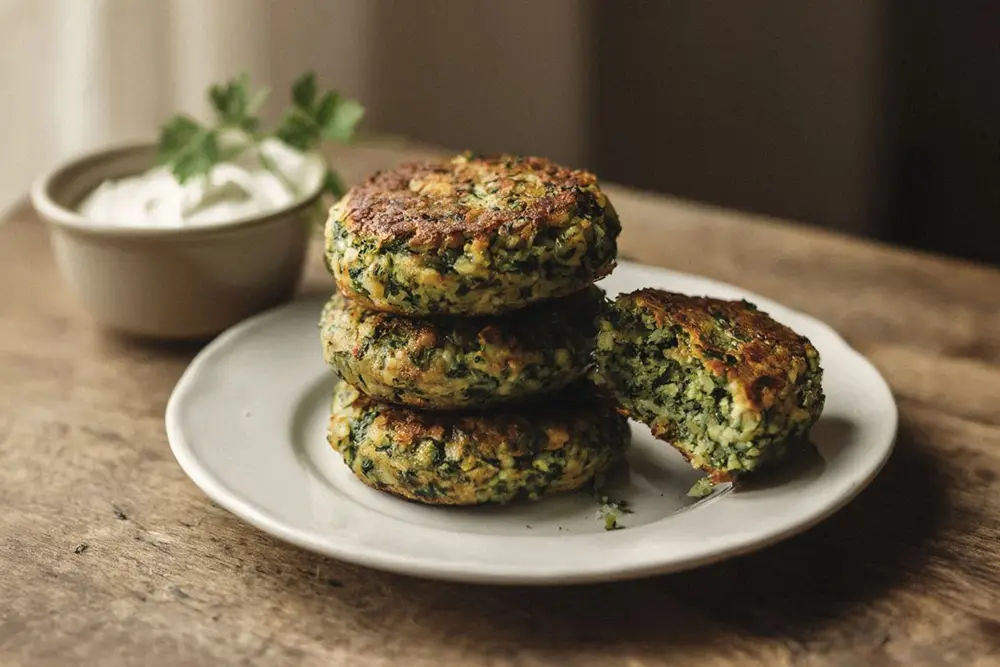
Pan-fried spinach and rice patties bound with egg and butter — a meatless Central European staple, crisp at the edges and tender inside.
Quick Summary
Pan-fried spinach and rice patties bound with egg and butter — a meatless Central European staple, crisp at the edges and tender inside.
Historical recipe
Modernised adaptation of an early 20th‑century source. Not independently kitchen-tested by Attic Recipes. Quantities, temperatures, and food safety guidance have been updated for a contemporary kitchen — results may vary and errors may exist. Nutritional values, where provided, are estimates only and have not been laboratory tested. Always follow current food safety guidelines for your region. If you have a health condition, allergy, or dietary requirement, consult a qualified professional before preparing this recipe.
Use of this recipe is entirely at your own risk and subject to our Terms of Service and Privacy Policy. Attic Recipes accepts no liability for any adverse outcome.
- Eggs
- Dairy
- Gluten
Additional notes
-
Caution
These patties contain whole eggs that must be fully cooked through before serving. Fry until the interior is no longer wet or translucent — 3–4 minutes per side at medium-high heat is sufficient for patties 1.5 cm thick. For the air fryer method, confirm the interior is set before serving. This applies especially to pregnant women, elderly individuals, children under 18, and immunocompromised individuals.
- 1
Boil the spinach in a large pot of unsalted water for 2–3 minutes until wilted and tender. Drain immediately and transfer to a bowl of cold water to stop cooking. Once cool enough to handle, squeeze out as much water as possible — first by pressing in a sieve, then by wrapping in a clean kitchen towel and twisting firmly. The spinach should feel almost dry. Grind or chop finely.
Tip Do not skip the thorough squeezing. Underdraining is the most common reason these patties fall apart. - 2
Cook the 200g of rice in salted boiling water until just tender. Drain completely through a fine sieve and spread on a tray to cool to room temperature. The rice must be fully drained — standing water in the rice will loosen the mixture.
- 3
Combine the ground spinach and cooled rice in a large bowl. Add the 2 eggs, 30g of melted butter, 15g of chopped parsley, salt, and black pepper. Mix thoroughly. If the mixture is too loose to hold a shape when pressed together, add up to 20g of flour or fine breadcrumbs and mix again. Refrigerate the mixture for 10 minutes — this firms it up and makes shaping easier.
- 4
Dust your palms generously with flour. Take a scoop of the mixture (about 80–90g) and press it firmly into a flat oval patty roughly 1.5 cm thick. Dust the outside lightly with flour. Repeat with the remaining mixture to form 6–8 patties.
- 5
Traditional method — heat the 90g of lard in a wide frying pan over medium-high heat until shimmering and hot. Fry the patties in batches without crowding, 3–4 minutes per side, until deep golden brown and crisp on both sides. Transfer to a rack or paper-lined plate.
Tip Do not move the patties for the first 2 minutes after placing them in the pan — let the crust form before attempting to flip. - 6
Modern method (oil) — heat the 90ml of neutral oil in a wide frying pan over medium-high heat. Fry as above, 3–4 minutes per side, until golden and crisp. The result is nearly identical to lard; the crust may be very slightly less rich.
- 7
Air fryer method — preheat the air fryer to 190°C. Line the basket with a sheet of baking paper cut to fit. Brush the formed patties lightly on both sides with a small amount of neutral oil. Arrange in a single layer without touching. Cook at 190°C for 12–15 minutes, flipping carefully at the halfway point. The patties will be cooked through and lightly golden, but the exterior will be softer and less crisp than the pan-fried version — this is expected. Handle gently when flipping as they are more fragile without the oil-fried crust.
Tip If the patties are sticking to the paper when you try to flip, give them another 1–2 minutes before attempting — the base needs to set before it will release cleanly. - 8
Serve immediately. Pan-fried patties hold their crust best within 10 minutes of cooking; air-fried patties are more forgiving and stay reasonably firm for longer.
Nutrition Information per 1 patty (approx. 90g)
Nutritional values are approximate estimates and may vary based on specific ingredients used, preparation methods, and portion sizes.
Serving Suggestions
Serve hot with a spoonful of cold sour cream or strained yogurt. A simple tomato salad or cucumber salad dressed with vinegar works well alongside. These also serve well as a side dish to a light soup.
About This Recipe
The name “steak” is a misdirection, but a charming one. What this recipe produces is a pan-fried spinach and rice patty — crisp at the edges, soft inside, smelling of butter and parsley — that has nothing to do with meat and everything to do with making something satisfying from a pile of greens and a cup of rice. Central European cooks of the early twentieth century used the word freely for anything fried flat in a pan, regardless of what it contained.
The technique is simple enough that it looks obvious on paper. Boil the spinach. Cook the rice. Mix with egg and butter, shape into patties, fry. The detail that is not obvious, and that period recipes of this type assume the cook already knows, is how dry everything must be before it goes into the bowl. Spinach is almost entirely water. Rice, if not fully drained, holds water between the grains. Combine the two while either retains moisture and the mixture will be too loose to shape, too fragile to flip, and too wet inside to ever develop a proper crust. Squeezing the spinach is not optional. It is the recipe.
Once you have that right, these come together quickly and fry beautifully — a deep golden exterior and a green, tender interior that makes a satisfying weeknight meal with nothing more than a bowl of sour cream alongside.
Why It Works
The rice functions as both filler and binder. Cooked rice is sticky enough at room temperature to help hold the mixture together from the inside, reducing the amount of egg and flour needed to maintain the patty’s shape. This is why the rice must be fully cooked and fully drained — undercooked rice does not have the surface starch that provides this binding effect, and wet rice dilutes the mixture rather than stabilising it.
The egg binds the whole mixture by setting under heat. Two eggs for this quantity is enough for patties that are handled carefully; a third egg provides extra insurance if the spinach was not drained as thoroughly as it should have been, but also adds moisture, which is counterproductive if the mixture is already borderline.
Chilling the formed mixture for 10 minutes before shaping is a small step that makes a visible difference. The butter firms slightly in the cold, the starches in the rice tighten, and the mixture becomes easier to press into a patty that holds its shape without cracking at the edges.
Modern Kitchen Tips
The air fryer version works, with caveats. Without the hot fat surrounding the patty on all sides, the exterior dries rather than crisps — the colour will be lighter and the texture slightly less satisfying than the pan-fried version. The trade-off is lower fat and less mess, which for a weeknight is often a reasonable exchange. Brush the patties generously with oil before air frying — without it, the exterior will be dry rather than merely less crisp.
Leftovers reheat well in a dry frying pan over medium heat for 2–3 minutes per side. The microwave will make them soft and a little soggy — not terrible, but not the same dish. The frying pan restores most of the original crust.
These freeze well before cooking. Shape the patties, place on a lined tray, freeze until solid, then transfer to a bag. Fry directly from frozen at slightly lower heat with the lid on for the first 3 minutes, then remove the lid and increase heat to crisp the exterior.
A meatless staple of the early twentieth century kitchen: spinach and rice, fried flat, and called a steak.
The Story Behind This Recipe
Historical Context
Early 20th century Central European vegetable cooking regularly produced dishes that gave plant-based ingredients the form and presentation of meat — cutlets, steaks, and schnitzel-shaped patties made from spinach, potato, or legumes were common in middle-class household cookbooks of the period. The term 'steak' in this context described the shape and frying method rather than any meat content. The combination of boiled spinach with rice as a base is characteristic of a practical approach to stretch fresh seasonal greens into a more substantial dish. Home cooks of the period used lard as the standard frying fat; the quantity was left unspecified, as was common practice, with the instruction simply being to fry in hot fat.
Modern Kitchen Adaptation
All quantities for eggs, butter, parsley, optional binder, and frying fat were absent or vague in the original text and are estimated here, marked accordingly. The original did not specify that spinach must be drained before grinding — this is a critical step omitted from period recipes of this type, where it was presumably understood by experienced cooks. Thorough drainage is addressed explicitly in the instructions and proTips. Two frying methods are provided: the traditional version using lard, and a modern version using neutral oil, with nearly identical results. An air fryer method is also provided as a lower-fat option; the result is less crisp but acceptable, and the patties require careful handling as the exterior is more fragile without a pan-fried crust.
This recipe is an independent modern adaptation developed from historical sources in the public domain. It is provided for informational and educational purposes only and does not constitute professional dietary, nutritional, or medical advice. Food preparation involves inherent risks. The reader assumes full responsibility for safe food handling, ingredient sourcing, and adherence to current local food safety guidelines. The site operator accepts no liability for outcomes resulting from the preparation or consumption of this recipe.
One recipe.
Every week.
You Might Also Like
More recipes from the same category
Asparagus Venetian Style
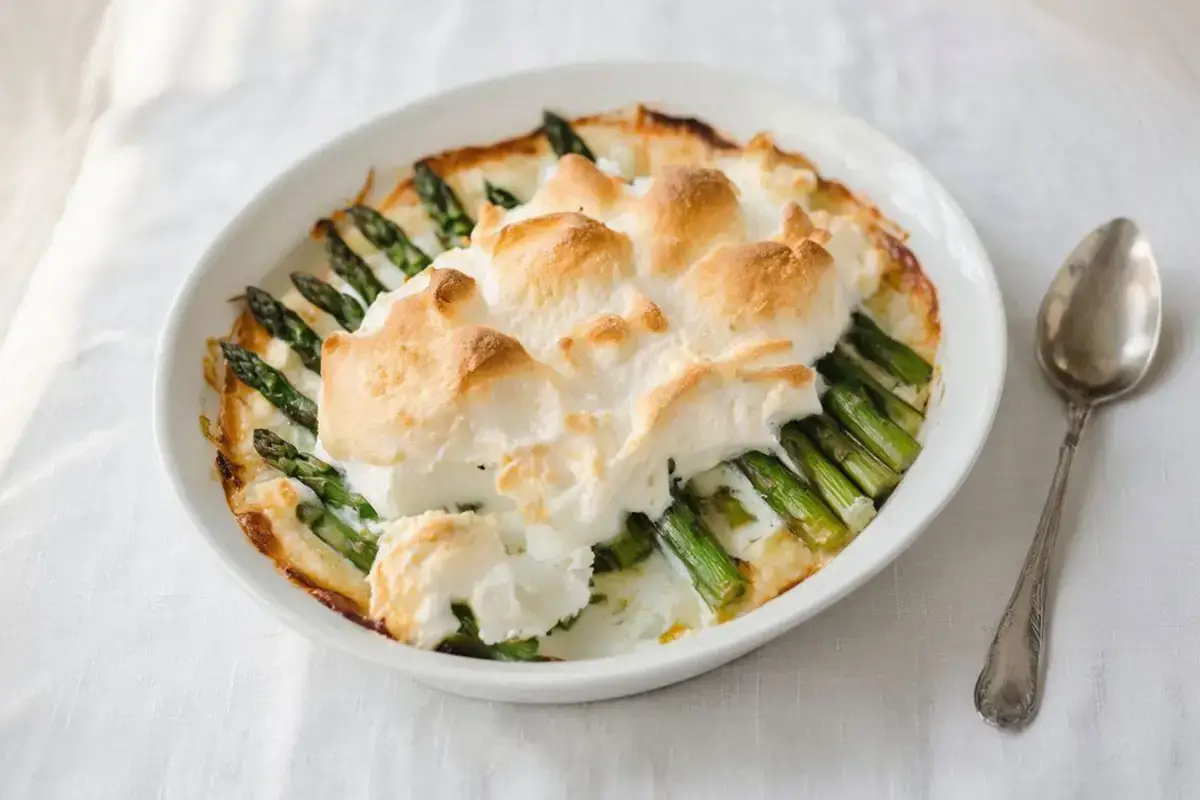
Fresh asparagus baked under a rich egg yolk cream sauce and a golden meringue-cheese topping. An elegant Central European appetizer.
Baked Mushrooms with Hard Cheese and Eggs
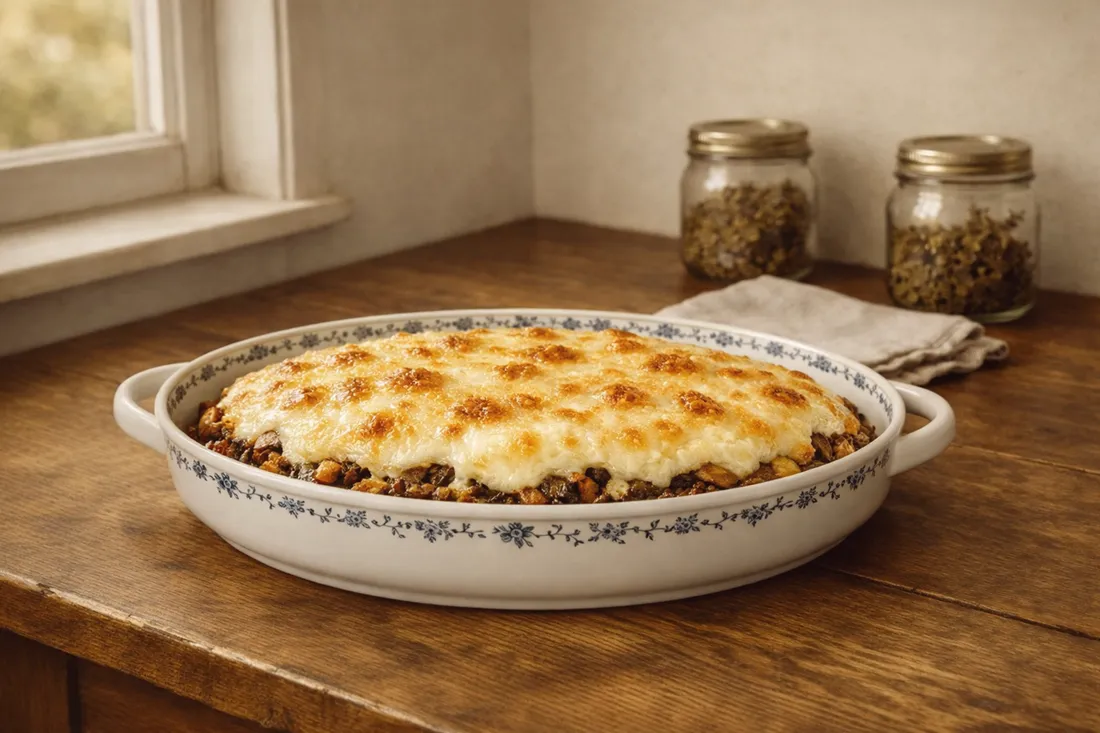
Layers of sliced hard-boiled eggs and grated cheese topped with sautéed mushrooms, baked under a rich egg-enriched sour cream topping.
Baked Eggplant with Potatoes
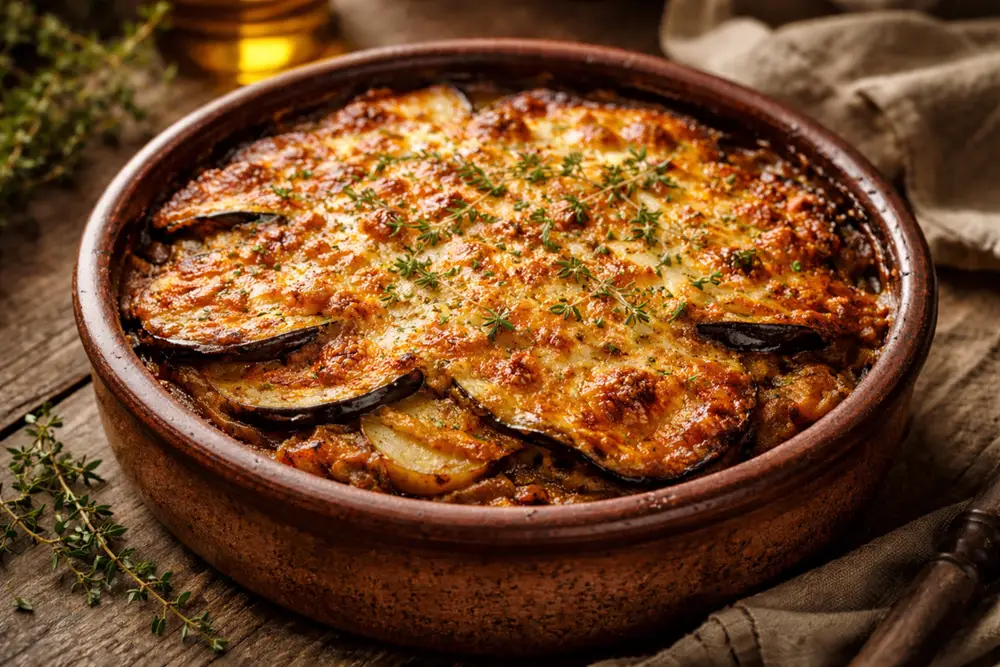
A slow-baked layered casserole of eggplant, parboiled potatoes, golden fried onion, and melted cheese.