Ragout Soup
Delicate veal and chicken soup with pale roux and a creamy egg-lemon finish, richer than simple chicken soup thanks to its smooth, unfried gravy.
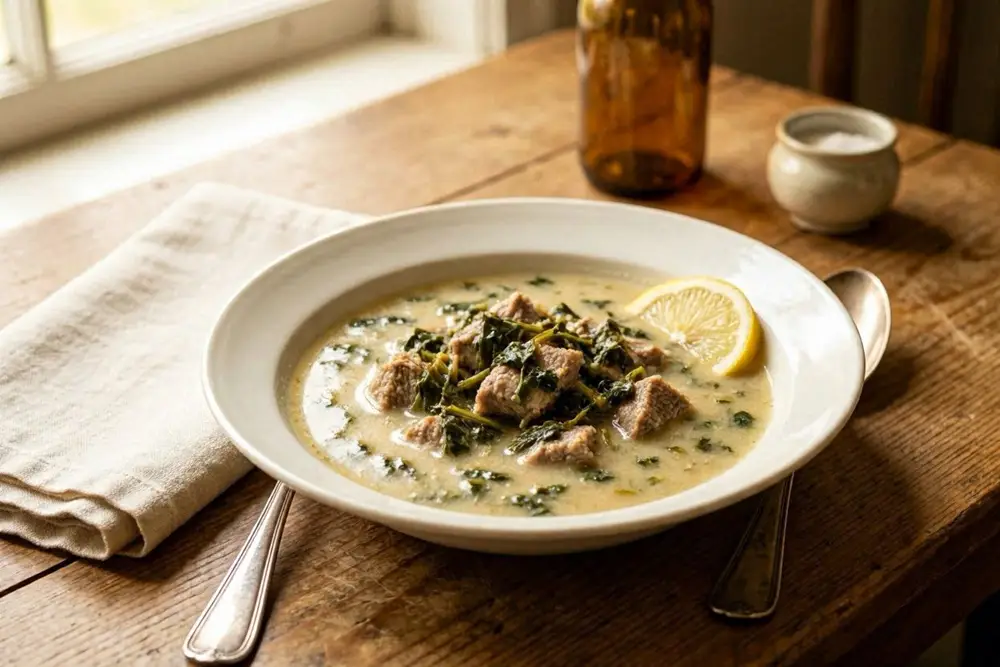
Quick Summary
Delicate veal and chicken soup with pale roux and a creamy egg-lemon finish, richer than simple chicken soup thanks to its smooth, unfried gravy.
Historical recipe
Modernised adaptation of an early 20th‑century source. Not independently kitchen-tested by Attic Recipes. Quantities, temperatures, and food safety guidance have been updated for a contemporary kitchen — results may vary and errors may exist. Nutritional values, where provided, are estimates only and have not been laboratory tested. Always follow current food safety guidelines for your region. If you have a health condition, allergy, or dietary requirement, consult a qualified professional before preparing this recipe.
Use of this recipe is entirely at your own risk and subject to our Terms of Service and Privacy Policy. Attic Recipes accepts no liability for any adverse outcome.
- Eggs
- Dairy
- Gluten
Additional notes
-
Warning
This soup is finished with a raw egg yolk and sour cream liaison. The mixture must be carefully tempered and brought to at least 74°C (165°F) before serving to ensure the egg is safely cooked. This is particularly important for pregnant women, young children, elderly people, and immunocompromised individuals.
- 1
Wash the veal and cut it into small cubes. Place it in a deep pot with the chopped soup greens (carrot, celery root, parsley root, and onion).
- 2
Add the water (1.5l) and salt (1 tsp). Bring to a simmer and let it stew on low heat until the meat is tender, about 60 minutes.
- 3
In a separate small pan, melt the butter (30g). Add the flour (30g) and fry it gently, stirring constantly, taking care that it remains pale and does not brown — this is the white roux (zaprška).
- 4
Gradually whisk the white roux into the simmering broth. Let it boil together for another 30 minutes so the flavors meld and the soup thickens.
- 5
Just before serving, break the egg yolk into a bowl. Add the sour cream (240ml) and lemon juice (15ml), and whisk together until smooth.
- 6
Temper the egg and cream mixture by gradually ladling a small amount of the hot soup into the bowl while whisking constantly, until the mixture reaches approximately 74°C (165°F). This prevents the egg from curdling.
- 7
Pour the tempered mixture back into the pot, stir well, and serve immediately while hot.
Nutrition Information per 1 portion (approx. 400g)
Nutritional values are approximate estimates and may vary based on specific ingredients used, preparation methods, and portion sizes.
Serving Suggestions
Serve hot as a main course, ideally with crusty bread. A small extra squeeze of lemon juice at the table allows each diner to adjust the tartness to their liking.
About This Recipe
Ragout soup occupies a quiet, refined corner of the old soup repertoire — closely related to a simple chicken soup, but elevated by a richer broth and a deliberately pale roux that thickens without darkening or adding the smoky depth of a browned one. The absence of red pepper is notable, since so many soups of the period leaned on it for color and warmth; here, the soup stays intentionally light, both in color and in character.
What makes this dish distinctive is the final flourish: a liaison of egg yolk, sour cream, and lemon juice, stirred in just before serving. This isn’t a heavy cream-based soup, but something closer to a delicate, tangy custard-thickened broth, where the lemon cuts through the richness of the veal and butter.
Why It Works
The slow stewing of the veal with the soup greens builds a deeply flavorful broth without needing to brown anything, which keeps the final color pale and clean. The white roux adds body without altering that color or introducing the toasted notes a browned roux would bring. The egg-and-sour-cream liaison is the soup’s signature element: tempering it carefully against the hot broth allows the proteins in the yolk to thicken the soup gently, giving it a silky texture, while the lemon juice brightens the whole dish and balances the richness of the butter, cream, and meat.
Modern Kitchen Tips
Take your time with the roux — patience here is what separates this soup from an ordinary chicken soup, since even a slightly browned roux will change both the color and flavor. When tempering the egg and cream mixture, add the hot soup very gradually and whisk constantly; a thermometer is helpful for confirming the 74°C mark without guesswork. If the soup is too thin after adding the liaison, a brief gentle simmer (without boiling) will thicken it further, but avoid a hard boil after this point to prevent curdling.
A classic of early 20th century home cooking, preserved and adapted for the modern kitchen.
The Story Behind This Recipe
Historical Context
Early 20th century recipes for this dish typically called for a much stronger gravy than an ordinary chicken soup, with the roux left pale rather than fried to a deeper color, and without the addition of red pepper that was common in similar soups of the period. Home cooks of the era often left the exact quantities of greens, fat, and seasoning to be judged by eye, with the guidance that a more generously seasoned soup would be richer and thicker.
Modern Kitchen Adaptation
The quantities of soup greens, butter, flour, salt, sour cream, and lemon juice were not specified with precise figures in the original and have been estimated based on standard proportions for a soup of this size. The cooking water volume was also not specified and has been estimated at 1.5 liters to adequately cover the meat and greens during stewing. The egg yolk and sour cream liaison is traditionally added directly to the hot soup, but to avoid the risk of curdling or undercooked egg, this version specifies a tempering step, gradually raising the mixture to a safe temperature of 74°C (165°F) before combining it with the soup.
This recipe is an independent modern adaptation developed from historical sources in the public domain. It is provided for informational and educational purposes only and does not constitute professional dietary, nutritional, or medical advice. Food preparation involves inherent risks. The reader assumes full responsibility for safe food handling, ingredient sourcing, and adherence to current local food safety guidelines. The site operator accepts no liability for outcomes resulting from the preparation or consumption of this recipe.
One recipe.
Every week.
You Might Also Like
More recipes you'll enjoy
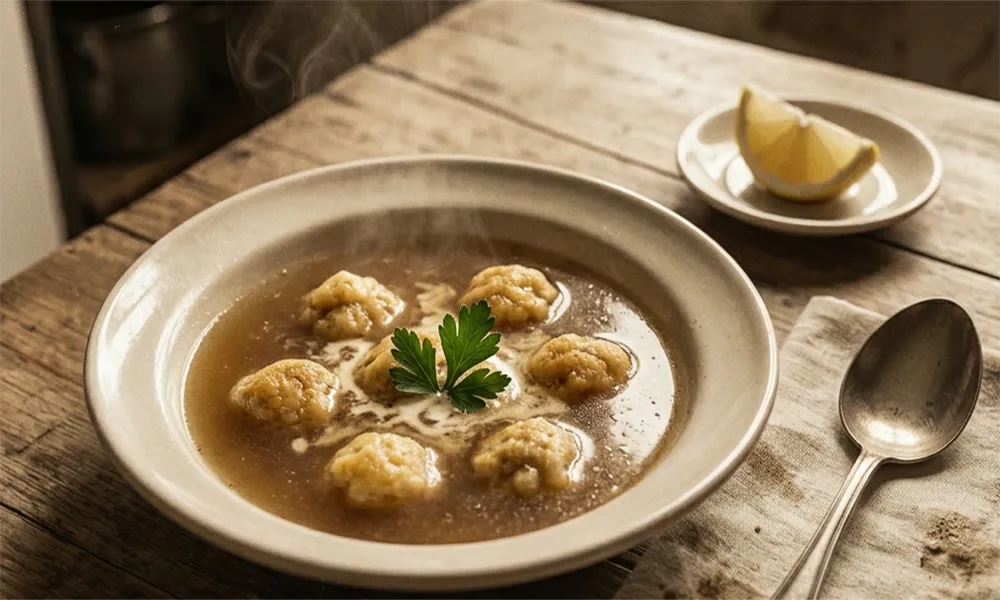
Beef Broth with Stuffed Dough Dumplings
Rich beef bone broth simmered with golden pan-fried dumplings stuffed with seasoned ground beef, finished with a light roux and fresh lemon juice.
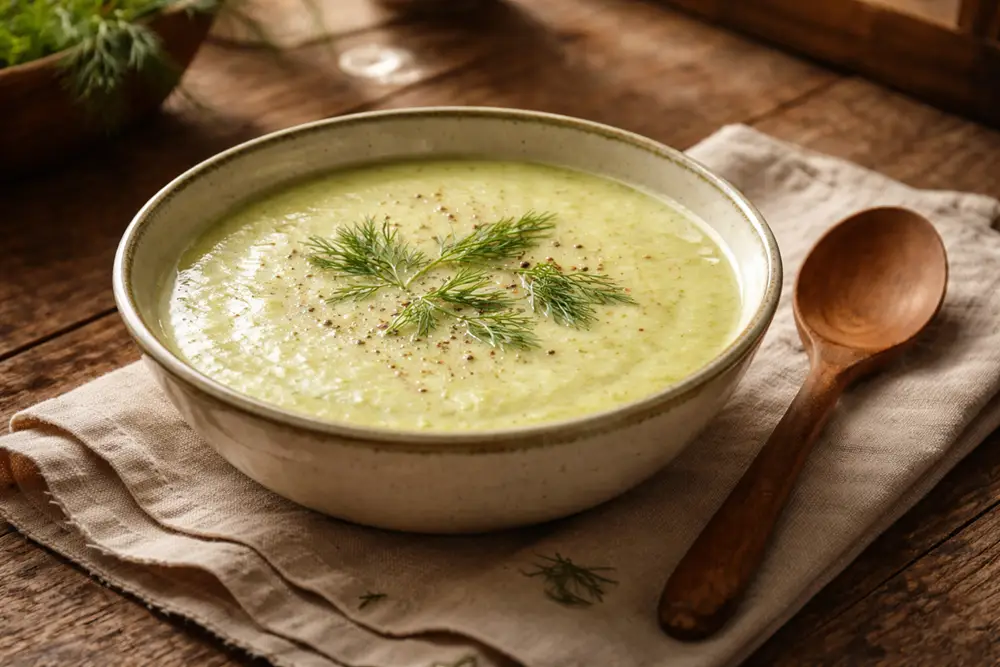
Zucchini Soup
Young zucchini and spring onion soup built on a butter roux, finished with fresh dill and a tempered yogurt and egg yolk liaison. Serve with black pepper.

Gourmet Filled Crepes with Veal and Sour Cream
Thin crepes filled with braised, ground veal and onion, topped with a paprika-infused sour cream sauce and baked until golden.