Potato Rolls
Laminated potato pastry rolls filled with ground ham, egg yolk, and sour cream. Rich, flaky, and savory.

Historical recipe
Modernised adaptation of an early 20th‑century source. Not independently kitchen-tested by Attic Recipes. Quantities, temperatures, and food safety guidance have been updated for a contemporary kitchen — results may vary and errors may exist. Nutritional values, where provided, are estimates only and have not been laboratory tested. Always follow current food safety guidelines for your region. If you have a health condition, allergy, or dietary requirement, consult a qualified professional before preparing this recipe.
Use of this recipe is entirely at your own risk and subject to our Terms of Service and Privacy Policy. Attic Recipes accepts no liability for any adverse outcome.
- Gluten
- Eggs
- Dairy
Additional notes
-
Note
This recipe contains a high amount of butter. Persons monitoring saturated fat intake should be aware that each roll contains approximately 5g of saturated fat.
- 1
Day 1. Boil the potatoes until completely tender, peel, and mash to a perfectly smooth purée while still warm. Spread out and leave to cool completely — warm potatoes will melt the butter.
- 2
In a large bowl, combine the cooled mashed potatoes, softened butter, 250g of flour, and a pinch of salt. Knead into a smooth, cohesive dough. It will be soft.
Tip Do not overwork the dough — knead just until the ingredients come together. Overworking develops gluten and toughens the pastry. - 3
Wrap the dough in cling film and refrigerate overnight, or for a minimum of 8 hours. The rest firms the butter and relaxes the dough, making it manageable for folding.
- 4
Day 2. Remove the dough from the refrigerator. Scatter the remaining 250g of flour onto a lightly floured surface. Roll the dough out into a rectangle, scatter some of the flour over it, and fold it in thirds like a letter. Rotate 90 degrees, roll out again, and repeat for a total of 3 folds, incorporating the flour gradually with each fold.
Tip If the dough softens or the butter begins to show through, stop and refrigerate for 15 minutes before continuing. Cold dough is essential for distinct flaky layers. - 5
After the final fold, roll the dough out to approximately 1 cm thickness. Cut into squares of roughly 8 x 8 cm.
- 6
Prepare the filling: combine the finely ground cooked ham, 1 egg yolk, and 1 teaspoon of sour cream. Mix well into a smooth paste.
- 7
Place a small amount of filling in the centre of each dough square — approximately 1 teaspoon. Do not overfill or the rolls will burst during baking.
- 8
Roll each square into a cylinder, enclosing the filling. Pinch the ends closed firmly and place seam-side down on a lined baking sheet, spaced slightly apart.
- 9
Brush the tops of the rolls with beaten egg yolk. Bake in a preheated oven at 200°C (400°F) / 180°C fan for 20–25 minutes, until deep golden brown. Serve warm or at room temperature.
Nutrition Information per 1 roll (approx. 35g)
Nutritional values are approximate estimates and may vary based on specific ingredients used, preparation methods, and portion sizes.
Serving Suggestions
Serve warm alongside afternoon tea or coffee. Also well suited to a cold buffet or as part of a savory pastry spread. Reheat briefly in a 160°C oven for 5–8 minutes if made ahead.
About This Recipe
Potato rolls occupy a particular place in Central European baking — somewhere between a savory croissant and a filled pastry, with a crumb that is flakier than bread and richer than pie crust. The dough is made in two stages: on the first day, mashed potato, butter, and flour are kneaded into a soft base and left to rest overnight. On the second day, more flour is folded in through a series of turns that create thin, distinct layers. The result, once baked, is a golden roll with a tender, slightly waxy interior and a filling of ham, egg yolk, and sour cream that stays moist and savory throughout.
The two-day method is not difficult, but it requires patience and attention to temperature. The dough must stay cold. This is the one rule that governs everything else about this recipe — cold butter creates steam in the oven, and steam is what separates the layers.
These rolls work equally well warm from the oven alongside tea or coffee, or at room temperature as part of a cold buffet spread. They also keep and reheat well, which made them a practical choice for households that baked in quantity.
Why It Works
Potato in pastry dough serves two purposes: it shortens the gluten structure of the flour, producing a more tender crumb than an all-flour dough, and it adds moisture without liquid, which keeps the pastry from becoming dry during the long baking time needed for laminated layers. The starch in the potato also gelatinizes during baking, giving the interior a slightly waxy, cohesive texture that holds the filling cleanly.
The laminating step — rolling and folding with additional flour — distributes the butter into thin sheets throughout the dough. In the oven, water in the butter converts to steam and forces the layers apart, creating flakiness without the need for a more technical puff pastry technique. Three folds is enough for a noticeable layered effect without overworking the dough.
The filling is minimal by design: ground ham, one egg yolk, and a small amount of sour cream. The egg yolk binds and enriches; the sour cream adds just enough acidity to cut through the fat of the pastry. More filling would overwhelm the dough; less would disappear entirely.
Modern Kitchen Tips
Mash the potatoes while they are still hot and spread them out to cool and dry before adding to the dough — steam escaping from hot mash is what makes potato pastry light. If the mash is wet or lumpy, the dough will be sticky and difficult to handle.
When rolling and folding on day 2, work quickly and keep everything cool. A cold marble surface or a chilled baking sheet underneath your work surface helps significantly. If the kitchen is warm, refrigerate the dough between each fold rather than pushing through all three folds at once.
For a neat roll, cut the dough squares as evenly as possible and use exactly the same amount of filling in each one. A small cookie scoop or teaspoon measure keeps this consistent.
A classic of early 20th century home cooking, preserved and adapted for the modern kitchen.
The Story Behind This Recipe
Historical Context
Potato pastry of this type — combining mashed potato, butter, and flour into a laminated dough — was a well-established technique in Central European home baking by the early 20th century. Potato extended flour at a time when it was more costly, while also producing a tender, slightly waxy crumb distinct from pure flour pastries. The two-day method, with an overnight rest before laminating, appears in period recipes for both sweet and savory filled pastries, and reflects the practical rhythm of household baking rather than professional technique. Ham and sour cream fillings were standard for savory versions; sweet versions used jam, ground walnuts, or poppy seed paste. This dish was recorded at commercial scale in period sources — the quantities as written yield several hundred rolls — and has been scaled down here for home use.
Modern Kitchen Adaptation
The original recipe does not specify an oven temperature, giving only 'hot oven.' A temperature of 200°C (400°F) / 180°C fan is estimated based on the dough type and thickness and is consistent with period baking practice for laminated pastries. The recipe as written gives quantities of 1/4 kg (250g) for each component — a likely transcription error rendered all quantities as '4 kilograms,' which would yield several hundred rolls. All quantities here reflect the correct 250g scale. Sour cream quantity ('a little') is estimated at 1 teaspoon, which produces a cohesive filling without making it too wet.
This recipe is an independent modern adaptation developed from historical sources in the public domain. It is provided for informational and educational purposes only and does not constitute professional dietary, nutritional, or medical advice. Food preparation involves inherent risks. The reader assumes full responsibility for safe food handling, ingredient sourcing, and adherence to current local food safety guidelines. The site operator accepts no liability for outcomes resulting from the preparation or consumption of this recipe.
One recipe.
Every week.
You Might Also Like
More recipes from the same category
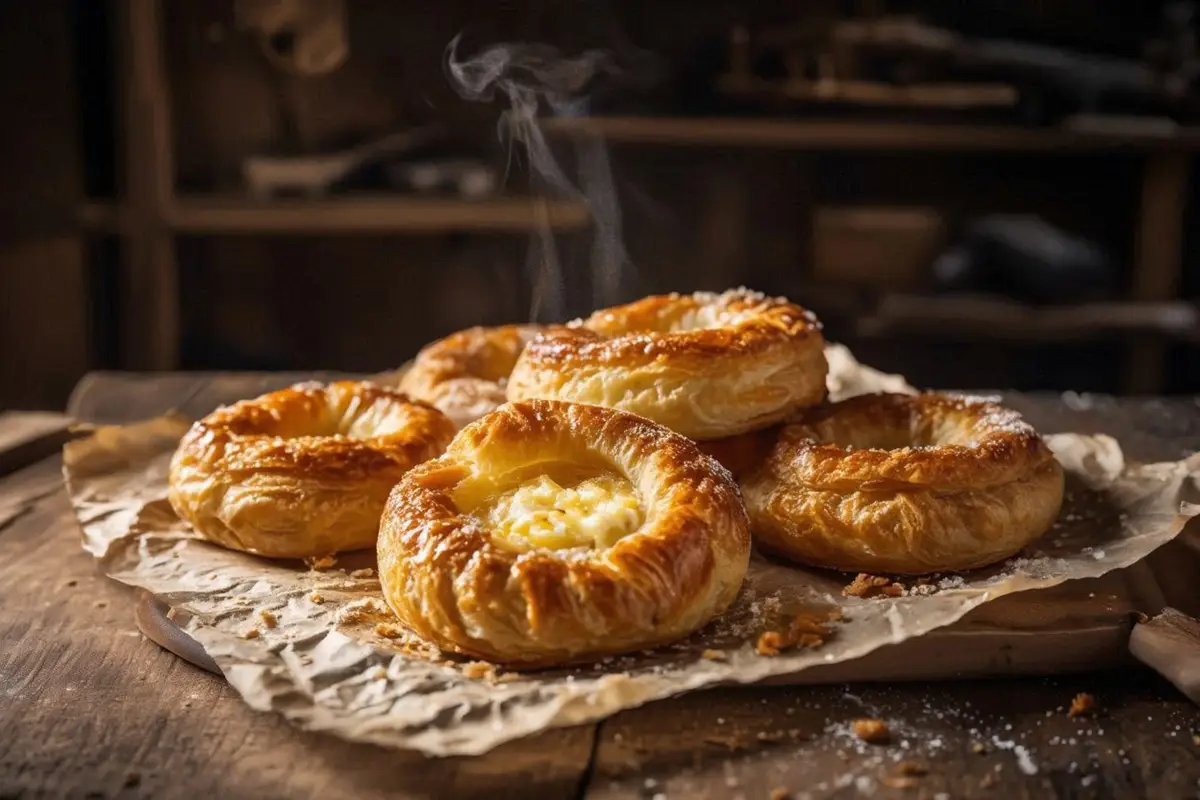
Flaky Fatback Pastries with Ham or Cheese
Tender, layered pastries made with hand-laminated pork fatback dough, filled with creamy ham or a rich egg-and-cheese mixture.
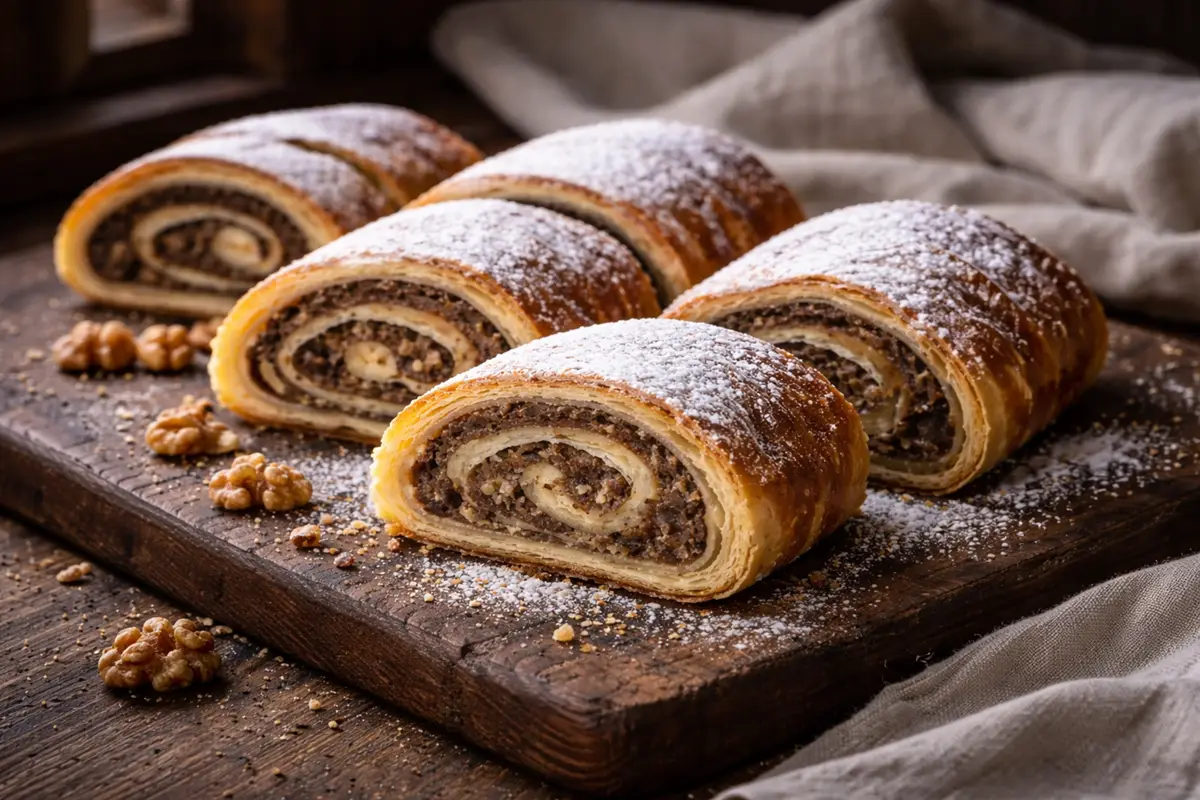
Fatback Walnut Roll
Flaky yeasted pastry laminated with raw pork fatback, filled with milk-cooked walnuts, raisins, and lemon zest. Sliced and dusted with sugar.
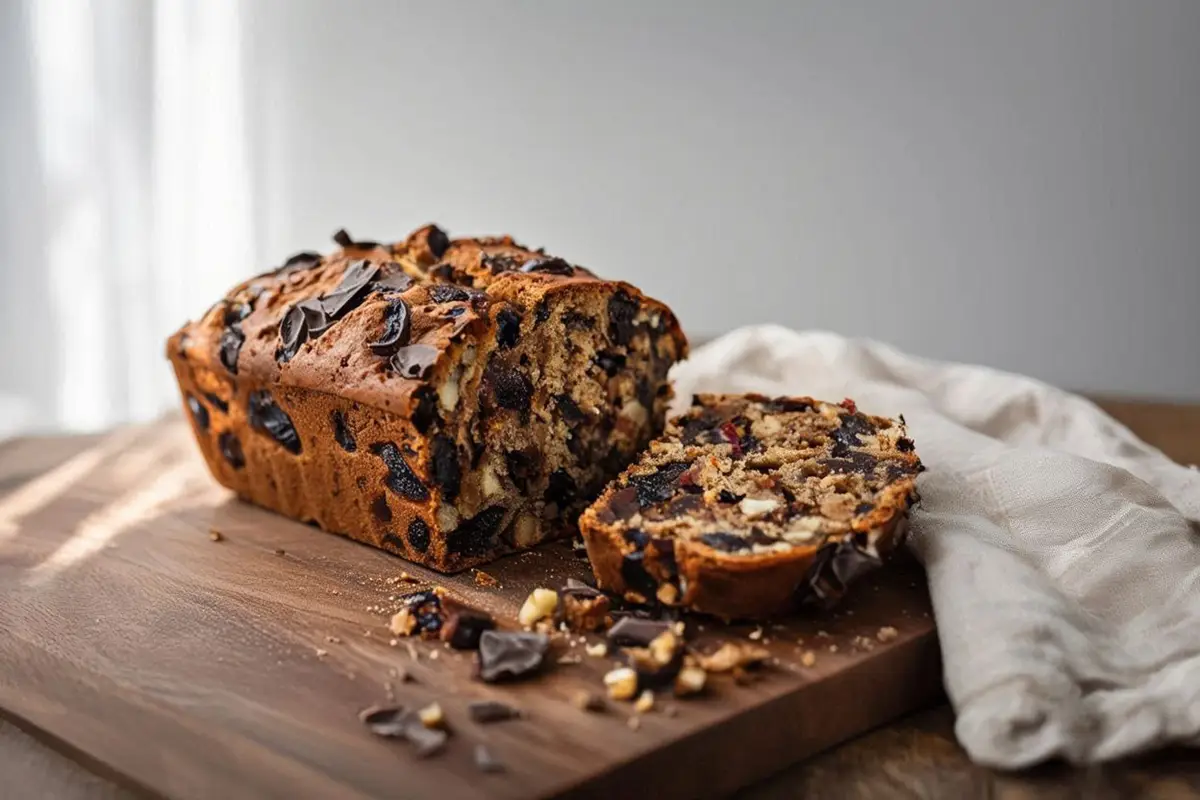
Kletzenbrot with Quince Cheese
A richly fruited Central European holiday bread packed with prunes, apricots, dates, dark chocolate, nuts, and homemade quince paste.