Parsley Soup with Toasted Rusks
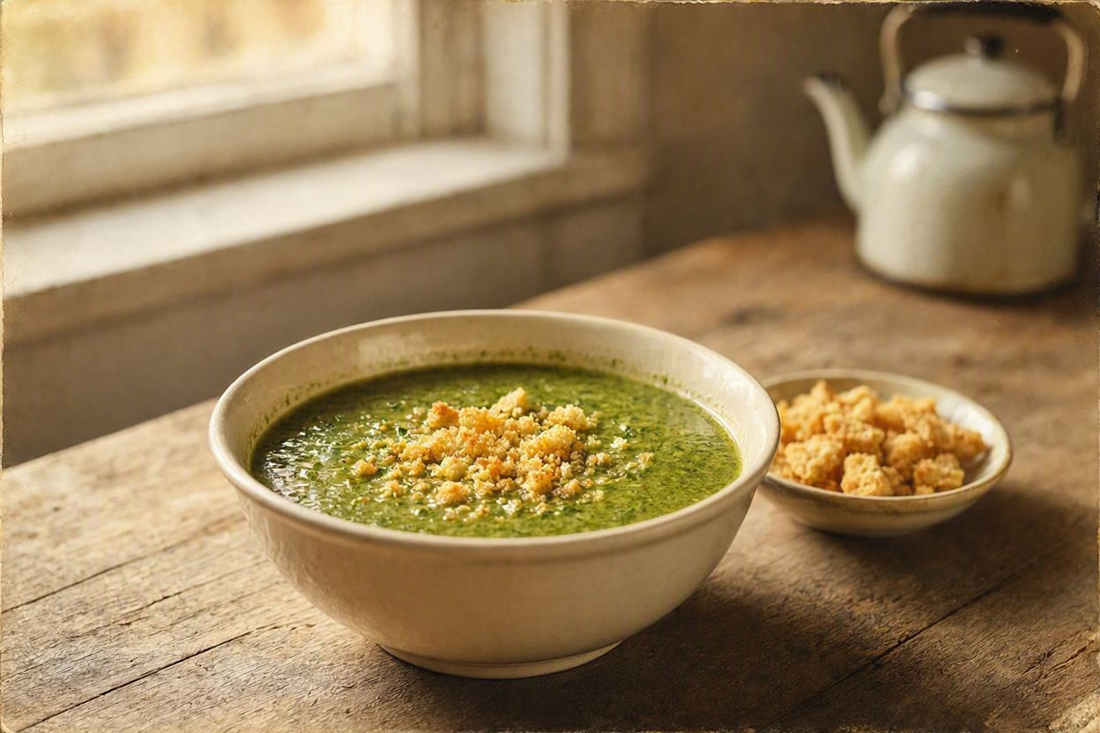
A meatless parsley soup thickened with a flour-and-oil roux, simmered with whole parsley bunches, and topped with crisp fried rusks.
Quick Summary
This meatless soup turns whole bunches of parsley into the main flavor, simmered in a simple flour-and-oil base for half an hour. Crisp fried rusk crumbs stirred in at the end add body, and a splash of lemon juice or vinegar brightens the finish.
Historical recipe
Modernised adaptation of an early 20th‑century source. Not independently kitchen-tested by Attic Recipes. Quantities, temperatures, and food safety guidance have been updated for a contemporary kitchen — results may vary and errors may exist. Nutritional values, where provided, are estimates only and have not been laboratory tested. Always follow current food safety guidelines for your region. If you have a health condition, allergy, or dietary requirement, consult a qualified professional before preparing this recipe.
Use of this recipe is entirely at your own risk and subject to our Terms of Service and Privacy Policy. Attic Recipes accepts no liability for any adverse outcome.
- Gluten
Additional notes
-
Warning
Frying the rusks in hot oil carries a splatter and burn risk — use a modest amount of oil, medium heat, and keep a lid or splatter screen nearby.
- 1
Roughly chop the parsley, leaves and stems together, and set aside. Crumble the rusks and set aside separately.
- 2
Heat most of the vegetable oil in a pot and stir in the flour, frying until lightly golden.
Tip Keep stirring constantly so the flour doesn't burn — this is the base that thickens the soup. - 3
Pour in the water, add the salt and black pepper, and bring to a boil, stirring to smooth out the roux.
- 4
Add the chopped parsley and simmer for 30 minutes.
- 5
Meanwhile, fry the crumbled rusks in the remaining oil until golden and crisp.
Tip Use only a small amount of oil over medium heat, and keep a lid or splatter screen nearby — hot oil can splatter as the crumbs fry. - 6
Just before removing the soup from the heat, stir in the fried rusk crumbs.
- 7
Finish the soup with lemon juice or vinegar to taste, just before serving.
Nutrition Information per 1 bowl (approx 300ml)
Nutritional values are approximate estimates and may vary based on specific ingredients used, preparation methods, and portion sizes.
Serving Suggestions
Serve hot, ladled over a few extra pieces of toasted bread if you like a heartier bowl.
About This Recipe
This soup treats parsley as more than a garnish — whole bunches, stems included, go into a simple flour-and-oil base and simmer until the herb becomes the dominant flavor of the broth rather than an afterthought. It’s a meatless dish built entirely from pantry basics: oil, flour, water, and whatever herbs and stale bread were on hand.
The fried rusk crumbs stirred in near the end do double duty, adding both texture and enough body that the soup can stand on its own as a light meal rather than a starter. It’s a good example of period cooking that stretched a small amount of fresh produce into something filling, without meat, dairy, or eggs.
Why It Works
Frying flour in oil before adding liquid builds a roux, the same base used in countless European soups and sauces, which thickens the broth as it simmers rather than leaving it watery. Simmering the whole parsley bunch for a full half hour softens the stems and releases their flavor fully into the liquid, unlike a quick last-minute addition that would leave the soup tasting more raw and grassy. The fried rusk crumbs soften slightly as they sit in the hot broth, thickening it further while keeping a little textural contrast.
Modern Kitchen Tips
If your parsley stems are especially thick, chop them a little finer than the leaves so they soften fully in the simmering time. Taste before adding the full amount of lemon juice or vinegar — a light hand keeps the parsley flavor forward rather than masking it with acidity. For a fully vegan or Lenten (posno) version, double-check that your rusks or twice-baked bread don’t contain milk or egg, since recipes vary by brand.
A classic of early 20th century home cooking, preserved and adapted for the modern kitchen.
The Story Behind This Recipe
Historical Context
Thickening a light vegetable broth with a flour-and-oil roux, then bulking it out with fried bread, was a practical way to turn a handful of garden herbs into a filling meal. Parsley here isn't just a garnish stirred in at the last minute — the whole bunch, leaves and stems together, simmers long enough to become the main flavor of the soup, closer to how spinach or sorrel soups were traditionally made.
Modern Kitchen Adaptation
The type of acid used to finish the soup wasn't specified in the traditional method, so either lemon juice or a light vinegar works; add it gradually and taste, since the right amount depends on the other ingredients. The frying step for the rusks briefly uses hot oil, so keep the amount modest and stay close by while frying to avoid splatters. Because rusks (dvopek) aren't widely sold outside Central Europe, dried, twice-baked bread such as zwieback or well-dried, lightly toasted bread cubes makes a reasonable substitute.
This recipe is an independent modern adaptation developed from historical sources in the public domain. It is provided for informational and educational purposes only and does not constitute professional dietary, nutritional, or medical advice. Food preparation involves inherent risks. The reader assumes full responsibility for safe food handling, ingredient sourcing, and adherence to current local food safety guidelines. The site operator accepts no liability for outcomes resulting from the preparation or consumption of this recipe.
One recipe.
Every week.
You Might Also Like
More recipes you'll enjoy
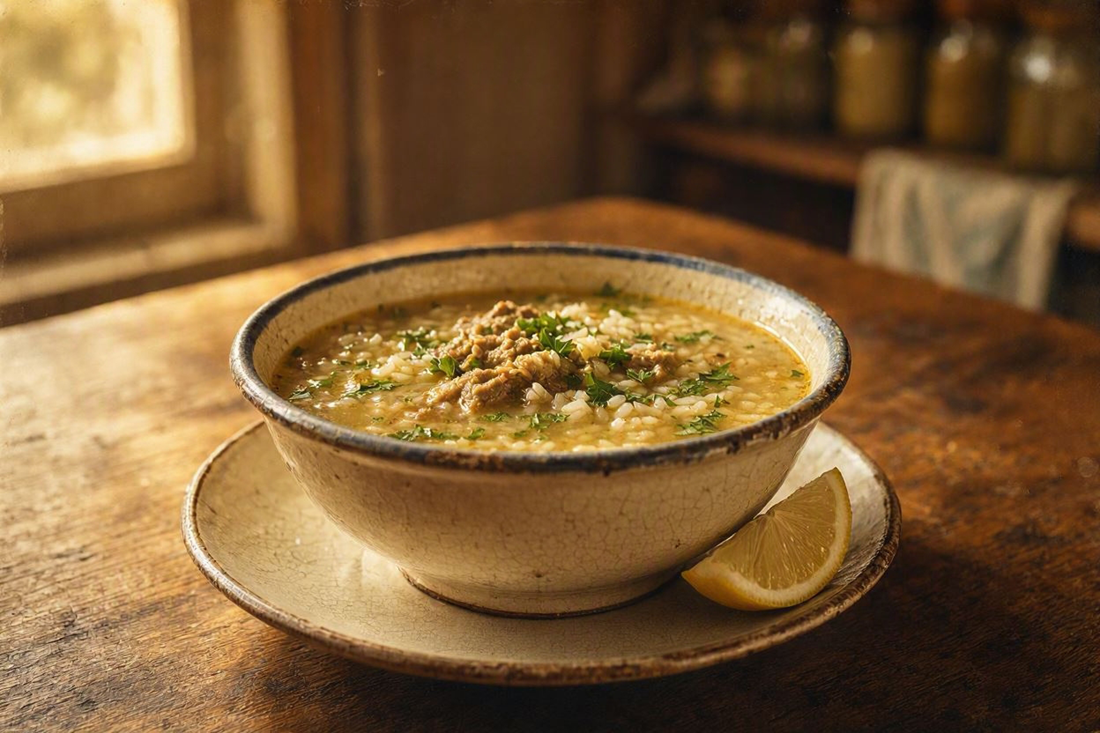
Lamb Soup with Egg and Lemon
A hearty lamb broth simmered with rice and onion, finished either with a silky egg-and-lemon enrichment or a sharper wine vinegar variation.
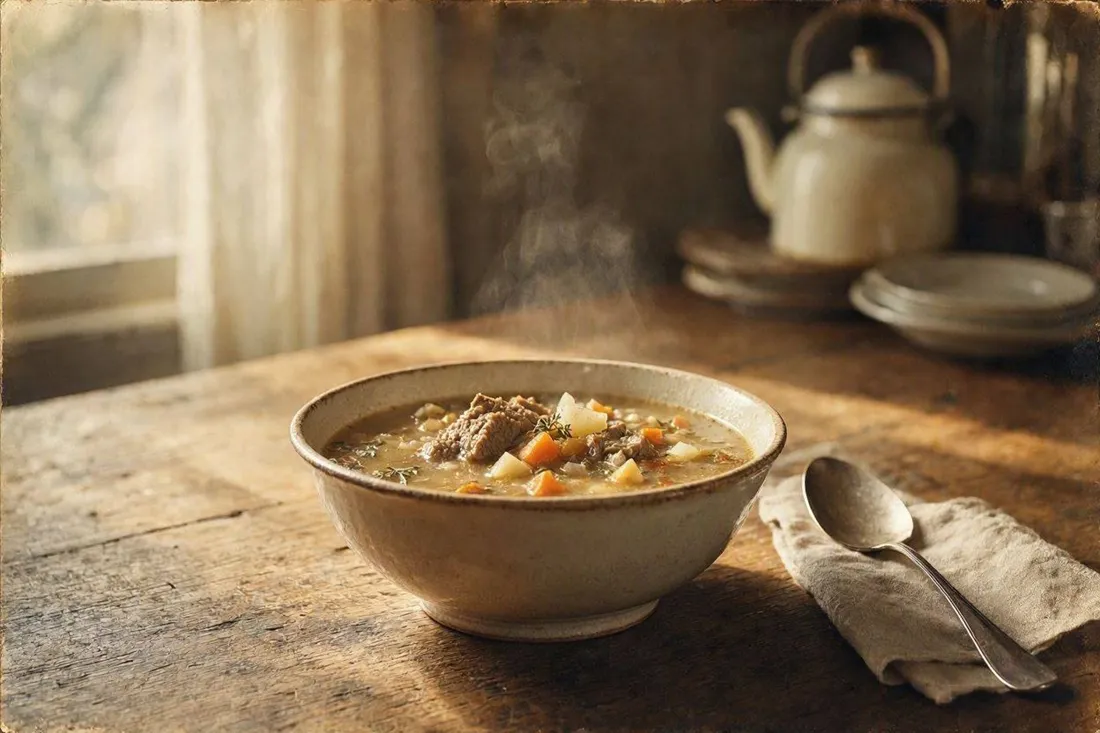
Veal Soup with Egg and Buttermilk Enrichment
A veal and root vegetable soup thickened with a roux, enriched with egg yolk and buttermilk, and finished with a touch of vinegar.
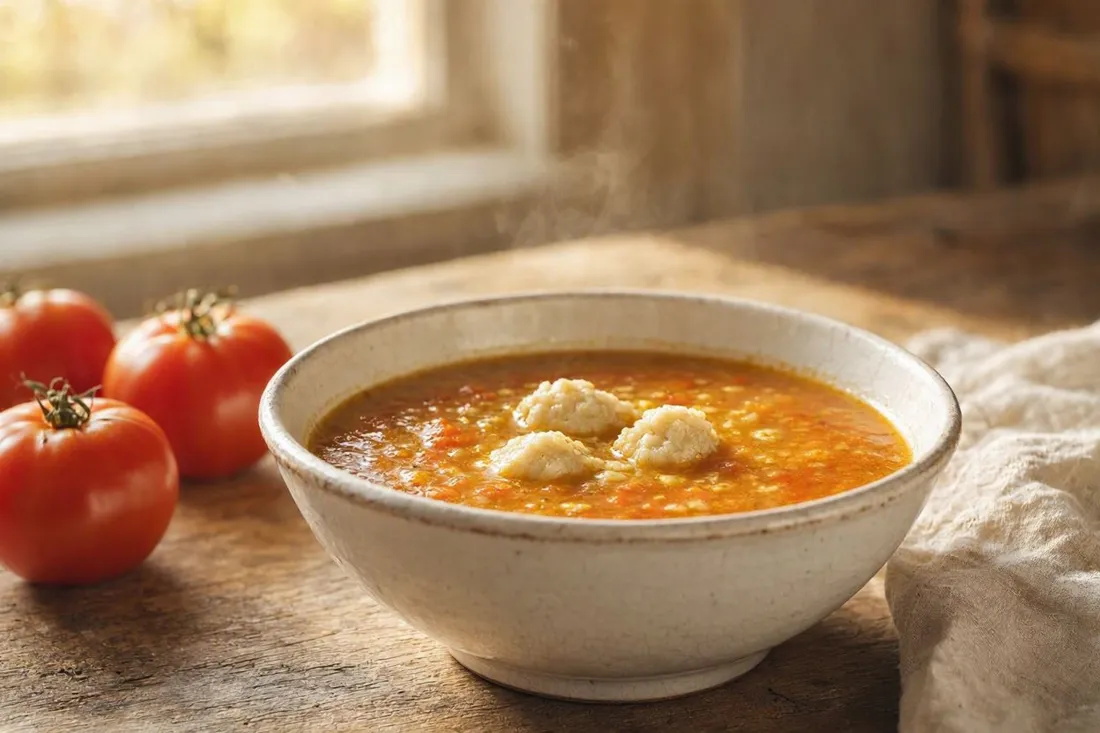
Summer Tomato Soup with Meatless Dumplings
A silky summer tomato soup finished with a light roux and small flour dumplings — a simple, meatless one-pot dish.