Mussel Pilaf
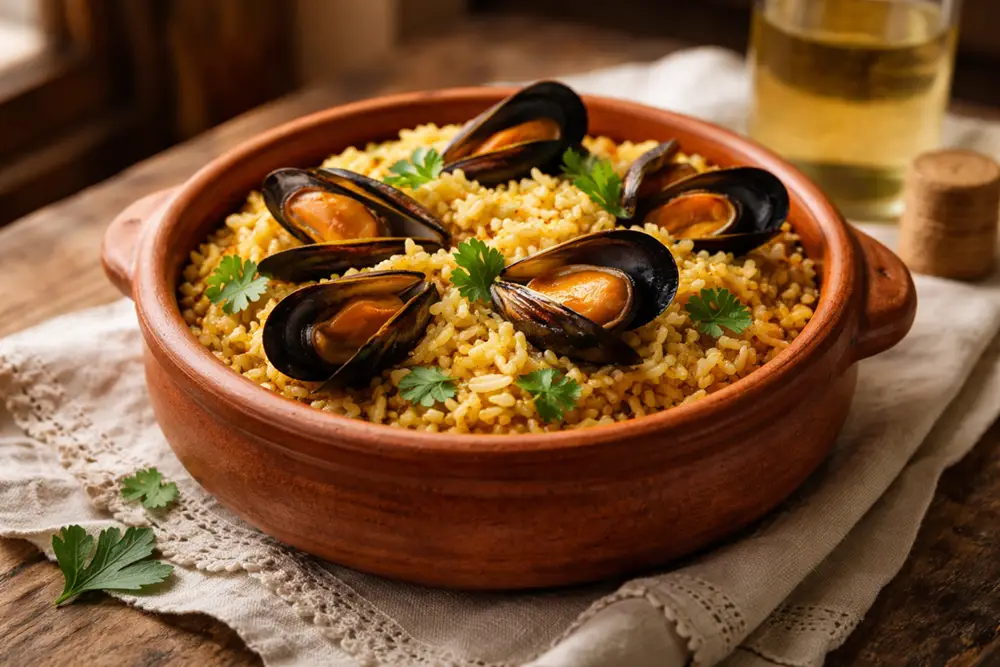
Mussels steamed open in white wine and herbs, their broth absorbed into saffron rice — a one-pot Adriatic coastal dish, light and deeply flavoured.
Quick Summary
Mussels steamed open in white wine and herbs, their broth absorbed into saffron rice — a one-pot Adriatic coastal dish, light and deeply flavoured.
Historical recipe
Modernised adaptation of an early 20th‑century source. Not independently kitchen-tested by Attic Recipes. Quantities, temperatures, and food safety guidance have been updated for a contemporary kitchen — results may vary and errors may exist. Nutritional values, where provided, are estimates only and have not been laboratory tested. Always follow current food safety guidelines for your region. If you have a health condition, allergy, or dietary requirement, consult a qualified professional before preparing this recipe.
Use of this recipe is entirely at your own risk and subject to our Terms of Service and Privacy Policy. Attic Recipes accepts no liability for any adverse outcome.
- Molluscs
- Celery
- Sulphites
Additional notes
-
Warning
Mussels are a high-risk shellfish. Buy only from reputable suppliers with verified harvest area certification. Discard any mussels that are cracked, broken, or fail to close when tapped before cooking, and any that remain closed after cooking. Mussels can accumulate marine biotoxins (including paralytic shellfish toxins) that are not destroyed by heat — always source from licensed, inspected suppliers. This dish is not recommended for pregnant women, children under 18, elderly individuals, or immunocompromised people unless sourced from certified, regularly tested suppliers.
-
Note
This recipe contains alcohol (white wine). Virtually all alcohol evaporates during the high-heat steaming phase, but trace amounts may remain. Individuals who avoid alcohol entirely should substitute the wine with an equal volume of fish stock or vegetable stock with a splash of white wine vinegar.
-
Warning
Frozen pre-shucked mussels are pre-cooked before freezing. Do not re-freeze thawed mussel meat, and use within 24 hours of thawing under refrigeration.
- 1
If using fresh mussels: scrub each mussel thoroughly with a stiff-bristled brush under cold running water, removing any barnacles and the stringy beard (byssus threads) by pulling firmly toward the hinge. Discard any mussels that are cracked, broken, or remain open when tapped sharply against the counter.
Tip Work quickly — mussels are alive and should be cooked the same day you buy them. - 2
Place the olive oil in a large heavy-bottomed pot over medium heat. Add the chopped onions and cook, stirring occasionally, for 5–6 minutes until softened and translucent. Add the crushed garlic and cook for 1 minute more.
- 3
Add the white wine, thyme, bay leaves, parsley sprigs, and celery to the pot. Increase the heat to high and bring to a vigorous boil.
- 4
Add the mussels all at once, stir briefly, and cover tightly. Steam over high heat for 5–7 minutes, shaking the pot occasionally, until all mussels have opened. Discard any mussels that remain firmly closed after 7 minutes.
Tip Do not overcook — mussels are done the moment the shells open. Extended heat makes them rubbery. - 5
Remove the mussels with a slotted spoon and set aside on a large plate. Remove the mussel meat from the shells, discarding the shells. Keep the meat warm by holding the plate over a pot of barely simmering water, or tent loosely with foil.
- 6
Pour the cooking liquid through a fine-mesh strainer or a strainer lined with cheesecloth into a measuring jug. Discard the spent herbs and celery. You need exactly 960 ml (4 generous cups) of strained broth. If you have less, top up with boiling water; if you have more, measure out 960 ml and discard the rest.
Tip Strain slowly — mussels release fine sand that you do not want in the rice. - 7
Return the measured broth to the same pot and bring to a boil over high heat. Season with white pepper and salt, then add the saffron along with its soaking water. Taste the broth — it should be pleasantly savoury and lightly fragrant.
- 8
Add the rinsed rice to the boiling broth, stir once to distribute, then cover tightly and reduce the heat to the lowest possible setting. Cook undisturbed for 15–18 minutes. Do not lift the lid.
Tip The rice absorbs all the liquid by absorption — lifting the lid releases steam and breaks the process. - 9
After 15 minutes, check the rice: the grains should be tender, separate, and all liquid absorbed. Remove the pot from the heat.
- 10
Gently scoop out half the rice and set aside briefly. Arrange the warm mussel meat evenly across the remaining rice in the pot. Cover the mussels with the reserved rice, replace the lid, and let rest off the heat for 2 minutes.
- 11
Bring the pot directly to the table and serve immediately. Scatter fresh parsley leaves over the top if desired. As the recipe notes: the meal should not wait for the guests — the guests should wait for the meal.
Nutrition Information per 1 serving (approx. 380g)
Nutritional values are approximate estimates and may vary based on specific ingredients used, preparation methods, and portion sizes.
Serving Suggestions
Serve directly from the pot — the presentation is part of the dish. Accompany with crusty bread and a simple green salad dressed with lemon. A glass of the same dry white wine used in cooking rounds out the meal.
About This Recipe
There is a particular pleasure in a dish that comes to the table in the same pot it was cooked in — and this mussel pilaf is exactly that kind of food. The technique is deceptively simple: mussels are steamed open in white wine with onions, garlic, and a bundle of fresh herbs, then their strained broth becomes the cooking liquid for saffron-scented rice. At the end, the mussel meat is layered into the rice between two halves, the pot is lidded and rested briefly, and that is the whole of it.
The result is a dish that manages to be both light and deeply savoury — the kind of thing that tastes far more complicated than it is. The rice absorbs every drop of the wine-and-mussel broth; the saffron turns it faintly golden and fragrant; the mussels, kept warm under a tent of foil while the rice cooks, stay tender. It is a coastal dish by character, practical by construction.
Fresh mussels are the traditional choice, and when you can find them — at a good fishmonger or a well-stocked supermarket seafood counter — they are worth using. But frozen pre-shucked mussel meat has improved considerably and works well here, particularly on a weeknight when you want something genuinely good without the 20-minute scrubbing exercise.
Why It Works
The technique is a pure pilaf method applied to shellfish broth. By steaming the mussels first at high heat, you accomplish two things: the mussels open and release their natural liquor into the wine, and the aromatics (thyme, bay, parsley, celery, garlic) infuse the liquid. Straining this broth removes everything spent and gives you a clean, intensely flavoured cooking liquid. Rice cooked in plain water is neutral; rice cooked in mussel-wine broth is something else.
The layering at the end — rice, mussel meat, rice — is a presentation decision, but it also serves a practical purpose: the mussels reheat gently in the residual heat of the rice without returning to the direct heat that would toughen them. The 2-minute rest off heat is not optional; it allows the steam within the pot to redistribute and the rice grains to firm up slightly before serving.
Modern Kitchen Tips
On mussels: Fresh mussels must be alive when you buy them. A closed shell, or one that closes when tapped, is alive. An open shell that stays open when tapped is dead — discard it. Cook the same day you buy them. Frozen pre-shucked mussels are a reliable substitute; look for them in the frozen seafood section of most larger supermarkets.
On the broth: You need exactly 960 ml. Measure it. Too little liquid and the rice scorches at the bottom; too much and you get wet, overcooked grains. Straining through cheesecloth rather than a standard strainer is worth the extra step — mussels always carry fine sand.
On the rice: Long-grain white rice is the correct choice here. Do not use risotto rice or short-grain varieties — they release starch and turn the pilaf creamy rather than keeping the grains separate. Do not rinse the rice more than once or twice in lukewarm water; you want to remove surface starch, not strip the grain.
On the lid: Do not lift it. Fifteen minutes of uninterrupted steam is what makes the pilaf work. Set a timer and walk away.
A classic of early 20th century Adriatic coastal cooking, preserved and adapted for the modern kitchen.
The Story Behind This Recipe
Historical Context
Early 20th century recipes along the Adriatic coast treated mussels as an everyday, affordable ingredient — abundant in clusters on sea rocks near Split and other Dalmatian ports, and occasionally available inland in Belgrade from seafood traders. The original preparation calls for an earthenware pot set directly over high heat, which distributes heat differently from modern cookware; the layering of mussel meat between two halves of rice at the end is the traditional presentation, kept unchanged here. The regional name used for mussels in period recipes was 'black sea shells' — a term that distinguished the saltwater bivalve from freshwater river mussels that were more familiar to inland readers at the time.
Modern Kitchen Adaptation
The original recipe assumes live, freshly harvested mussels from a morning market. Today, fresh mussels are widely available in supermarket seafood counters, and frozen pre-shucked mussel meat is a practical year-round alternative. When using frozen mussels, skip the steaming step and use 960 ml of good-quality fish or vegetable stock instead — the wine and aromatics can still be simmered briefly (5 minutes) for flavour, then strained and combined with the stock. An earthenware pot is ideal for even heat retention during the rice absorption phase; a heavy-bottomed Dutch oven or enamelled cast-iron pot is the closest modern equivalent. The saffron quantity is estimated — period recipes for this dish typically listed saffron without a measurement, as it was sold in small packets of consistent weight and cooks were expected to use the contents of one packet.
This recipe is an independent modern adaptation developed from historical sources in the public domain. It is provided for informational and educational purposes only and does not constitute professional dietary, nutritional, or medical advice. Food preparation involves inherent risks. The reader assumes full responsibility for safe food handling, ingredient sourcing, and adherence to current local food safety guidelines. The site operator accepts no liability for outcomes resulting from the preparation or consumption of this recipe.
One recipe.
Every week.
You Might Also Like
More recipes you'll enjoy
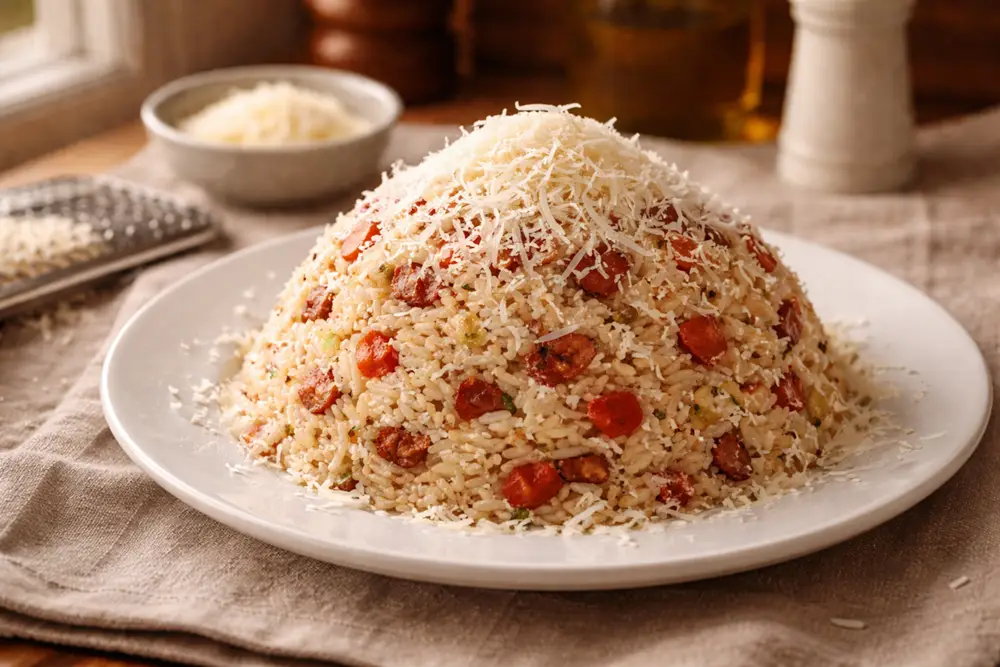
Rice with Bacon and Cheese
Savory rice cooked with dried bacon, poultry broth, and tomato passata, packed into a mold and inverted onto a plate, finished with generous grated cheese.
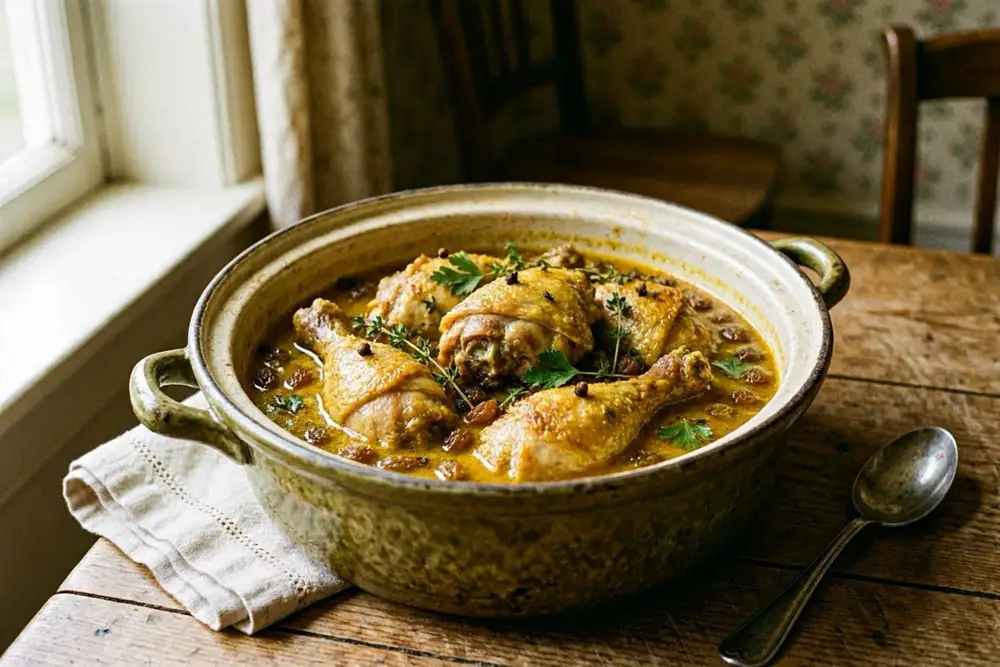
Chicken Stew with Spices
A fragrant braised chicken with walnuts, saffron, cinnamon, raisins, and savory — a Caucasian-inspired stew from a Central European cookbook.
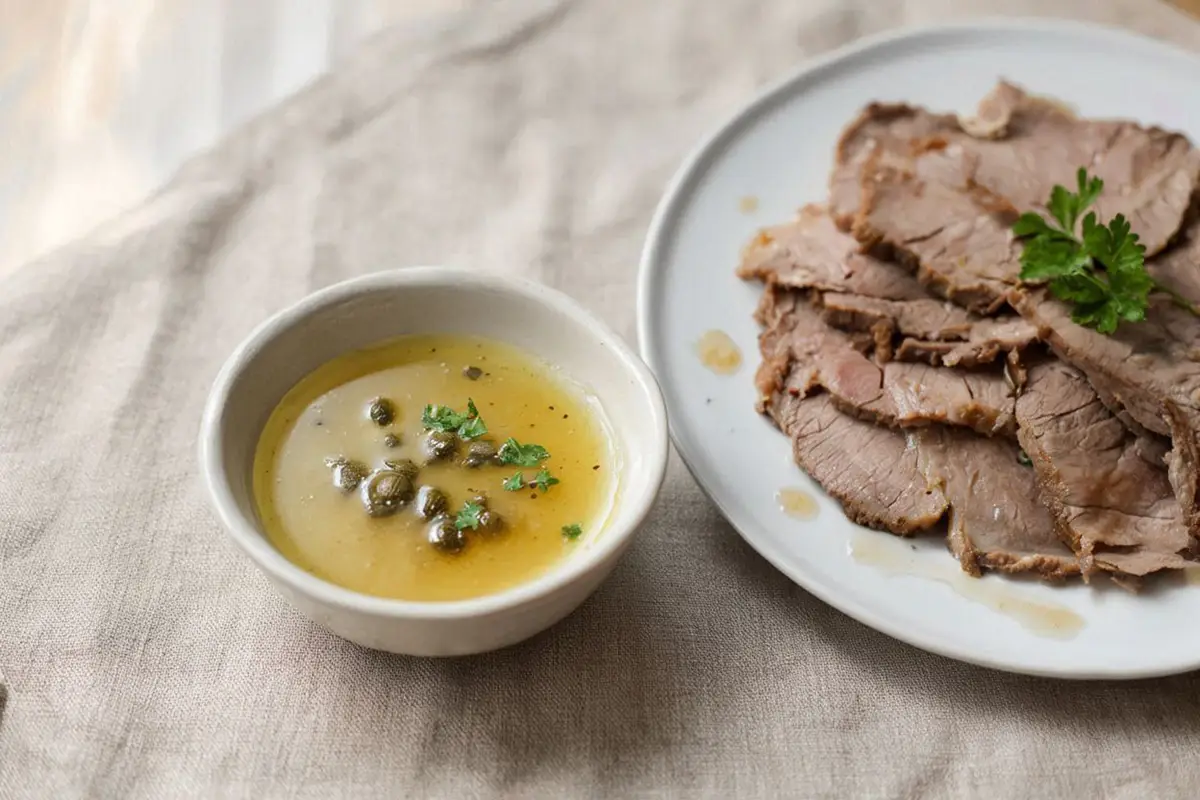
Piquant Sauce for Pickles, Cold Meats and Boiled Fish
A sharp, emulsified cold sauce of mustard, white wine, capers, gherkin, and olive oil — a bold accompaniment to boiled fish, cold roasts, and aspic.