Macaroni Cheese Pie
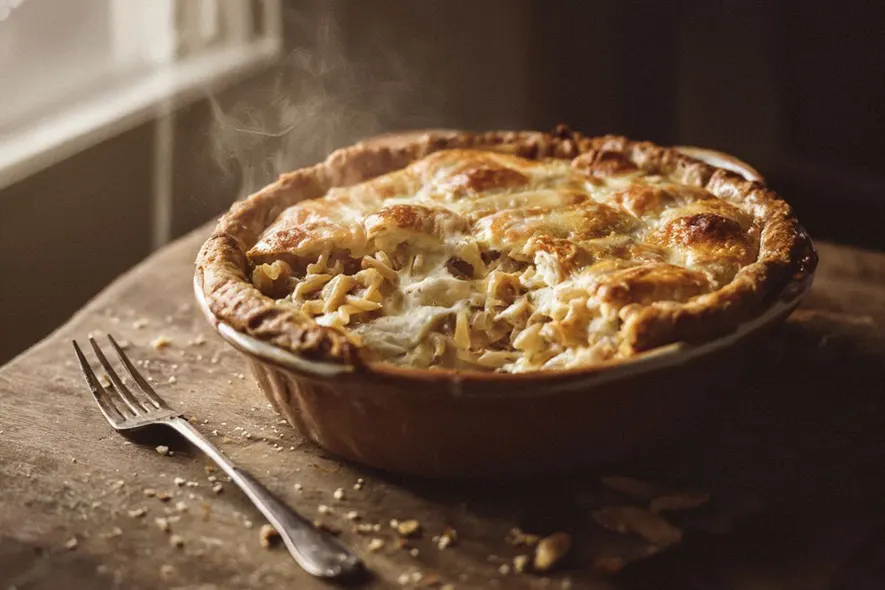
Savory Serbian gibanica layered with boiled pasta, aged white cheese, and kajmak, wrapped in a hand-stretched lard pastry crust.
Historical recipe
Modernised adaptation of an early 20th‑century source. Not independently kitchen-tested by Attic Recipes. Quantities, temperatures, and food safety guidance have been updated for a contemporary kitchen — results may vary and errors may exist. Nutritional values, where provided, are estimates only and have not been laboratory tested. Always follow current food safety guidelines for your region. If you have a health condition, allergy, or dietary requirement, consult a qualified professional before preparing this recipe.
Use of this recipe is entirely at your own risk and subject to our Terms of Service and Privacy Policy. Attic Recipes accepts no liability for any adverse outcome.
- Eggs
- Dairy
- Gluten
Additional notes
-
Warning
This recipe contains raw egg yolks incorporated into the filling before baking. The filling must reach a minimum internal temperature of 74°C (165°F) for the eggs to be fully cooked — verify with a thermometer before serving. Pregnant women, young children, elderly individuals, and immunocompromised persons should take particular care.
-
Note
Each serving contains approximately 38g of fat, of which around 18g is saturated. This dish is best treated as an occasional rather than everyday food.
- 1
Bring a large pot of well-salted water to the boil. Break the spaghetti or macaroni into thirds and cook until just tender. Drain, then rinse with lukewarm water to stop cooking without chilling the pasta.
- 2
Melt 1 tablespoon of butter or lard in a saucepan over medium heat. Add the drained pasta and stir well to coat evenly. Remove from the heat and allow to cool completely — the pasta must not be warm when you add the egg yolks.
- 3
In a large bowl, combine the cooled pasta with the 8 egg yolks, 500g of crumbled prevreli sir, 150g of kajmak, and 1 tablespoon of lard. Mix gently until evenly combined.
Tip Add the egg yolks one at a time and stir between each addition — this helps distribute them evenly through the cheese and pasta without breaking down the texture. - 4
In a separate clean bowl, beat the 8 egg whites to firm peaks. Fold the beaten whites gently into the pasta and cheese mixture in two additions, working from the bottom up to preserve as much volume as possible. Set aside.
- 5
Place the 250g of sifted flour on a work surface. Add 1 tablespoon of lard and a pinch of salt, then gradually work in enough cold water to form a firm but pliable dough — similar in texture to shortcrust pastry. Knead well until smooth, then divide into two equal pieces. Cover and rest for 10 minutes.
Tip The dough should be firm enough to roll thin without tearing. If it springs back too aggressively, let it rest a few minutes longer. - 6
Preheat the oven to 180°C (350°F) / 160°C fan. Grease a baking dish (approx. 30x20cm) generously with melted lard. Roll out the first piece of dough on a lightly floured surface until thin enough to line the base and sides of the dish with some overhang.
- 7
Lay the first sheet of dough into the greased dish, pressing it gently into the corners. Pour the macaroni and cheese filling over the dough and spread it evenly.
- 8
Roll out the second piece of dough to the same thickness. Lay it over the filling. Trim any excess with a knife or rolling pin, then press and crimp the edges of the top and bottom crusts together to seal. Brush the top generously with melted lard.
- 9
Bake for 50–55 minutes until the top crust is deep golden brown and the filling is set. A skewer inserted into the centre should come out without wet egg mixture clinging to it. Rest for 10 minutes before slicing.
Tip If the top crust browns too quickly, tent loosely with foil after the first 30 minutes.
Nutrition Information per 1 serving (approx. 250g)
Nutritional values are approximate estimates and may vary based on specific ingredients used, preparation methods, and portion sizes.
Serving Suggestions
Serve hot or warm, cut into generous squares, as an appetizer or a substantial breakfast dish. A glass of cold ayran or plain yoghurt alongside cuts through the richness of the cheese and lard. Leftovers reheat well in a low oven (150°C / 300°F) for 10–15 minutes — avoid the microwave, which softens the crust.
About This Recipe
There is a category of old recipe book entry that defies easy classification — dishes that sit at the junction of two traditions, borrowing the structure of one and the ingredients of another. This macaroni cheese pie is one of them. Outwardly it is a gibanica, the layered pastry-and-cheese bake that has been central to Serbian home cooking for generations. But inside the hand-stretched crust, instead of the expected cheese-and-egg filling, there is pasta: boiled, sautéed in lard, and folded together with generous quantities of prevreli sir and kajmak before being sealed under a second pastry sheet.
The recipe was filed under the heading “Pasta Dessert” — a title that misleads on both counts. There is nothing sweet here, and despite the pasta, this is firmly a pastry dish. It reads more like a cook’s practical experiment than a standard recipe: a way to stretch a pasta component into something more substantial by wrapping it in the familiar architecture of a pie. The result is rich, deeply savoury, and filling in the way that only lard-enriched pastry and aged cheese together can be.
Scaling the original presented an interpretive challenge. The quantities given — multiple kilograms of cheese, several kilograms of flour — clearly describe a feast-sized preparation, the kind made for a large family gathering or celebration rather than an ordinary weekday meal. The version here has been brought down to a practical size for a household of eight, keeping the ratios intact.
Why It Works
The structural logic of this recipe is more deliberate than it first appears. Rinsing the pasta with lukewarm water after boiling stops the cooking without shocking the starch — cold water would cause the surface starch to contract and clump, making it harder for the egg yolks and cheese to penetrate and bind the filling. Coating the pasta in hot lard immediately afterward serves a second purpose: it keeps the strands from sticking while adding fat that will later help the filling hold together during baking.
The beaten egg whites are what give the filling its lightness. Without them, the mass of cheese and pasta would bake into something dense and solid; the folded whites introduce enough air to produce a filling that sets firmly but remains tender rather than rubbery. The ratio of 8 whites to 500g of cheese is generous — this is a filling designed to rise slightly in the oven and hold its shape when sliced.
The lard crust is thin, firm, and deliberately not flaky. Unlike butter pastry, lard pastry has very little water content, which means it crisps rather than crumbles. Brushing the top with additional melted lard before baking drives this further, producing a crust that browns deeply and shatters cleanly under a knife.
Modern Kitchen Tips
Prevreli sir is an aged Serbian white brine cheese with a pronounced, slightly pungent flavour and a high fat content — it is not widely available outside the region. Aged feta is the most practical substitute: look for Greek PDO feta sold in blocks rather than pre-crumbled, which tends to be drier and less flavourful. For a closer approximation of the texture and milder salt level of prevreli sir, mix 400g of aged feta with 100g of full-fat ricotta.
Kajmak has no direct equivalent in Western supermarkets. Crème fraîche is the most reliable substitute — it has a similar fat content and a comparable mild, slightly fermented flavour. Full-fat sour cream works in a pinch but is thinner and more acidic. Avoid substituting with double cream, which lacks the slight tang that balances the richness of the cheese.
If you cannot source lard for the pastry, cold unsalted butter works as a functional alternative. The crust will be slightly less shatteringly crisp and will have a more buttery flavour, but the structure will hold. Do not use margarine or soft fats — they contain too much water and will make the dough difficult to roll thin.
A feast-day gibanica from early 20th century Serbian home cooking, adapted for the modern kitchen.
The Story Behind This Recipe
Historical Context
Early 20th century Serbian home cooking produced a number of gibanica variations that went well beyond the classic cheese-and-egg filling. The macaroni version appears to reflect a period when pasta — still a semi-luxury in rural households — was being incorporated into traditional pastry formats. Home cooks of the period used prevreli sir, a pungent, well-aged white brine cheese, as the backbone of the filling, combined with kajmak, the thick cream skimmed from heated milk that functioned as both fat and flavouring. The original quantities suggest a dish intended for a large gathering: the proportions given would have fed a full household several times over. The instruction to 'spray well with lard' before baking reflects a standard technique of the era for achieving a shatteringly crisp top crust.
Modern Kitchen Adaptation
The original quantities (multiple kilograms of cheese and flour) have been scaled to a practical household portion for 8. Kajmak has no true Western equivalent — the closest substitutes are crème fraîche (for richness and mild acidity) or full-fat sour cream. For the prevreli sir, aged feta is the most reliable Western approximation: it shares the high fat content, pronounced salinity, and slight pungency of a mature brine cheese. A more nuanced substitute is a mix of aged feta with a small amount of full-fat ricotta to soften the texture, or feta combined with crème fraîche in place of kajmak entirely. Avoid low-fat feta — the fat is structural here, binding the filling during baking. Lard in the dough has not been substituted, as it is responsible for the specific texture of the crust; cold unsalted butter works as a functional alternative but will produce a slightly different result. Oven temperature is estimated at 180°C (350°F) / 160°C fan — the original recipe gives no temperature.
This recipe is an independent modern adaptation developed from historical sources in the public domain. It is provided for informational and educational purposes only and does not constitute professional dietary, nutritional, or medical advice. Food preparation involves inherent risks. The reader assumes full responsibility for safe food handling, ingredient sourcing, and adherence to current local food safety guidelines. The site operator accepts no liability for outcomes resulting from the preparation or consumption of this recipe.
One recipe.
Every week.
You Might Also Like
More recipes from the same category
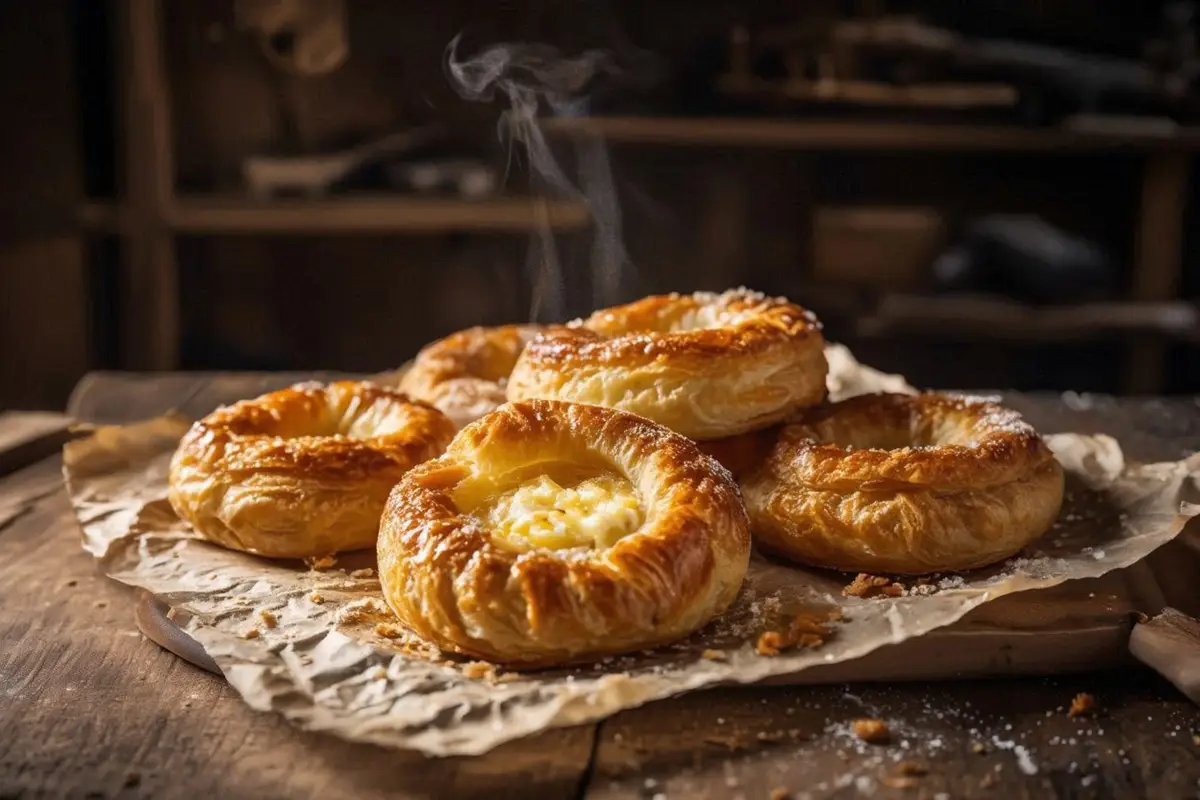
Flaky Fatback Pastries with Ham or Cheese
Tender, layered pastries made with hand-laminated pork fatback dough, filled with creamy ham or a rich egg-and-cheese mixture.
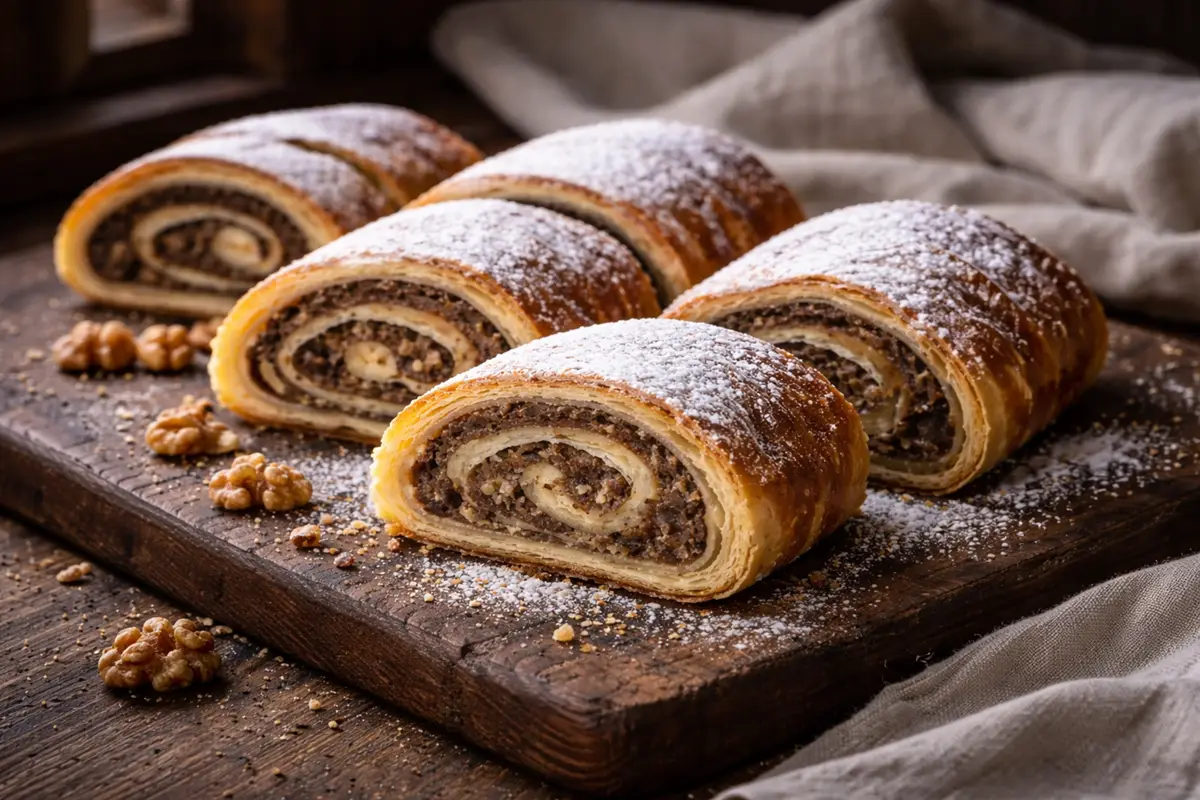
Fatback Walnut Roll
Flaky yeasted pastry laminated with raw pork fatback, filled with milk-cooked walnuts, raisins, and lemon zest. Sliced and dusted with sugar.
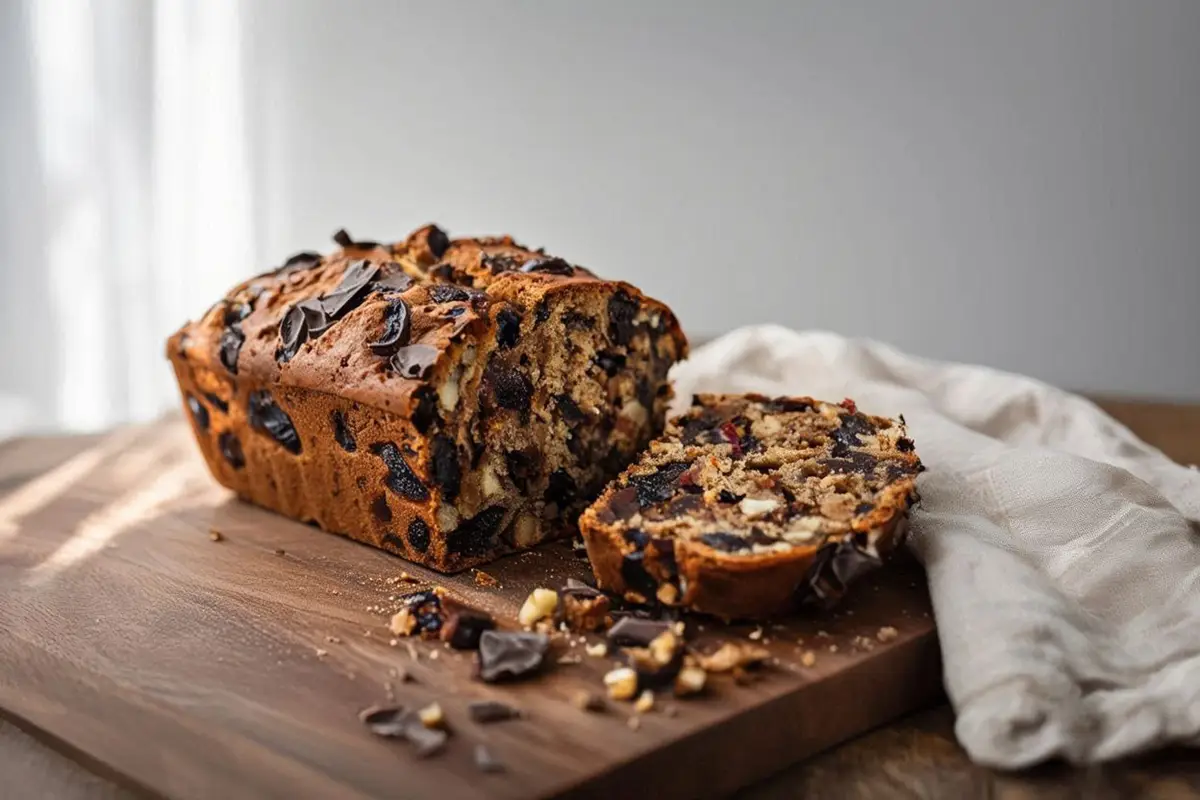
Kletzenbrot with Quince Cheese
A richly fruited Central European holiday bread packed with prunes, apricots, dates, dark chocolate, nuts, and homemade quince paste.