Lentil Paprikash with Veal
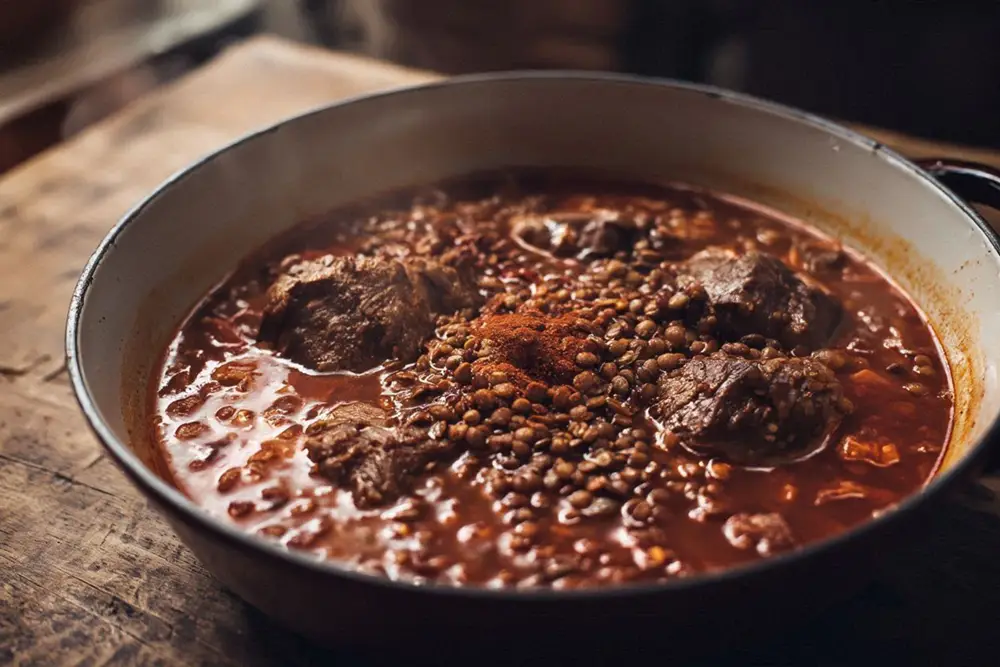
Tender veal paprikash recipe: simmered with 500g slow-cooked onions, brown lentils, sweet paprika. Authentic Central European lentil paprikaš.
Quick Summary
Tender veal paprikash recipe: simmered with 500g slow-cooked onions, brown lentils, sweet paprika. Authentic Central European lentil paprikaš.
Historical recipe
Modernised adaptation of an early 20th‑century source. Not independently kitchen-tested by Attic Recipes. Quantities, temperatures, and food safety guidance have been updated for a contemporary kitchen — results may vary and errors may exist. Nutritional values, where provided, are estimates only and have not been laboratory tested. Always follow current food safety guidelines for your region. If you have a health condition, allergy, or dietary requirement, consult a qualified professional before preparing this recipe.
Use of this recipe is entirely at your own risk and subject to our Terms of Service and Privacy Policy. Attic Recipes accepts no liability for any adverse outcome.
Additional notes
-
Warning
Veal must reach a minimum internal temperature of 74°C (165°F) before serving. Simmer until fully tender — properly cooked veal pieces will show no pink at the centre. Pregnant women, children under 18, elderly individuals, and immunocompromised persons should ensure the meat is thoroughly cooked before consuming.
-
Note
This recipe contains lard (saturated animal fat). Per-serving saturated fat is approximately 4g. Individuals monitoring saturated fat intake may substitute neutral vegetable oil — see modernAdaptation.
- 1
In a large heavy-bottomed saucepan, melt 20 g of lard over medium-low heat. Add 500 g of sliced onion and cook slowly, stirring occasionally, for 15–20 minutes until the onion is fully soft, golden, and reduced to roughly a third of its original volume. Do not rush this step.
Tip The onion is the sauce. If it browns too quickly or catches at the edges, add a small splash of water and reduce the heat. - 2
Add 500 g of veal pieces to the onion. Increase the heat to medium and fry, stirring, until the meat is browned on all sides — approximately 8–10 minutes. Season with salt and black pepper. Reduce heat to low, cover, and simmer for 45–50 minutes until the veal is tender. Add a small splash of water if the pan looks dry during simmering.
Tip Veal releases its own juices as it cooks — keep the heat low and resist adding too much liquid. The finished stew should be thick, not soupy. - 3
While the veal simmers, place 250 g of washed brown lentils in a medium saucepan. Cover with cold water and bring to a boil. Boil for 2 minutes, then drain and discard this first water. Return the lentils to the pan, cover with fresh boiling water, and cook for 25–30 minutes until tender but still holding their shape. Drain and set aside.
Tip Discarding the first water reduces the compounds that cause digestive discomfort and gives the lentils a cleaner flavour. - 4
When the veal is tender, if using sweet paprika, sprinkle 5 g over the stew and stir for 30 seconds over low heat before adding the lentils. Add the drained lentils to the veal stew and stir gently to combine. Simmer together for 8–10 minutes to allow the flavours to meld. Taste and adjust salt if needed.
Tip Add the paprika before the lentils, not after — it needs brief contact with the fat in the pan to release its colour and aroma. Do not let it cook dry or it will turn bitter. - 5
Serve directly from the pot. The finished paprikaš should be thick, with the lentils integrated into the onion-based sauce rather than sitting separately.
Nutrition Information per 1 serving (approx. 350g)
Nutritional values are approximate estimates and may vary based on specific ingredients used, preparation methods, and portion sizes.
Serving Suggestions
Serve with crusty white bread or dense rye bread to absorb the onion sauce. A spoonful of sour cream stirred in at the table adds richness and cuts the paprika's warmth. Pickled vegetables alongside — cornichons, pickled peppers, or a simple vinegar-dressed cabbage salad — provide contrast to the deep, sweet flavour of the stew.
About This Recipe
Paprikaš is not a complicated dish, but it is an unforgiving one. The technique is simple — onion, fat, meat, patience — and the result depends almost entirely on how much attention you give the onion at the beginning and how low you keep the heat throughout. Half a kilo of onion cooked slowly in lard until it collapses into a golden, jammy mass is already most of the sauce. The veal does the rest.
Lentils are the less expected element here, and the more interesting one. They are not stirred in raw to cook with the meat — they are cooked separately, in two changes of water, until tender but intact, then folded into the finished stew at the end. This keeps them from falling apart, from absorbing too much of the braising liquid, and from muddying the clean flavour of the onion base. The result is a stew where the lentils are present as a distinct texture, not dissolved into the background.
The optional sweet paprika, added at the last moment before the lentils go in, turns the sauce a deep brick red and adds the particular warm, slightly smoky flavour that defines Central European paprikaš. It is optional in the sense that the dish works without it. It is not optional in the sense that it makes the dish considerably better.
Why It Works
Five hundred grams of onion contains a significant quantity of natural sugars and pectin. When cooked slowly in fat over low heat, the cell walls break down and the sugars caramelise gradually, producing a deeply flavoured base that thickens the sauce without any flour. This is why the onion quantity, which appears excessive at first glance, is not a mistake — it is the thickener, the sweetener, and the primary flavour vehicle all at once.
Brown lentils hold their shape better than red lentils under prolonged heat, which makes them the appropriate choice for a dish where the lentils are added to an already-cooked stew and simmered further. Their earthy, slightly nutty flavour integrates with the sweet onion base without competing with the veal.
Discarding the first cooking water from the lentils removes oligosaccharides — complex sugars that the human digestive system cannot fully process — along with any residual surface compounds from the drying process. The second water produces a cleaner, more neutral-tasting lentil.
Modern Kitchen Tips
If using tinned lentils, drain and rinse them thoroughly before adding. Two 400g tins replace the 250g of dried lentils and eliminate Step 3 entirely. The final simmer at Step 4 needs only 5 minutes rather than 10, as tinned lentils are already fully cooked and will begin to break down if simmered too long.
The paprika must go into the fat, not into liquid. Add it to the stew after the veal is cooked but before any water is added or the lentils go in — it needs direct contact with the hot fat for 20–30 seconds to release its colour compounds and full flavour. If it hits liquid first, it disperses without blooming.
Leftovers thicken considerably overnight as the lentils continue to absorb the sauce. Reheat gently with a splash of water and taste for seasoning before serving.
A stew built on patience and a half-kilo of onions — which turns out to be exactly the right foundation.
The Story Behind This Recipe
Historical Context
Early 20th century Central European paprikaš recipes typically used a large quantity of onion — often equal in weight to the meat — as the primary thickening agent, relying on the natural sugars and pectin released during slow cooking rather than flour or cream. Home cooks of the period would have used rendered lard as the cooking fat throughout. The two-pot method — stewing the meat separately from the lentils and combining them only at the end — was standard practice, preventing the lentils from absorbing too much liquid during the meat's long cooking time and from disintegrating into the sauce. Sweet or mild red pepper was a common optional addition in paprikaš preparations of the era, added at the end of the frying stage to preserve its colour and prevent bitterness.
Modern Kitchen Adaptation
Lard has been retained as the historically correct fat; an equal weight of neutral vegetable oil or a mixture of butter and neutral oil may be used as a modern alternative. For a faster weeknight version, two 400g tins of brown or green lentils (drained and rinsed) may be substituted for the dried lentils — omit Step 3 entirely and add the tinned lentils directly at Step 4, reducing the final simmer to 5 minutes as they are already fully cooked. The original recipe did not specify the quantity of lentils — the asterisk appearing in place of a quantity is an OCR error — 250g of dried lentils has been established as the appropriate quantity for 4 servings alongside 500g of veal.
This recipe is an independent modern adaptation developed from historical sources in the public domain. It is provided for informational and educational purposes only and does not constitute professional dietary, nutritional, or medical advice. Food preparation involves inherent risks. The reader assumes full responsibility for safe food handling, ingredient sourcing, and adherence to current local food safety guidelines. The site operator accepts no liability for outcomes resulting from the preparation or consumption of this recipe.
One recipe.
Every week.
You Might Also Like
More recipes from the same category
Asparagus Tip Soup
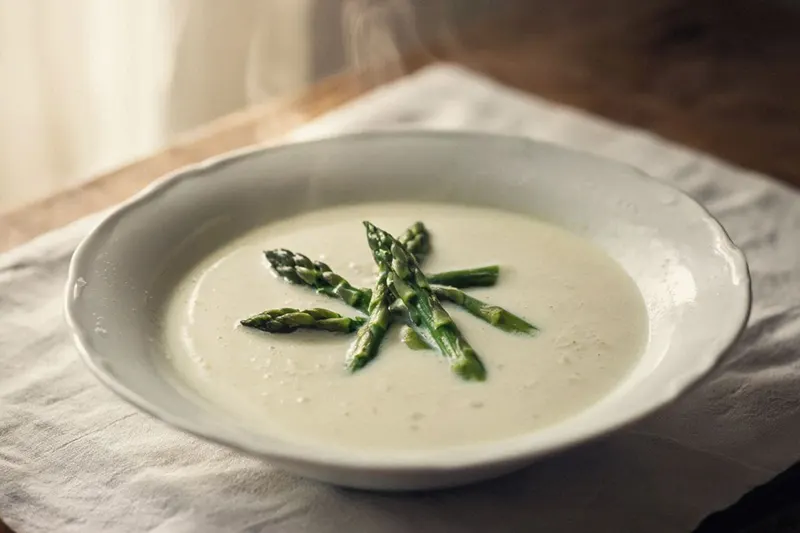
A silky, cream-enriched asparagus soup built on a white roux and finished with tempered egg yolks — an elegant first course from early 20th century cooking.
Beef Broth with Stuffed Dough Dumplings
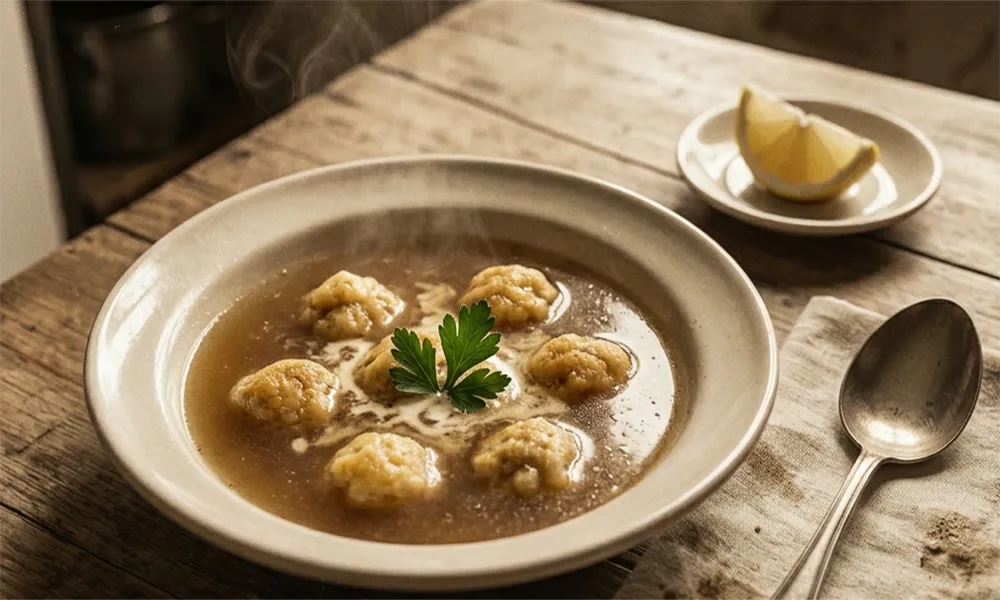
Rich beef bone broth simmered with golden pan-fried dumplings stuffed with seasoned ground beef, finished with a light roux and fresh lemon juice.
Bean Soup Cooked with Beef
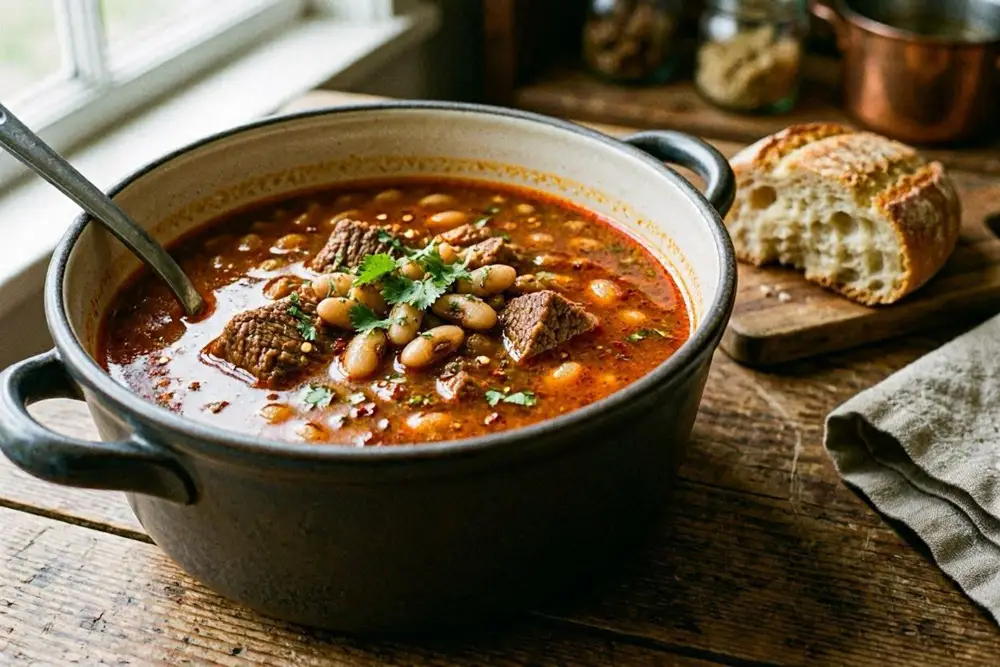
White beans and beef shoulder slow-simmered with a bouquet garni, finished in the oven with a paprika-spiced pan roux. A deeply satisfying one-pot meal.