Lamb with Caper Sauce
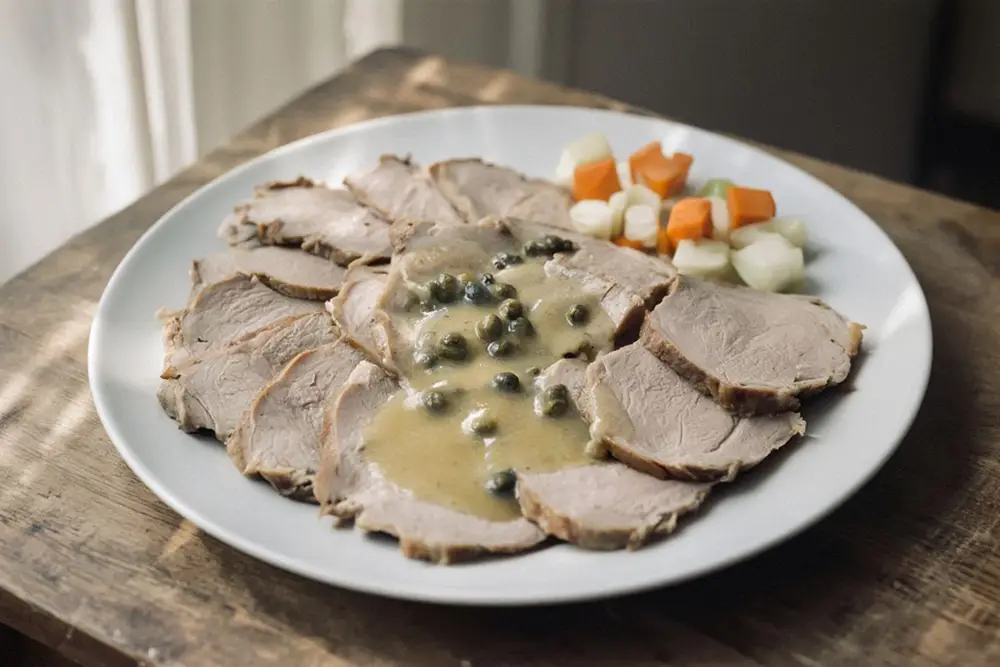
A whole poached leg or breast of lamb simmered with root vegetables and bay, served with cubed greens and a roux-based caper sauce made from the cooking stock.
Historical recipe
Modernised adaptation of an early 20th‑century source. Not independently kitchen-tested by Attic Recipes. Quantities, temperatures, and food safety guidance have been updated for a contemporary kitchen — results may vary and errors may exist. Nutritional values, where provided, are estimates only and have not been laboratory tested. Always follow current food safety guidelines for your region. If you have a health condition, allergy, or dietary requirement, consult a qualified professional before preparing this recipe.
Use of this recipe is entirely at your own risk and subject to our Terms of Service and Privacy Policy. Attic Recipes accepts no liability for any adverse outcome.
- Dairy
- Gluten
Additional notes
-
Warning
Lamb and mutton must be cooked until fully tender and the juices run clear when pierced at the thickest point. The internal temperature of the thickest part of a whole leg must reach at least 74°C (165°F) before serving. Stuffed breast preparations must reach this temperature at the centre of the filling. Use an instant-read thermometer to verify, particularly for large or thick pieces.
-
Note
This dish contains approximately 11g of saturated fat per serving, primarily from the lamb. Individuals managing cardiovascular health or dietary fat intake should note the portion size.
- 1
If using lamb breast, it may be stuffed with a filling of your choice and tied securely with kitchen twine before cooking. Keep the meat in one whole piece regardless of cut.
- 2
Place the lamb in a large saucepan. Pour over enough cold water to just cover the meat — do not use hot or boiling water. Add a small amount of salt. Bring slowly to a boil over medium heat.
Tip Starting in cold water draws impurities gradually to the surface as grey foam, making them easy to skim. This produces a cleaner stock and a better-flavoured sauce. - 3
As the water comes to a boil, skim off any grey foam that rises to the surface using a skimmer or large spoon. Continue skimming until no more foam appears — this usually takes 5–8 minutes once boiling begins.
- 4
Add the whole carrot (120g), whole peeled kohlrabi (200g), halved onions (200g), and the bay leaf. Reduce heat to the lowest simmer — the surface should barely move. Cook uncovered or with the lid slightly ajar.
- 5
Simmer gently for 90–120 minutes until the meat is fully tender. A leg is done when a skewer inserted at the thickest point meets no resistance; breast is done when it feels soft throughout and the tied portions hold their shape. # estimated cooking time
Tip Mutton will take longer than young lamb — allow up to 2 hours for older animals. Do not rush with higher heat; a hard boil will toughen the meat and cloud the stock. - 6
When the meat is done, carefully lift it out of the stock. Hold it over the pot or place it on a rack over a tray — keeping it in the steam from the stock will prevent it from cooling and drying on the surface while you finish the sauce.
- 7
Ladle off 250ml of the hot poaching stock and use it immediately to make the Caper Sauce (/recipes/caper-sauce). The remaining stock can be seasoned and served separately as a light soup, or reserved for another use.
- 8
Remove the cooked vegetables from the stock. Drain and cut the carrot and kohlrabi into small cubes. Discard the onion halves and bay leaf.
- 9
Slice the lamb and arrange on a warmed serving plate. Scatter the cubed carrot and kohlrabi around the meat as a garnish. Pour the hot caper sauce generously over the lamb and serve immediately.
Nutrition Information per 1 serving (approx. 320g including sauce and vegetables)
Nutritional values are approximate estimates and may vary based on specific ingredients used, preparation methods, and portion sizes.
Serving Suggestions
Serve with boiled new potatoes or plain steamed rice to absorb the caper sauce. The reserved poaching stock, lightly seasoned, makes a clean and simple first course. For those who enjoy a stronger caper flavour, serve additional whole drained capers alongside the plated dish — the sauce itself is intentionally mild to balance the character of the lamb.
About This Recipe
Poaching a whole cut of meat is one of the quieter cooking methods — no browning, no high heat, no drama. A leg or breast of lamb goes into cold water with a few vegetables and a bay leaf, and two hours later it comes out tender, pale, and surrounded by a stock that has absorbed everything it needs to become a sauce. The caper sauce made from that stock is not an afterthought. It is the point of the exercise.
The combination of poached lamb and caper sauce is one of those pairings that has survived for over a century because it works on a precise logic. Lamb — particularly mutton, which this recipe was more likely written for — has a strong, specific fat character. The caper sauce, built on the lamb’s own stock and finished with lemon or vinegar, has exactly enough acidity to balance that fat without overpowering the meat. The two were made for each other by the same pot.
The vegetables — carrot, kohlrabi, onion — serve the cooking process more than the plate. They flavour the stock, and the stock flavours the sauce. On the plate they appear as small cubes alongside the meat, a garnish that is also a record of what the stock went through to get there.
Why It Works
Cold water start is not a detail — it is the method. Placing meat into already-boiling water causes the proteins on the surface to seize and contract immediately, trapping the impurities inside the meat and producing a cloudy, grey stock. Starting in cold water and raising the temperature slowly draws those same proteins — and the foam they carry — gradually to the surface, where they can be skimmed away cleanly. The result is a clearer stock and a sauce that is pale and clean rather than murky.
The low simmer after skimming is equally important. A hard boil agitates the stock continuously, re-incorporating the fat and proteins that have been skimmed off and breaking the collagen into a cloudy emulsion. A barely-moving simmer keeps everything calm, allows the collagen to convert slowly to gelatin, and produces a stock with enough body to hold the sauce together.
The vegetables go in after skimming, not before, because they would otherwise be overcooked to mush by the time the meat is done. Added halfway through — or in this case, after the initial boil and skim — they cook gently in the simmering stock and finish at roughly the same time as the meat.
Modern Kitchen Tips
A meat thermometer removes all guesswork from the doneness question. Young lamb leg at 1kg will typically reach 74°C at the centre within 90 minutes of gentle simmering. Mutton, being denser and from an older animal, may take the full two hours or slightly beyond. The skewer test — no resistance at the thickest point — is the traditional method and works well, but temperature is more reliable for stuffed preparations where the centre is not directly accessible.
The poaching stock not used for the sauce freezes well in small portions. It makes an excellent base for vegetable soups, rice dishes, or a second batch of caper sauce if you have leftover lamb the following day.
If the meat has cooled slightly before the sauce is ready, return it briefly to the hot stock rather than to the oven — the oven will dry the surface. Two to three minutes in the warm poaching liquid will bring it back to serving temperature without any loss of moisture.
Cold water, a slow simmer, and a stock worth keeping: the whole logic of this dish is in the pot.
The Story Behind This Recipe
Historical Context
Poached whole cuts of lamb or mutton served with a roux-based caper sauce was a standard preparation in Central European middle-class cooking of the early 20th century. The method — cold water start, slow simmer with root vegetables and bay, stock reserved for the sauce — follows the same logic as the French blanquette and the broader tradition of European boiled meat dishes, all of which prioritised a clear, flavourful cooking liquid as much as the meat itself. Mutton was the more common choice in period recipes, as older animals were more readily available and better suited to long, slow poaching than young lamb. The option to stuff and tie a breast before cooking appears in recipes of this type as a way to extend the dish and add interest to the less prestigious cut. Home cooks of the period did not specify the weight of the aromatics — a carrot, a kohlrabi, and two onions were understood quantities requiring no elaboration.
Modern Kitchen Adaptation
Quantities for the aromatic vegetables were not given in the original and are estimated here based on standard poaching ratios for 1kg of meat. Cooking time is estimated at 90–120 minutes and marked accordingly — the original stated only 'until tender', which is correct but unhelpful for planning. Young lamb will be done closer to 90 minutes; mutton or larger pieces may require the full 2 hours. The caper sauce is treated as a separate recipe (see Caper Sauce at /recipes/caper-sauce) using the poaching stock from this dish as its liquid base, which is consistent with the original instruction and produces a more flavourful sauce than one made with water or purchased stock.
This recipe is an independent modern adaptation developed from historical sources in the public domain. It is provided for informational and educational purposes only and does not constitute professional dietary, nutritional, or medical advice. Food preparation involves inherent risks. The reader assumes full responsibility for safe food handling, ingredient sourcing, and adherence to current local food safety guidelines. The site operator accepts no liability for outcomes resulting from the preparation or consumption of this recipe.
One recipe.
Every week.
You Might Also Like
More recipes from the same category
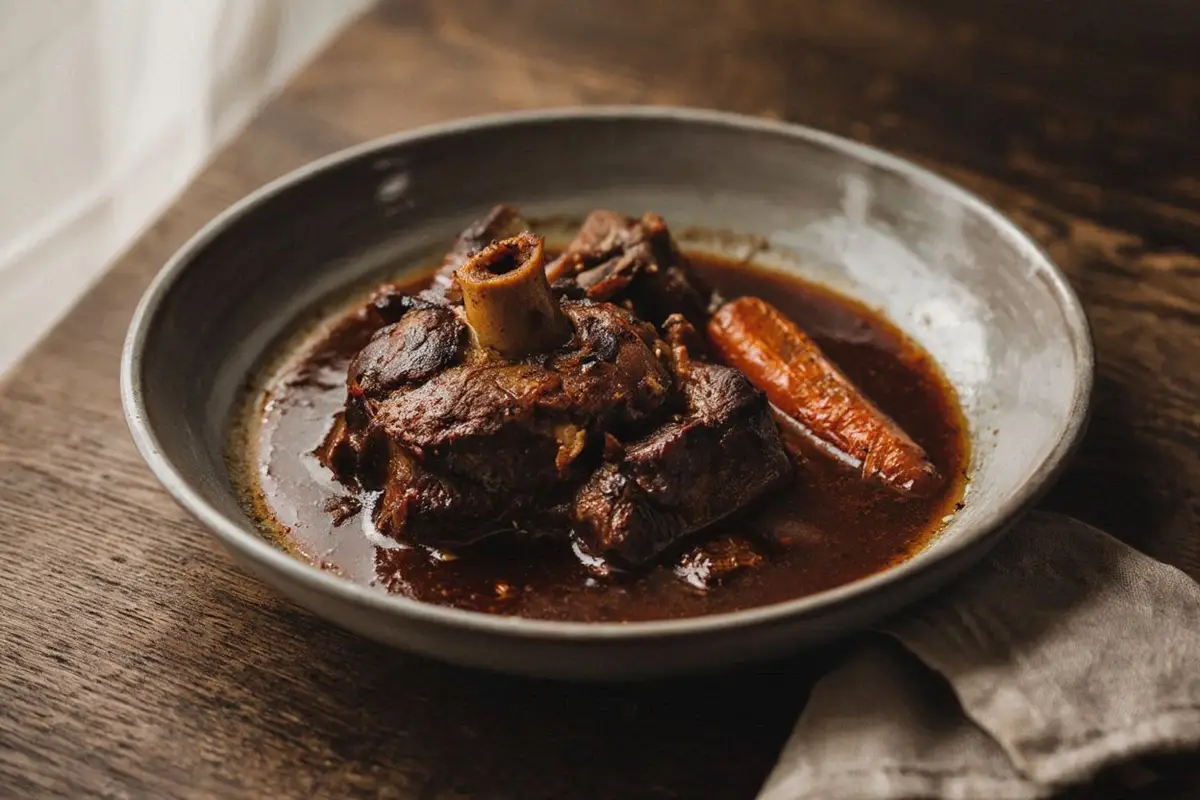
Beef Tail in Red Wine Sauce
Slow-braised oxtail in a rich red wine broth with carrots, lemon zest, and a silky roux-thickened sauce. A forgotten Central European classic.
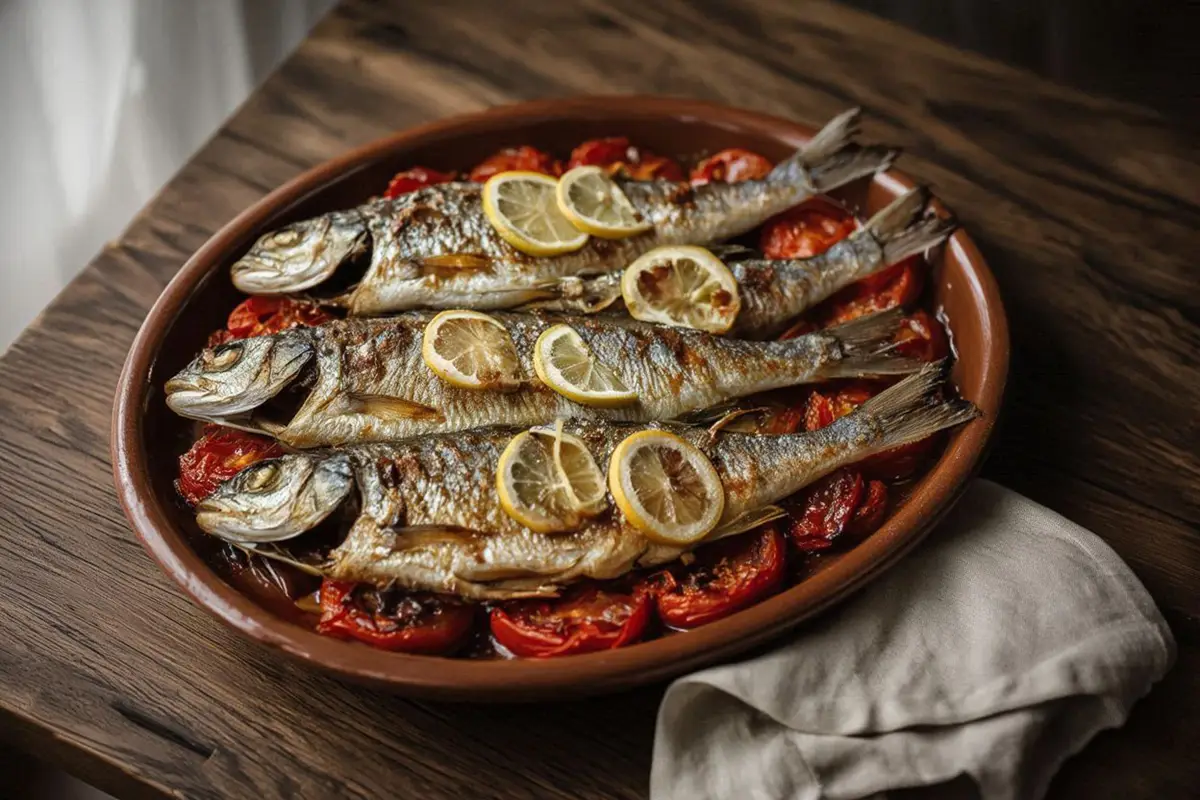
Baked Fish with Tomatoes
Whole fish baked over ripe tomatoes with generous olive oil and lemon — a simple, fragrant Central European oven dish.
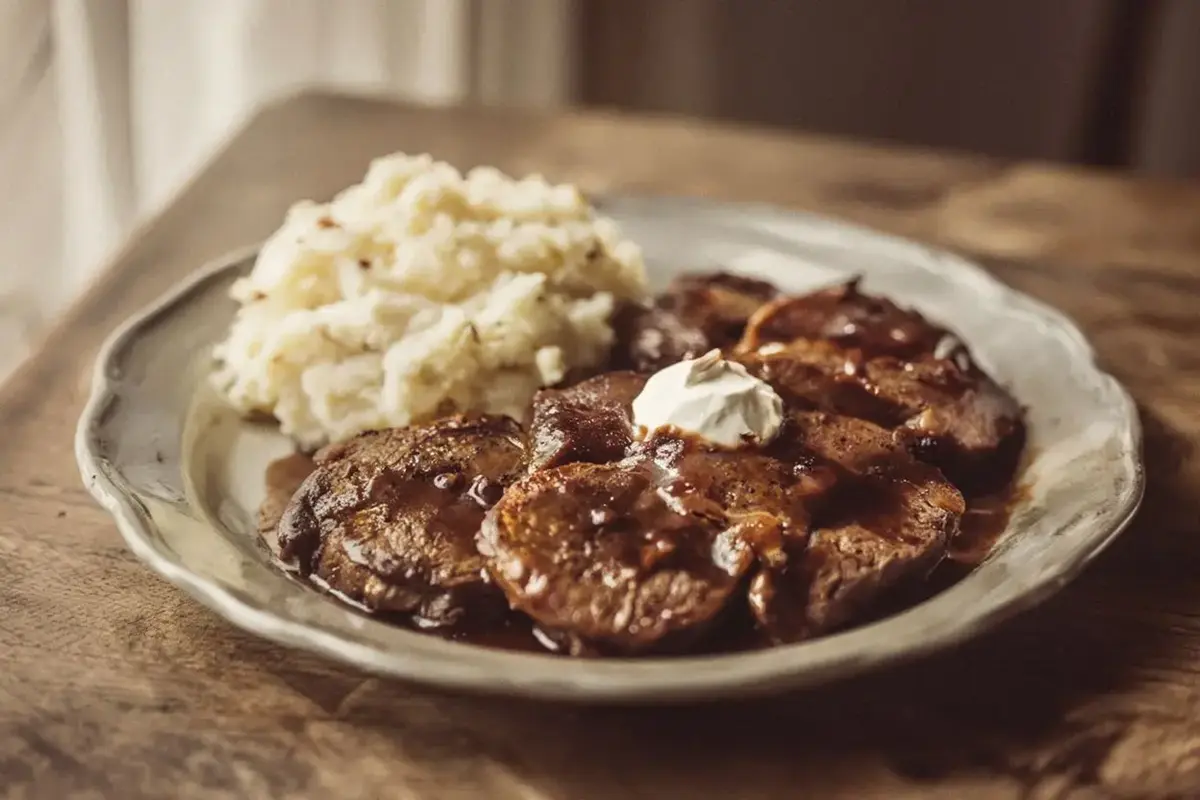
Beef Kidney with Wine
Beef kidney marinated in red wine, braised with herbs, finished with sour cream. Tender, rich, and deeply flavored.