Lamb Intestines Soup
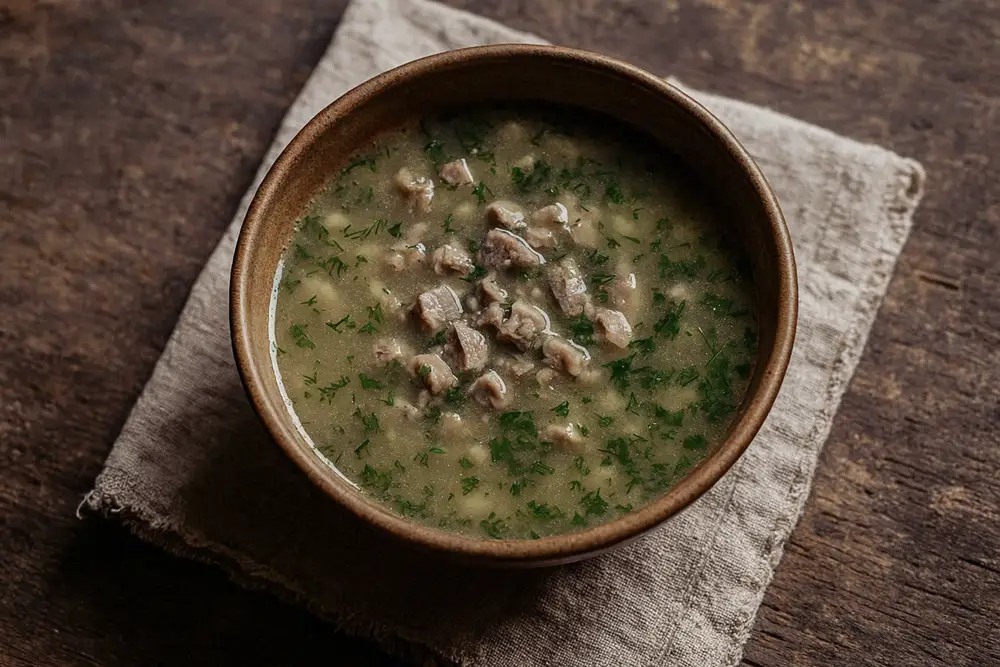
A traditional spring offal soup — blanched lamb intestines simmered with fresh butter, green onions, garlic, and wild herbs. Clean, light, and deeply savory.
Historical recipe
Modernised adaptation of an early 20th‑century source. Not independently kitchen-tested by Attic Recipes. Quantities, temperatures, and food safety guidance have been updated for a contemporary kitchen — results may vary and errors may exist. Nutritional values, where provided, are estimates only and have not been laboratory tested. Always follow current food safety guidelines for your region. If you have a health condition, allergy, or dietary requirement, consult a qualified professional before preparing this recipe.
Use of this recipe is entirely at your own risk and subject to our Terms of Service and Privacy Policy. Attic Recipes accepts no liability for any adverse outcome.
- Gluten
- Dairy
Additional notes
-
Warning
Lamb intestines must be thoroughly cleaned before cooking — turn inside out and rinse under cold running water until the water runs clear. Blanch in fresh boiling water and discard the blanching liquid completely.
-
Caution
Offal (organ meat) has a high cholesterol content (approx. 185mg per serving). Individuals with cardiovascular conditions or high cholesterol should consume in moderation.
-
Note
This dish contains organ meat. It is not recommended for pregnant women or immunocompromised individuals without ensuring the intestines are sourced fresh and cooked to a minimum internal temperature of 74°C (165°F).
- 1
Turn the lamb intestines inside out and rinse thoroughly under cold running water. Drop them into a pot of boiling unsalted water and blanch for 3–4 minutes until they turn white and firm. Drain immediately and discard the blanching water.
Tip The blanching water carries off impurities and most of the gamey smell — do not reuse it. - 2
Allow the blanched intestines to cool slightly, then finely chop them into pieces roughly 1–2 cm in size.
- 3
Melt the 3 tbsp butter in a heavy-bottomed soup pot over medium heat. Add the sliced green onions and minced garlic. Sauté, stirring occasionally, until golden and fragrant, about 5–6 minutes.
- 4
Add the chopped intestines to the pot and sauté with the onion mixture for 4–5 minutes, stirring to coat evenly.
- 5
Sprinkle in the 2 tbsp flour and stir continuously for 1–2 minutes to lightly toast it. The flour should coat the meat and onion mixture without browning.
- 6
Slowly pour in the 1500 ml water or broth in a steady stream, whisking as you pour to prevent lumps. Bring to a boil, then reduce to a gentle simmer. Cover and cook for 30–35 minutes until the intestines are fully tender and have reached an internal temperature of at least 71°C (160°F).
Tip The intestines should be completely soft with no resistance when pressed — undercooked offal has an unpleasant texture. - 7
In the final 5 minutes of cooking, stir in the chopped dill, parsley, and wild spring greens. Season with 1 tsp salt and 0.5 tsp black pepper, adjusting to taste. Serve immediately, hot.
Nutrition Information per 1 serving (approx. 380ml)
Nutritional values are approximate estimates and may vary based on specific ingredients used, preparation methods, and portion sizes.
Serving Suggestions
Serve hot in deep bowls with crusty bread for dipping. A wedge of lemon on the side allows diners to adjust acidity. Pairs well with a simple green salad. Traditionally a spring dish — best made when lamb intestines are freshest, in the weeks around Easter.
About This Recipe
Lamb intestines soup sits at the edge of what modern cooks are willing to try — and that is exactly what makes it worth writing about. Across Central and Southeastern Europe, the weeks around Easter were historically the one time of year when fresh lamb offal was available in any quantity, and home cooks wasted nothing. The intestines, stomach, liver, and lungs all had their place at the table, cleaned carefully and cooked simply, before refrigeration made year-round offal a possibility.
This version is lighter than the heavy, vinegar-soured tripe soups found in regional taverns, and more modest than the ceremonial Greek magiritsa. It is a household soup — butter-based, flour-thickened, finished with whatever spring herbs were growing. The flavor, for those willing to try it, is genuinely delicate: the blanching step removes most of the gamey character, and what remains is a rich, savory broth that tastes unmistakably of spring.
The recipe as recorded gave no quantities for the thickener or liquid, and named no specific herbs beyond “finer spring herbs.” What it preserved was the method: blanch first, build on butter and onion, thicken lightly, finish with green things. That logic holds.
Why It Works
The two-stage treatment of the intestines — blanching in plain boiling water, discarding that water, then cooking in fresh liquid — is not optional. The first liquid carries off blood proteins, surface impurities, and most of the volatile compounds responsible for the sharpest gamey notes. Every subsequent step builds flavor on a cleaner base.
Thickening with flour directly in the pot (rather than making a separate roux) is efficient and period-appropriate. The flour coats the sautéed meat and onions, absorbs the butter, and then hydrates gradually as the broth is added — producing a lightly thickened soup rather than a heavy stew. The consistency should be brothy but with a little body, not gluey.
The spring herbs are added at the very end for a reason: dill and parsley lose their fragrance quickly under heat. Two to three minutes of cooking is enough to integrate them without cooking out their brightness.
Modern Kitchen Tips
- Sourcing: Fresh lamb intestines are available from halal butchers and specialty meat suppliers, particularly in the weeks around Easter. Ask for them cleaned if possible — it significantly reduces prep time.
- Cleaning: Turn inside out using your fingers or a thin wooden dowel, wash under cold running water until water runs clear. Any yellowish fat deposits on the outside can be trimmed but are not harmful.
- Wild greens: Nettle (blanched briefly before adding to remove sting), sorrel, or wild garlic greens are the most historically accurate choices. Young spinach or watercress work well as substitutes.
- Sourness: A small splash of white wine vinegar or a squeeze of lemon stirred in at the end lifts the whole soup and is consistent with regional variations. Worth trying on a second bowl.
- Scaling: The recipe scales well to 6–8 servings for a larger table. Intestines remain the limiting ingredient — availability determines quantity.
A spring offal soup from the early 20th century Central European table, preserved and adapted for the modern kitchen.
The Story Behind This Recipe
Historical Context
Early 20th century recipes for this type of spring offal soup treated lamb intestines as a seasonal ingredient tied directly to the lamb slaughter that accompanied Easter and spring festivities across Central and Southeastern Europe. Home cooks of the period blanched the intestines briefly — just until white — then built the soup on a simple butter-and-onion base thickened with flour, a technique common to the roux-adjacent traditions of Austro-Hungarian household cooking. The instruction to add 'finer spring herbs' was left to the cook's judgment, and in practice meant whatever was growing: nettles, sorrel, wild garlic greens, or dill. No quantities for flour, liquid, or herbs were given; the consistency was calibrated entirely by feel. This version — butter-based, herb-forward, and relatively delicate — reads as a home cook's approach rather than a tavern preparation.
Modern Kitchen Adaptation
The original gave no quantities for flour, water, herbs, or cooking times — all have been estimated based on standard soup ratios and offal cooking technique and are marked accordingly. The intestines require thorough cleaning and blanching before use; the original assumed this knowledge. Fresh butter is retained as written; for a more neutral flavor, a neutral oil may be substituted. Lard, which was common in the period, may also be used for a richer, more traditional result. Wild spring greens (nettle, sorrel) are listed as optional — young spinach is a reliable substitute in modern kitchens. No vinegar finish has been added, though a small splash of white wine vinegar at the end is consistent with regional variants and balances the richness well if desired.
This recipe is an independent modern adaptation developed from historical sources in the public domain. It is provided for informational and educational purposes only and does not constitute professional dietary, nutritional, or medical advice. Food preparation involves inherent risks. The reader assumes full responsibility for safe food handling, ingredient sourcing, and adherence to current local food safety guidelines. The site operator accepts no liability for outcomes resulting from the preparation or consumption of this recipe.
One recipe.
Every week.
You Might Also Like
More recipes from the same category
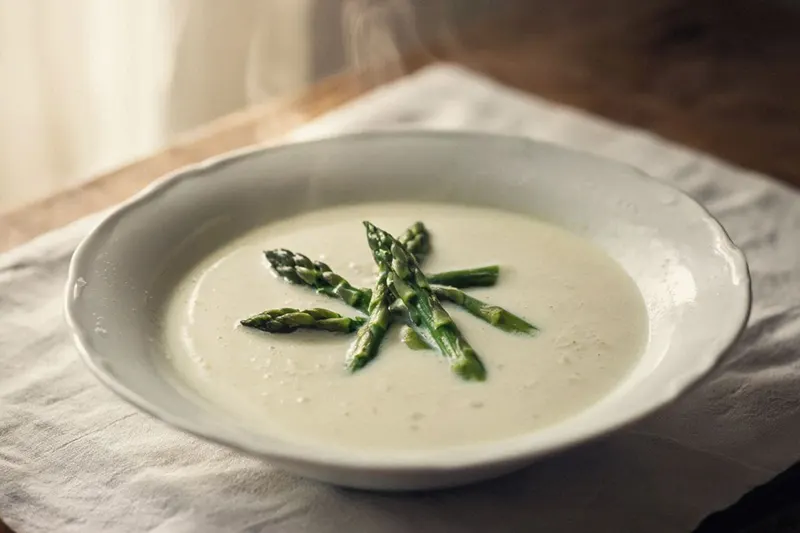
Asparagus Tip Soup
A silky, cream-enriched asparagus soup built on a white roux and finished with tempered egg yolks — an elegant first course from early 20th century cooking.
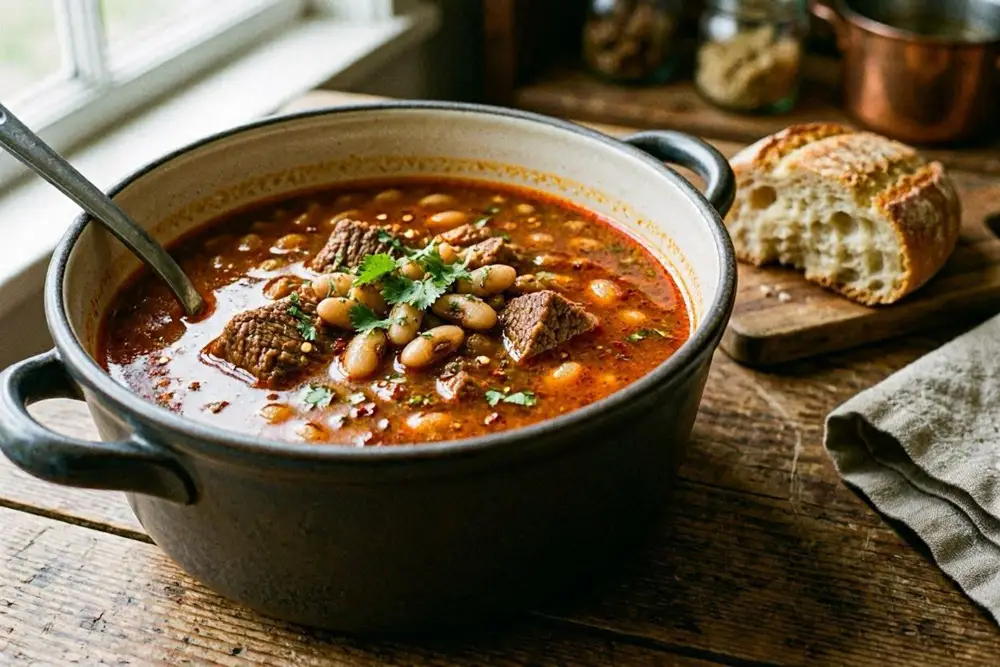
Bean Soup Cooked with Beef
White beans and beef shoulder slow-simmered with a bouquet garni, finished in the oven with a paprika-spiced pan roux. A deeply satisfying one-pot meal.
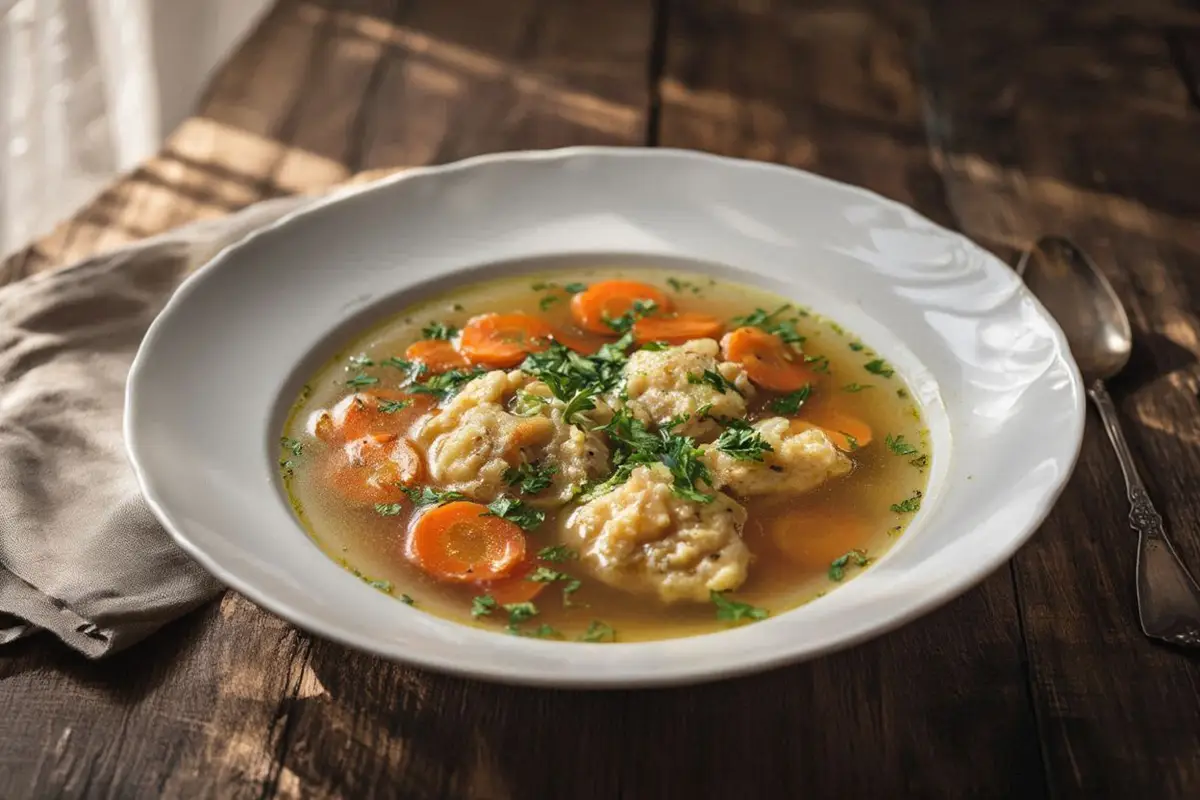
Beef Soup with Carrot-Colored Broth
A rich, golden Central European beef soup with carrot-colored broth, served with semolina or liver dumplings. Hearty, clear, and deeply flavorful.