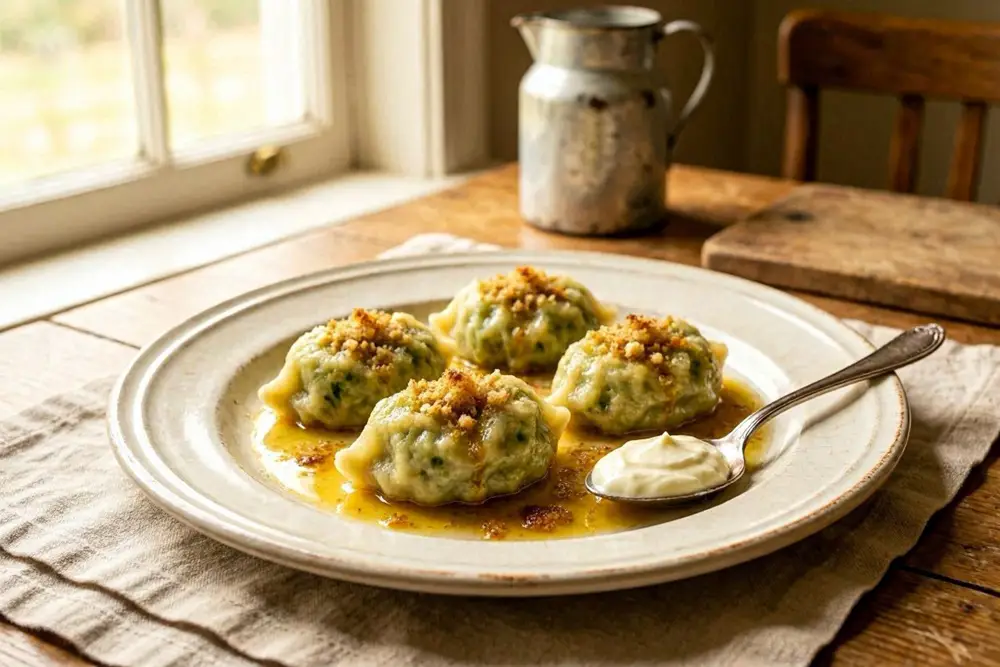
Kale Dumplings with Browned Butter and Sour Cream
Tender boiled kale dumplings bound with semolina and egg, finished with golden breadcrumbs fried in butter and a spoonful of sour cream.
Historical recipe
Modernised adaptation of an early 20th‑century source. Not independently kitchen-tested by Attic Recipes. Quantities, temperatures, and food safety guidance have been updated for a contemporary kitchen — results may vary and errors may exist. Nutritional values, where provided, are estimates only and have not been laboratory tested. Always follow current food safety guidelines for your region. If you have a health condition, allergy, or dietary requirement, consult a qualified professional before preparing this recipe.
Use of this recipe is entirely at your own risk and subject to our Terms of Service and Privacy Policy. Attic Recipes accepts no liability for any adverse outcome.
- Eggs
- Dairy
- Gluten
Additional notes
-
Note
This recipe contains egg yolks and egg whites incorporated into a boiled dumpling. No internal temperature is specified in the original method; home cooks should ensure dumplings are cooked through (firm throughout, no soft centre) before serving. Pregnant women, young children, older adults, and immunocompromised individuals should use pasteurized eggs as an added precaution.
Pasteurized liquid egg whites and pasteurized yolks are available in most supermarkets and can be substituted in equal measure.
- 1
Bring a large pot of well-salted water to a boil. Add the kale and cook until completely tender, about 10–15 minutes. Drain thoroughly in a colander.
Tip The kale must be very soft — not just wilted — or the dumplings will have a fibrous texture. - 2
Once the kale is cool enough to handle, gather it in a clean kitchen towel and wring out as much water as possible. Chop the kale finely and set aside.
- 3
In a large bowl, beat the 15 g softened butter until creamy. Mix in the 3 egg yolks, 1 tsp salt, ¼ tsp black pepper, and the minced garlic clove.
- 4
Add the chopped kale, 30 g breadcrumbs, and 100 g semolina to the bowl. Stir until evenly combined. The mixture should be thick and hold its shape.
Tip If the mixture feels too loose, rest it for 5 minutes — the semolina absorbs moisture as it sits. Add breadcrumbs a tablespoon at a time only if needed after resting. - 5
In a separate clean bowl, beat the 3 egg whites to stiff peaks. Gently fold them into the kale mixture in two additions, preserving as much volume as possible.
- 6
Bring a large pot of salted water to a gentle simmer (not a rolling boil). Wet your hands and shape the kale mixture into dumplings the size of a large walnut. Drop a test dumpling into the water first. If it holds together and rises to the surface after 8–10 minutes, proceed with the rest.
- 7
Cook the dumplings in batches, without overcrowding. They are done when they float and feel firm to a gentle press, about 8–10 minutes.
Tip A vigorous boil will knock the dumplings apart. Keep the water at a steady, gentle simmer throughout. - 8
While the dumplings cook, melt the 60 g butter in a small frying pan over medium heat. Add the 40 g breadcrumbs and fry, stirring frequently, until golden brown and fragrant. Remove from heat.
- 9
Remove the dumplings with a slotted spoon and drain briefly. Arrange on a warm serving plate, pour the browned butter and breadcrumbs over them, and serve with 120 ml sour cream alongside.
Nutrition Information per 1 serving (approx. 280g)
Nutritional values are approximate estimates and may vary based on specific ingredients used, preparation methods, and portion sizes.
Serving Suggestions
Serve as a side dish alongside roasted pork, fried sausages, or braised beef. As a light vegetarian main, pair with a sharp green salad dressed with vinegar. The dumplings also work well plated alongside roasted root vegetables — carrots, parsnips, celeriac — where the browned-butter topping ties the plate together.
About This Recipe
Kale dumplings occupy a specific corner of Central European home cooking — practical, economical, and quietly sophisticated. Kale is cooked until completely soft, squeezed dry, and combined with semolina and beaten egg whites to produce a mixture that holds its shape in simmering water without becoming heavy. The result is something between a gnocchi and a knödel: tender in the centre, with a faint resistance at the surface, and a deep, slightly bitter green flavour that the browned butter topping softens and enriches.
The dish belongs to a tradition of stretching a single winter vegetable into something that can anchor a meal. Kale was a cold-weather staple across much of the region precisely because it survived frost and required little beyond salt and fat to become satisfying. This recipe reflects that economy while producing something that holds up well enough to serve as a side for roasted meat or as a vegetarian main with a sharp salad alongside.
What makes this version work is the attention to moisture. Kale releases a remarkable amount of water, and every step — the long boil, the thorough draining, the wring in a kitchen towel — exists to drive that water out before the semolina and egg bind the mixture. Get that right, and the rest is straightforward.
Why It Works
Semolina does two things in this recipe: it absorbs residual moisture from the kale, and it provides structure without making the dumplings dense. Fine wheat semolina gelatinizes partially during boiling, creating a soft but cohesive matrix that holds the chopped kale in suspension. Breadcrumbs serve as a secondary binder and a buffer — if the kale is wetter than expected, the extra breadcrumbs take up the slack.
The beaten egg whites are the less obvious technique. In a dumpling that is essentially a vegetable-and-starch paste, folding in stiff whites introduces small air pockets that expand during cooking, lightening the texture and helping the dumplings float once set. Without them, the same mixture would produce a denser, heavier dumpling that takes longer to cook through and risks a gummy interior.
The browned butter topping is not decorative. Fat carries aroma compounds that kale on its own mutes, and the toasted breadcrumbs add a textural contrast that makes the soft dumpling more interesting on the palate. Sour cream adds acidity, which lifts the richness of the butter and complements the slight bitterness of the kale.
Modern Kitchen Tips
A stand or hand mixer makes quick work of both the creaming step and the egg whites — use a clean, dry bowl for the whites, as any trace of fat will prevent them from reaching stiff peaks. If you are working ahead, the shaped raw dumplings can sit on a lightly floured tray, covered, in the refrigerator for up to two hours before cooking. Do not freeze them raw; the ice crystals will disrupt the semolina structure and the dumplings will fall apart in the water.
Leftover cooked dumplings reheat well in a covered pan with a small splash of water, or can be sliced and pan-fried in butter the next day until golden on the cut surfaces — a different dish entirely, and a good one.
A classic of early 20th century home cooking, preserved and adapted for the modern kitchen.
The Story Behind This Recipe
Historical Context
Dumplings bound with cooked greens and semolina appear across the breadth of Central European cookery — from the kale-growing regions of the northern plains down through the Habsburg lands where semolina was a standard pantry staple. Early 20th century home recipes for this type typically called for a 'small coffee cup' of semolina, a volume measure tied to the household coffee service rather than a standardized kitchen unit, here standardized to 100 g. The technique of folding in beaten egg whites — unusual for a boiled dumpling — was used to keep a dense, moisture-heavy vegetable mixture light enough to cook through without becoming waterlogged. The browned-butter-and-breadcrumb finish, known across the region by many names, was the standard way to dress boiled dumplings and noodles before cream or olive oil became everyday pantry items for most households.
Modern Kitchen Adaptation
Early 20th century recipes for this dish used 'white coffee semolina' — a vintage term for standard fine wheat semolina, measured in a small household coffee cup (approximately ½ cup or 100 g), here converted to 100 g by weight. The step of squeezing the kale thoroughly dry is made explicit because period recipes assumed this knowledge; it is the most common failure point for modern cooks. No cooking temperature was given in the original — a gentle simmer is specified here because a rolling boil will knock the dumplings apart before they set. For a lighter result, substitute half the sour cream with plain full-fat yogurt.
This recipe is an independent modern adaptation developed from historical sources in the public domain. It is provided for informational and educational purposes only and does not constitute professional dietary, nutritional, or medical advice. Food preparation involves inherent risks. The reader assumes full responsibility for safe food handling, ingredient sourcing, and adherence to current local food safety guidelines. The site operator accepts no liability for outcomes resulting from the preparation or consumption of this recipe.
One recipe.
Every week.
You Might Also Like
More recipes from the same category
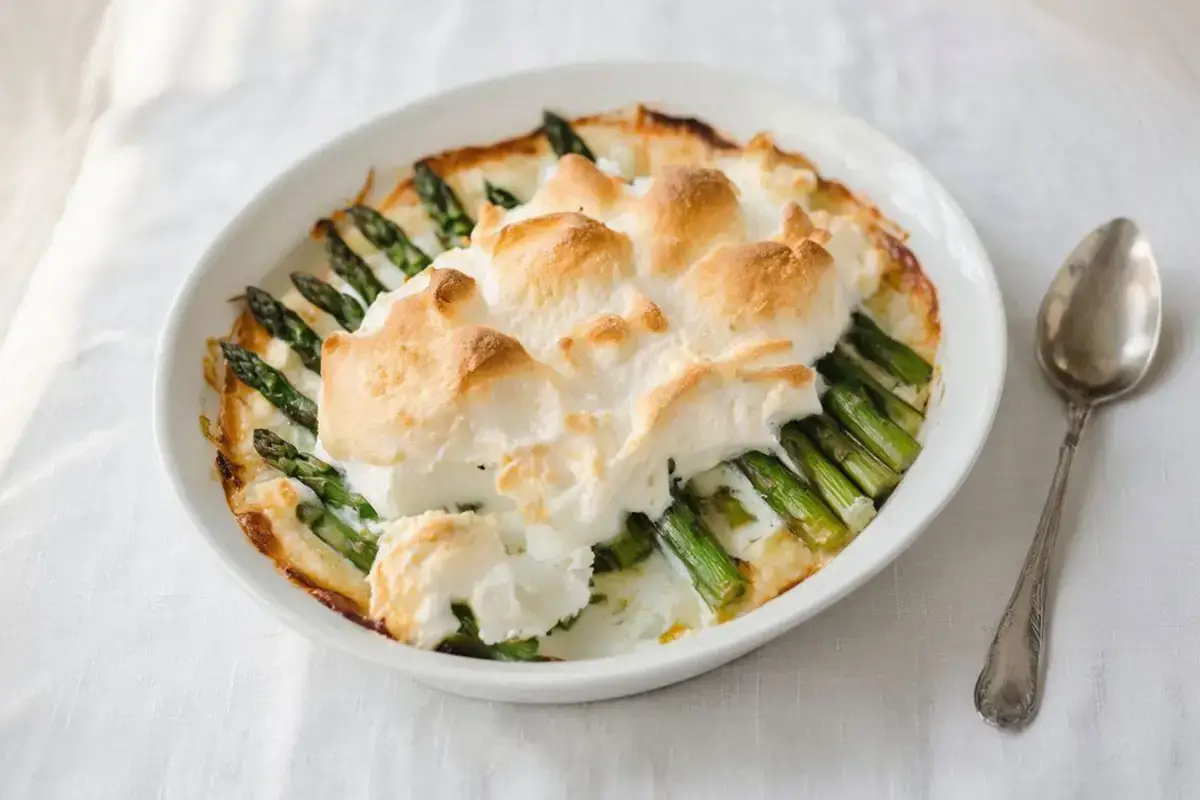
Asparagus Venetian Style
Fresh asparagus baked under a rich egg yolk cream sauce and a golden meringue-cheese topping. An elegant Central European appetizer.
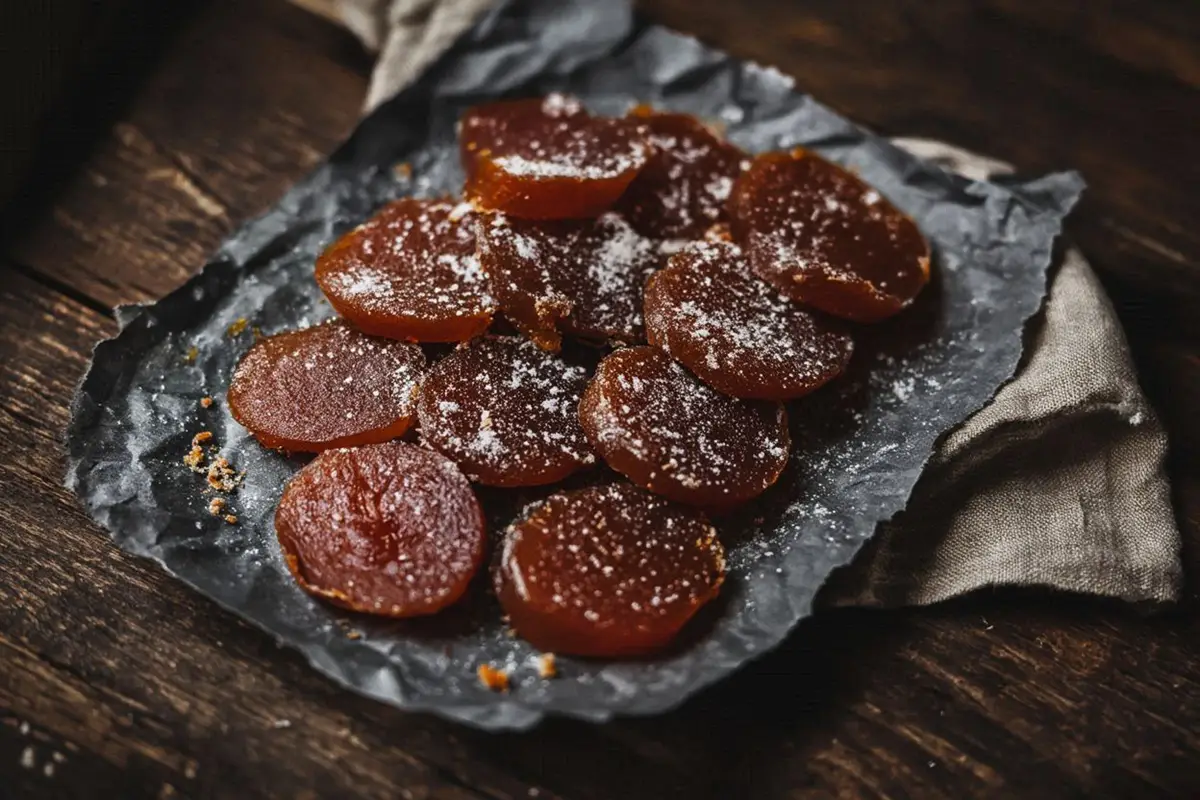
Apricot Fruit Paste
Sieved ripe apricots cooked with equal weight sugar and lemon juice, poured into molds and air-dried — from early 20th century Central European kitchens.
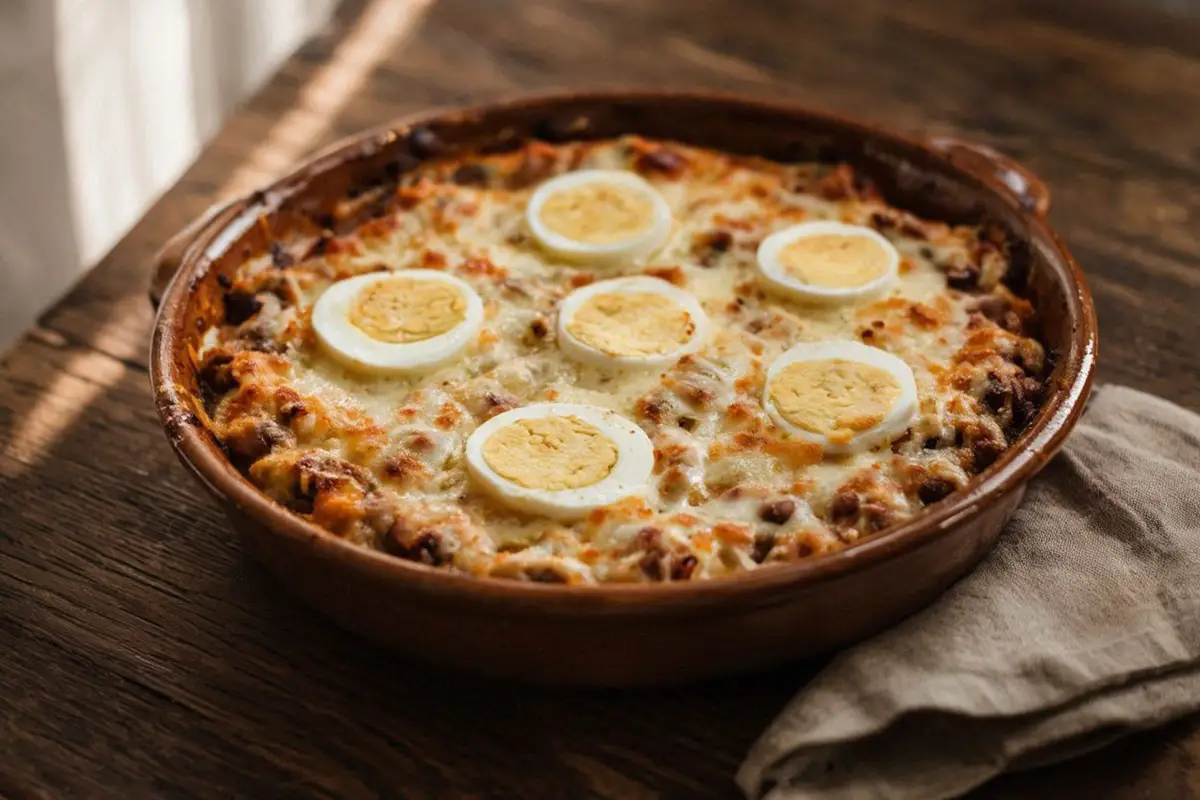
Bean Moussaka Without Meat
A hearty Central European vegetarian moussaka of pureed white beans layered with hard-boiled eggs, kashkaval cheese, and a sour cream custard topping.