Floating Islands the Central European Way
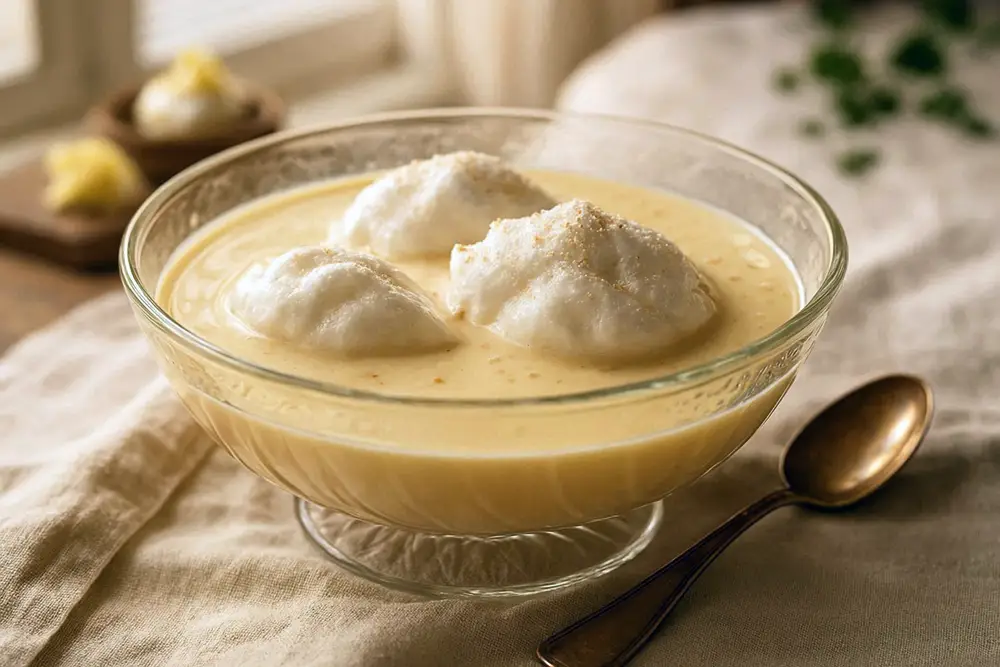
Cloud-light poached meringue dumplings served cold in a silky vanilla custard — the beloved Central European šnenokle, made the old-fashioned way.
Quick Summary
Cloud-light poached meringue dumplings served cold in a silky vanilla custard — the beloved Central European šnenokle, made the old-fashioned way.
Historical recipe
Modernised adaptation of an early 20th‑century source. Not independently kitchen-tested by Attic Recipes. Quantities, temperatures, and food safety guidance have been updated for a contemporary kitchen — results may vary and errors may exist. Nutritional values, where provided, are estimates only and have not been laboratory tested. Always follow current food safety guidelines for your region. If you have a health condition, allergy, or dietary requirement, consult a qualified professional before preparing this recipe.
Use of this recipe is entirely at your own risk and subject to our Terms of Service and Privacy Policy. Attic Recipes accepts no liability for any adverse outcome.
- Eggs
- Dairy
- Gluten
Additional notes
-
Warning
This recipe contains a flour-stabilised custard cooked to 74–76°C (165–170°F). Pregnant women, children under 18, elderly individuals, and immunocompromised persons should ensure the custard reaches this minimum internal temperature before removing from heat.
For extra assurance, use an instant-read thermometer to verify the custard has reached 74°C before serving.
- 1
Pour 1000 ml of whole milk into a wide, shallow saucepan. Add the split vanilla pod and its scraped seeds. Bring the milk to a gentle simmer over medium heat — small bubbles at the edges, around 82–85°C (180–185°F). Do not allow it to boil hard. Reduce heat to maintain this temperature throughout poaching.
Tip A thermometer is helpful here. Violently boiling milk will tear the meringue dumplings apart. - 2
While the milk heats, place 6 egg whites, a pinch of salt, and ¼ tsp of cream of tartar in a clean, dry bowl. Whip on medium speed until soft peaks form, then gradually add 30 g of granulated sugar and continue whipping to stiff, glossy peaks. The meringue should hold its shape firmly when the whisk is lifted.
- 3
Using two large tablespoons dipped in cold water, scoop oval dumplings from the meringue and gently lower them into the simmering milk. Work in batches — do not crowd the pan. Poach for 2–3 minutes per side, turning once with a slotted spoon, until the dumplings are just set and no longer look raw. Remove with a slotted spoon and arrange in a large glass serving bowl.
Tip The dumplings will puff slightly in the milk and deflate a little as they cool — this is normal. - 4
Once all dumplings are poached, remove the vanilla pod from the milk and reserve the milk for the custard. You should have approximately 800–850 ml of vanilla-infused milk remaining. Allow the milk to cool slightly — it should be hot but not boiling, around 70–75°C.
- 5
Place 6 egg yolks and 90 g of granulated sugar in a medium saucepan. Whisk vigorously until the mixture is pale and slightly thickened. Whisk in 10 g of plain flour until fully incorporated.
Tip Incorporating the flour into the yolk-sugar mixture before adding any liquid prevents lumps. - 6
Temper the yolk mixture: ladle approximately 100 ml of the warm vanilla milk into the yolk-sugar-flour mixture in a slow, steady stream, whisking constantly. Once combined, pour in the remaining warm milk in a thin stream, continuing to whisk.
- 7
Return the saucepan to medium-low heat. Cook, whisking constantly, until the custard thickens and just begins to show the first sign of a simmer — small bubbles breaking the surface at the edges. The custard should reach 74–76°C (165–170°F) on an instant-read thermometer. Remove from heat immediately.
Tip Do not allow a full rolling boil — this will cause the yolks to curdle. If you see lumps forming, remove from heat immediately and whisk vigorously off the heat. - 8
Pour the warm custard over the meringue dumplings in the glass serving bowl. Allow to cool to room temperature, then cover and refrigerate for at least 2 hours. Serve as cold as possible.
Nutrition Information per 1 serving (approx. 220g)
Nutritional values are approximate estimates and may vary based on specific ingredients used, preparation methods, and portion sizes.
Serving Suggestions
Serve very cold, straight from the refrigerator. A light dusting of ground cinnamon or a small handful of toasted flaked almonds scattered over the top just before serving adds both texture and a gentle warmth that contrasts the cold custard. A thin drizzle of caramel sauce is a popular modern addition, though the traditional version is served plain.
About This Recipe
There is a particular kind of dessert that belongs to a specific moment in the afternoon — the cold, quiet kind, served from a glass bowl that has been sitting in the refrigerator since morning. Šnenokle is exactly that. Soft meringue dumplings, poached in vanilla milk until just set, arranged in a wide bowl and covered in a pale yellow custard that thickens as it cools. It is the sort of thing that seems effortless when it arrives at the table and reveals its technique only when you attempt it yourself.
The name travels well across borders. Germans call them Schneenockerl — snow dumplings. Hungarians know the dessert as madártej, bird’s milk. The French version, oeufs à la neige or île flottante, follows the same logic: poached meringue, vanilla custard, a cold bowl. The Central European approach is slightly sturdier than the French — the custard contains a small measure of flour, which makes it more forgiving over direct heat and gives it a texture that holds up to the cold without becoming watery.
What makes this version worth making is exactly what made it worth making a hundred years ago: the contrast. The meringue is cold and light; the custard is dense and fragrant. Both taste of vanilla, but differently — the whites absorb the poaching milk gently, while the yolks carry it more assertively. Served as cold as possible, straight from the refrigerator, this is one of the few desserts that genuinely improves with patience.
Why It Works
The custard in this recipe is a hybrid — older than a crème anglaise in spirit, but not quite a pastry cream. A single teaspoon of flour joins six yolks and sugar before the warm milk is added, providing enough starch to stabilise the mixture against curdling without making the custard heavy or opaque. The yolks supply both richness and emulsification; the flour provides a safety margin. This combination was standard in Central European home cooking long before kitchen thermometers became common, and it remains practical for the same reason.
The meringue dumplings work because stiffly whipped egg whites trap enough air to stay buoyant during poaching. The sugar added to the whites is minimal — just enough to stabilise the foam without making the exterior tough. The key variable is milk temperature: at a full boil, the turbulence tears the dumplings apart; at a gentle simmer, they set evenly and hold their shape. The difference between a cloud and a lump is roughly twenty degrees.
Modern Kitchen Tips
A wide, shallow pan gives you room to poach several dumplings at once without crowding, which matters because adding too many at once drops the milk temperature and extends the cooking time unevenly. Dipping your spoons in cold water before scooping each dumpling prevents the meringue from sticking and helps you get a cleaner oval shape.
The custard is ready when it coats the back of a spoon and holds a line drawn through it with a finger — but with flour in the mix, it will feel slightly thicker than a classic crème anglaise at the same stage. Pull it off the heat as soon as the first bubbles appear at the edges. It will continue to thicken as it cools, and it will thicken further in the refrigerator. This is by design.
If the custard does over-thicken, whisk in a tablespoon of warm milk before pouring it over the dumplings. The texture should be pourable, not spreadable.
A cold-weather comfort and warm-weather indulgence alike — šnenokle has been appearing on Central European tables for well over a century, and shows no sign of stopping.
The Story Behind This Recipe
Historical Context
Early 20th century Central European recipes for this dessert, known across the region as šnenokle, šne-nokli, or schneenockerl, typically called for poaching the meringue dumplings directly in full-boiling milk — a practical instruction for home cooks without thermometers. The custard method of the period was similarly direct: yolks, sugar, and a small measure of flour were combined and whisked into the hot poaching milk over heat without any tempering step. The addition of flour is characteristic of the older approach, placing this custard between a classic crème anglaise and a light pastry cream — sturdier than the former, lighter than the latter. Home cooks of the period relied on the flour to provide insurance against curdling, compensating for the absence of controlled heat.
Modern Kitchen Adaptation
Two adjustments have been made to the original method. First, the milk temperature for poaching has been reduced from a rolling boil to a gentle simmer of 82–85°C (180–185°F). Boiling milk causes the meringue dumplings to break apart and turn rubbery; a steady simmer produces the cloud-like texture the dessert is known for. Second, a tempering step has been introduced for the custard: a small amount of warm milk is whisked into the yolk-sugar-flour mixture before the remainder is added. This reduces the risk of scrambled eggs for home cooks, while preserving the original ratio of flour, which remains at 1 teaspoon for 6 yolks. The flour has been retained as part of the recipe's character — removing it would produce a different, thinner custard. No substitution for the vanilla pod is strongly recommended, as vanilla extract does not infuse into the poaching milk in the same way.
This recipe is an independent modern adaptation developed from historical sources in the public domain. It is provided for informational and educational purposes only and does not constitute professional dietary, nutritional, or medical advice. Food preparation involves inherent risks. The reader assumes full responsibility for safe food handling, ingredient sourcing, and adherence to current local food safety guidelines. The site operator accepts no liability for outcomes resulting from the preparation or consumption of this recipe.
One recipe.
Every week.
You Might Also Like
More recipes from the same category
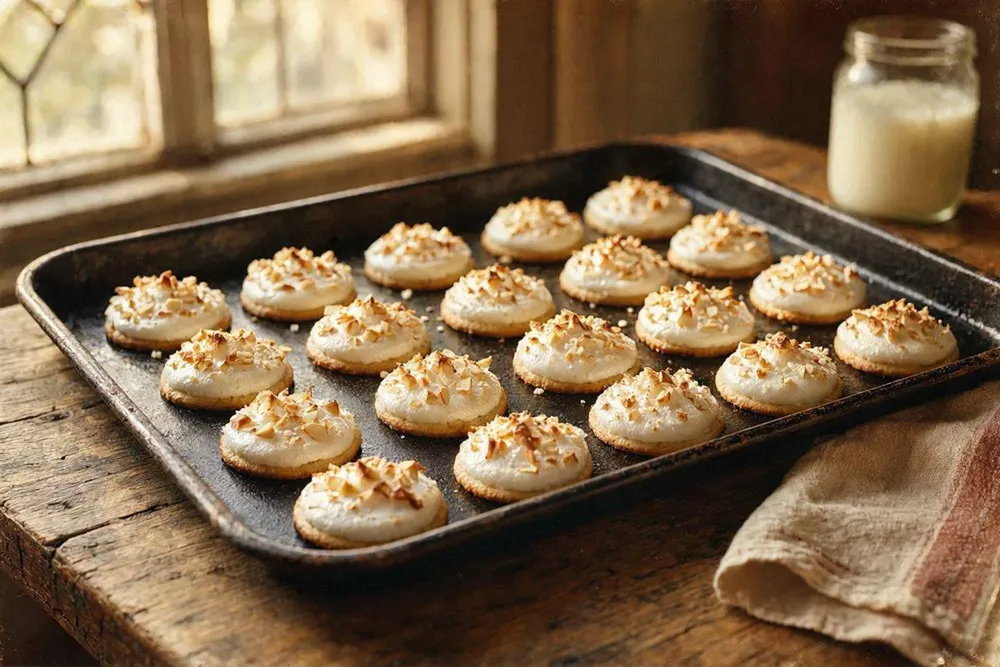
Almond Gurabije Cookies
Small lemon-scented cookies made with lard and egg yolk, indented in the center, coated in whipped egg white, and rolled in sugar and chopped almonds.
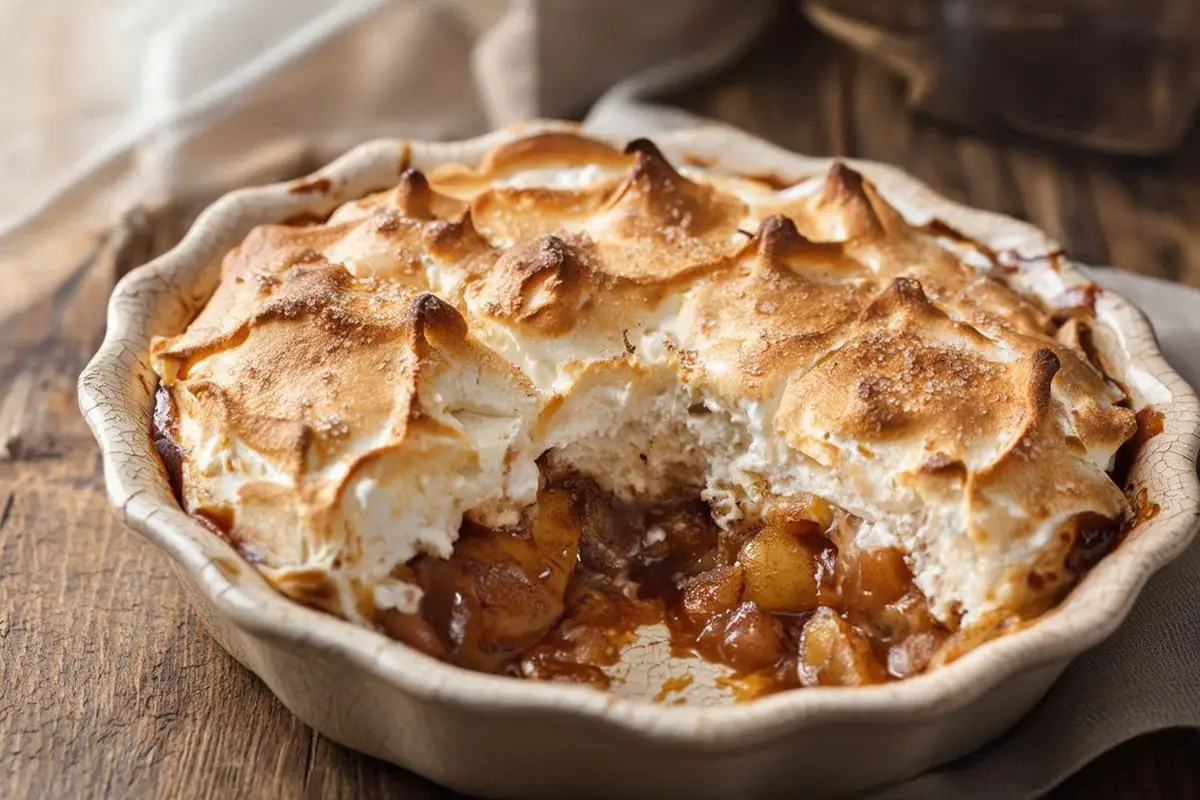
Velvet Apple & Meringue Gratin
A decadent vintage dessert featuring apples slow-cooked in a butter-sugar syrup, topped with a cloud of lemon-scented meringue.
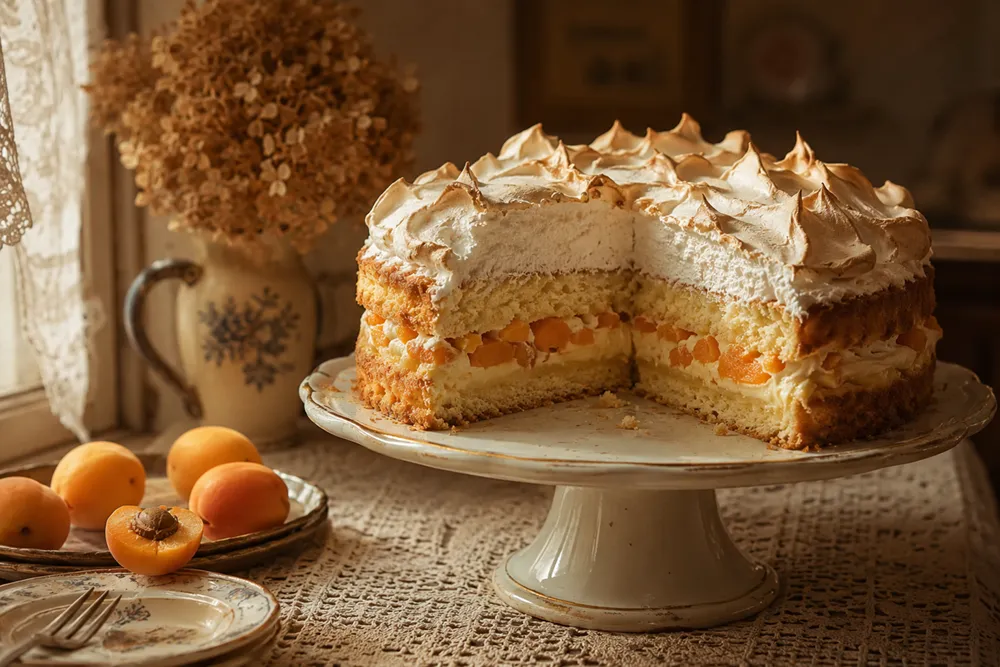
Apricot Cream Torte
Traditional apricot cream cake combining sponge, vanilla custard, and meringue for a timeless European flavor.