Figs in the Snow
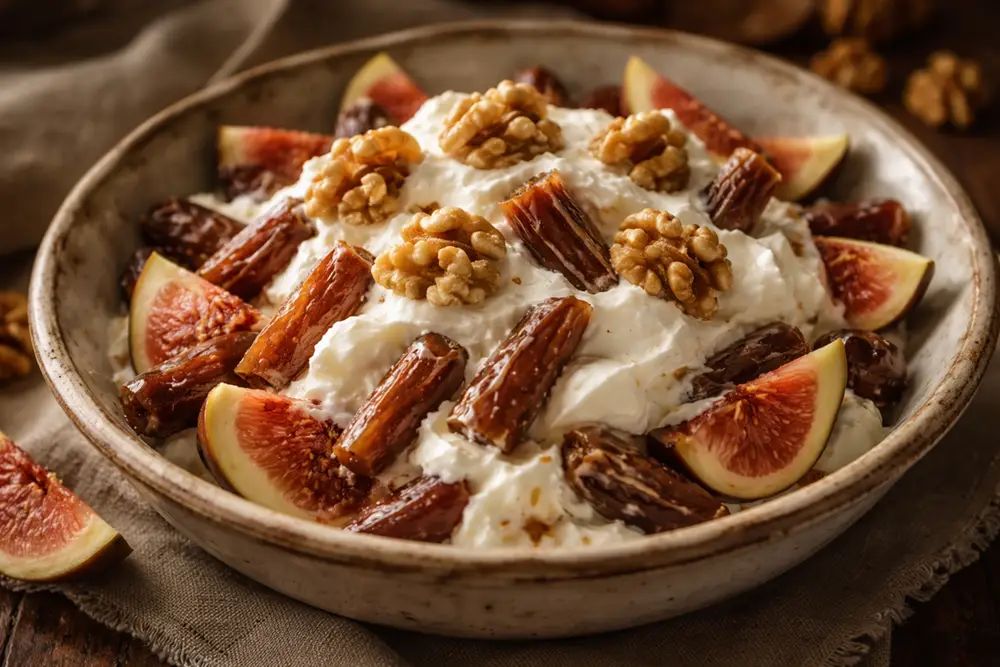
Sliced ripe figs and dates macerated in lemon juice and sugar, piled into a bowl and covered with sweetened whipped cream and whole walnuts.
Quick Summary
Sliced ripe figs and dates macerated in lemon juice and sugar, piled into a bowl and covered with sweetened whipped cream and whole walnuts.
Historical recipe
Modernised adaptation of an early 20th‑century source. Not independently kitchen-tested by Attic Recipes. Quantities, temperatures, and food safety guidance have been updated for a contemporary kitchen — results may vary and errors may exist. Nutritional values, where provided, are estimates only and have not been laboratory tested. Always follow current food safety guidelines for your region. If you have a health condition, allergy, or dietary requirement, consult a qualified professional before preparing this recipe.
Use of this recipe is entirely at your own risk and subject to our Terms of Service and Privacy Policy. Attic Recipes accepts no liability for any adverse outcome.
- Dairy
- Tree Nuts
Additional notes
-
Note
This dessert is high in saturated fat (approximately 12g per serving), primarily from heavy whipping cream. Suitable for occasional consumption as part of a balanced diet.
-
Caution
Contains walnuts. Unsuitable for anyone with a tree nut allergy. Cross-contamination risk if prepared in a kitchen where other nuts are handled.
- 1
Cut 250g of ripe figs and 125g of pitted dates into long strips of similar size. Place in a large serving bowl.
- 2
Add 2 tbsp of granulated sugar and 45ml of fresh lemon juice to the fruit. Add 20g of walnut halves and mix gently to combine. Cover and leave to macerate at room temperature for 4 hours.
Tip The lemon juice both flavours the fruit and prevents the figs from discolouring. The 4-hour rest allows the sugar to draw out some of the fruit's juices, creating a light syrup at the base of the bowl. - 3
Shortly before the 4 hours are up, whip 250ml of cold heavy cream with 1 tsp of icing sugar to stiff peaks.
- 4
Spread or pile the whipped cream over the entire surface of the fruit mixture, covering it completely to resemble snow.
- 5
Garnish with 30g of whole walnut halves arranged over the cream. Serve immediately while the cream is still cold and airy.
Nutrition Information per 1 porcija (approx. 160g)
Nutritional values are approximate estimates and may vary based on specific ingredients used, preparation methods, and portion sizes.
Serving Suggestions
Serve directly from the bowl at the table. A wide, shallow glass or ceramic bowl works best — it allows the white cream to cover the full surface and makes the 'snow' effect visible from above. Pairs well with a small glass of dessert wine or a cup of strong black coffee.
About This Recipe
Figs in the Snow belongs to a category of desserts that barely qualifies as cooking — and that is precisely the point. Fresh figs and dates, cut into strips, macerated for four hours with lemon juice and sugar, then buried under a thick layer of whipped cream and whole walnuts. The work takes fifteen minutes. The rest is patience and refrigeration.
What makes it interesting is the contrast the name promises and the recipe delivers. The fruit at the base is dense, syrupy, and intensely sweet — dates especially, which are among the most sugar-concentrated foods used in traditional European kitchens. The cream on top is cold, light, and barely sweetened. Between the two is a layer of walnut halves that add the one texture neither the fruit nor the cream can provide. When served at the table straight from the bowl, the white surface and the richness underneath justify the name.
Fresh figs are a brief seasonal ingredient. Dried figs could substitute structurally, but the texture would shift considerably — the fresh fig’s soft flesh and the date’s chewy density create a combination that rehydrated dried fruit does not replicate in the same way. This is a dessert worth making when fresh figs are actually in season, rather than adapting into something year-round.
Why It Works
The four-hour maceration is not optional. Sugar draws moisture from the fruit by osmosis, creating a light syrup that pools at the base of the bowl and partially coats the strips. Lemon juice slows the oxidation of the figs — which would otherwise begin to brown — and its acidity contrasts with the concentrated sweetness of the dates in a way that makes the dessert taste less cloying than the sugar content might suggest.
The cream must be whipped to stiff peaks rather than soft peaks. It needs to hold its shape over the fruit without collapsing or weeping into the macerating liquid below. Stiff peaks also give the visual effect the recipe is named for — a dense, white surface that covers the fruit completely and holds the walnut garnish in place.
Modern Kitchen Tips
- Cold equipment for whipping. Place your bowl and whisk in the freezer for 10–15 minutes before whipping the cream. Cold cream whips faster and holds its structure longer.
- Time the cream carefully. Whip the cream in the final 10 minutes before serving, not at the start of the maceration period. Whipped cream held for hours loses volume and begins to separate.
- Reduce or skip the sugar in the fruit. Dates and figs together are already very sweet. Taste the fruit mixture after an hour of maceration — if it is sweet enough, the 2 tablespoons of sugar can be reduced to 1 or omitted entirely.
- Lightly toast the walnuts. Two to three minutes in a dry pan over medium heat deepens the walnut flavour considerably. Cool completely before using as garnish — warm walnuts will melt the cream on contact.
A no-cook vintage dessert from the early 20th century — fruit, cream, and patience.
The Story Behind This Recipe
Historical Context
No-cook assembled desserts of this type — fresh or dried fruit macerated with citrus and sugar, then covered with whipped cream — were a characteristic feature of middle-class Central European entertaining in the early 20th century. They required no oven, no specialist equipment, and could be prepared ahead of time, which made them practical for households without full kitchen staff. Figs and dates together were a slightly luxurious combination for the period, as both were imported dried goods rather than local seasonal fruit; using them fresh, as this recipe specifies, would have marked it as a summer or early autumn dish prepared when fresh figs were briefly available. No sweetener was specified for the cream in the original approach — home cooks of the period typically sweetened to their own taste, and the instruction 'sweet cream' referred to fresh, unsoured cream rather than pre-sweetened cream.
Modern Kitchen Adaptation
The original recipe specified 4 litres of whipped cream — a physically implausible quantity for the amount of fruit given and almost certainly a transcription or printing error in the source. The quantity has been corrected to 250ml, which is sufficient to cover the fruit generously and serve 6. The original gave no quantity for walnut halves beyond 'one handful'; this has been standardised to 50g total (20g folded into the fruit, 30g for garnish). A small amount of icing sugar has been added to the cream as a modern refinement, since the original gave no guidance on sweetening the cream — mark as estimated. Given that both figs and dates are naturally high in sugar, the 2 tablespoons of granulated sugar added to the fruit can be reduced or omitted entirely without affecting the structure of the dish; modern palates generally find this quantity sufficient alongside the sweetened cream.
This recipe is an independent modern adaptation developed from historical sources in the public domain. It is provided for informational and educational purposes only and does not constitute professional dietary, nutritional, or medical advice. Food preparation involves inherent risks. The reader assumes full responsibility for safe food handling, ingredient sourcing, and adherence to current local food safety guidelines. The site operator accepts no liability for outcomes resulting from the preparation or consumption of this recipe.
One recipe.
Every week.
You Might Also Like
More recipes you'll enjoy
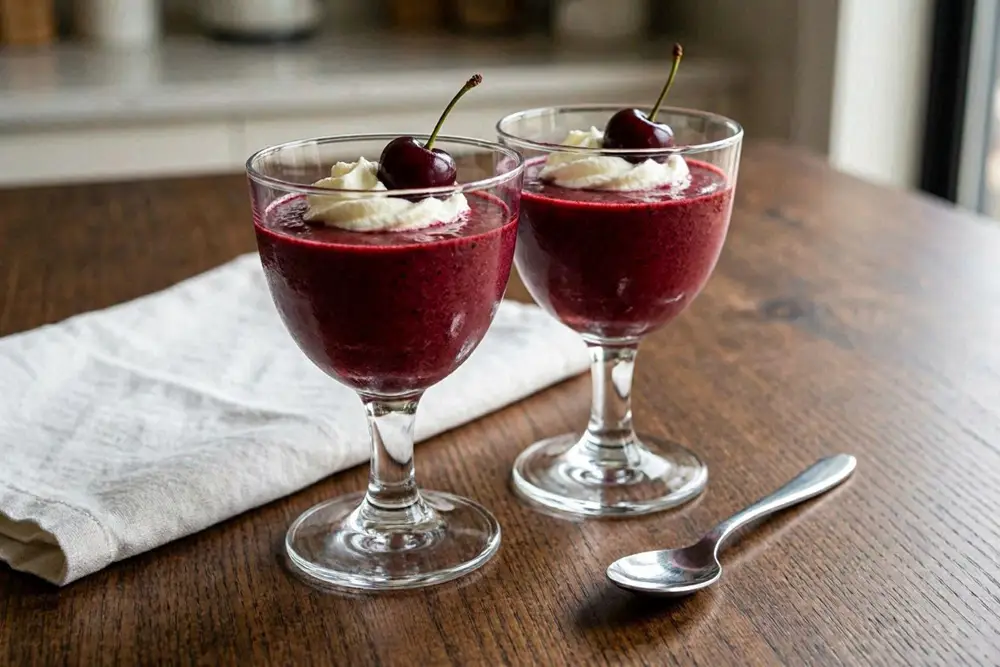
Cherry Cream
A silky, chilled cherry mousse set with agar-agar and lightened with whipped cream — a refined dessert from the early 20th century home kitchen.
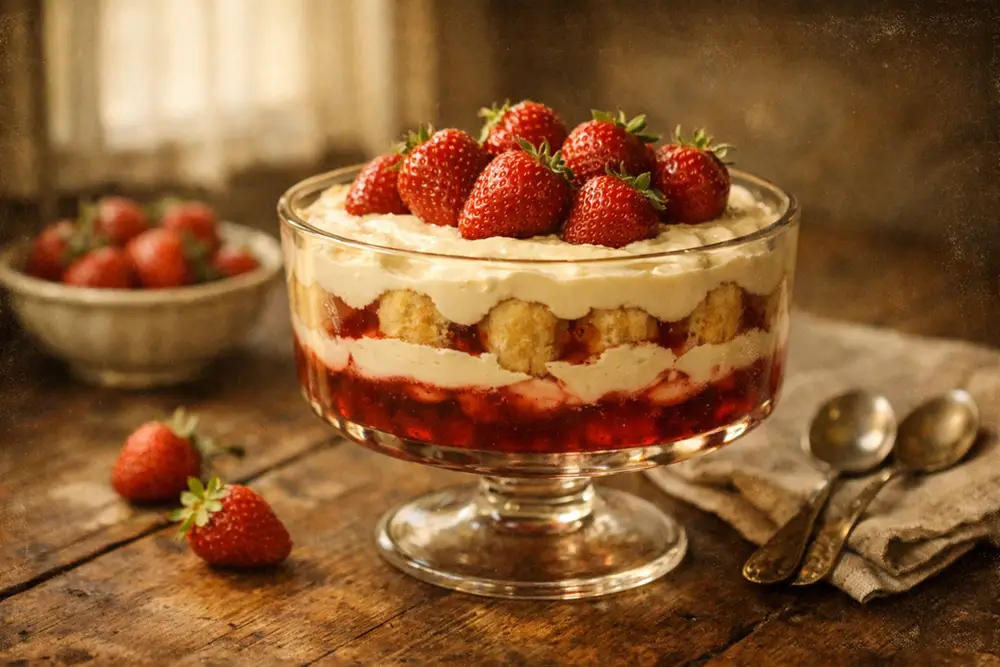
Ladyfingers with Strawberry Topping
Ladyfingers layered with a thick wild strawberry syrup and chilled to set — a simple, elegant Central European no-bake dessert from the early 20th century.
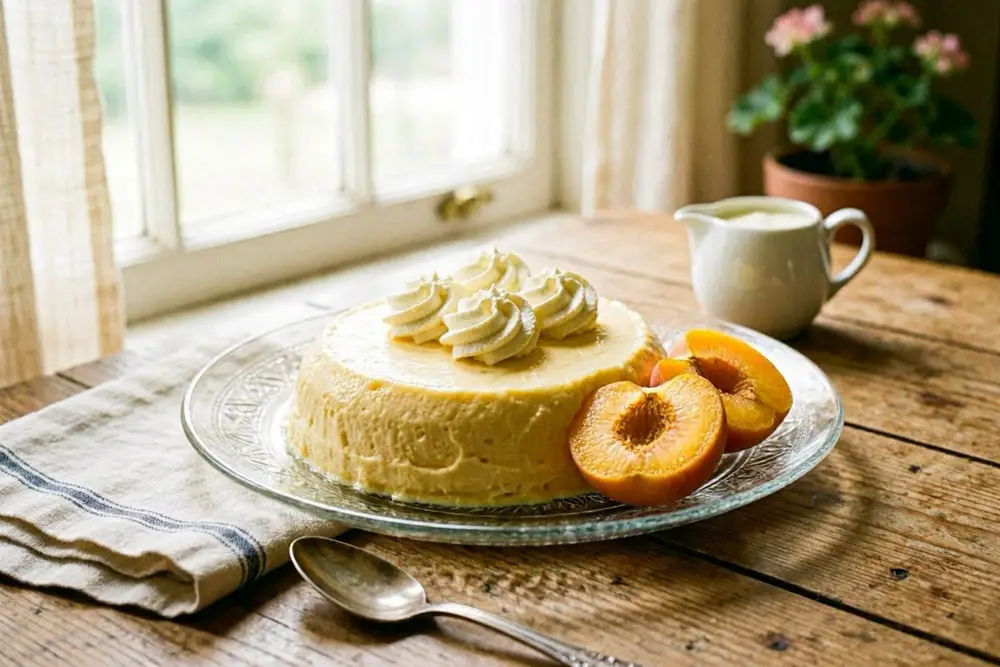
Peach Cream
A chilled peach mousse from early 20th century home cooking: peach marmalade base folded with egg and gelatine, set in a mould and served with fresh cream.