Dried Pork Legs Paprikash
Authentic Central European paprikash recipe: slow-cooked smoked pork legs & veal with onions, tomatoes, peppers. Deep, dark, jammy sauce.
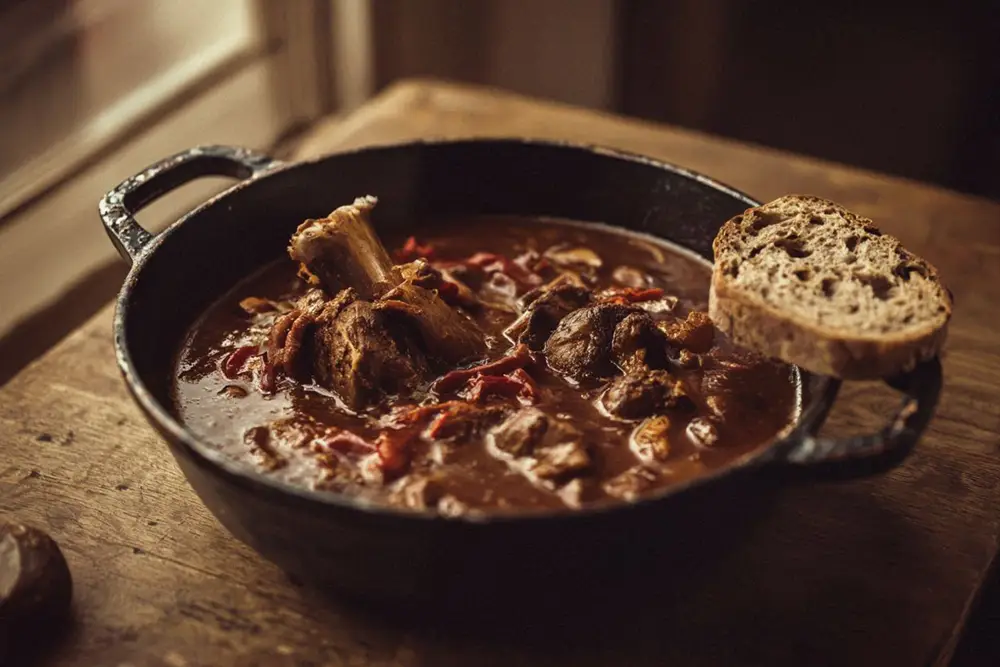
Historical recipe
Modernised adaptation of an early 20th‑century source. Not independently kitchen-tested by Attic Recipes. Quantities, temperatures, and food safety guidance have been updated for a contemporary kitchen — results may vary and errors may exist. Nutritional values, where provided, are estimates only and have not been laboratory tested. Always follow current food safety guidelines for your region. If you have a health condition, allergy, or dietary requirement, consult a qualified professional before preparing this recipe.
Use of this recipe is entirely at your own risk and subject to our Terms of Service and Privacy Policy. Attic Recipes accepts no liability for any adverse outcome.
Additional notes
-
Caution
Dried and smoked pork legs vary significantly in salt content depending on producer and curing method. Do not add salt until the very end and after tasting — the dish may require none. This applies especially to legs from traditional producers or farm-cured sources.
-
Note
This dish contains approximately 12g of saturated fat per serving due to the combination of lard, pork skin, and collagen-rich cuts. Individuals managing cardiovascular health or dietary fat intake should note the portion size.
Substitute lard with 120 ml sunflower oil to reduce saturated fat to approximately 5g per serving.
- 1
Wash the dried smoked pork legs thoroughly in several changes of warm water, scrubbing the skin to remove surface deposits. This also draws out some of the excess salt.
Tip If the legs smell very strongly of smoke or seem especially salty, soak them in cold water for 1–2 hours before cooking. - 2
Place the legs in a large heavy-bottomed pot. Add enough cold water to just cover them. Bring to a boil, then reduce heat and simmer gently, adding water as needed to keep the legs submerged, until the meat is about halfway tender — roughly 1 to 1.5 hours. The skin should be beginning to soften but the meat should still resist when pressed.
- 3
Add the cubed veal (1000g) and all the lard (140g) to the pot. Stir to combine. Allow the meat to brown lightly in the rendered fat for 5–8 minutes, stirring occasionally.
- 4
When the veal is nearly cooked through and both meats are almost tender, add the chopped onion (1000g), tomatoes, bell peppers, and hot peppers. Stir to incorporate.
Tip Adding the onion this late — when the meat is almost done — is traditional. The onion breaks down quickly in the hot fat and meat juices, becoming almost dissolved into the sauce rather than remaining as distinct pieces. - 5
Continue to simmer on low heat, uncovered or with the lid slightly ajar, until the onion has completely dissolved into the sauce, the peppers are very soft, and the sauce has thickened to a dark, almost jammy consistency. This takes approximately 45–60 minutes.
- 6
Taste the sauce before adding any salt. Add salt only if needed — many traditional dried legs will render the dish sufficiently salty without any addition. Adjust hot pepper to taste.
- 7
Serve directly from the pot. The meat from the legs should be falling off the bone.
Nutrition Information per 1 serving (approx. 380g)
Nutritional values are approximate estimates and may vary based on specific ingredients used, preparation methods, and portion sizes.
Serving Suggestions
Serve with fresh white bread for mopping the sauce, or with homemade trganci (hand-torn pasta). Boiled potatoes are a more restrained accompaniment if the dish feels rich. A sour cucumber pickle on the side cuts through the fat cleanly.
About This Recipe
Dried pork legs paprikaš belongs to a category of Central European winter cooking that is built on patience and preserved meat. The dried and smoked legs — cured through the autumn months — contribute something a fresh cut cannot: a depth of smoke and salt that permeates the entire sauce over hours of slow simmering. The veal, added midway through, stays tender and absorbs the character of the legs without competing with it.
What makes this dish unusual among paprikash traditions is the proportion of onion. One kilogram of onion to one kilogram of meat is not aromatics — it is infrastructure. Over the long, low simmer, the onion dissolves completely, thickening the sauce and providing a sweetness that tempers the saltiness of the cured meat. There is no paprika powder in the original recipe, which is uncommon for a dish bearing the paprikash name: the colour and spice come entirely from the peppers added near the end, and from the smoke already locked into the legs.
This is a dish that rewards a cold weekend afternoon and a heavy pot. The result is not elegant, but it is deeply satisfying — a dark, concentrated sauce, meat falling from the bone, and a smell that fills the kitchen for hours.
Why It Works
The sequencing of this recipe is not obvious but it is deliberate. The legs go in first and alone because their collagen needs time — substantially more time than veal — to break down. Adding the veal at the halfway point ensures both meats finish together without the veal overcooking to fibre. The fat and the browning step that follows serve a dual purpose: they add a layer of Maillard flavour to the veal’s surface and they create the base in which the onion will eventually melt.
The late addition of vegetables is the most counterintuitive part of the recipe. In most modern braising, aromatics are the first thing into the pan. Here they go in last, when the meat is nearly done. The logic is reduction: with the lid off and the heat maintained, the tomatoes break down rapidly, the peppers soften into the sauce, and the onion dissolves into the fat rather than slowly stewing. The result is a sauce that is thick not from flour or starch but from reduced onion and vegetable solids — the traditional way to build body in paprikash without a roux.
The collagen from the pork skin and leg bones provides additional body as it converts to gelatin during the long simmer. If the sauce is still thin after the vegetables have cooked, remove the lid entirely and increase the heat slightly for the last 20 minutes.
Modern Kitchen Tips
A cast-iron Dutch oven or heavy enamelled pot is ideal here — even heat distribution prevents the bottom from catching during the long onion-reduction phase. If you do not have one, use a wide, heavy-based pot and keep the heat at a genuine low simmer rather than a bubbling boil.
The legs can be started the day before and refrigerated once halfway cooked. The fat will solidify on the surface overnight and can be partially skimmed before continuing — this reduces the overall fat content of the dish with no loss of flavour from the meat itself.
If fresh tomatoes are out of season or pale, a 400g tin of whole peeled tomatoes is a reliable substitute. Do not use passata — the texture of broken-down whole tomatoes integrates better into this kind of thick, slowly reduced sauce.
A Central European winter standard: smoked pork, patient heat, and an onion that disappears into the sauce.
The Story Behind This Recipe
Historical Context
Early 20th century household recipes for this type of dish appeared wherever the practice of drying and smoking pork legs through winter was common in Central European cooking. The technique of using dried legs — rather than fresh — was a practical response to the preservation calendar: legs cured in autumn and early winter would be used up in slow-cooked dishes through the cold months, when their concentrated flavour and gelatinous collagen were most valued. The 1:1 ratio of veal to onion by weight is characteristic of paprikash traditions where onion functions not merely as aromatics but as a thickening agent, fully dissolving into the sauce. The addition of vegetables only near the end of cooking reflects a period approach where the primary goal was controlled reduction rather than layered building of flavour. Home cooks of the period did not specify a precise quantity for the fat beyond noting that the dish should have enough to fry and cook; 140g per approximately 2 kg of meat reflects the standard ratio in Central European paprikash traditions of the era.
Modern Kitchen Adaptation
The source text listed '14 kilograms of fat' — a clear transcription error, most likely a misread of '140g' or '1/4 kg'. Central European paprikash recipes of the period consistently use lard at approximately 7–10% of total meat weight; 140g for 2 kg of meat is the corrected quantity used here. This value is marked as estimated. Lard can be substituted with 120 ml of a neutral oil such as sunflower or with rendered duck fat, though lard produces the most characteristic flavour and body. The source text also references 'eggplant' in a phrase that appears to be a transcription error — the main recipe body lists only bell peppers and hot peppers as vegetables. Bell peppers are used here as written. One medium diced eggplant added with the other vegetables is a consistent regional variation for those who prefer it.
This recipe is an independent modern adaptation developed from historical sources in the public domain. It is provided for informational and educational purposes only and does not constitute professional dietary, nutritional, or medical advice. Food preparation involves inherent risks. The reader assumes full responsibility for safe food handling, ingredient sourcing, and adherence to current local food safety guidelines. The site operator accepts no liability for outcomes resulting from the preparation or consumption of this recipe.
One recipe.
Every week.
You Might Also Like
More recipes from the same category
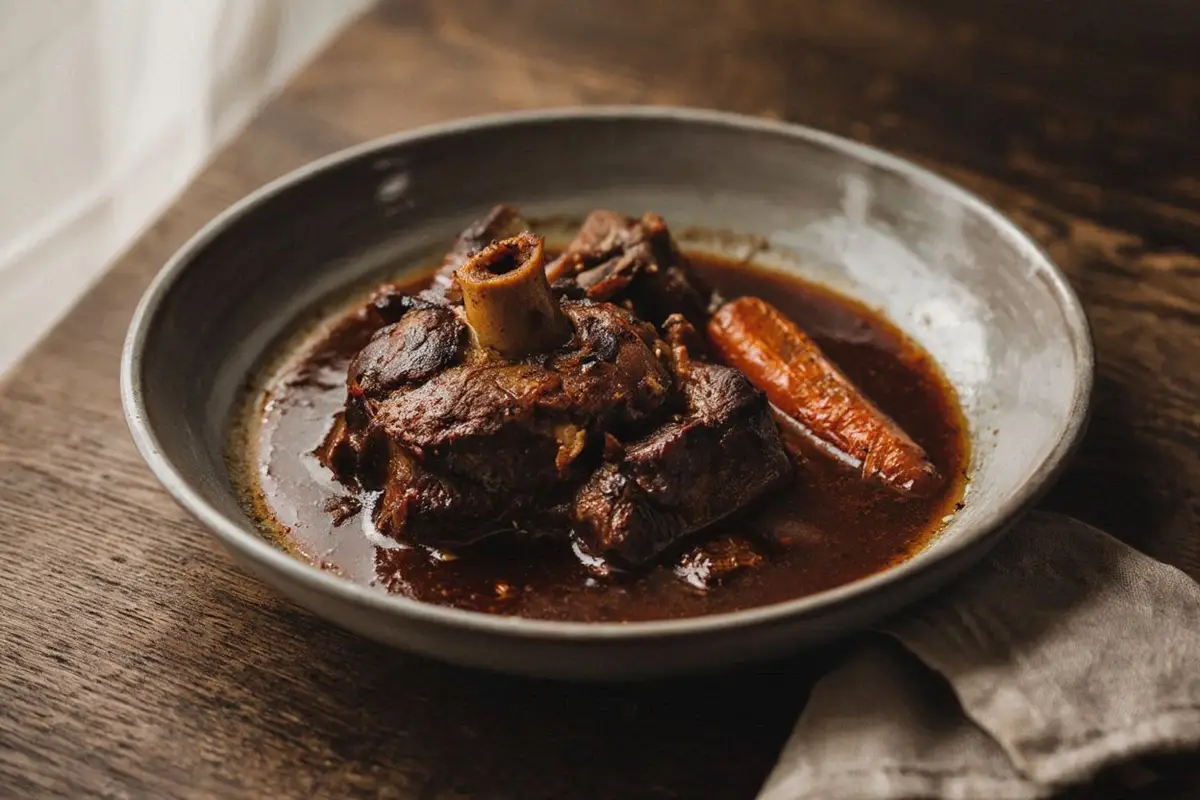
Beef Tail in Red Wine Sauce
Slow-braised oxtail in a rich red wine broth with carrots, lemon zest, and a silky roux-thickened sauce. A forgotten Central European classic.
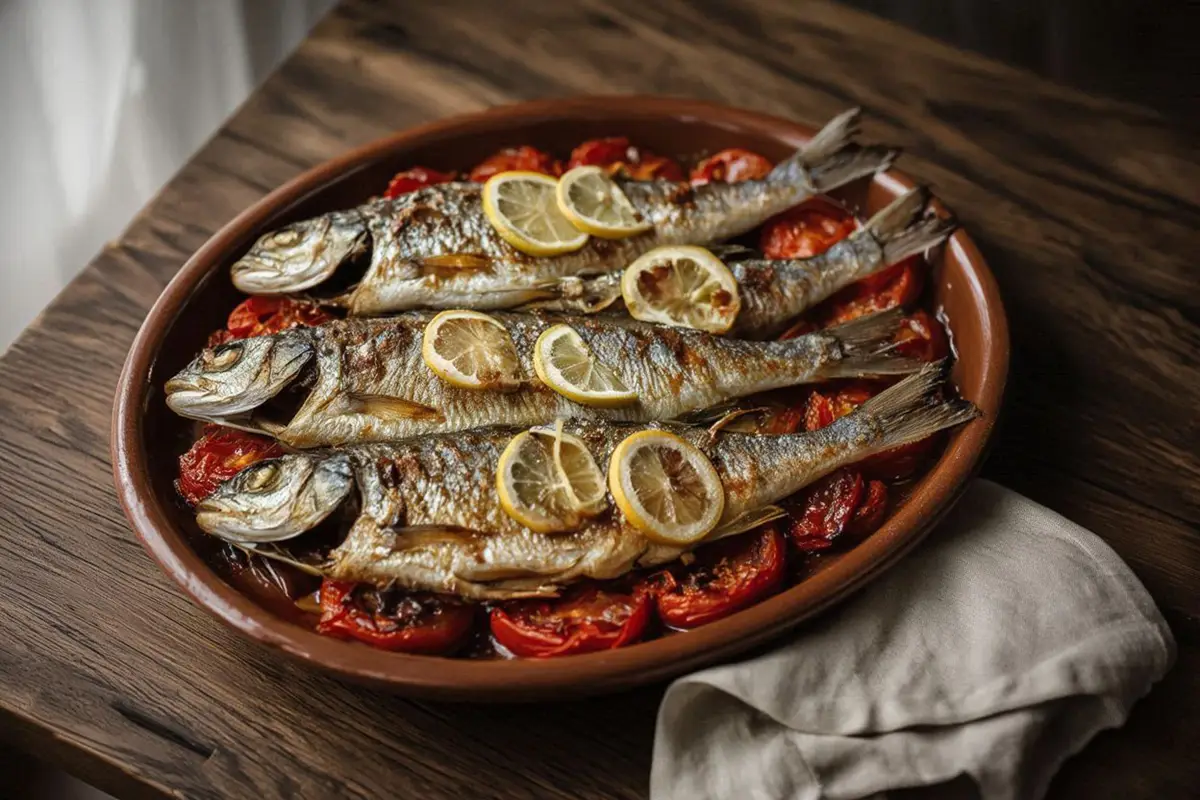
Baked Fish with Tomatoes
Whole fish baked over ripe tomatoes with generous olive oil and lemon — a simple, fragrant Central European oven dish.
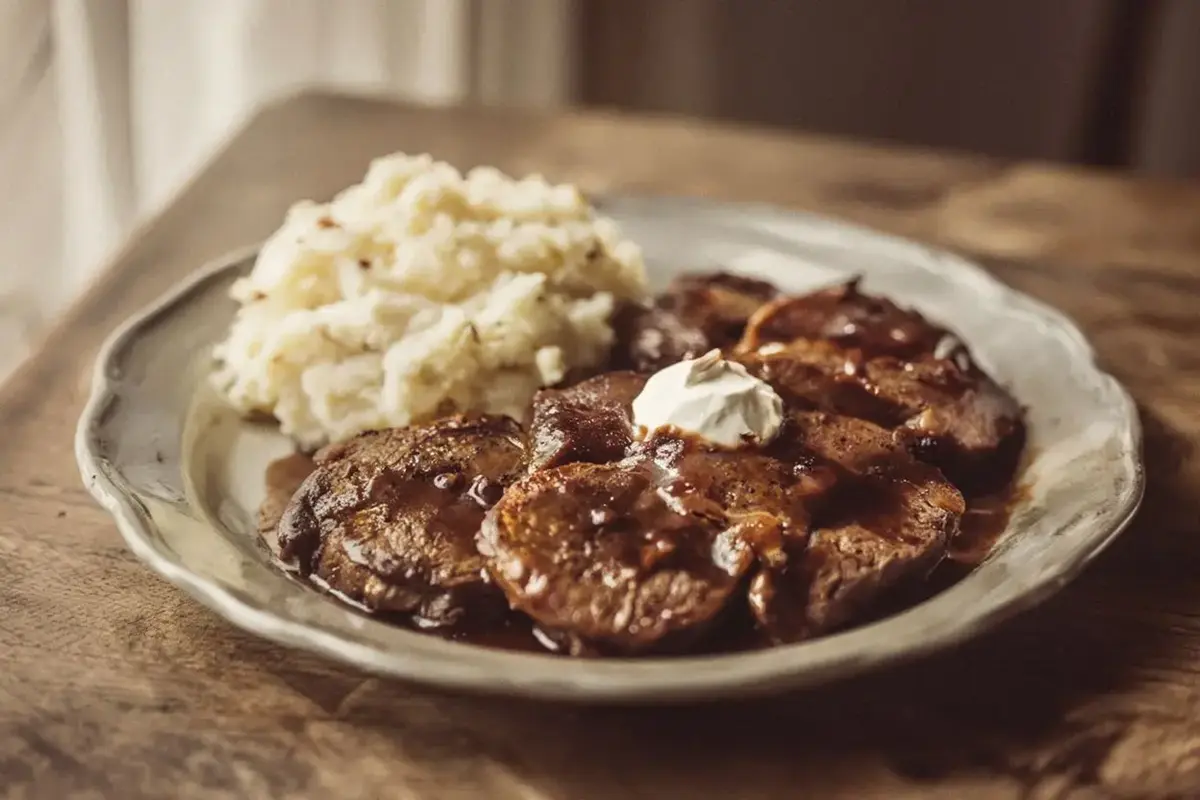
Beef Kidney with Wine
Beef kidney marinated in red wine, braised with herbs, finished with sour cream. Tender, rich, and deeply flavored.