Cuttlefish Risotto
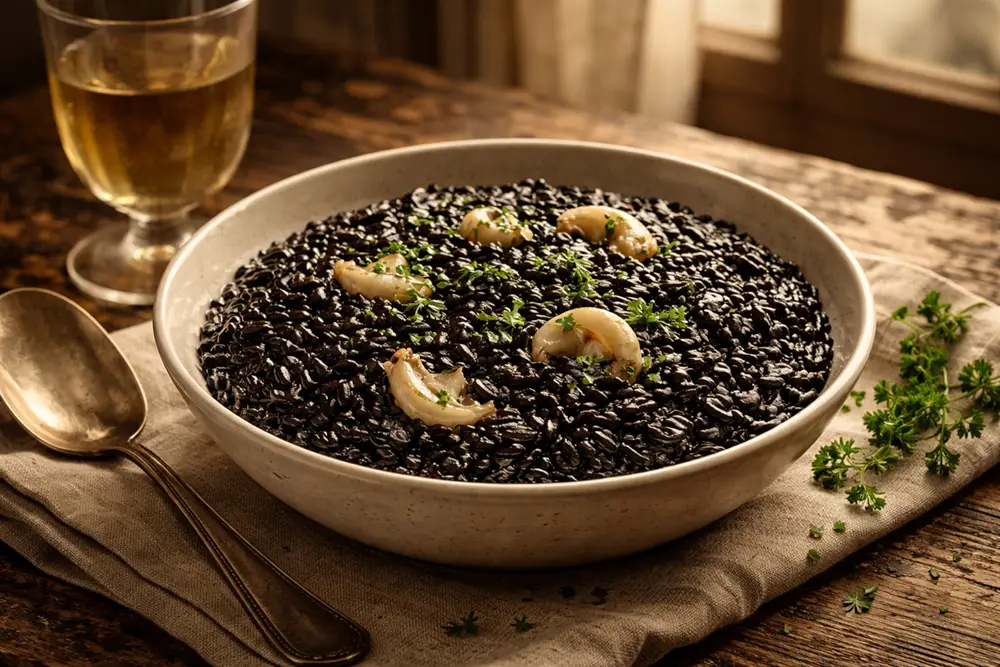
A deeply savoury risotto built on slowly braised cuttlefish, tomato, and garlic, finished with butter and Parmesan. Three classic variations included.
Quick Summary
A deeply savoury risotto built on slowly braised cuttlefish, tomato, and garlic, finished with butter and Parmesan. Three classic variations included.
Historical recipe
Modernised adaptation of an early 20th‑century source. Not independently kitchen-tested by Attic Recipes. Quantities, temperatures, and food safety guidance have been updated for a contemporary kitchen — results may vary and errors may exist. Nutritional values, where provided, are estimates only and have not been laboratory tested. Always follow current food safety guidelines for your region. If you have a health condition, allergy, or dietary requirement, consult a qualified professional before preparing this recipe.
Use of this recipe is entirely at your own risk and subject to our Terms of Service and Privacy Policy. Attic Recipes accepts no liability for any adverse outcome.
- Dairy
- Molluscs
Additional notes
-
Caution
Cuttlefish must be cooked until fully tender before the rice is added. Undercooked cuttlefish remains rubbery and does not soften further once the rice and additional liquid are in the pan. Allow 30–35 minutes of gentle simmering before proceeding to the rice stage.
-
Note
Cuttlefish ink is safe to eat but will stain hands, clothing, and light-coloured cookware permanently. Wear an apron and use a dark or stainless pan. Pierce the ink bladder over a small bowl, not directly over the pan, to control the amount added.
-
Note
This recipe contains molluscs (cuttlefish) and dairy (butter, Parmesan), both major allergens. The pea variation may include lard — check with guests before serving.
- 1
Clean the 600 g cuttlefish: remove the internal bone (cuttlebone), mouthparts, eyes, and the digestive tube. If making black risotto, carefully remove the ink bladders and set aside in a small bowl — do not pierce them yet. Rinse the cleaned cuttlefish bodies under cold water and cut into strips or bite-sized pieces.
Tip If working with whole fresh cuttlefish for the first time, chill them thoroughly before cleaning — the ink bladder is easier to remove intact when the flesh is cold and firm. - 2
Heat the 80 ml olive oil in a large wide saucepan over medium heat. Add the 2 finely chopped onions and cook, stirring occasionally, until soft and translucent, about 8–10 minutes. Add the 2 chopped garlic cloves and cook for a further 2 minutes until fragrant but not browned.
- 3
Add the cleaned cuttlefish pieces to the pan. Fry over medium-high heat, stirring frequently, until the pieces turn opaque and begin to colour lightly, about 5–7 minutes. If making black risotto, pierce the reserved ink bladders over the pan now and stir the ink through.
- 4
Add the 2 tbsp tomato purée (or 200 g canned crushed tomatoes) and stir to coat. Pour in enough hot water or fish stock to just cover the cuttlefish — approximately 400–500 ml. Reduce heat to a gentle simmer, cover, and cook for 30–35 minutes until the cuttlefish are tender throughout.
Tip Test a piece by pressing it between your fingers — it should yield easily with no rubbery resistance. Do not add the rice until this point is reached. - 5
Add the 600 g rice to the pan and stir well to coat in the braising liquid. Begin adding the remaining hot water or stock in ladlefuls, stirring frequently and allowing each addition to absorb before adding the next. Continue for 18–20 minutes until the rice is cooked through but still has a slight bite (al dente) and the risotto is creamy and loose — it should fall slowly from a spoon, not hold a stiff shape.
- 6
Remove from heat. Stir in the 30 g butter and stir vigorously for 1 minute — this is the mantecatura step and is what gives the risotto its glossy, creamy finish. Season with 1 tsp salt and ¼ tsp black pepper, taste, and adjust.
- 7
Serve immediately in warm bowls, topped with 50 g freshly grated Parmesan. Risotto does not wait — it tightens quickly off the heat.
- 8
**Pea variation:** While the risotto cooks, heat 1 tbsp olive oil or lard in a small pan. Add the chopped small onion and cook until golden. Add the 200 g peas, season with salt and pepper, and add a splash of water. Simmer for 8–10 minutes until the peas are tender. Stir the cooked peas into the risotto during the last 5 minutes of rice cooking time.
Nutrition Information per 1 serving (approx. 380g)
Nutritional values are approximate estimates and may vary based on specific ingredients used, preparation methods, and portion sizes.
Serving Suggestions
Serve as a main course with crusty bread to mop up the cooking liquid. A simple green salad dressed with lemon and olive oil works well alongside. The black ink version is dramatic enough to serve as a dinner-party centrepiece — white or cream-coloured bowls show off the colour. Do not reheat risotto; it loses its texture irreversibly. Serve immediately.
About This Recipe
This is risotto as it was made along the Adriatic coast before the dish acquired its current international reputation — practical, deeply savoury, and built around cuttlefish rather than the short cooking times of northern Italian restaurant versions. The cuttlefish braises slowly in tomato and its own juices for the better part of an hour before the rice ever enters the pan. By that point the cooking liquid is dark, rich, and full of the kind of flavour that only long-cooked seafood produces. The rice finishes in that liquid, absorbing it gradually, and the result is a risotto that tastes of the sea in a way that a thirty-minute version simply does not.
The recipe comes in three versions that reflect how the dish actually lived in coastal households: the plain tomato version, the black version made with the ink of the cuttlefish itself, and a pea variation that stretches the dish and softens its intensity. None of these is more correct than the others — they are three expressions of the same basic method, each suited to different seasons and different availability of ingredients. The ink version requires intact ink bladders, which means fresh or carefully thawed whole cuttlefish. The pea version works well when the cuttlefish are small and their ink bladders too fragile to save.
Parmesan on seafood risotto is sometimes questioned in Italian culinary tradition, but the period recipe includes it without hesitation — which is itself a historical note worth preserving.
Why It Works
The long braising of the cuttlefish before the rice is added is the structural decision that defines this recipe. Cuttlefish contains a significant amount of collagen, which converts to gelatin during extended moist cooking. That gelatin enriches the braising liquid and gives the finished risotto a natural body and gloss that no amount of butter can fully replicate. Rushing this stage — adding the rice to insufficiently cooked cuttlefish — produces a tough, chewy result that does not improve with further cooking.
The tomato performs two functions: it adds acidity that balances the richness of the seafood and butter, and it provides the pectin-based body that helps the risotto hold together without becoming stiff. Two tablespoons of purée is a small quantity relative to the volume of liquid, but the flavour is present throughout.
The butter finishing step — stirring cold butter vigorously into the risotto off the heat — emulsifies fat into the starchy cooking liquid and creates the characteristic creamy texture of a well-made risotto. It is a physical process, not just a flavour addition: the agitation matters as much as the butter itself.
Modern Kitchen Tips
Frozen cuttlefish works well in this recipe and is often cleaner to prepare than fresh, since it is typically sold pre-cleaned with the ink bladders already removed. If you want the black version and are using frozen cuttlefish, buy commercial cuttlefish ink sachets (widely available in fishmongers and online) and add one or two sachets at Step 3.
Fish stock improves the result noticeably over plain water — a light shellfish or white fish stock is ideal. Avoid strongly flavoured stock made from oily fish, which overpowers the cuttlefish. If using water, add an extra pinch of salt and a small splash of dry white wine with the tomato purée at Step 4.
The risotto will tighten significantly as it sits. If serving in stages, pull it off the heat while it is still slightly looser than you want — it will reach the right consistency in the bowl.
A classic of early 20th century home cooking, preserved and adapted for the modern kitchen.
The Story Behind This Recipe
Historical Context
Cuttlefish risotto was a fixture of coastal Central European and Adriatic home cooking throughout the early 20th century, appearing in household recipe collections from the Dalmatian coast as far north as Trieste. Home cooks of the period treated the ink bladder as optional — some added it as a matter of course for depth of colour and flavour, others omitted it entirely. The recipe acknowledges both approaches without prescribing one over the other, which is characteristic of a dish that was deeply embedded in local habit rather than codified technique. Regional variants were numerous: one version substituted chopped beetroot for the ink to approximate the dark colour without using the ink itself — an unusual workaround that suggests the dish was known far enough from the coast that fresh cuttlefish with intact ink bladders were not always available. The pea variation, prepared as a separate component cooked in onion and fat before being stirred into the risotto, reflects the broader Central European habit of building flavour in separate stages before combining.
Modern Kitchen Adaptation
Short-grain risotto rice — Arborio or Carnaroli — is specified here in place of the generic 'rice' of the period recipe; long-grain rice was also used historically but produces a looser, less creamy result that most modern cooks would not recognise as risotto. Fish stock replaces plain hot water as the preferred cooking liquid for deeper flavour, though water remains an acceptable and authentic alternative. The butter finishing step (mantecatura) is made explicit — it is implied but not described in the period method. Parmesan quantity is specified at 50 g; the original gave no measure.
This recipe is an independent modern adaptation developed from historical sources in the public domain. It is provided for informational and educational purposes only and does not constitute professional dietary, nutritional, or medical advice. Food preparation involves inherent risks. The reader assumes full responsibility for safe food handling, ingredient sourcing, and adherence to current local food safety guidelines. The site operator accepts no liability for outcomes resulting from the preparation or consumption of this recipe.
One recipe.
Every week.
You Might Also Like
More recipes you'll enjoy
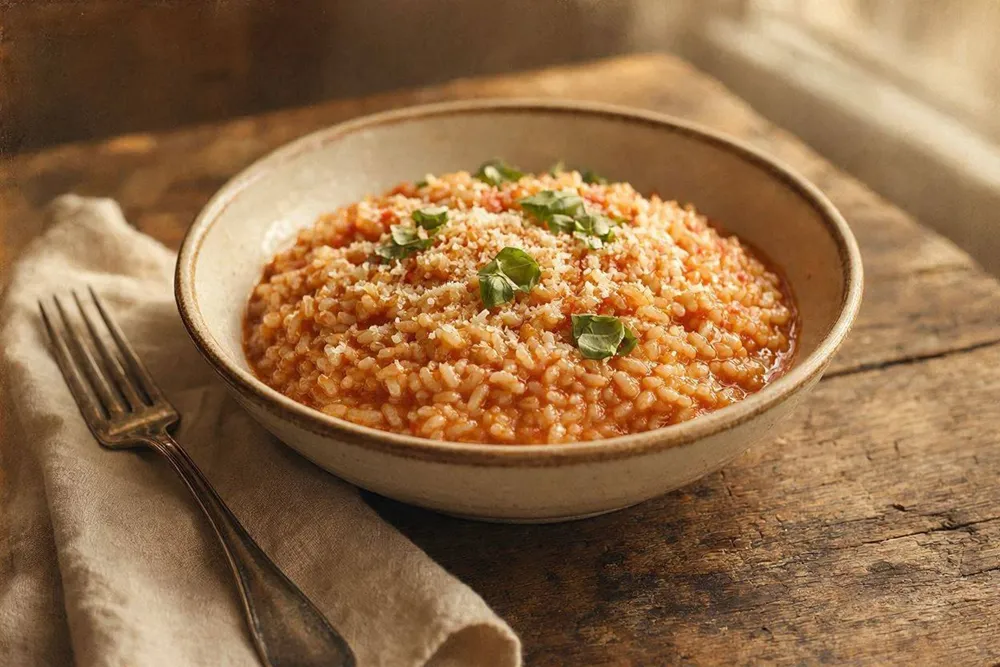
Tomato Risotto with Parmesan
Rice slowly cooked in lard and absorbed with warm water, enriched with a prepared tomato sauce and finished with grated parmesan.

Ground Beef Roast Steaks
Freshly ground beef mixed with whipped butter, shaped into steaks, coated in flour and egg, and pan-fried in butter until golden — a Central European meat dish.
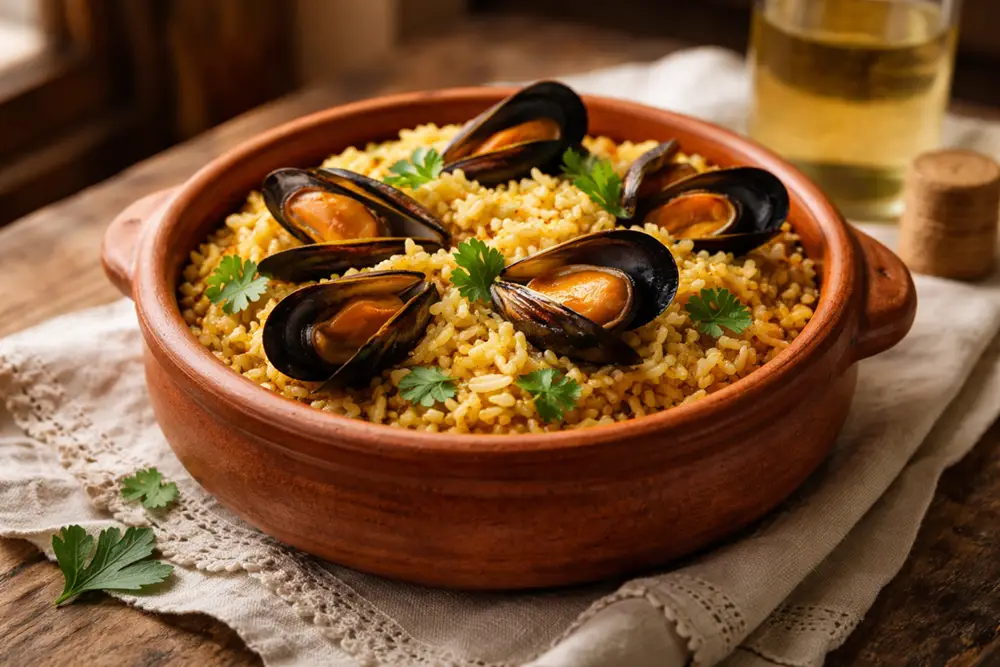
Mussel Pilaf
Mussels steamed open in white wine and herbs, their broth absorbed into saffron rice — a one-pot Adriatic coastal dish, light and deeply flavoured.