Consommé Double
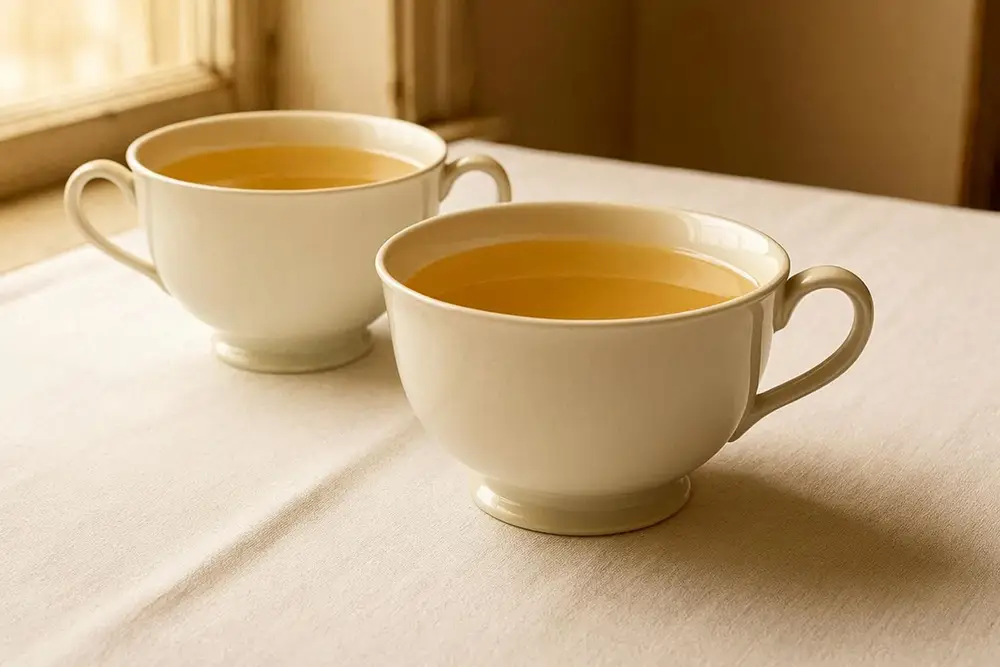
A rich, concentrated clear broth made by cooking a whole chicken in a clarified beef soup base, then skimming, straining, and serving hot in white teacups.
Quick Summary
A rich, concentrated clear broth made by cooking a whole chicken in a clarified beef soup base, then skimming, straining, and serving hot in white teacups.
Historical recipe
Modernised adaptation of an early 20th‑century source. Not independently kitchen-tested by Attic Recipes. Quantities, temperatures, and food safety guidance have been updated for a contemporary kitchen — results may vary and errors may exist. Nutritional values, where provided, are estimates only and have not been laboratory tested. Always follow current food safety guidelines for your region. If you have a health condition, allergy, or dietary requirement, consult a qualified professional before preparing this recipe.
Use of this recipe is entirely at your own risk and subject to our Terms of Service and Privacy Policy. Attic Recipes accepts no liability for any adverse outcome.
- Eggs
- Celery
Additional notes
-
Warning
The whole chicken must reach an internal temperature of 74°C (165°F) before it is removed from the broth. Use a meat thermometer inserted into the thickest part of the thigh, away from the bone, to verify. Undercooked poultry poses a risk of Salmonella and Campylobacter. Pregnant women, children under 18, elderly individuals, and immunocompromised persons should ensure the chicken is fully cooked before proceeding.
-
Note
This recipe uses whole eggs as a clarification agent. The eggs are fully cooked during simmering and removed entirely by straining — they do not remain in the finished broth.
- 1
Prepare the beef base: mince the brisket and place in a large pot with the beaten eggs, salt, peppercorns, and all julienned root vegetables. Mix well, then gradually add the 2 litres of cold water, stirring constantly. The water must be cold.
- 2
Place the pot over medium-low heat. Stir frequently as it heats to prevent the meat from settling and scorching. Meanwhile, halve the garlic and char the cut sides in a dry pan until dark. Add to the pot.
- 3
As the soup approaches a boil, the meat and egg proteins will coagulate and rise as a raft. Once the raft has formed and the soup comes to a boil, stop stirring. Reduce to the gentlest possible simmer and cook undisturbed for 1 to 1.5 hours.
- 4
Lower the whole cleaned chicken into the simmering beef base. The chicken should be fully submerged — add a little hot water if needed. Return to a gentle simmer and cook until the chicken is completely tender and cooked through, approximately 60–75 minutes.
Tip Do not boil vigorously at any point. A hard boil will cloud the broth and cannot be reversed. The surface should show only the occasional lazy bubble. - 5
Once the chicken is fully cooked, carefully remove it from the pot. Reserve the chicken meat for another use — it will be flavourful but soft. Continue simmering the broth for a further 30 minutes.
- 6
Remove the pot from the heat. Skim any visible fat from the surface using a wide shallow spoon or fat separator. Allow the broth to settle for a few minutes.
- 7
Carefully ladle the broth through a fine-mesh sieve lined with a clean white linen or muslin cloth (rinsed in cold water and wrung out) into a clean pot. Do not press the solids — let the broth drip through under its own weight.
- 8
The finished consommé double should be clear and pale golden — light yellow in colour. Taste and adjust salt. Keep warm at the edge of the stove until serving. Serve hot in pre-warmed white teacups with no garnish.
Nutrition Information per 1 serving (approx. 350ml)
Nutritional values are approximate estimates and may vary based on specific ingredients used, preparation methods, and portion sizes.
Serving Suggestions
Serve hot in white teacups or small bowls with no garnish, as period sources specify. The reserved poached chicken makes an excellent filling for potato rolls, vol-au-vents, or a simple chicken salad dressed with sour cream and capers.
About This Recipe
Consommé double is the more serious sibling of a standard clear beef soup. The method begins identically — ground beef, eggs, root vegetables, cold water, slow heat — but partway through, a whole chicken is lowered into the clarifying broth and left to cook until completely tender. When the chicken is removed, the broth has absorbed its fat, gelatin, and flavour, and another half hour of quiet simmering concentrates everything further. What remains after straining is a pale golden liquid of unusual depth: richer than a simple beef broth, cleaner than a chicken stock, with a body that comes from the gelatin the chicken releases as it cooks.
Period sources are specific about the presentation: no garnish, no noodles, no vegetables. White teacups only. The point is the broth itself — its colour, its clarity, its flavour — and anything added would obscure that.
The chicken, once removed, is not wasted. Poached slowly in an already-flavoured broth, it emerges tender and well-seasoned, ready for salads, pastry fillings, or anything that calls for cooked chicken with flavour already built in.
Why It Works
The double enrichment works through two distinct mechanisms. The first is extraction: as the chicken simmers, collagen in the connective tissue converts to gelatin, which dissolves into the broth and gives it body — a slight viscosity that distinguishes consommé double from a thin clear soup. The second is fat emulsification: chicken fat released during cooking distributes through the broth in fine droplets, which are then removed during skimming and straining, leaving behind flavour compounds without visible greasiness.
The pale yellow colour is characteristic and intentional. Chicken fat is more saturated than beef fat and carries different fat-soluble flavour compounds, including carotenoids from the feed, which tint the broth gold. A darker colour indicates either too much heat at some stage or beef-dominant flavour, both of which are avoidable with careful temperature control.
The clarification raft from the beef base continues to work throughout the chicken cooking stage, trapping particles released by the chicken as well. By the time the broth is strained, it has been filtered twice — once by the raft during simmering, once by the linen cloth during straining.
Modern Kitchen Tips
The most common mistake with consommé double is impatience with the heat. A rolling boil at any point — whether during the beef base stage or while the chicken is cooking — destroys the clarity and cannot be corrected. Use the lowest burner on your stove, or move the pot half off the burner, and check every 15–20 minutes.
Verify the chicken’s internal temperature with a thermometer before removing it. The thickest part of the thigh should read at least 74°C (165°F). If you do not have a thermometer, pierce the thigh at its thickest point — the juices must run completely clear with no trace of pink.
For the clearest possible result, refrigerate the finished strained broth overnight. The fat will solidify on the surface and can be lifted off cleanly in one piece, and any remaining fine particles will settle to the bottom. Reheat gently before serving.
A classic of early 20th century home cooking, preserved and adapted for the modern kitchen.
The Story Behind This Recipe
Historical Context
Consommé double — literally 'double consommé' — is a classical enriched clear soup in which a standard clarified beef broth is used as the cooking medium for a whole chicken, producing a broth of exceptional depth and concentration. The technique was well established in French professional cuisine by the mid-19th century and had entered the repertoire of Central European middle-class home cooking by the early 20th century, appearing in period recipe collections as a distinct and prestigious dish separate from standard clear soup. The characteristic pale yellow colour — lighter than a standard beef broth — comes from the chicken fat and gelatin released during cooking, which modify the colour and body of the finished broth. Period sources specify that it should be served without garnish, in white teacups, to display the clarity and colour of the broth.
Modern Kitchen Adaptation
No significant changes have been made to the original method. The description 'thick, well-cleaned chicken' is interpreted as a whole chicken of approximately 1.2–1.5kg with giblets removed, which was standard period language for a market-ready bird. The cooked chicken can be reserved after removal from the broth and used in salads, filled pastries, or other dishes — period cooks would not have discarded it. Fat skimming with a spoon is specified here as the primary method; a fat separator or refrigerating the finished broth overnight and lifting the solidified fat cap are equally effective modern alternatives.
This recipe is an independent modern adaptation developed from historical sources in the public domain. It is provided for informational and educational purposes only and does not constitute professional dietary, nutritional, or medical advice. Food preparation involves inherent risks. The reader assumes full responsibility for safe food handling, ingredient sourcing, and adherence to current local food safety guidelines. The site operator accepts no liability for outcomes resulting from the preparation or consumption of this recipe.
One recipe.
Every week.
You Might Also Like
More recipes you'll enjoy
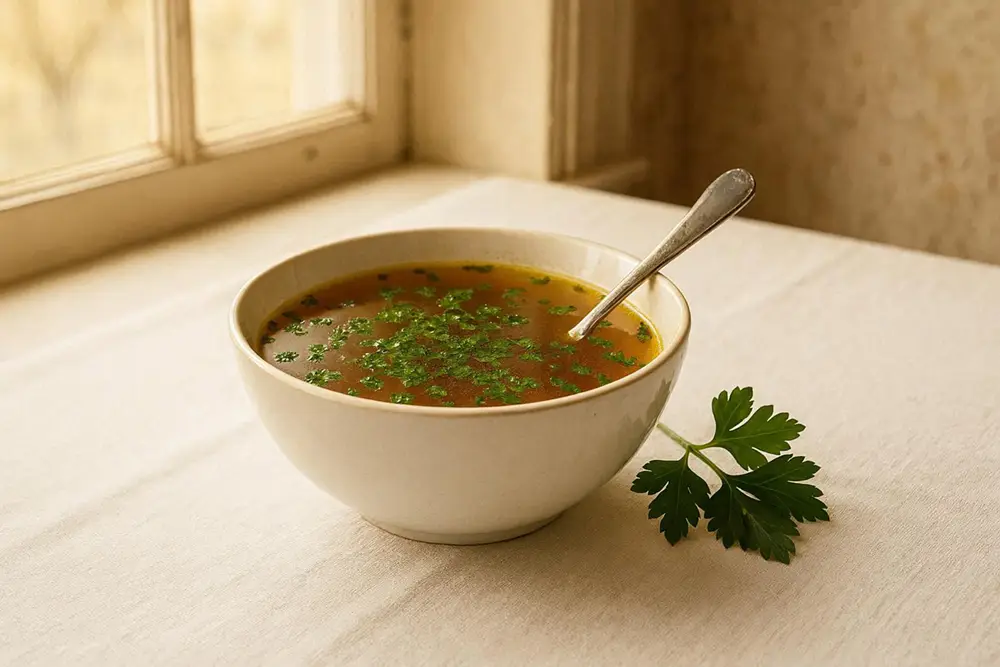
Clear Beef Soup
A slowly simmered and strained beef soup clarified with whole eggs and root vegetables, yielding a clean, deeply flavoured broth served as a first course.
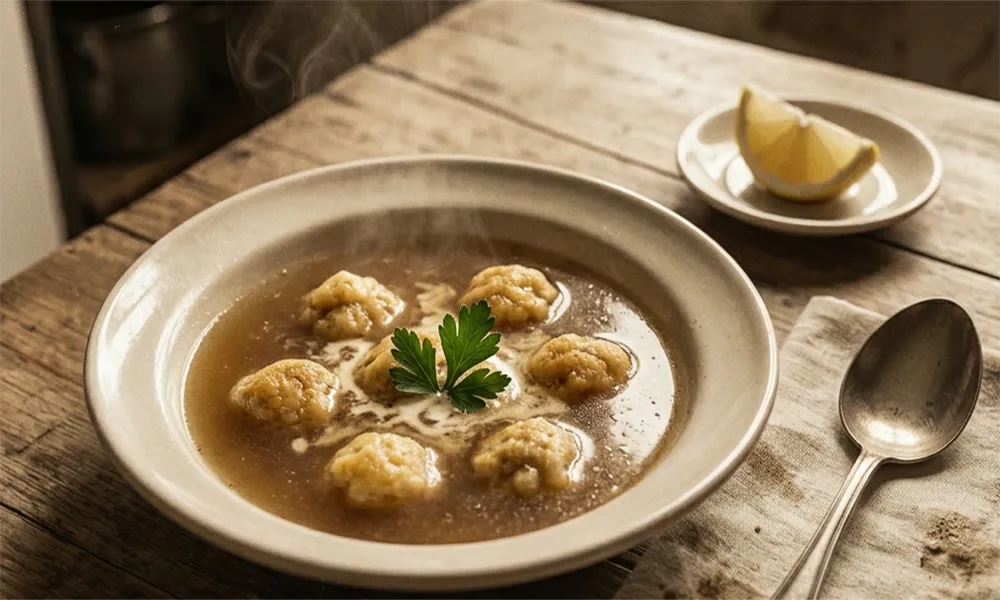
Beef Broth with Stuffed Dough Dumplings
Rich beef bone broth simmered with golden pan-fried dumplings stuffed with seasoned ground beef, finished with a light roux and fresh lemon juice.
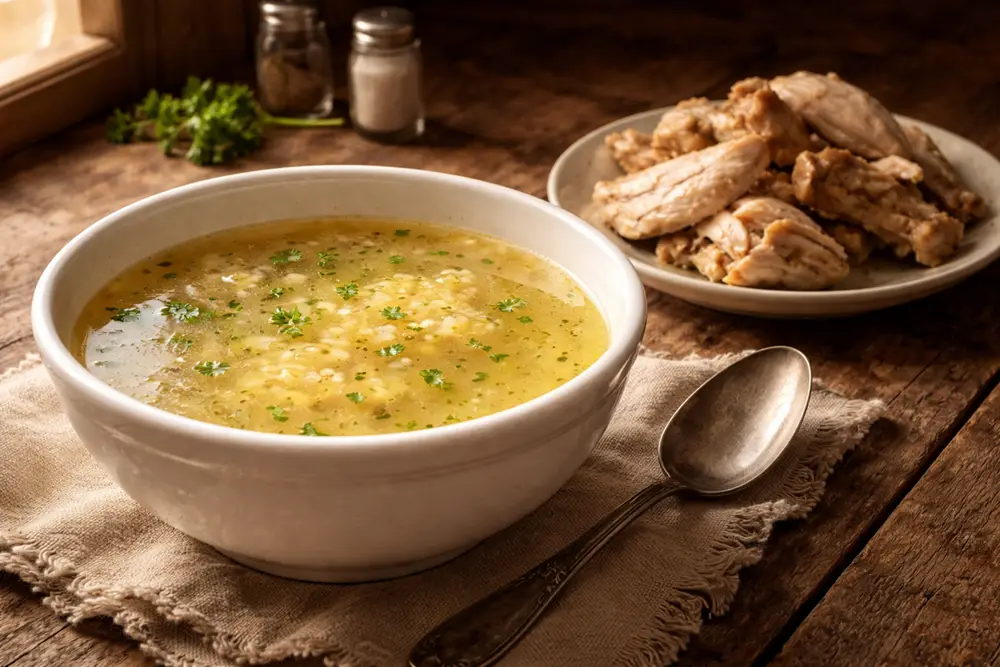
Sour Soup (Kisela Čorba)
A clear poultry broth thickened with egg yolks and mileram, sharpened with wine vinegar or lemon juice, served with rice and meat on the side.