Cherry Cream
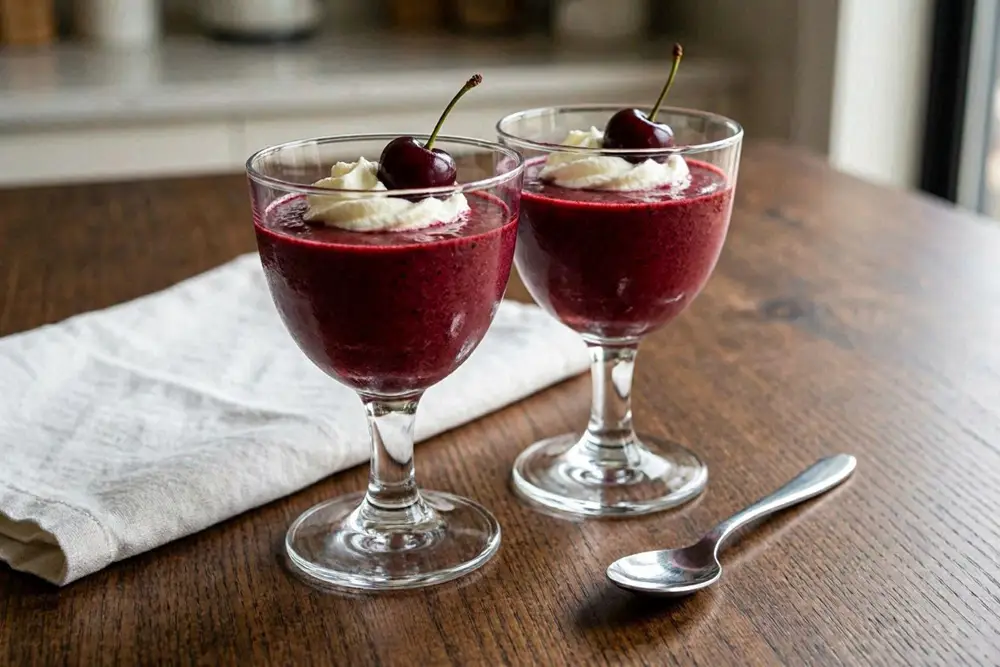
A silky, chilled cherry mousse set with agar-agar and lightened with whipped cream — a refined dessert from the early 20th century home kitchen.
Quick Summary
A silky, chilled cherry mousse set with agar-agar and lightened with whipped cream — a refined dessert from the early 20th century home kitchen.
Historical recipe
Modernised adaptation of an early 20th‑century source. Not independently kitchen-tested by Attic Recipes. Quantities, temperatures, and food safety guidance have been updated for a contemporary kitchen — results may vary and errors may exist. Nutritional values, where provided, are estimates only and have not been laboratory tested. Always follow current food safety guidelines for your region. If you have a health condition, allergy, or dietary requirement, consult a qualified professional before preparing this recipe.
Use of this recipe is entirely at your own risk and subject to our Terms of Service and Privacy Policy. Attic Recipes accepts no liability for any adverse outcome.
- Dairy
Additional notes
-
Note
This dessert is high in saturated fat (approximately 14 g per serving), primarily from heavy cream. Suitable for occasional consumption as part of a balanced diet.
- 1
Pit all 1000 g of cherries. Push the pitted cherries through a fine-mesh sieve or food mill to produce a smooth purée. Discard the skins. You should obtain approximately 700–750 ml of purée.
Tip A food mill (mouli) is easier than a sieve for this quantity. If using a blender, blend first then pass through a fine sieve to remove skins. - 2
Pour the cherry purée into a small saucepan. Sprinkle 10 g of agar-agar powder over the cold purée and whisk to combine. Let it sit for 2 minutes, then bring to a full boil over medium heat, stirring constantly. Boil for 2 minutes to fully activate the agar-agar, then remove from heat.
Tip Agar-agar must reach a rolling boil to dissolve completely. Insufficient boiling is the most common cause of a failed set. - 3
If adding sugar, stir 2 tablespoons into the hot purée immediately after removing from heat. Transfer the purée to a wide bowl and let it cool, stirring occasionally, until it reaches approximately 40°C (104°F) — warm to the touch but no longer hot. Do not allow it to cool below this point or it will begin to gel before the cream is folded in.
- 4
While the purée cools, whip 250 g of very cold heavy cream to firm peaks.
- 5
Working quickly, fold the whipped cream into the warm cherry purée in two or three additions, using a spatula and a gentle folding motion to preserve the volume. Pour or spoon the mixture into 6 glass cups.
Tip Speed matters here. Agar-agar sets at around 32–40°C (90–104°F), so the mixture will begin to firm as you work. Divide into cups immediately. - 6
Refrigerate for a minimum of 3 hours until fully set and cold throughout.
- 7
Before serving, garnish each cup with a few of the 100 g pitted cherries and a dollop of whipped cream (from the 100 ml garnish cream). Serve alongside small pastries.
Nutrition Information per 1 porcija (approx. 195g)
Nutritional values are approximate estimates and may vary based on specific ingredients used, preparation methods, and portion sizes.
Serving Suggestions
Serve in tall glass cups to show the set texture and deep colour. Traditional accompaniments are small shortbread biscuits, langue de chat, or almond tuiles. For a more modern presentation, a few drops of kirsch stirred into the garnish cream complement the cherry flavour well.
About This Recipe
Cherry Cream is a cold dessert from the early 20th century — a time when the distinction between a mousse and a jelly was largely a matter of how much the cream was incorporated and how firmly the setting agent held. This version sits somewhere between the two: firm enough to unmould if needed, light enough to spoon through without resistance. The deep, slightly tart flavour of cherry purée cuts through the richness of the cream in a way that keeps the dessert feeling genuinely refreshing.
What makes this recipe worth revisiting is its restraint. There is no custard base, no egg yolk enrichment, no complicated tempering. The structure comes entirely from agar-agar — a plant-based gelling agent derived from red algae, already well established in European kitchens by the early 20th century. The result is a clean, bright dessert that lets the fruit speak clearly, and one that happens to be naturally gluten-free.
The original calls for the cherries to be pushed through a hair sieve, a tool designed to produce a purée of almost polished smoothness. A fine-mesh sieve or food mill achieves the same result today with considerably less effort.
Why It Works
Agar-agar behaves differently from gelatin in two important ways, and both matter here. First, it sets at a higher temperature — around 32–40°C (90–104°F), compared to gelatin’s roughly 15–20°C. This means the window for folding in whipped cream is narrow: the purée must be cool enough not to deflate the cream, but warm enough that the agar hasn’t already started to firm. Working at around 40°C hits that window reliably. Second, agar-agar produces a set that holds at room temperature — it will not melt on a warm summer afternoon the way gelatin-based desserts do. For a chilled dessert intended to be served outdoors or on a warm buffet table, this is a practical advantage.
The cherry purée is the medium in which the agar dissolves and sets, which means the gel is flavoured all the way through rather than merely flavoured on top. The whipped cream, folded in after the purée has partially cooled, lightens the texture and adds the fat that gives the dessert its richness — but the dominant flavour remains unmistakably fruit.
Modern Kitchen Tips
- Agar-agar must boil. Unlike gelatin, which dissolves in warm liquid, agar-agar requires a full rolling boil for at least 2 minutes. Skipping this step results in a soft, unstable set or no set at all.
- Cold cream, cold bowl. Whipping cream to firm peaks is far easier when both the cream and the bowl have been chilled. Place your bowl and whisk in the freezer for 15 minutes before you begin.
- Work quickly once the purée is ready. Agar-agar begins to set as the temperature drops below about 40°C. Have your cups ready before you start folding in the cream, and pour immediately.
- Sour cherries vs sweet cherries. Either works, but sour cherries (Prunus cerasus) give a sharper, more complex flavour and a deeper colour. If using sweet cherries, taste the purée before adding any sugar — it may not need any.
A light, elegant dessert from the early 20th century home kitchen — pure fruit, clean cream, and the quiet confidence of a recipe that needs nothing added.
The Story Behind This Recipe
Historical Context
Early 20th century recipes for cold desserts of this type relied on hair sieves — finely woven wire or horsehair sieves — to produce a perfectly smooth fruit purée, a step that was considered non-negotiable for refined table presentation. Agar-agar, introduced to European kitchens via trade with East and Southeast Asia, was already in use in Central European confectionery and pharmacy by the late 19th century. Home cooks of the period would have treated it much as gelatin is treated today. No sugar was specified — home cooks of the period were expected to judge sweetness by the fruit itself, and the dish was conceived for very ripe, peak-season cherries where sweetness was not in question.
Modern Kitchen Adaptation
The original calls for agar-agar 'cut into 2 cm pieces,' which refers to the dried strip or bar form common in the early 20th century. Modern agar-agar powder is far more consistent and easier to use: 10 g powder is the equivalent of approximately 30 g flakes or 2–3 standard bars. The activation method has been updated to reflect current food science: agar-agar must be dispersed in cold liquid before heating, brought to a full rolling boil, and held there for at least 2 minutes to dissolve fully. The original recipe gives no cooling guidance before the cream is folded in; a target of 40°C (104°F) has been added to prevent the cream from melting while still allowing enough time to incorporate it before the agar begins to set. Sugar has been added as an optional ingredient, as modern cherry varieties — particularly those available out of peak season — may be more acidic than the fruit the original recipe was written for.
This recipe is an independent modern adaptation developed from historical sources in the public domain. It is provided for informational and educational purposes only and does not constitute professional dietary, nutritional, or medical advice. Food preparation involves inherent risks. The reader assumes full responsibility for safe food handling, ingredient sourcing, and adherence to current local food safety guidelines. The site operator accepts no liability for outcomes resulting from the preparation or consumption of this recipe.
One recipe.
Every week.
You Might Also Like
More recipes you'll enjoy
Figs in the Snow
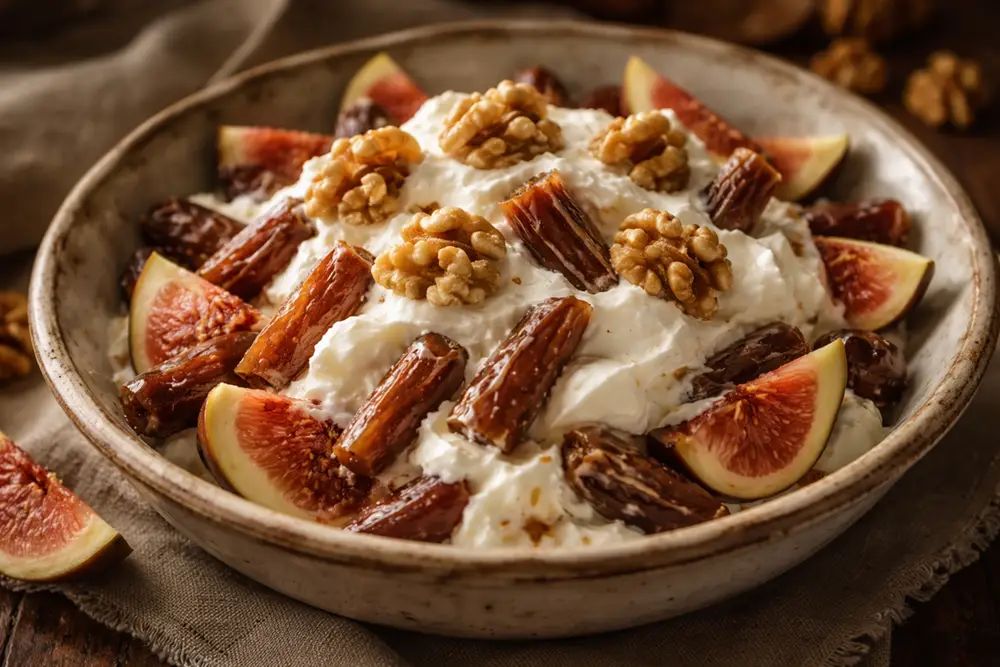
Sliced ripe figs and dates macerated in lemon juice and sugar, piled into a bowl and covered with sweetened whipped cream and whole walnuts.
Ladyfingers with Strawberry Topping
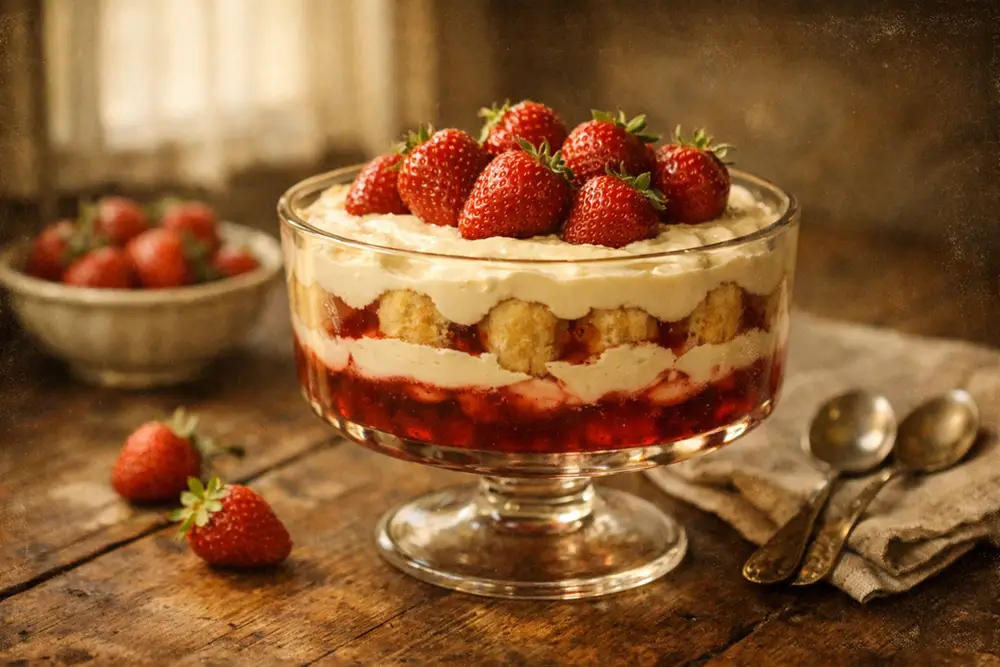
Ladyfingers layered with a thick wild strawberry syrup and chilled to set — a simple, elegant Central European no-bake dessert from the early 20th century.
Peach Cream
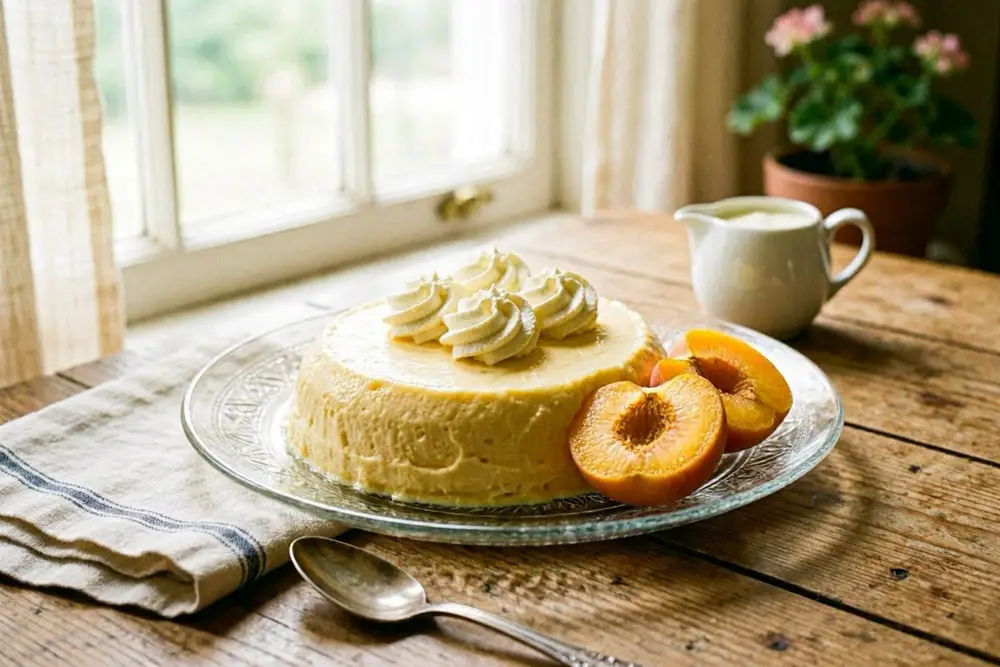
A chilled peach mousse from early 20th century home cooking: peach marmalade base folded with egg and gelatine, set in a mould and served with fresh cream.