Caper Sauce
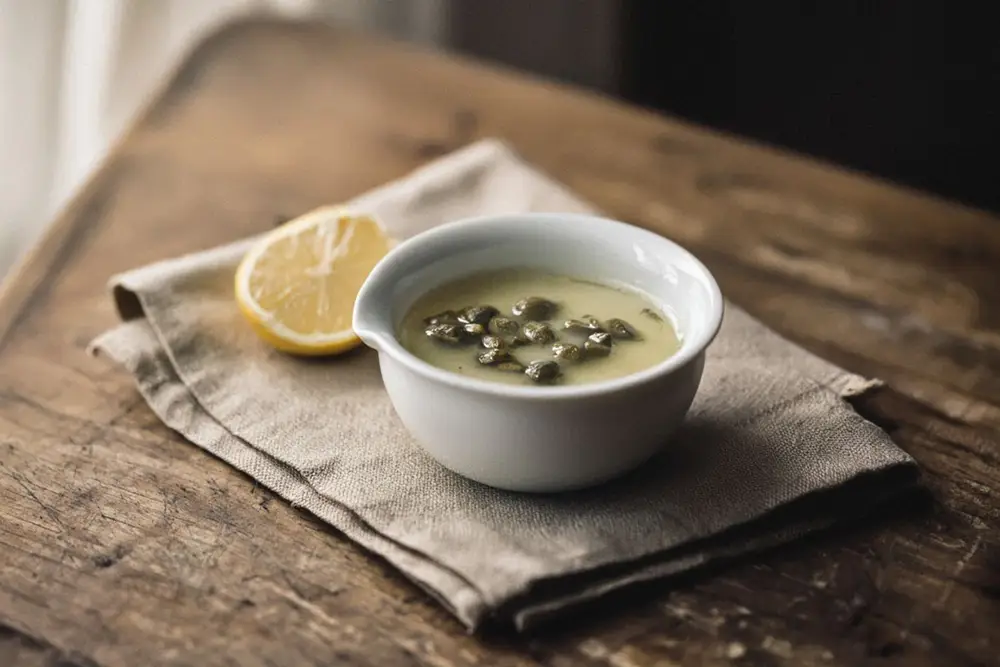
A simple roux-based sauce with capers and lemon — made in under 15 minutes, equally at home over poached lamb, boiled vegetables, or pan-fried fish.
Historical recipe
Modernised adaptation of an early 20th‑century source. Not independently kitchen-tested by Attic Recipes. Quantities, temperatures, and food safety guidance have been updated for a contemporary kitchen — results may vary and errors may exist. Nutritional values, where provided, are estimates only and have not been laboratory tested. Always follow current food safety guidelines for your region. If you have a health condition, allergy, or dietary requirement, consult a qualified professional before preparing this recipe.
Use of this recipe is entirely at your own risk and subject to our Terms of Service and Privacy Policy. Attic Recipes accepts no liability for any adverse outcome.
- Dairy
- Gluten
Additional notes
-
Caution
This sauce must simmer for a minimum of 5 minutes after the liquid is added to fully cook the flour. Undercooked roux produces an unpleasant floury taste and may cause digestive discomfort in sensitive individuals.
- 1
Melt the 25g of butter in a small heavy-bottomed saucepan over medium-low heat. Do not allow it to brown.
- 2
Add the 15g of flour and a pinch of salt all at once. Stir immediately with a whisk or wooden spoon to combine into a smooth paste (roux). Cook the roux for 1–2 minutes, stirring constantly, until it smells faintly biscuity and loses its raw flour smell. Do not allow it to colour.
Tip Cooking the roux for a full 1–2 minutes before adding liquid is essential — undercooked roux will leave a floury taste in the finished sauce. - 3
Remove the saucepan from the heat. Add the 250ml of hot stock (or milk or water) in a thin, steady stream, whisking constantly as you pour. Return to medium-low heat and continue whisking until the sauce is completely smooth and begins to thicken.
- 4
Simmer gently for 5 minutes, stirring frequently, until the sauce is smooth, velvety, and coats the back of a spoon. Taste and adjust salt.
- 5
Stir in the 15g of finely chopped capers. Simmer for one further minute.
- 6
Remove from heat. Add the 15ml of lemon juice or vinegar gradually, stirring constantly. Taste — the acid should brighten the sauce without making it sharp. Serve immediately.
Tip For a more pronounced caper flavour, scatter an additional 10–15g of whole drained capers directly over the plated meat at serving — these provide a fresh, briny contrast to the cooked capers already in the sauce.
Nutrition Information per 1 serving (approx. 55ml)
Nutritional values are approximate estimates and may vary based on specific ingredients used, preparation methods, and portion sizes.
Serving Suggestions
This sauce is the intended accompaniment for Lamb with Caper Sauce (/recipes/lamb-with-caper-sauce). It also works well over poached or steamed fish, boiled new potatoes, or cauliflower. For a more pronounced caper character, serve additional whole drained capers alongside rather than increasing the quantity in the sauce itself.
About This Recipe
A caper sauce in the Central European tradition is not the bright, butter-mounted piccata sauce that appears in Italian-American cooking. It is quieter than that — a pale, roux-thickened base with capers stirred in at the end and a spoonful of lemon juice or vinegar to lift it. The result is something between a velouté and a simple white sauce: mild enough to let the meat speak, sharp enough to cut through the fat of poached lamb or a piece of boiled fish.
The sauce comes together in fifteen minutes and requires nothing beyond a small saucepan and a whisk. Its simplicity is its virtue. Made with the poaching stock from the lamb it accompanies, it tastes of the same pot — which is exactly the point. The stock carries the flavour of the meat, the vegetables, and the bay leaf into the sauce without any additional work.
The capers go in last, chopped fine, and simmer for only a minute before serving. This keeps them from going soft and losing their texture entirely, while still allowing their brine to season the sauce from the inside.
Why It Works
The roux — butter and flour cooked together before any liquid is added — is what gives this sauce its body and stability. The fat coats the starch granules in the flour, which prevents them from clumping when the hot liquid is added. This is why the roux must be cooked for at least a minute before the stock goes in: raw flour added directly to liquid produces lumps; flour cooked in fat first disperses smoothly.
The acid — lemon juice or vinegar — is added at the very end and off the heat for a reason. Acid weakens the starch network that thickens the sauce. Added too early or at too high a temperature, it will thin the sauce and can cause it to become gluey or grainy. Added at the end, after the sauce has already set, it brightens the flavour without affecting the texture.
Capers added at the beginning of cooking lose their bite and colour. Added in the last minute, they retain enough texture to be distinct in the finished sauce while still releasing their brine into the surrounding liquid.
Modern Kitchen Tips
If you are making this sauce independently of the lamb dish — to serve over fish or vegetables — use a good-quality light chicken or vegetable stock rather than plain water. Plain water produces a flat, starchy sauce with little flavour of its own. Milk produces a slightly richer, creamier result that works particularly well with cauliflower or poached cod.
The sauce can be made up to 30 minutes ahead and kept warm in the saucepan over the lowest possible heat, with a piece of baking paper pressed directly onto the surface to prevent a skin from forming. Stir before serving and add the lemon juice only at the last moment.
If the sauce thickens too much on standing, whisk in a small splash of hot stock or water to loosen it. Do not add cold liquid — it will cause the sauce to seize.
A fifteen-minute roux sauce that makes the most of the pot it came from.
The Story Behind This Recipe
Historical Context
Roux-based white sauces finished with capers were a standard component of Central European middle-class cooking in the early 20th century, appearing regularly as an accompaniment to poached meats, boiled vegetables, and fish. The technique — butter, flour, hot liquid, acid finish — follows the same structure as the French sauce poulette and the German Kapernsauce, both of which circulated widely in translated and adapted form through Central European household cookbooks of the period. The use of cooking stock from the meat itself as the sauce liquid, rather than separate stock or plain milk, reflects a practical economy common to this style of cooking: nothing from the pot was wasted, and the poaching liquid carried enough flavour to enrich the sauce without additional preparation. Home cooks of the period did not specify the type of liquid precisely, listing milk, water, or broth as interchangeable.
Modern Kitchen Adaptation
The original text was partially disrupted by OCR errors that reversed the order of steps. The correct sequence — roux first, liquid second, acid and capers last — has been restored based on the standard technique described in the text and consistent with period roux-based sauces. No quantities were changed. Lamb poaching stock is recommended as the primary liquid when this sauce is made as part of Lamb with Caper Sauce (/recipes/lamb-with-caper-sauce); milk or water produce a milder, more neutral result. The acid must be added at the very end and off the heat to prevent the sauce from breaking — this is a technical requirement not stated explicitly in the original.
This recipe is an independent modern adaptation developed from historical sources in the public domain. It is provided for informational and educational purposes only and does not constitute professional dietary, nutritional, or medical advice. Food preparation involves inherent risks. The reader assumes full responsibility for safe food handling, ingredient sourcing, and adherence to current local food safety guidelines. The site operator accepts no liability for outcomes resulting from the preparation or consumption of this recipe.
One recipe.
Every week.
You Might Also Like
More recipes from the same category
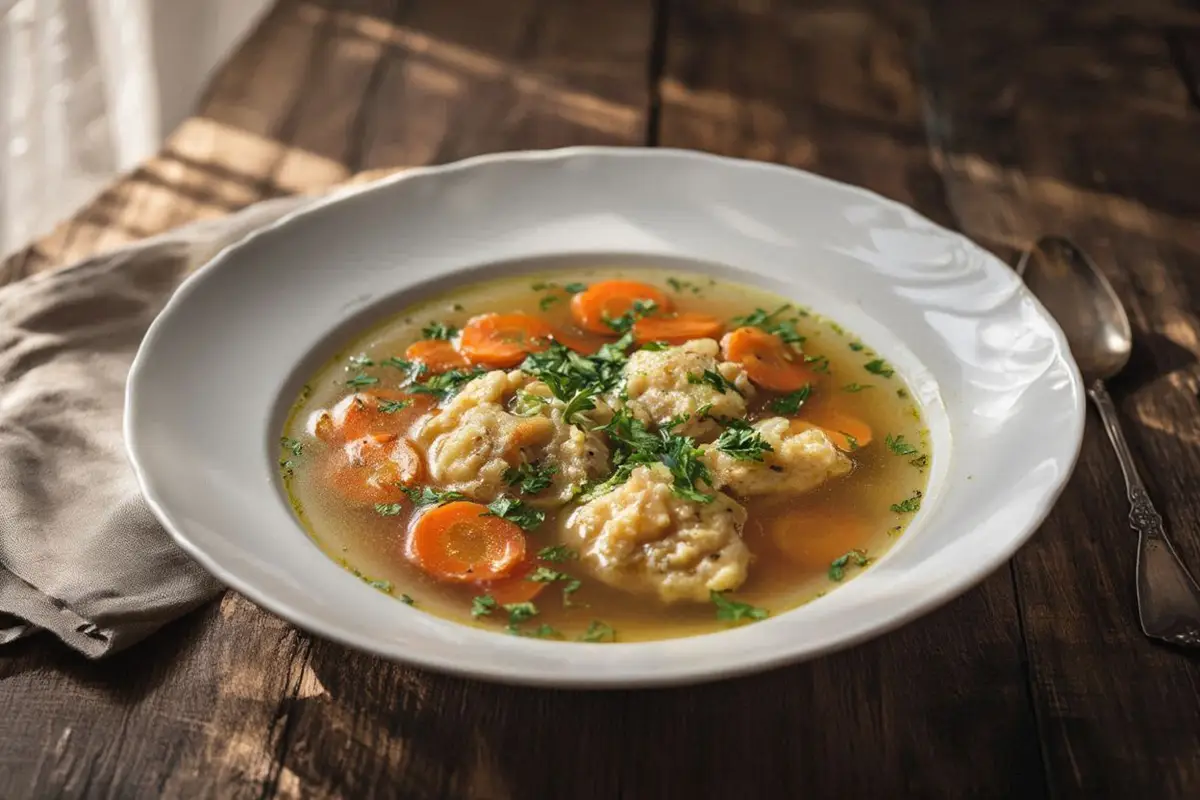
Beef Soup with Carrot-Colored Broth
A rich, golden Central European beef soup with carrot-colored broth, served with semolina or liver dumplings. Hearty, clear, and deeply flavorful.
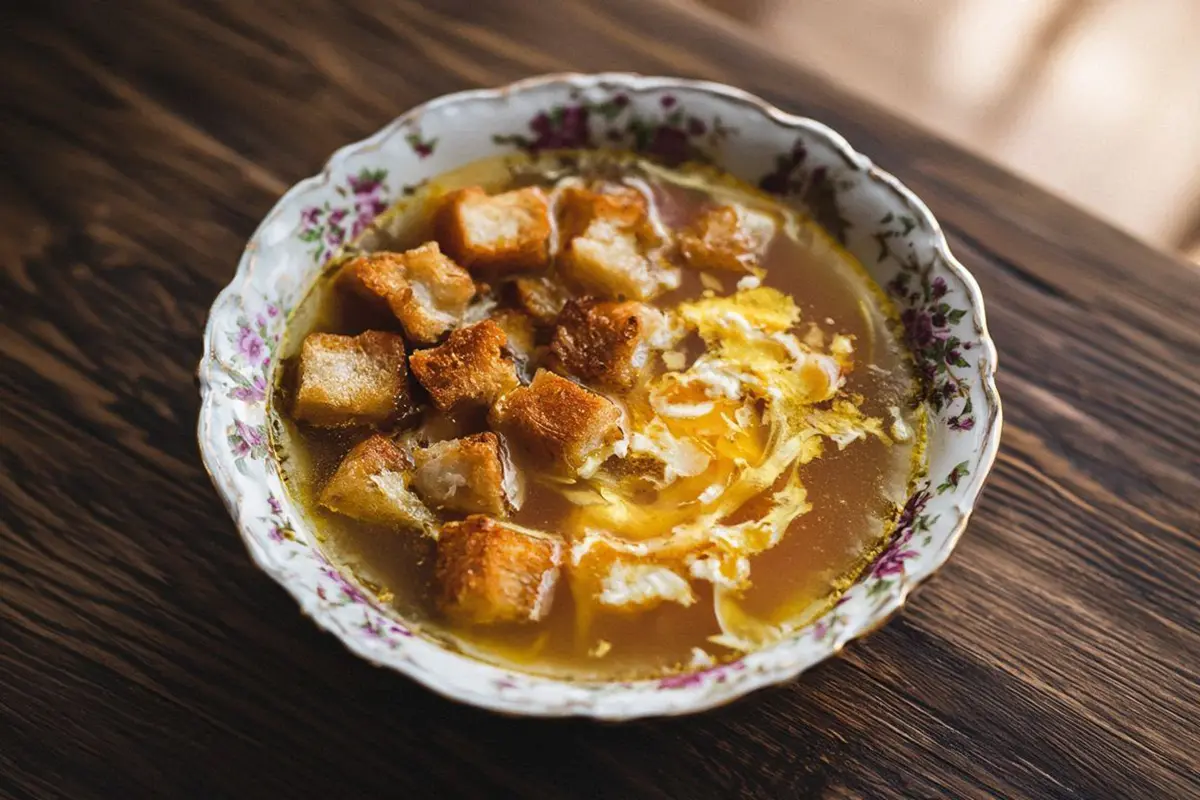
Beer Soup
A frugal Central European staple — beer and water enriched with egg yolks and sugar, finished with crisp fried bread. A technique that still works.
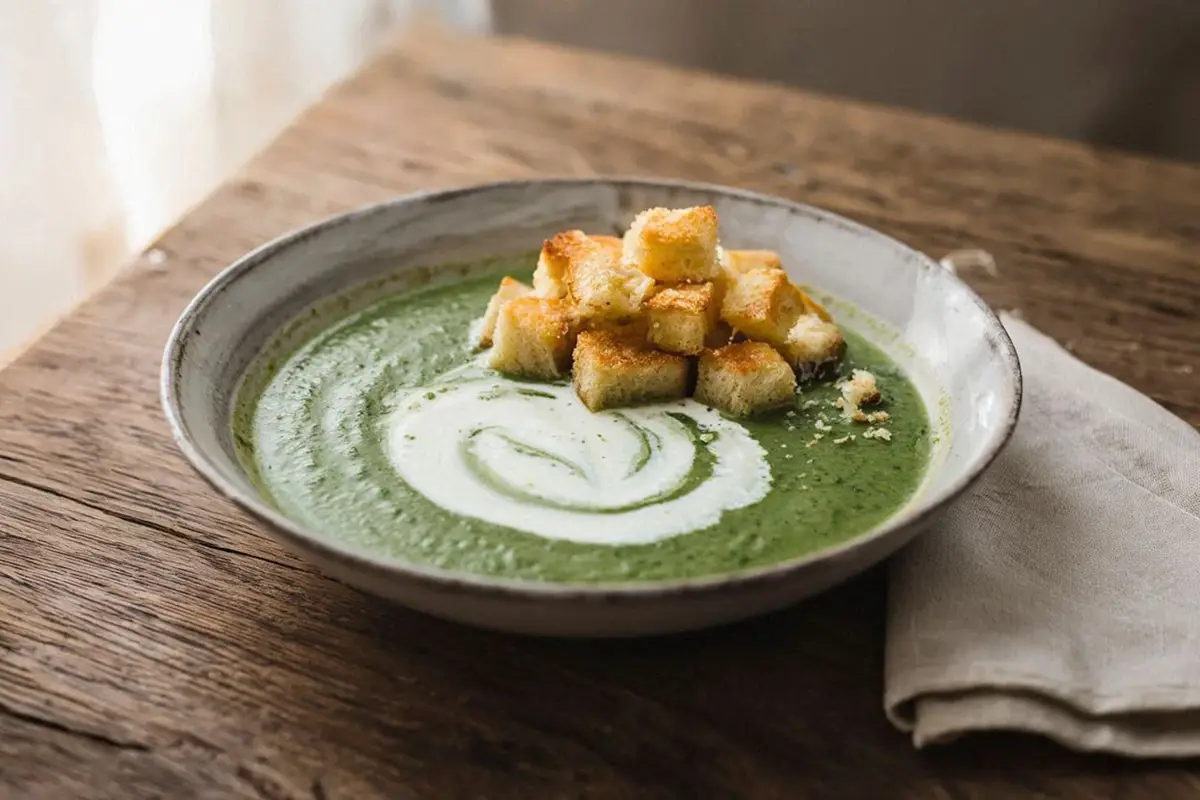
Bulgarian Spinach Soup with Egg and Sour Milk
A silky Bulgarian spinach soup finished with tempered egg yolks, lemon, and sour milk — nourishing, tangy, and very simple.