Cake Filled with Fruit Cream
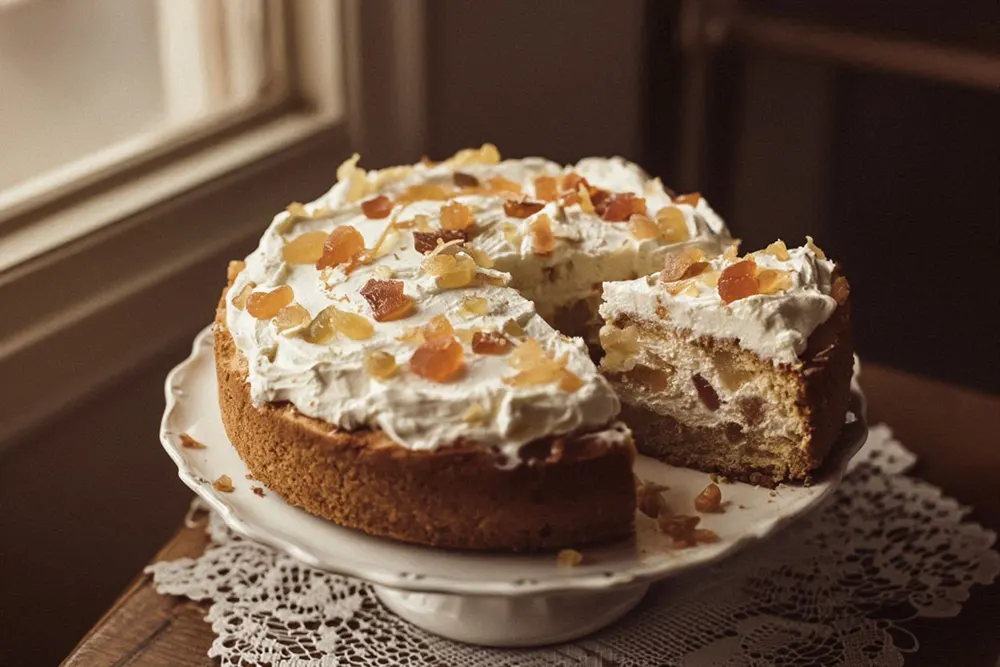
Hollowed sponge filled with rum-soaked candied peel, raisins, jelly candy, and gelatin custard folded with whipped cream. Topped with cream and candied fruit.
Quick Summary
Hollowed sponge filled with rum-soaked candied peel, raisins, jelly candy, and gelatin custard folded with whipped cream. Topped with cream and candied fruit.
Historical recipe
Modernised adaptation of an early 20th‑century source. Not independently kitchen-tested by Attic Recipes. Quantities, temperatures, and food safety guidance have been updated for a contemporary kitchen — results may vary and errors may exist. Nutritional values, where provided, are estimates only and have not been laboratory tested. Always follow current food safety guidelines for your region. If you have a health condition, allergy, or dietary requirement, consult a qualified professional before preparing this recipe.
Use of this recipe is entirely at your own risk and subject to our Terms of Service and Privacy Policy. Attic Recipes accepts no liability for any adverse outcome.
- Eggs
- Dairy
- Gluten
Additional notes
-
Warning
This recipe contains a custard cooked with egg yolks. Cook to a minimum internal temperature of 74°C (165°F), stirring constantly. Do not allow the custard to boil. Pregnant women, elderly individuals, young children, and immunocompromised persons should ensure the custard reaches this temperature and should avoid any substitution with uncooked yolks.
Use pasteurized liquid egg yolks if cooking to temperature is not possible.
-
Note
This recipe contains alcohol (rum, minimum 40% ABV). The rum is used as a cold soak and is not cooked off — the fruit retains a significant proportion of the alcohol. Pregnant women, children under 18, and those avoiding alcohol should omit the rum and substitute with orange juice or a non-alcoholic syrup.
-
Note
This recipe contains approximately 13g saturated fat per serving, primarily from heavy cream and egg yolks. Those managing cardiovascular health or saturated fat intake should be aware.
- 1
Bloom the gelatin: submerge the 5 gelatin sheets in a bowl of cold water and leave to soften for 5–10 minutes.
- 2
Soak the fruit mixture: combine the 50g candied lemon peel, 50g candied orange peel, 50g raisins, and 50g fruit jelly candy in a bowl. Pour over the 80ml rum, stir, and set aside to macerate while you prepare the rest. Reserve a small handful of the fruit mix for decoration.
- 3
Make the sponge: preheat the oven to 180°C (350°F) / 160°C fan. Grease and line a 24cm round cake tin. In a large bowl, beat the 8 egg yolks with the 250g sugar until very pale, thick, and foamy — the mixture should fall in thick ribbons, about 5–7 minutes. Add the lemon juice and finely grated zest and mix briefly to combine.
Tip A true Viennese-style sponge relies entirely on egg foam for lift — no baking powder. Beat the yolks fully. - 4
Fold in the 150g sifted flour gently using a spatula — do not beat. Then fold in the 8 stiffly beaten egg whites in two or three additions, cutting through the batter rather than stirring to preserve volume.
- 5
Pour the batter into the prepared tin and bake for 30–35 minutes, until the top is golden and a skewer inserted into the centre comes out clean. Remove from the tin and cool completely on a wire rack before proceeding — at least 1 hour.
- 6
Make the custard: heat the 500ml milk in a saucepan over medium heat until just below boiling. In a separate bowl, whisk the 6 egg yolks with the 6 tbsp sugar until pale and slightly thickened. Temper the yolks: slowly pour a ladleful of hot milk into the yolk mixture, whisking constantly. Pour the tempered mixture back into the saucepan with the remaining milk.
Tip Never add cold yolks directly to hot milk — tempering prevents scrambling and ensures a smooth custard. - 7
Cook the custard over medium-low heat, stirring constantly with a wooden spoon or heat-resistant spatula, until the mixture thickens enough to coat the back of the spoon. Target temperature: 74°C (165°F) — do not allow it to boil. Remove from the heat immediately.
- 8
Squeeze excess water from the bloomed gelatin sheets and stir them into the hot custard immediately. Mix until completely dissolved. Transfer to a clean bowl and place in a cool spot or refrigerator, stirring occasionally, until the custard cools and just begins to thicken — it should mound slightly when dropped from a spoon but still be pourable. This will take approximately 45–60 minutes in the refrigerator.
- 9
Hollow the cake: using a serrated knife, slice a thin horizontal lid — about 1.5–2cm thick — from the top of the cooled sponge. Set the lid aside. Using a spoon or your fingers, carefully hollow out the interior of the cake, leaving walls and a base approximately 1.5cm thick all around. The removed sponge can be reserved for another use (trifle, cake pops).
- 10
Whip the filling cream: beat the 250ml cold heavy cream with the 2 tbsp powdered sugar until firm peaks form. Do not overwhip.
- 11
Assemble the filling: drain the rum-soaked fruit (reserve the rum if desired). Fold the drained fruit into the partially set custard. Then gently fold in the whipped cream until combined and even. Work quickly — the gelatin will continue setting.
- 12
Fill the cake: spoon the filling into the hollowed cake shell, pressing gently to remove air pockets. Replace the sponge lid. Refrigerate the assembled cake for a minimum of 2 hours, or until the filling is fully set and sliceable.
- 13
Finish: whip the 150ml topping cream with 1 tbsp powdered sugar to firm peaks. Spread evenly over the top and sides of the chilled cake. Decorate with the reserved candied fruit and jelly candy pieces. Serve chilled.
Nutrition Information per 1 serving (approx 180g)
Nutritional values are approximate estimates and may vary based on specific ingredients used, preparation methods, and portion sizes.
Serving Suggestions
Serve well chilled, cut into wedges. The cake holds and slices best after a full overnight chill. Accompanies well with a glass of sweet Tokaji or a dessert Riesling. Dust with a little powdered sugar before serving if the cream top has dried.
About This Recipe
This cake belongs to a class of Central European celebration desserts built around a single structural idea: bake a sturdy sponge, hollow it out, and fill the shell with something far more elaborate than the exterior suggests. The technique transforms a plain round cake into a vessel — a preparation that lets the filling take centre stage without the structural demands of a multi-layer cake.
The filling here combines two textures that were a hallmark of the period’s refined pastry work: a gelatin-set custard for body and a folded whipped cream for lightness. Threading through both is a mixture of rum-soaked candied citrus peels, raisins, and fruit jelly candy — the kind of pantry confectionery that marked a household’s access to quality ingredients. The result is rich, aromatic, and cold — the contrast between the soft sponge shell and the set cream interior is what makes the cake work.
The finishing layer of whipped cream spread over the outside is deliberate and functional, not just decorative. It seals the cake, holds the lid in place, and carries the scattered candied fruit that signals, before the first slice, what waits inside.
Why It Works
The gelatin in the custard is doing structural work that the whipped cream alone could not. Without it, the filling would collapse the moment the cake was cut. But gelatin alone would produce a stiff, bouncy set — folding in whipped cream loosens the texture and introduces the lightness that makes the filling pleasant to eat rather than merely stable.
The tempering step in the custard is non-negotiable. Adding cold yolks to hot milk directly causes the proteins to seize and curdle instantly. Tempering — introducing a small amount of hot milk to the yolks before combining — raises the yolks’ temperature gradually, allowing the proteins to set slowly and smoothly as the custard cooks.
The sponge itself is a classic Viennese-style foam cake: no chemical leavening, no fat. It rises and holds its structure through air beaten into the yolks and trapped in the stiff egg whites. This produces a sponge with a firm, slightly dry crumb — exactly what is needed when the interior will be hollowed and filled with a wet, heavy cream. A butter sponge or a softer génoise would collapse under the filling’s weight.
Modern Kitchen Tips
A kitchen thermometer takes the guesswork out of the custard — pull it from the heat the moment you hit 74°C. If you go above 82°C, the yolks will scramble and no amount of straining will save the texture.
The gelatin set timing is the most critical moment in the recipe. Check the custard every 10 minutes once it goes into the refrigerator. You want it at the stage where it coats the back of a spoon firmly and mounds slightly — not liquid, not set. If it sets too firmly before you can fold in the cream and fruit, warm it gently over a bowl of hot water, stirring until it loosens, then proceed immediately.
Hollow the cake from the centre outward using a small spoon or melon baller, working in concentric rings. Aim for walls about 1.5cm thick. Thinner walls look elegant but risk splitting when you fill and cut; thicker walls eat into the filling-to-sponge ratio that makes the cake interesting.
A classic of early 20th century Central European celebration baking, preserved and adapted for the modern kitchen.
The Story Behind This Recipe
Historical Context
Home cooks of the period used this technique — hollowing a baked sponge and filling it with a chilled cream — as an elegant way to produce a layered dessert without the complexity of a constructed layer cake. Early 20th century Central European pastry tradition favoured gelatin-set creams for filled cakes, as refrigeration was unreliable and gelatin provided structural stability at cool room temperature. The fruit mixture — candied citrus peels, raisins, and jelly candy — reflects the confectionery pantry typical of middle-class households of the era, where imported candied fruit was a marker of celebration. The original recipe did not specify an oven temperature, rum quantity, or whether the finishing cream was a separate portion — these have been established in the modernized version.
Modern Kitchen Adaptation
The oven temperature of 180°C (350°F) / 160°C fan is estimated, as the original gave none — typical for Viennese sponge of this type and period. The rum quantity (80ml) is calculated to fully macerate 200g of mixed fruit; the original gave no volume. The finishing cream (150ml) is treated as a separate portion from the filling cream, as the quantity used for filling (250ml, set with gelatin and folded into custard) would leave insufficient cream for coating the outside of a 24cm cake. The custard method has been corrected: the original described adding yolks directly to hot milk, which risks curdling. The modernized version uses a full tempering step and specifies 74°C (165°F) as the safe target temperature. Pasteurized eggs are recommended for any cook in a vulnerable group — the custard is cooked to a safe temperature, but the whipped cream used in the filling is not heat-treated.
This recipe is an independent modern adaptation developed from historical sources in the public domain. It is provided for informational and educational purposes only and does not constitute professional dietary, nutritional, or medical advice. Food preparation involves inherent risks. The reader assumes full responsibility for safe food handling, ingredient sourcing, and adherence to current local food safety guidelines. The site operator accepts no liability for outcomes resulting from the preparation or consumption of this recipe.
One recipe.
Every week.
You Might Also Like
More recipes you'll enjoy
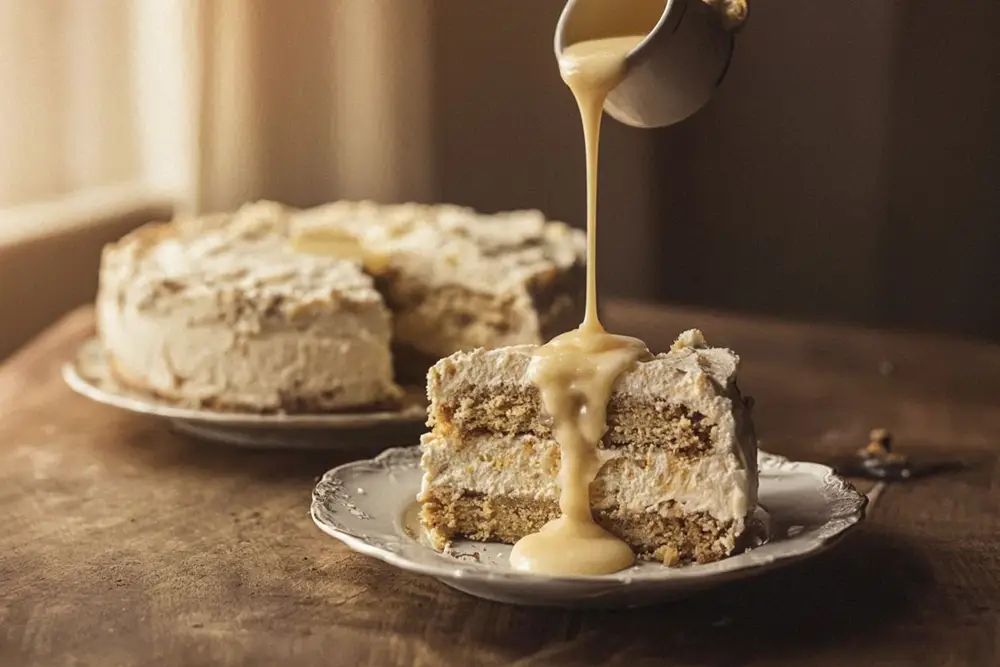
Almond Cream Biscuit Torte
A light sponge layered with almond buttercream and finished with a poured chilled custard sauce — a classic of early 20th century Central European pastry.
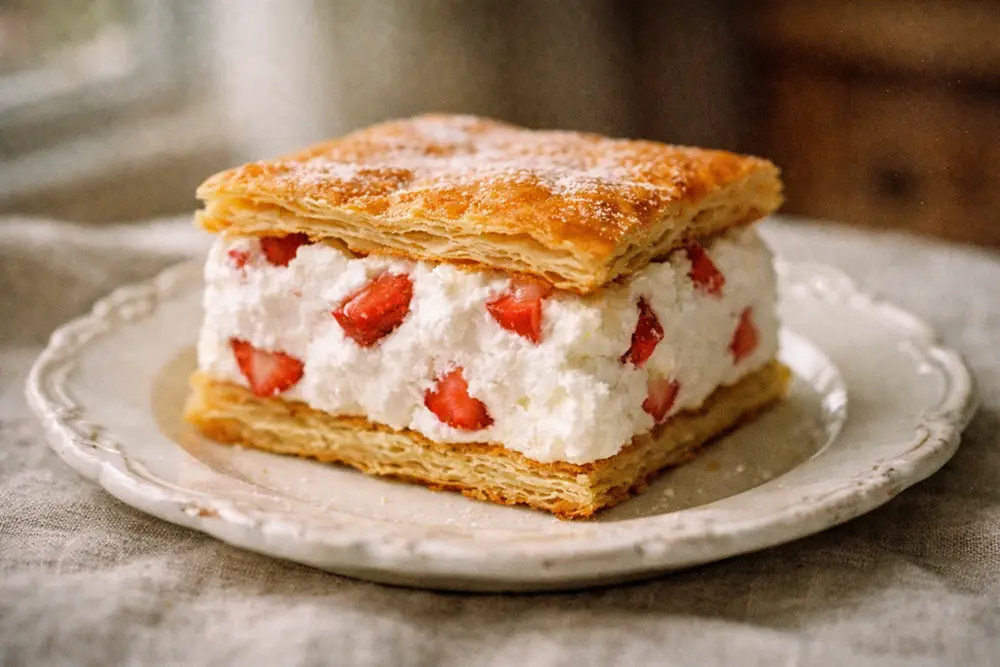
Strawberry Meringue Pie
Italian meringue with fresh strawberries between two rough puff pastry crusts. A Central European celebration dessert from early 20th century home baking.
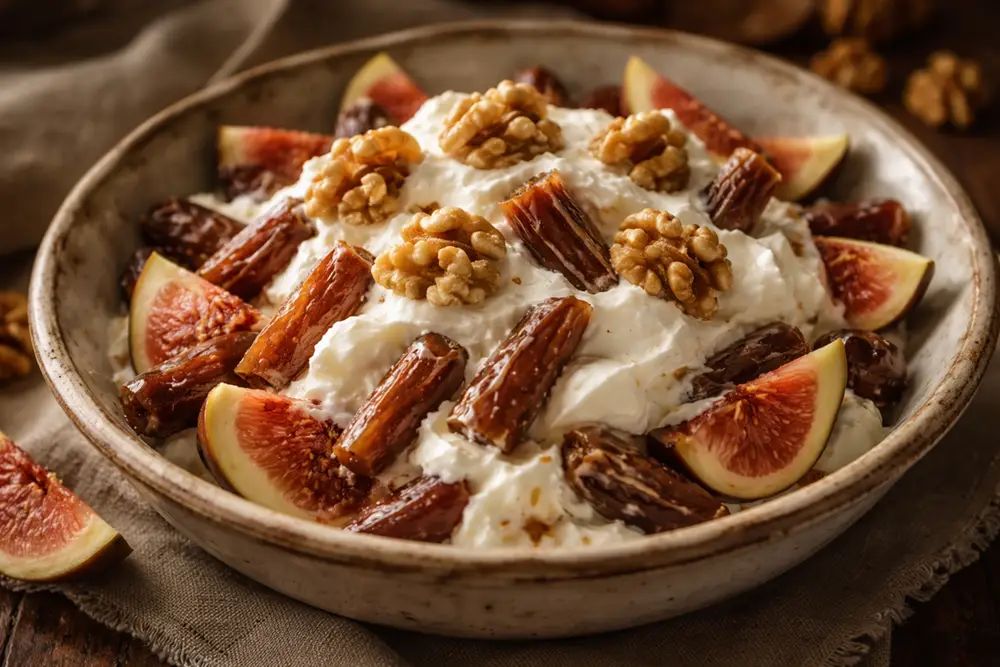
Figs in the Snow
Sliced ripe figs and dates macerated in lemon juice and sugar, piled into a bowl and covered with sweetened whipped cream and whole walnuts.