Bulgarian Tarator (Historical Walnut Paste)
A century-old walnut-and-garlic paste, strained through a sieve into a thick, pourable sauce — the ancestor of the modern cold yogurt soup.
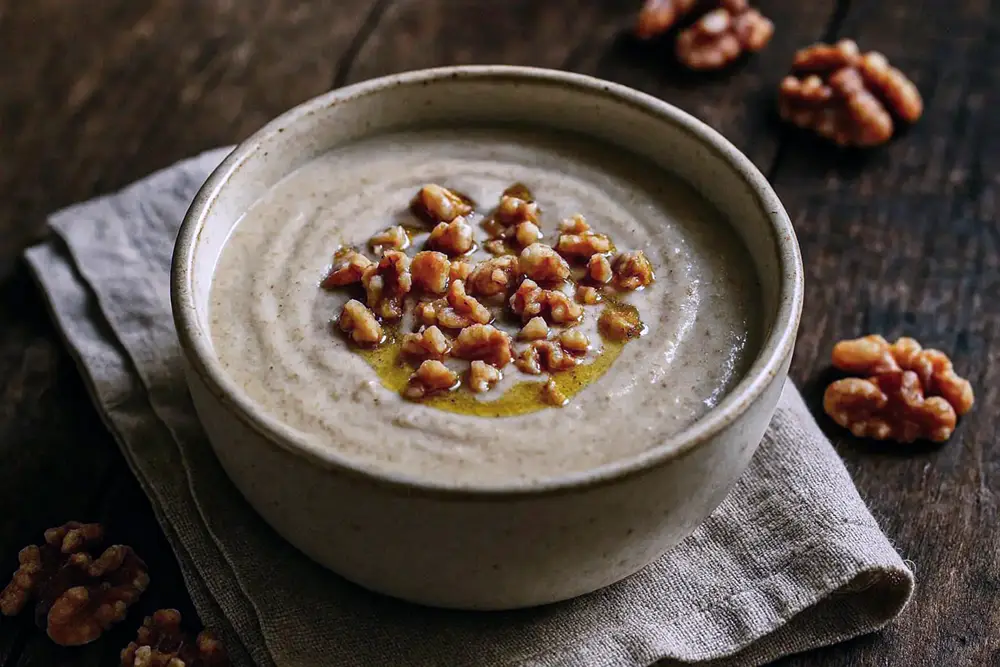
Historical recipe
Modernised adaptation of an early 20th‑century source. Not independently kitchen-tested by Attic Recipes. Quantities, temperatures, and food safety guidance have been updated for a contemporary kitchen — results may vary and errors may exist. Nutritional values, where provided, are estimates only and have not been laboratory tested. Always follow current food safety guidelines for your region. If you have a health condition, allergy, or dietary requirement, consult a qualified professional before preparing this recipe.
Use of this recipe is entirely at your own risk and subject to our Terms of Service and Privacy Policy. Attic Recipes accepts no liability for any adverse outcome.
- Tree Nuts
- Gluten
Additional notes
-
Warning
Do not use brass or copper mortars for this preparation. The acidic compounds in walnuts and garlic react with copper alloys to form verdigris (copper carbonate), which is toxic if ingested. Use only wooden, stone, or stainless steel equipment.
-
Caution
Walnuts can trigger severe allergic reactions. This dish contains no hidden allergens beyond nuts and gluten, but cross-contamination risk should be disclosed to guests.
- 1
Inspect the 250g of shelled walnuts carefully. Discard any kernels that show black spots, mold, or shriveling. Rinse briefly and pat dry.
- 2
Place the bread crumb (80g) in a small bowl and pour over enough cold water to submerge it. Let it soak for 2–3 minutes until fully softened, then squeeze firmly to remove as much water as possible.
- 3
In a wooden or stone mortar, pound the 250g of walnuts in small batches until they form a nearly oily paste. This will take 8–12 minutes of steady work. The mass is ready when it clumps together and feels slightly greasy.
- 4
Add the squeezed bread and the 3 garlic cloves to the mortar. Continue pounding until all three elements are fully incorporated into a uniform paste.
- 5
Add 1 tsp of salt and mix through.
- 6
Transfer the paste to a fine-mesh sieve set over a deep bowl. Using a wooden spoon or clean hands, press the paste firmly through the sieve, adding cold water little by little — up to 150ml total — to help the emulsion pass through. A thick, porridge-like sauce will collect in the bowl below.
- 7
Taste and adjust salt. Serve immediately in small bowls, drizzled with sunflower or light olive oil if desired, with the reserved walnut pieces scattered on top.
Nutrition Information per 1 serving (approx. 90g)
Nutritional values are approximate estimates and may vary based on specific ingredients used, preparation methods, and portion sizes.
Serving Suggestions
Serve chilled as a dipping sauce with crusty bread, roasted or fried vegetables, or grilled fish. It also works well alongside roasted beets or as a spread on toasted bread. The reserved walnut pieces from the strainer make an ideal rough-textured garnish.
About This Recipe
Before tarator became the cold yogurt-and-cucumber soup served across Central and Eastern Europe every summer, it existed in an older form — a walnut-and-garlic paste, strained through a sieve into a thick, pourable sauce. This is that version. No yogurt, no cucumber, no dill. Just walnuts, bread, garlic, water, and steady work in a mortar.
The technique is older than the dish’s modern name suggests. Walnut pastes bound with soaked bread appear throughout Ottoman-influenced cuisines — the same mechanical logic produces Georgian satsivi, Turkish tarator sauce for fried fish, and Circassian chicken. What early Central European home cooks made with this method was structurally identical: a dense, creamy emulsion that thinned as water was worked through it, yielding something between a sauce and a porridge.
Period accounts of this preparation are notable not just for their technique but for their safety awareness. The warning against brass mortars — and the explanation of verdigris as the specific hazard — reflects practical knowledge that preceded modern food safety regulation by generations.
Why It Works
The walnut-and-bread combination follows the same logic as a classic emulsified sauce: the bread provides starch and protein that bind the walnut oils and prevent the paste from breaking as water is added. Without bread, the emulsion is unstable — it separates quickly and coats the palate unevenly. With it, the strained sauce holds together long enough to serve, and the texture stays thick and cohesive rather than greasy.
Pounding rather than blending matters here. A mortar ruptures the walnut cell walls slowly and evenly, releasing oils gradually into the growing mass. A food processor cuts at high speed and introduces heat and air, both of which work against a stable emulsion. The result is similar in flavor but different in body — food-processor tarator tends to be slightly looser and separates faster.
Straining through a sieve is the step that defines the texture. The paste is pushed through under pressure with added water, and only the smooth emulsified fraction passes through. The coarser pieces left behind are not waste — period preparations treated them as a secondary garnish, scattered over the finished bowl.
Modern Kitchen Tips
If you don’t have a large mortar, a food processor works, but stop well before the mixture looks smooth — over-processing heats the oils and produces a bitter, unstable paste. Pulse in five-second bursts, scraping down the sides often.
The bread should be from a firm white loaf, not a soft sandwich bread. Soft breads absorb too much water and make the paste gummy rather than binding. Sourdough or a day-old country loaf works well.
Cold water is essential here: warm water loosens the oils too quickly and the emulsion may not hold through the straining step.
A classic of early 20th century home cooking, preserved and adapted for the modern kitchen.
The Story Behind This Recipe
Historical Context
Early 20th century preparations of this dish describe a walnut-and-bread paste as the foundation of tarator — a technique that predates the now-universal yogurt-and-cucumber version by at least a generation. Home cooks of the period worked almost exclusively with wooden or stone mortars, and the caution around brass or copper vessels was practical knowledge passed down orally: verdigris, the greenish residue that forms when acid contacts copper alloys, was well understood as a hazard long before food-safety regulation codified it. The straining step — pressing the paste through a sieve with added water — is the same mechanical principle used in walnut sauces across Ottoman-influenced cuisines, from Circassian chicken (çerkez tavuğu) to Georgian satsivi. The relationship is not coincidental; this preparation sits squarely within the broader Ottoman walnut-and-bread sauce family that spread through Central and Eastern Europe during several centuries of shared culinary history. Yogurt does not appear in any recorded early version of this dish.
Modern Kitchen Adaptation
The wooden mortar method has been kept as the primary technique, since a food processor produces an acceptable but noticeably different result — slightly coarser, less emulsified, with a tendency to separate. If using a processor, pulse in very short bursts and stop before the mixture becomes grainy paste rather than smooth. The bread quantity is estimated at 80g (approximately one-third of the walnut weight), which is consistent with similar period preparations for binding walnut emulsions. Garlic quantity is estimated at 3 cloves — the period preparation calls for 'a few' without a number. Oil is a modern addition not present in early versions of this dish; it improves mouthfeel and helps the paste emulsify smoothly when pressed through the sieve. If the finished sauce is too thick, loosen with additional cold water, one tablespoon at a time.
This recipe is an independent modern adaptation developed from historical sources in the public domain. It is provided for informational and educational purposes only and does not constitute professional dietary, nutritional, or medical advice. Food preparation involves inherent risks. The reader assumes full responsibility for safe food handling, ingredient sourcing, and adherence to current local food safety guidelines. The site operator accepts no liability for outcomes resulting from the preparation or consumption of this recipe.
One recipe.
Every week.
You Might Also Like
More recipes from the same category

Asparagus Tip Soup
A silky, cream-enriched asparagus soup built on a white roux and finished with tempered egg yolks — an elegant first course from early 20th century cooking.

Bean Soup Cooked with Beef
White beans and beef shoulder slow-simmered with a bouquet garni, finished in the oven with a paprika-spiced pan roux. A deeply satisfying one-pot meal.
Beef Soup with Carrot-Colored Broth
A rich, golden Central European beef soup with carrot-colored broth, served with semolina or liver dumplings. Hearty, clear, and deeply flavorful.